Bai Lu, Huo Ran, Fang Guotao, Ma Tiantian, Shang Yanhong
Hebei Key Laboratory of Cancer Radiotherapy and Chemotherapy, Department of Medical Oncology, Affiliated Hospital of Hebei University, Baoding, China.
Front Oncol. 2023 Jan 23;13:1055122. doi: 10.3389/fonc.2023.1055122. eCollection 2023.
High expression of matrix metalloproteinase-11 (MMP11) is associated with various tumors and immune microenvironments. Conversely, poor response to immunotherapy in epidermal growth factor receptor (EGFR)-mutant lung adenocarcinoma (LUAD) patients is closely related to the characteristics of immune microenvironment.
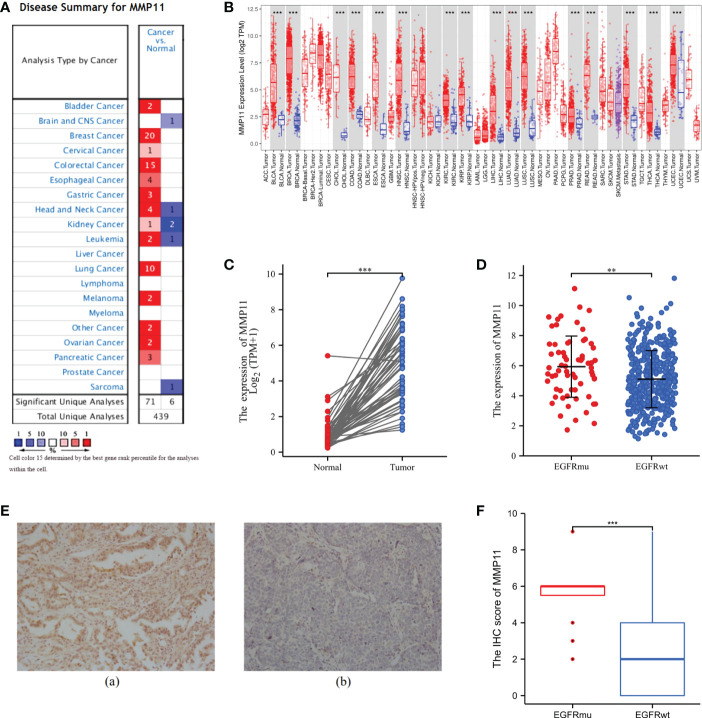
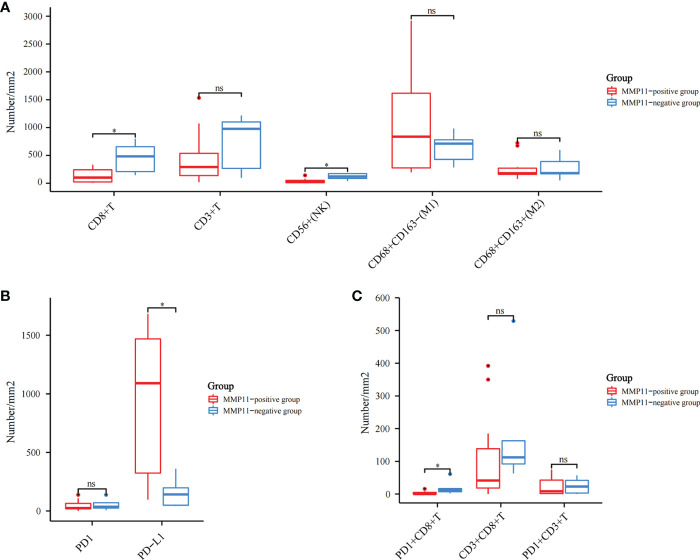
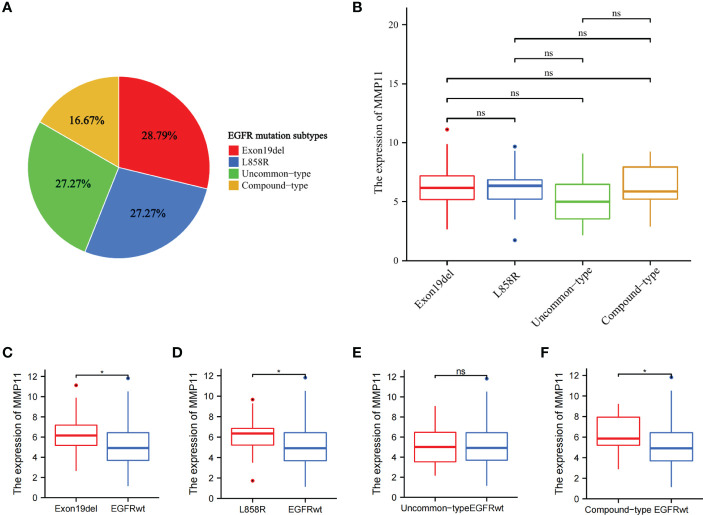
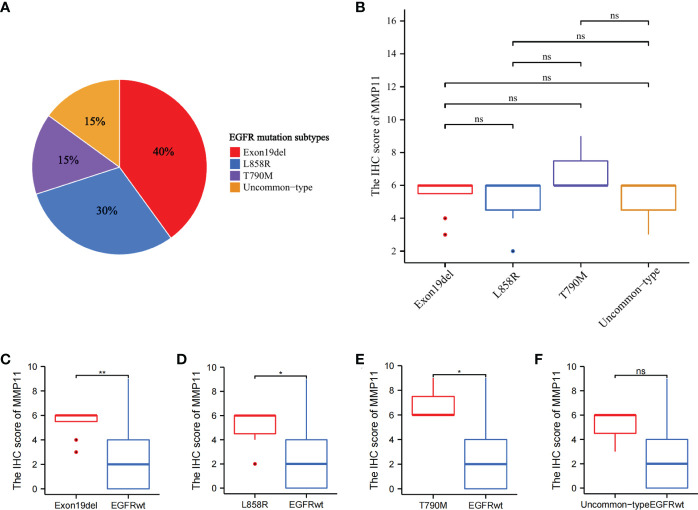
The Cancer Genome Atlas (TCGA)-LUAD database and our gathered clinical LUAD samples were used to examine the relationship between MMP11 expression and EGFR mutation. Then the correlation between MMP11 and immune response and the difference of immune cell infiltration in different groups were analyzed. Compared the differences in the immune microenvironment between the MMP11-positive and MMP11-negative expression groups using immunohistochemistry (IHC) and multiplex immunohistochemistry.
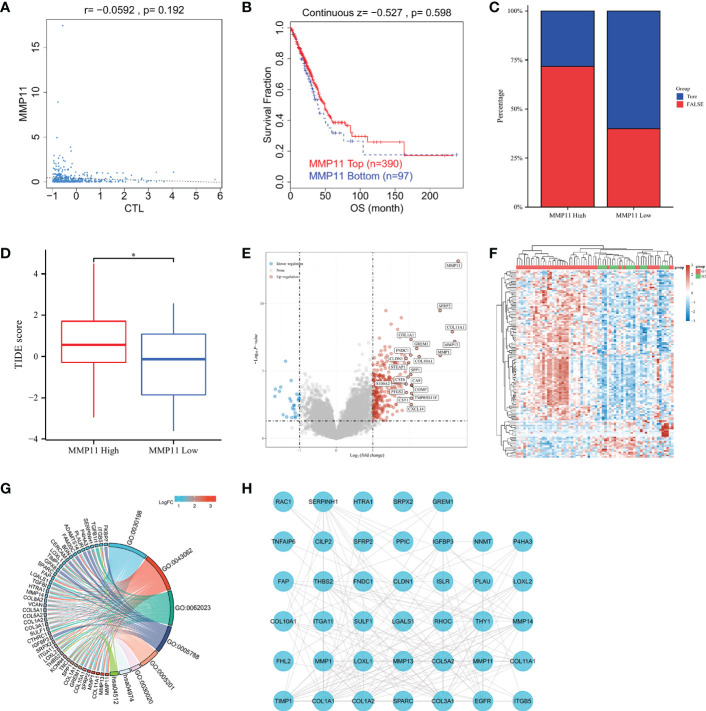
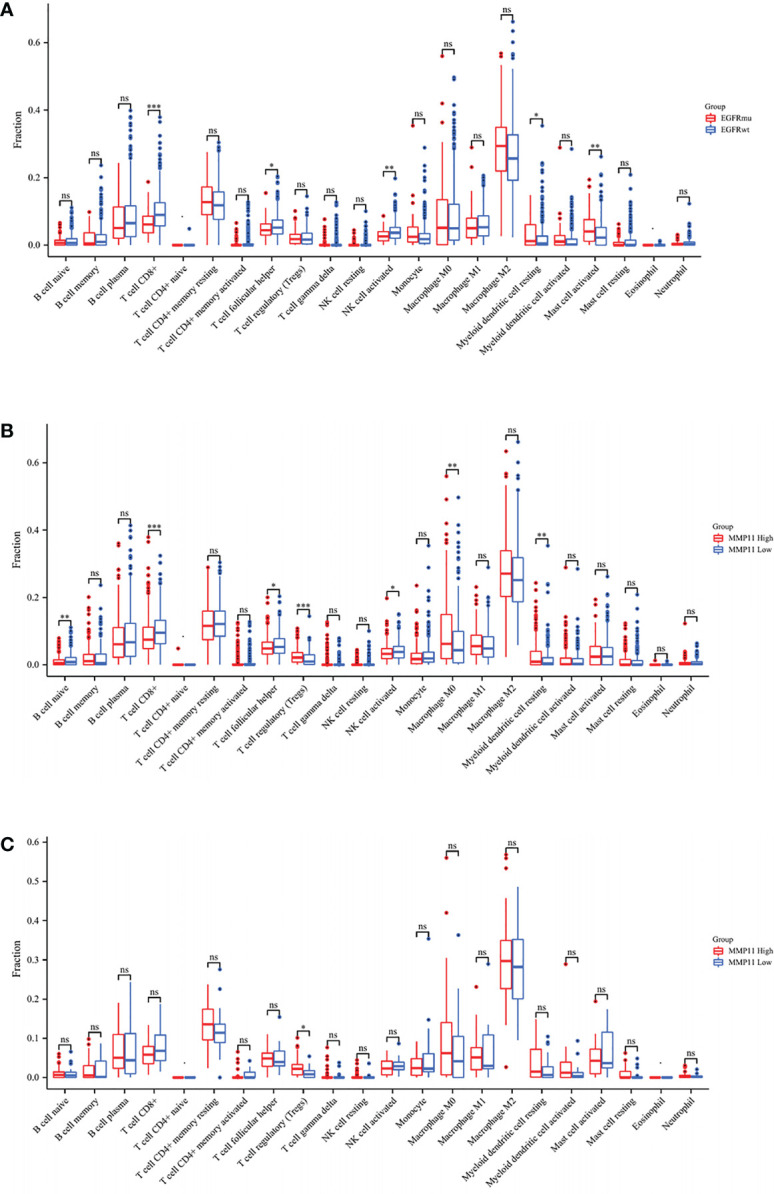
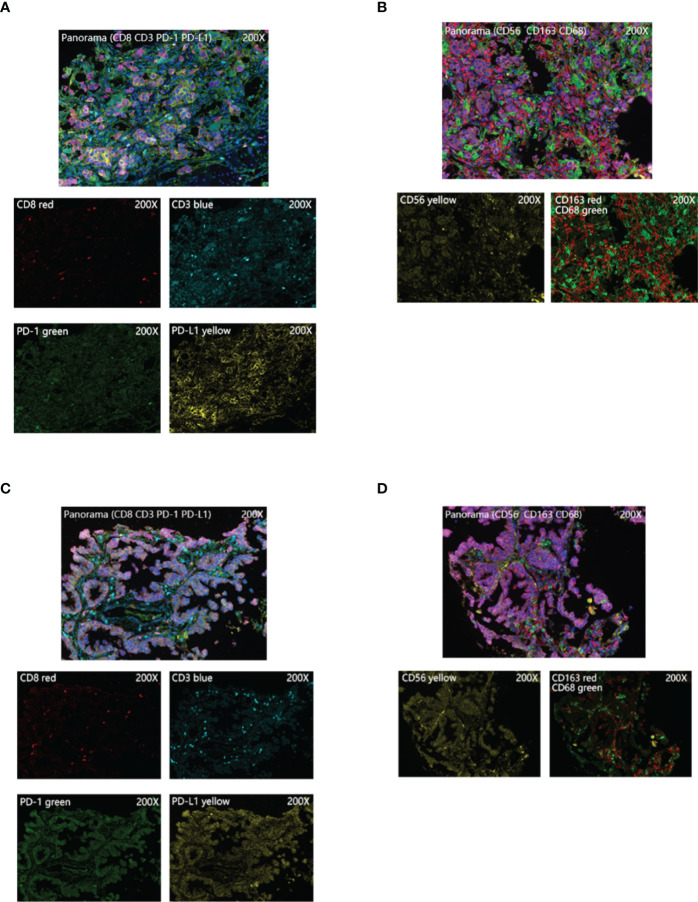
The expression of MMP11 in samples with exon 19 deletions, exon 21 L858R or exon 20 T790M mutations was higher than wild type, but there was no difference between the samples with uncommon mutation and the wild-type. The high MMP11 expression group had a higher Tumor Immune Dysfunction and Exclusion (TIDE) score. Pathways associated with enrichment in the extracellular matrix (ECM) were the main biological functions of differential genes between the high and low MMP11 groups. The IHC score of MMP11 in the EGFR-mutant group was higher than in the EGFR-wild group. In TCGA-LUAD, the high MMP11 group had a lower proportion of T cell CD8+ and NK cells activated. In the clinical samples, the infiltration levels of T cell CD8+ and NK cells in the tumor parenchyma of EGFR-mutant LUAD was lower in the MMP11-positive than in the MMP11-negative group. The expression levels of tumor cell PD-L1 were higher in the MMP11-positive expression group than in the MMP11-negative expression group, and the proportion of PD1+CD8+ T cells infiltrated was reduced in the MMP11-positive group compared to the MMP11-negative group.
High expression of MMP11 was associated with EGFR mutations. Patients with EGFR-mutant LUAD with high expression of MMP11 responded poorly to immunotherapy, and the percentage of T cell CD8+ and NK cells in immune cell infiltration was lower in MMP11. Consequently, MMP11 is related to the immunological microenvironment of EGFR-mutant lung adenocarcinoma, which may be a predictor of possible immunotherapeutic response.
基质金属蛋白酶11(MMP11)的高表达与多种肿瘤及免疫微环境相关。相反,表皮生长因子受体(EGFR)突变的肺腺癌(LUAD)患者对免疫治疗反应不佳与免疫微环境的特征密切相关。
利用癌症基因组图谱(TCGA)-LUAD数据库及我们收集的临床LUAD样本,研究MMP11表达与EGFR突变之间的关系。然后分析MMP11与免疫反应的相关性以及不同组中免疫细胞浸润的差异。采用免疫组织化学(IHC)和多重免疫组织化学方法比较MMP11阳性和阴性表达组之间免疫微环境的差异。
外显子19缺失、外显子21 L858R或外显子20 T790M突变样本中MMP11的表达高于野生型,但罕见突变样本与野生型样本之间无差异。MMP11高表达组的肿瘤免疫功能障碍和排除(TIDE)评分较高。细胞外基质(ECM)富集相关通路是MMP11高低表达组差异基因的主要生物学功能。EGFR突变组中MMP11的IHC评分高于EGFR野生组。在TCGA-LUAD中,MMP11高表达组中活化的T细胞CD8 +和NK细胞比例较低。在临床样本中,EGFR突变LUAD肿瘤实质中T细胞CD8 +和NK细胞的浸润水平在MMP11阳性组低于MMP11阴性组。MMP11阳性表达组中肿瘤细胞PD-L1的表达水平高于MMP11阴性表达组,且与MMP11阴性组相比,MMP11阳性组中浸润的PD1 + CD8 + T细胞比例降低。
MMP11的高表达与EGFR突变相关。MMP11高表达的EGFR突变LUAD患者对免疫治疗反应不佳,且MMP11中免疫细胞浸润中T细胞CD8 +和NK细胞的百分比更低。因此,MMP11与EGFR突变型肺腺癌的免疫微环境相关,可能是免疫治疗反应可能性的预测指标。