Smith Edward J, Sathasivam Kirupa, Landles Christian, Osborne Georgina F, Mason Michael A, Gomez-Paredes Casandra, Taxy Bridget A, Milton Rebecca E, Ast Anne, Schindler Franziska, Zhang Chuangchuang, Duan Wenzhen, Wanker Erich E, Bates Gillian P
Huntington's Disease Centre, Department of Neurodegenerative Disease and UK Dementia Research Institute at UCL, Queen Square Institute of Neurology, University College London, London WC1N 3BG, UK.
Neuroproteomics, Max Delbrück Center for Molecular Medicine in the Helmholtz Association, Berlin 13125, Germany.
Brain Commun. 2023 Jan 20;5(1):fcad010. doi: 10.1093/braincomms/fcad010. eCollection 2023.
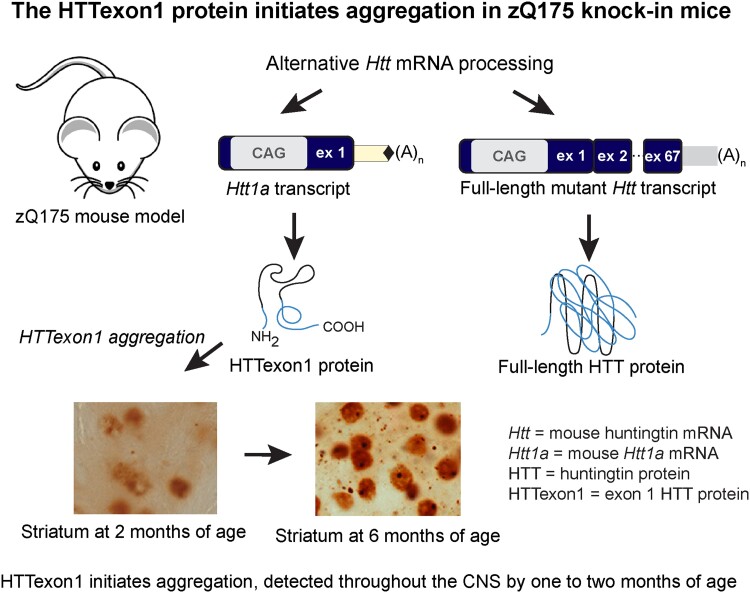
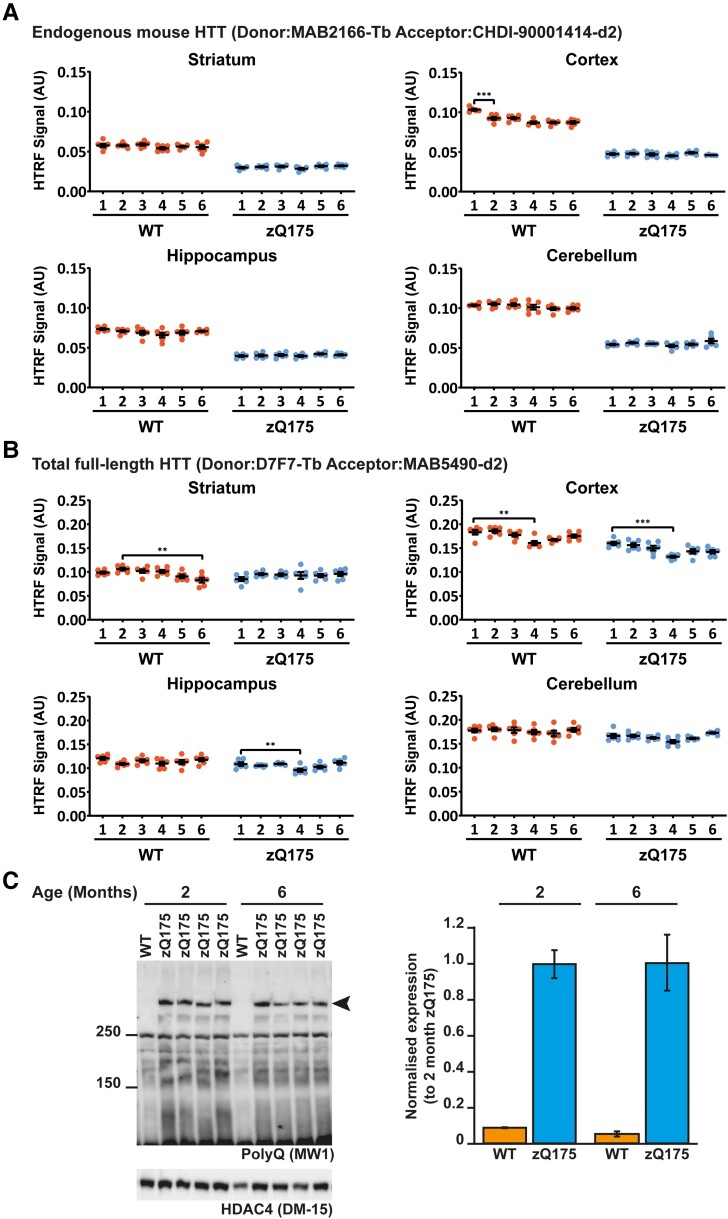
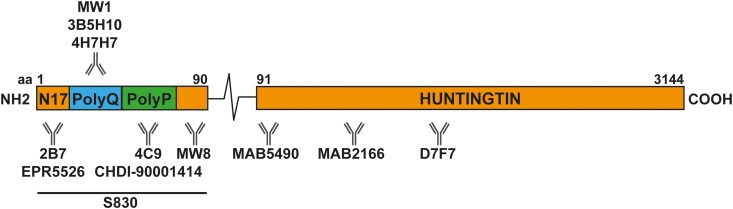
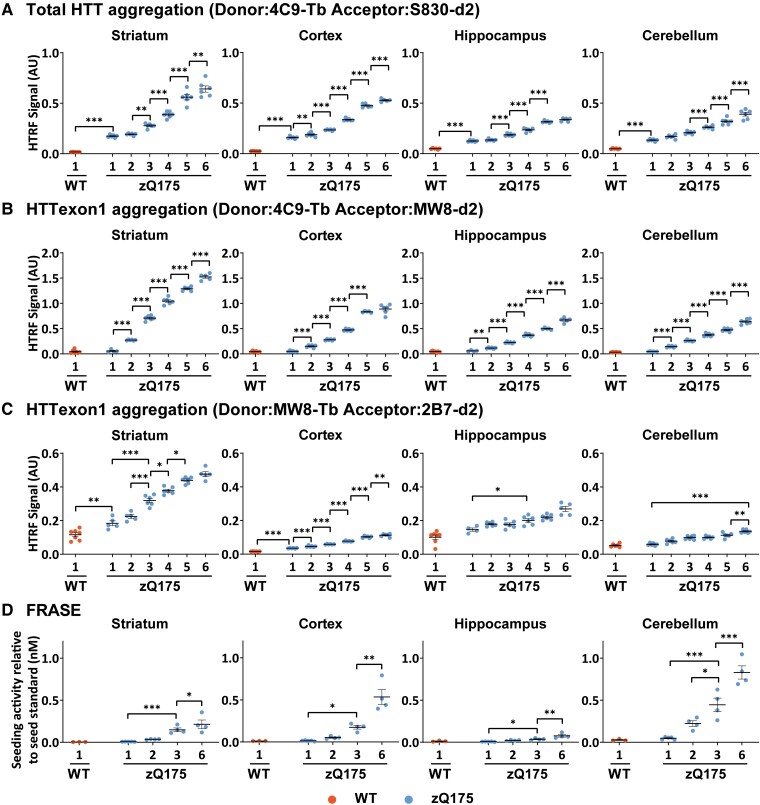
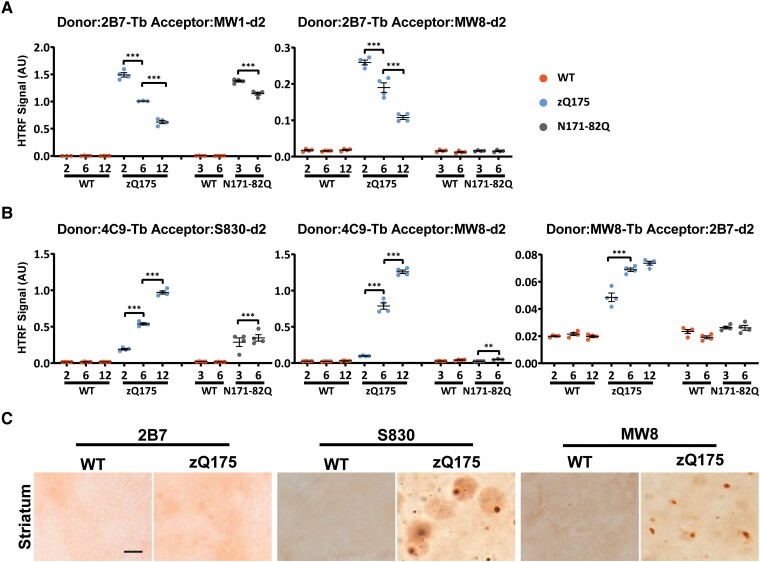
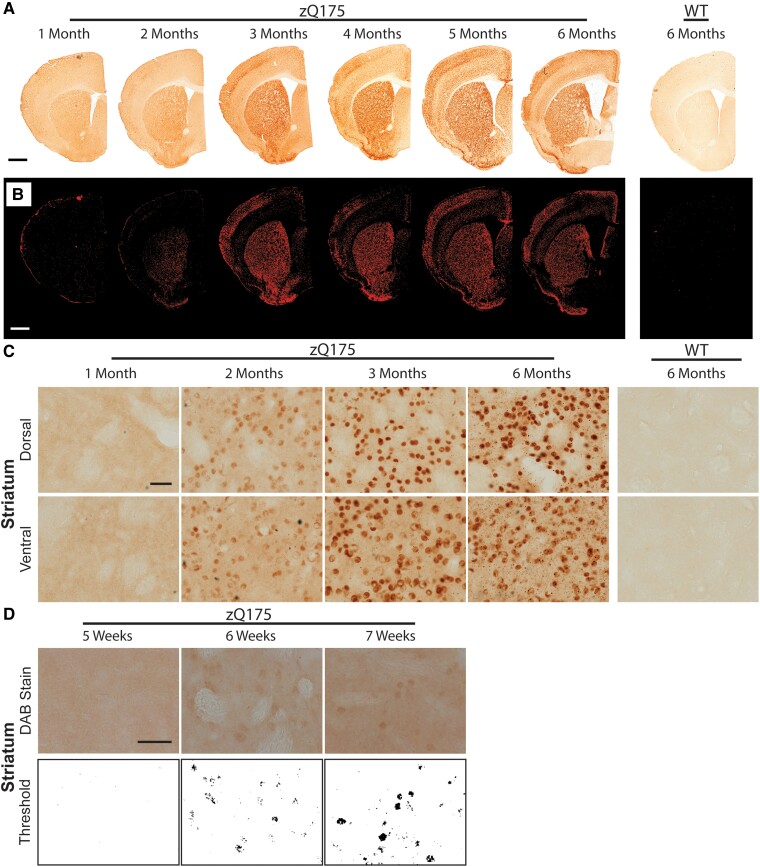
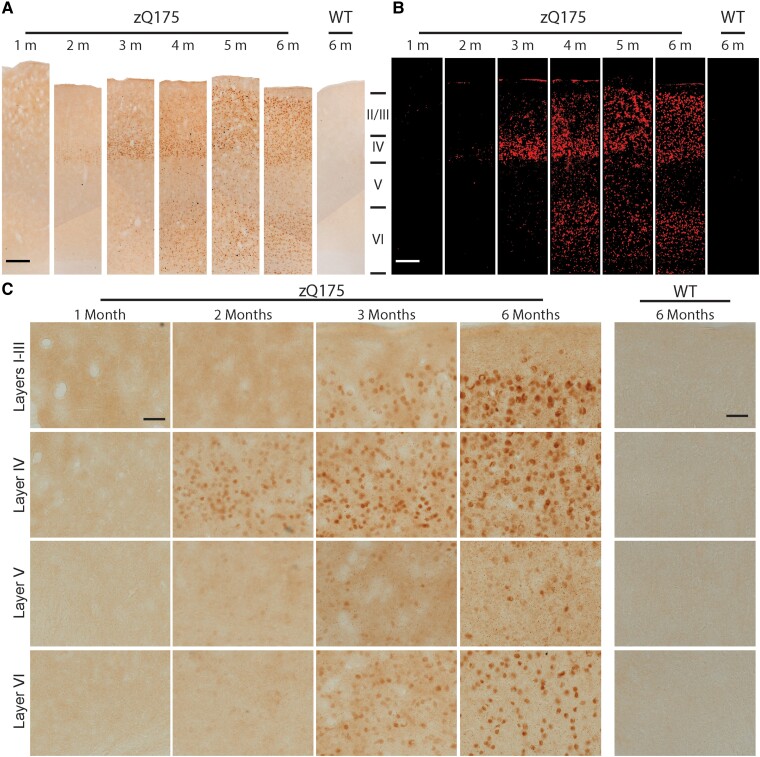
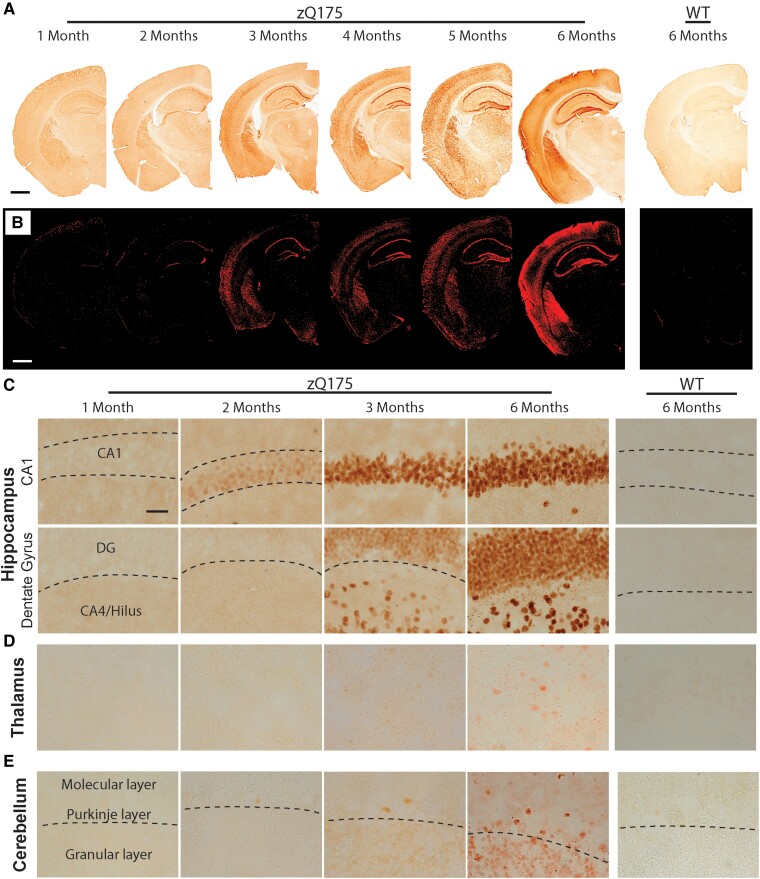
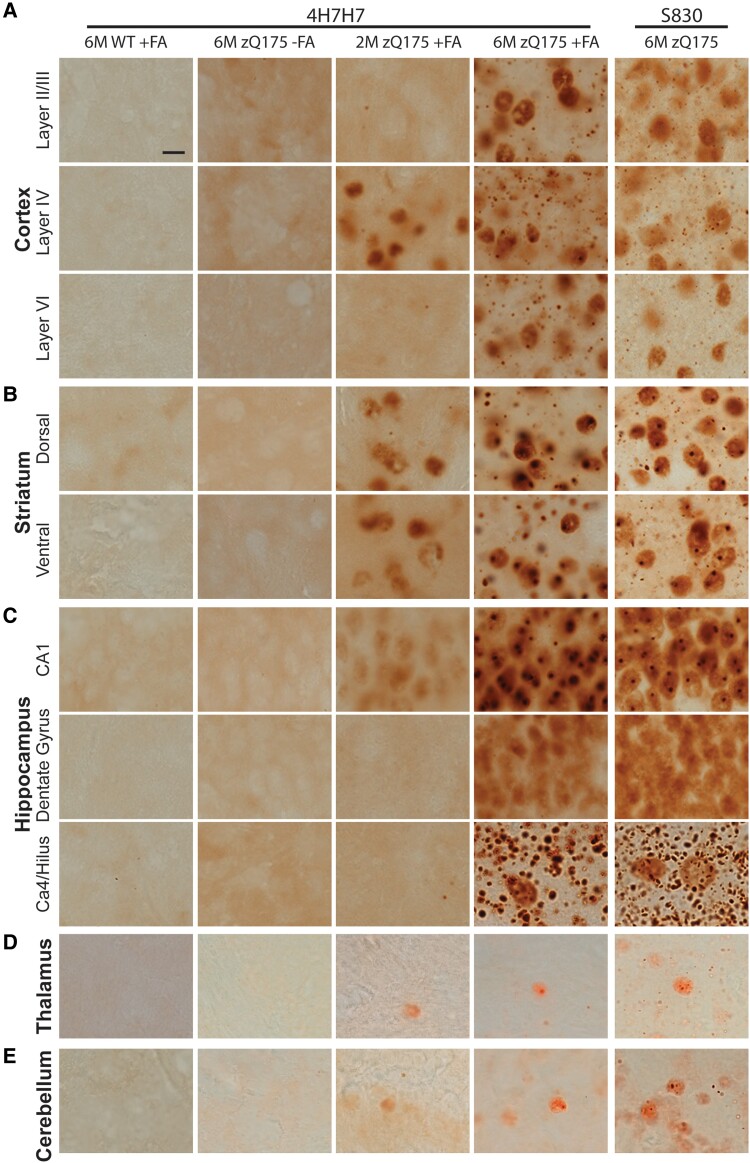
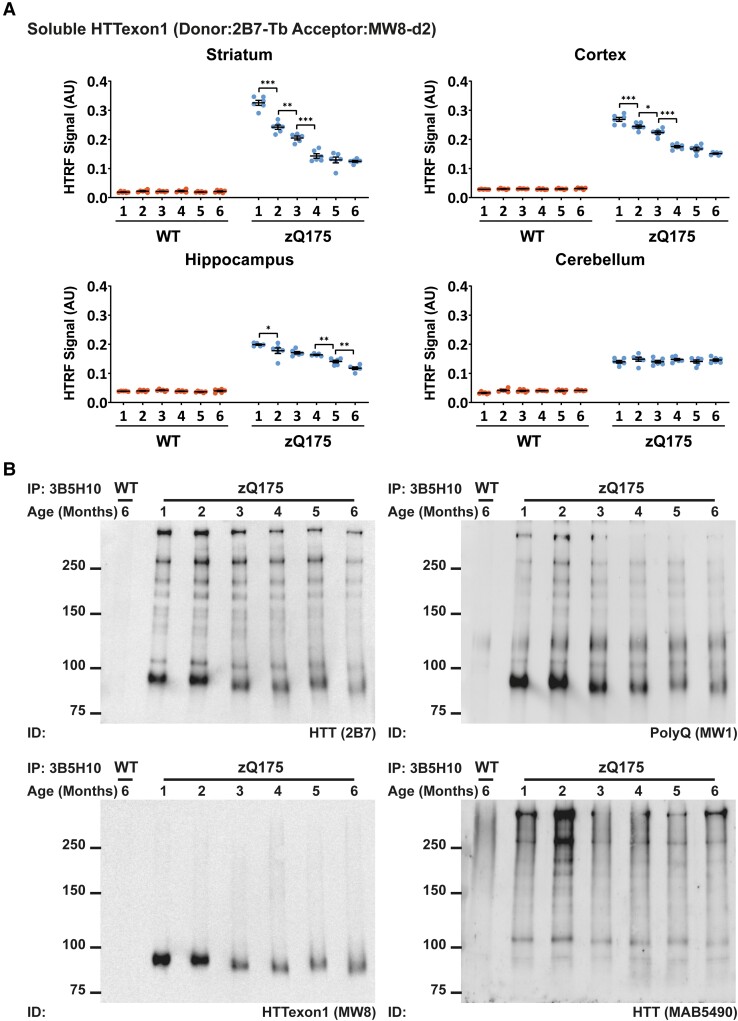
Huntingtin-lowering approaches that target huntingtin expression are a major focus for therapeutic intervention for Huntington's disease. When the cytosine, adenine and guanine repeat is expanded, the huntingtin pre-mRNA is alternatively processed to generate the full-length huntingtin and transcripts. encodes the aggregation-prone and highly pathogenic exon 1 huntingtin protein. In evaluating huntingtin-lowering approaches, understanding how the targeting strategy modulates levels of both transcripts and the huntingtin protein isoforms that they encode will be essential. Given the aggregation-propensity of exon 1 huntingtin, the impact of a given strategy on the levels and subcellular location of aggregated huntingtin will need to be determined. We have developed and applied sensitive molecular approaches to monitor the levels of aggregated and soluble huntingtin isoforms in tissue lysates. We have used these, in combination with immunohistochemistry, to map the appearance and accumulation of aggregated huntingtin throughout the CNS of zQ175 mice, a model of Huntington's disease frequently chosen for preclinical studies. Aggregation analyses were performed on tissues from zQ175 and wild-type mice at monthly intervals from 1 to 6 months of age. We developed three homogeneous time-resolved fluorescence assays to track the accumulation of aggregated huntingtin and showed that two of these were specific for the exon 1 huntingtin protein. Collectively, the homogeneous time-resolved fluorescence assays detected huntingtin aggregation in the 10 zQ175 CNS regions by 1-2 months of age. Immunohistochemistry with the polyclonal S830 anti-huntingtin antibody showed that nuclear huntingtin aggregation, in the form of a diffuse nuclear immunostain, could be visualized in the striatum, hippocampal CA1 region and layer IV of the somatosensory cortex by 2 months. That this diffuse nuclear immunostain represented aggregated huntingtin was confirmed by immunohistochemistry with a polyglutamine-specific antibody, which required formic acid antigen retrieval to expose its epitope. By 6 months of age, nuclear and cytoplasmic inclusions were widely distributed throughout the brain. Homogeneous time-resolved fluorescence analysis showed that the comparative levels of soluble exon 1 huntingtin between CNS regions correlated with those for huntingtin aggregation. We found that soluble exon 1 huntingtin levels decreased over the 6-month period, whilst those of soluble full-length mutant huntingtin remained unchanged, data that were confirmed for the cortex by immunoprecipitation and western blotting. These data support the hypothesis that exon 1 huntingtin initiates the aggregation process in knock-in mouse models and pave the way for a detailed analysis of huntingtin aggregation in response to huntingtin-lowering treatments.
针对亨廷顿蛋白表达的降低亨廷顿蛋白水平的方法是亨廷顿舞蹈症治疗干预的主要重点。当胞嘧啶、腺嘌呤和鸟嘌呤重复序列扩增时,亨廷顿蛋白前体信使核糖核酸会进行可变剪接,产生全长亨廷顿蛋白和转录本。编码易于聚集且具有高度致病性的外显子1亨廷顿蛋白。在评估降低亨廷顿蛋白水平的方法时,了解靶向策略如何调节转录本及其编码的亨廷顿蛋白异构体的水平至关重要。鉴于外显子1亨廷顿蛋白的聚集倾向,需要确定给定策略对聚集型亨廷顿蛋白水平和亚细胞定位的影响。我们开发并应用了灵敏的分子方法来监测组织裂解物中聚集型和可溶性亨廷顿蛋白异构体的水平。我们将这些方法与免疫组织化学相结合,绘制了聚集型亨廷顿蛋白在zQ175小鼠中枢神经系统中的出现和积累情况,zQ175小鼠是一种常用于临床前研究的亨廷顿舞蹈症模型。在1至6月龄期间,每月对zQ175小鼠和野生型小鼠的组织进行聚集分析。我们开发了三种均相时间分辨荧光测定法来追踪聚集型亨廷顿蛋白的积累,并表明其中两种方法对外显子1亨廷顿蛋白具有特异性。总体而言,均相时间分辨荧光测定法在1至2月龄时检测到了10个zQ175中枢神经系统区域中的亨廷顿蛋白聚集。用多克隆S830抗亨廷顿蛋白抗体进行的免疫组织化学显示,在2月龄时,纹状体、海马CA1区和体感皮层IV层中可观察到以弥漫性核免疫染色形式存在的核亨廷顿蛋白聚集。用聚谷氨酰胺特异性抗体进行的免疫组织化学证实,这种弥漫性核免疫染色代表聚集型亨廷顿蛋白,该抗体需要甲酸抗原修复来暴露其表位。到6月龄时,核内和胞质内包涵体广泛分布于整个大脑。均相时间分辨荧光分析表明,中枢神经系统区域之间可溶性外显子1亨廷顿蛋白的相对水平与亨廷顿蛋白聚集的水平相关。我们发现,在6个月的时间里,可溶性外显子1亨廷顿蛋白水平下降,而可溶性全长突变型亨廷顿蛋白水平保持不变,免疫沉淀和蛋白质印迹法对皮层的数据证实了这一点。这些数据支持了外显子1亨廷顿蛋白在基因敲入小鼠模型中启动聚集过程的假设,并为详细分析降低亨廷顿蛋白水平治疗后亨廷顿蛋白的聚集情况铺平了道路。