Department of Gastroenterology, Changhai Hospital, Naval Medical University, Shanghai, China.
Changhai Clinical Research Unit, Shanghai, China.
J Med Internet Res. 2023 Feb 9;25:e41518. doi: 10.2196/41518.
Dietary management is considered a potential adjunctive treatment for inflammatory bowel disease (IBD). Short-video sharing platforms have enabled patients to obtain dietary advice more conveniently. However, accessing useful resources while avoiding misinformation is not an easy task for most patients.
This study aimed to evaluate the quality of the information in IBD diet-related videos on Chinese short-video sharing platforms.
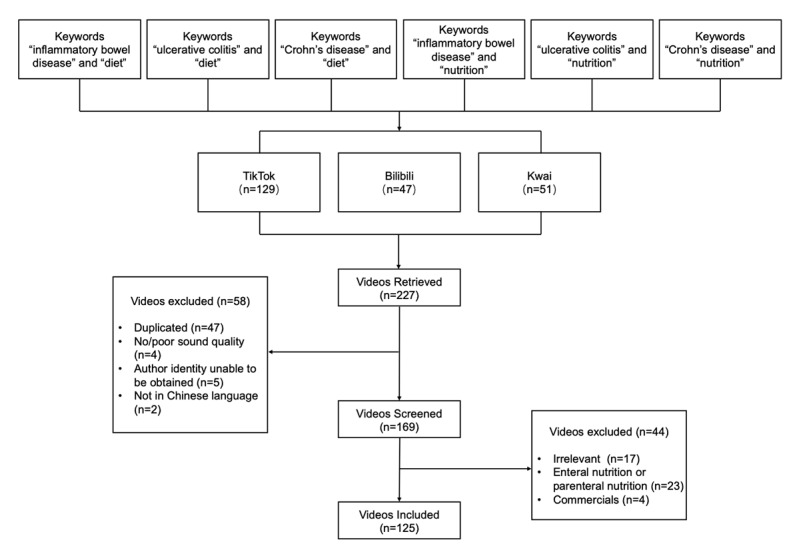
We collected and extracted information from a total of 125 video samples related to the IBD diet on the 3 Chinese short-video sharing platforms with the most users: TikTok, Bilibili, and Kwai. Two independent physicians evaluated each video in terms of content comprehensiveness, quality (rated by Global Quality Score), and reliability (rated by a modified DISCERN tool). Finally, comparative analyses of the videos from different sources were conducted.
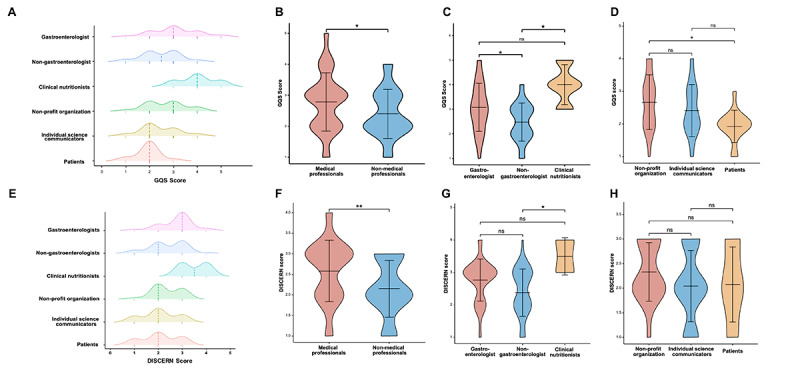
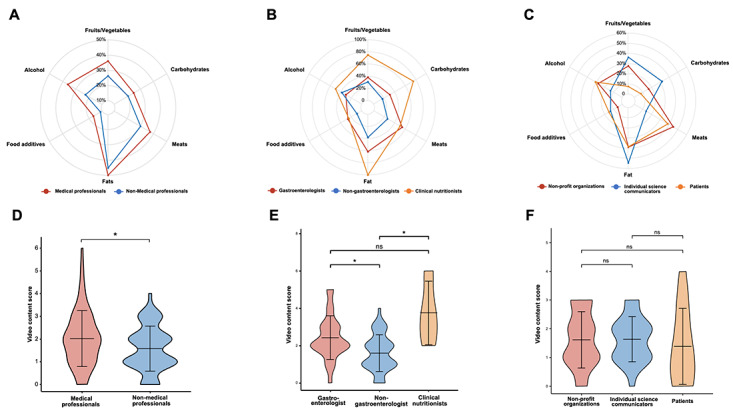
The videos were classified into 6 groups based on the identity of the uploaders, which included 3 kinds of medical professionals (ie, gastroenterologists, nongastroenterologists, and clinical nutritionists) and 3 types of non-medical professionals (ie, nonprofit organizations, individual science communicators, and IBD patients). The overall quality of the videos was poor. Further group comparisons demonstrated that videos from medical professionals were more instructive in terms of content comprehensiveness, quality, and reliability than those from non-medical professionals. Moreover, IBD diet-related recommendations from clinical nutritionists and gastroenterologists were of better quality than those from nongastroenterologists, while recommendations from nonprofit organizations did not seem to be superior to other groups of uploaders.
The overall quality of the information in IBD diet-related videos is unsatisfactory and varies significantly depending on the source. Videos from medical professionals, especially clinical nutritionists and gastroenterologists, may provide dietary guidance with higher quality for IBD patients.
饮食管理被认为是炎症性肠病(IBD)的一种潜在辅助治疗方法。短视频分享平台使患者能够更方便地获得饮食建议。然而,对于大多数患者来说,获取有用资源的同时避免错误信息并非易事。
本研究旨在评估中国短视频分享平台上与 IBD 饮食相关的视频信息质量。
我们从用户最多的 3 个中国短视频分享平台(TikTok、Bilibili 和快手)上共收集和提取了 125 个与 IBD 饮食相关的视频样本。两名独立医生根据内容全面性、质量(由全球质量评分评定)和可靠性(由改良的 DISCERN 工具评定)对每个视频进行评估。最后,对来自不同来源的视频进行了比较分析。
根据上传者的身份,将视频分为 6 组,包括 3 种医疗专业人员(即胃肠病学家、非胃肠病学家和临床营养师)和 3 种非医疗专业人员(即非营利组织、个体科学传播者和 IBD 患者)。视频的整体质量较差。进一步的组间比较表明,医疗专业人员的视频在内容全面性、质量和可靠性方面比非医疗专业人员的视频更具指导意义。此外,临床营养师和胃肠病学家的 IBD 饮食相关建议质量优于非胃肠病学家,而非营利组织的建议似乎并不优于其他上传者。
IBD 饮食相关视频的信息整体质量不尽如人意,且差异显著,取决于来源。来自医疗专业人员的视频,特别是临床营养师和胃肠病学家的视频,可能为 IBD 患者提供质量更高的饮食指导。