Diabetes Research Center, Health Research Institute, Ahvaz Jundishapur University of Medical Sciences, Ahvaz, Iran.
Student Research Committee, Ahvaz Jundishapur University of Medical Sciences, Ahvaz, Iran.
BMC Endocr Disord. 2022 May 2;22(1):116. doi: 10.1186/s12902-022-01032-4.
Compliance to dietary recommendations by patients is the most difficult part of diabetes management. The nature of any educational method is to increase patients' awareness. But the question is, what is the effect of each method and for this purpose a comparative method should be considered. Therefore, this study was conducted to compare the effects of in-person education versus video tele-education on dietary regimen compliance in patients with T2DM.
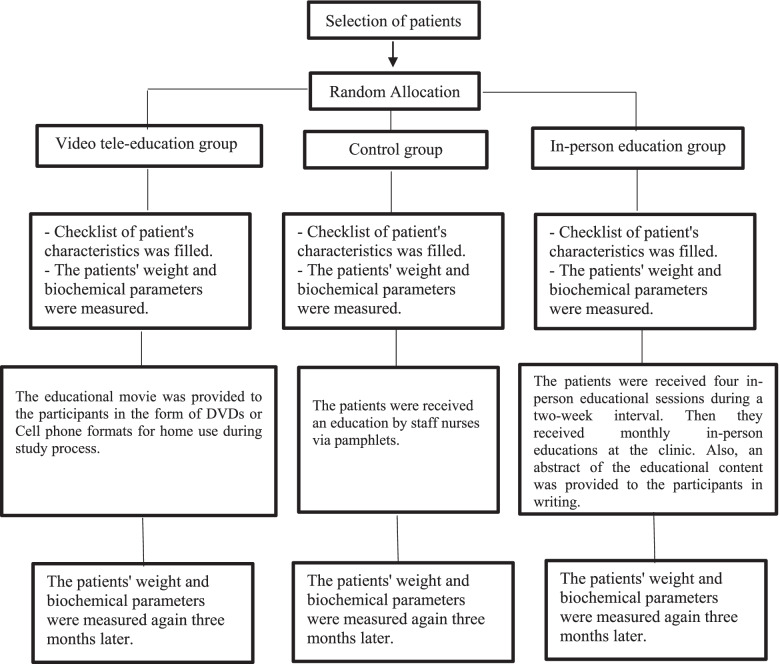
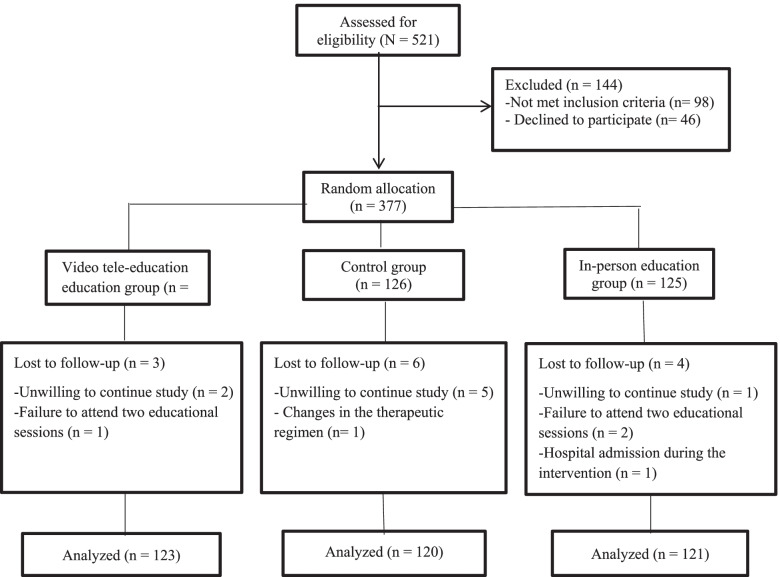
In this trial, 378 patients with type 2 diabetes mellitus (T2DM) were random allocated into video tele-education, in-person education and control groups. The patients' weight and biochemical parameters were measured before educational programs and three-month later.
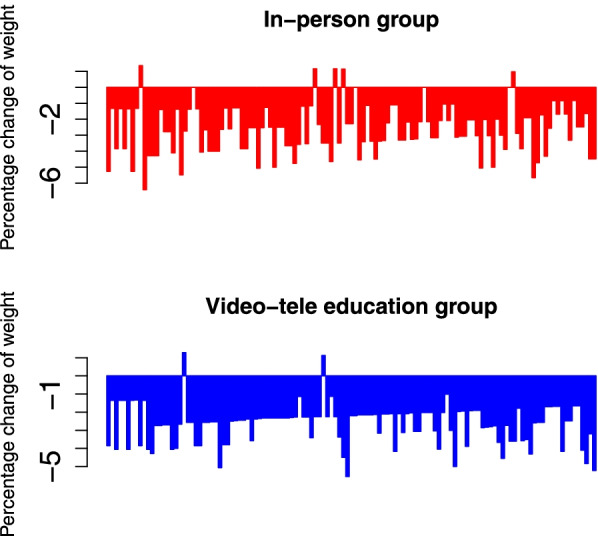
The mean changes of patients' weight, glycemic parameters, and Lipid profiles decreased more in the two educational groups than the control group in a three-month period. There were no significant differences in the all study variables between the in-person and video education groups in post interventions except Total Cholesterol (TC). The pre- and post-intervention changes in the weight, TC, hemoglobin A1c, Triglyceride, and Very Low-density Lipoprotein Cholesterol were significant in both in-person group and video group. None of the educational programs had a significant impact on the Fasting blood sugar, Low-Density Lipoprotein Cholesterol, and High-Density Lipoprotein Cholesterol.
Video tele-education was just as effective as in-person educational method on dietary regimen compliance among patients with T2DM in a three-month period. Therefore, it is recommended to use video tele-education in combination with or as an alternative to the in-person education method. This study provides support for diabetes educator.
This investigation was registered in the Iranian Registry of Clinical Trials Center ( IRCT20150302021307N4 ).
患者对饮食建议的依从性是糖尿病管理中最困难的部分。任何教育方法的本质都是提高患者的意识。但问题是,每种方法的效果如何,为此需要考虑比较方法。因此,本研究旨在比较面对面教育与视频远程教育对 2 型糖尿病患者饮食方案依从性的影响。
在这项试验中,将 378 例 2 型糖尿病患者随机分为视频远程教育组、面对面教育组和对照组。在教育计划之前和三个月后测量患者的体重和生化参数。
在三个月的时间里,与对照组相比,两个教育组的患者体重、血糖参数和血脂谱的平均值变化更大。在干预后,除总胆固醇(TC)外,面对面教育组和视频教育组在所有研究变量方面均无显著差异。在面对面组和视频组中,体重、TC、糖化血红蛋白、甘油三酯和极低密度脂蛋白胆固醇的干预前后变化均有统计学意义。两种教育方案均未对空腹血糖、低密度脂蛋白胆固醇和高密度脂蛋白胆固醇产生显著影响。
在三个月的时间内,视频远程教育与面对面教育方法一样有效,可以提高 2 型糖尿病患者的饮食方案依从性。因此,建议将视频远程教育与面对面教育方法结合使用或作为替代方法。本研究为糖尿病教育工作者提供了支持。
本研究在伊朗临床试验注册中心(IRCT20150302021307N4)注册。