Broad Institute of MIT and Harvard, Cambridge, MA 02142, USA; Center for Computational and Integrative Biology, Department of Molecular Biology, Massachusetts General Hospital, Harvard Medical School, Boston, MA 02114, USA.
Department of Biological Chemistry and Molecular Pharmacology, Harvard Medical School, Blavatnik Institute, Boston, MA 02115, USA.
Cell Host Microbe. 2023 Feb 8;31(2):173-186. doi: 10.1016/j.chom.2023.01.009.
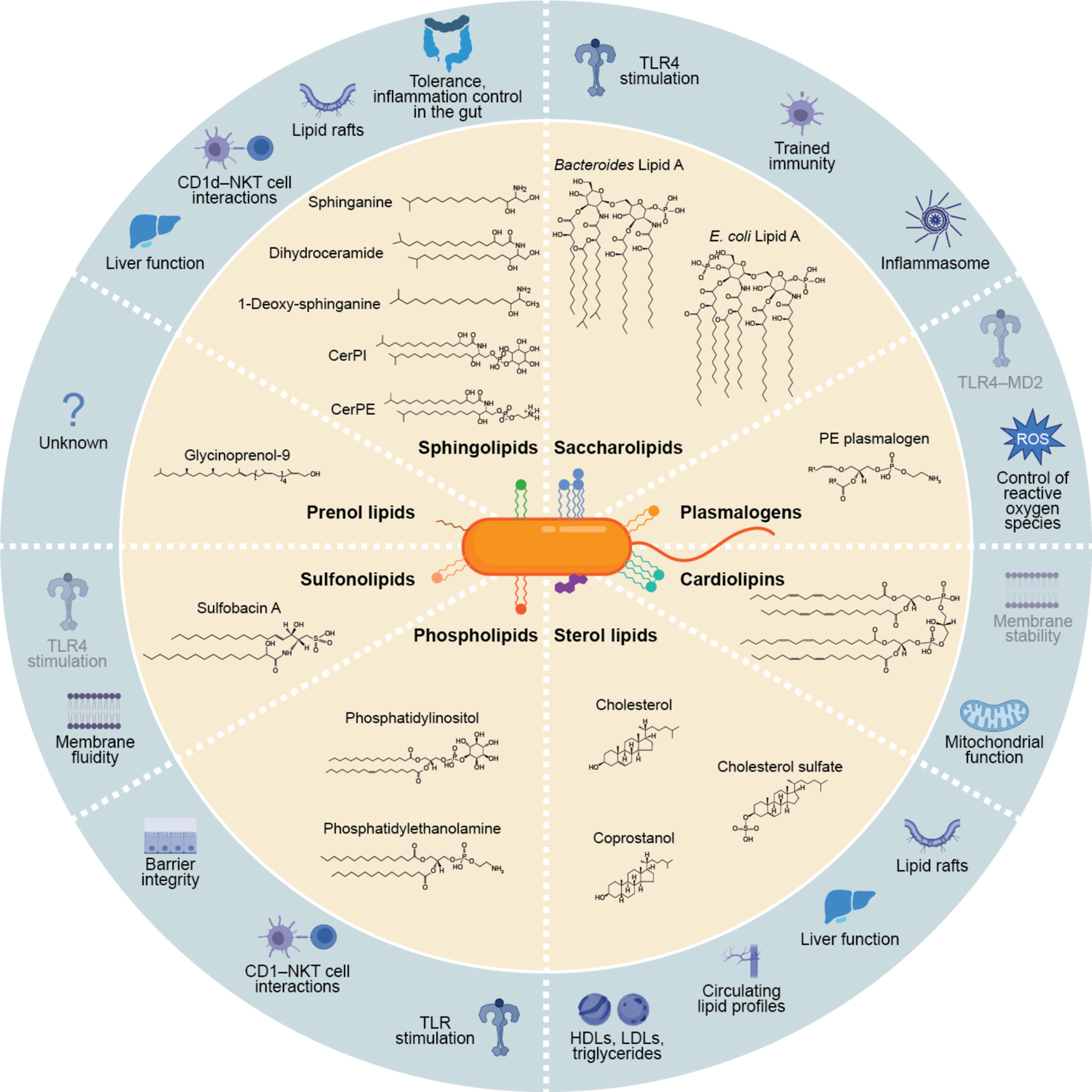
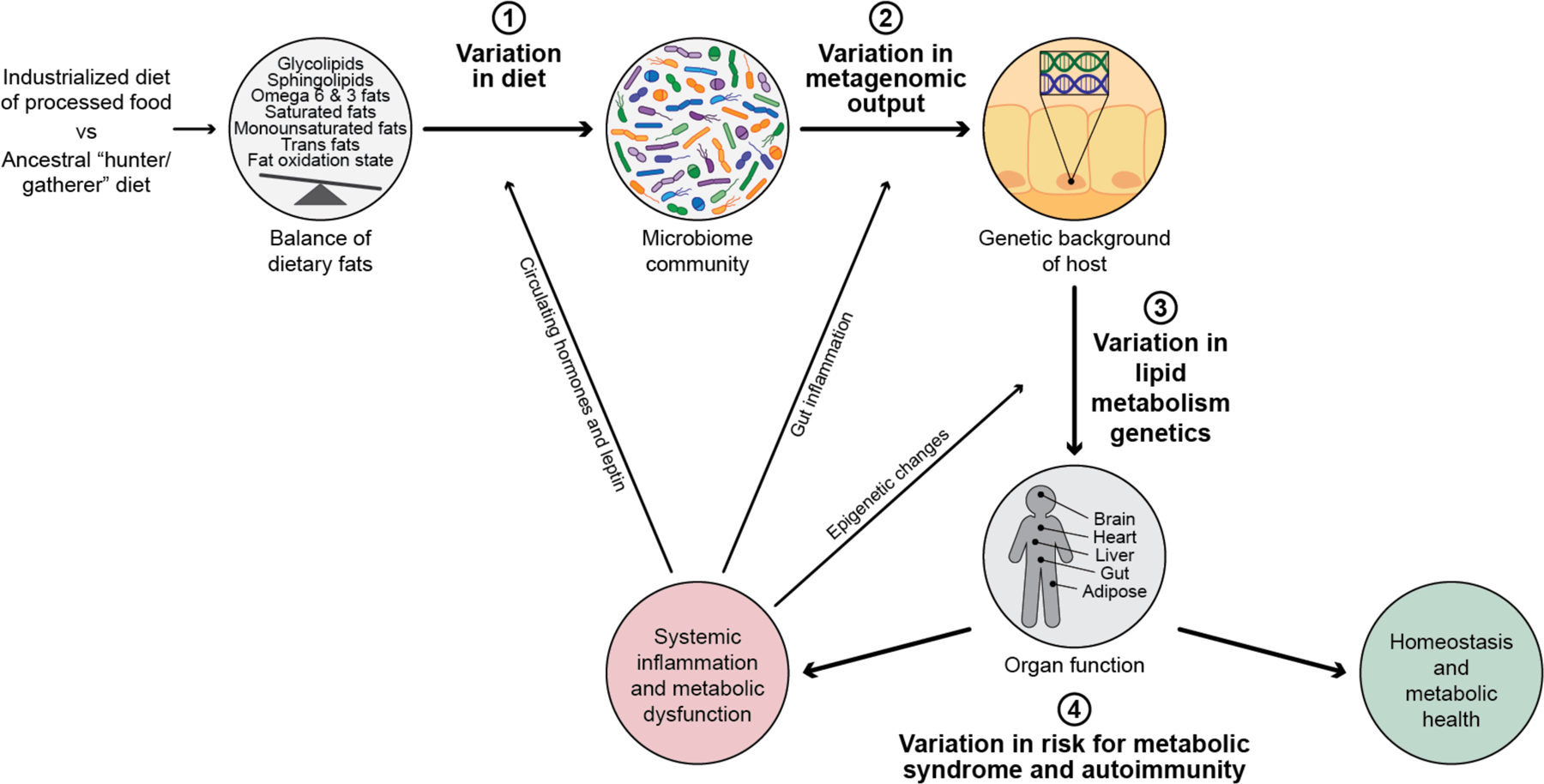
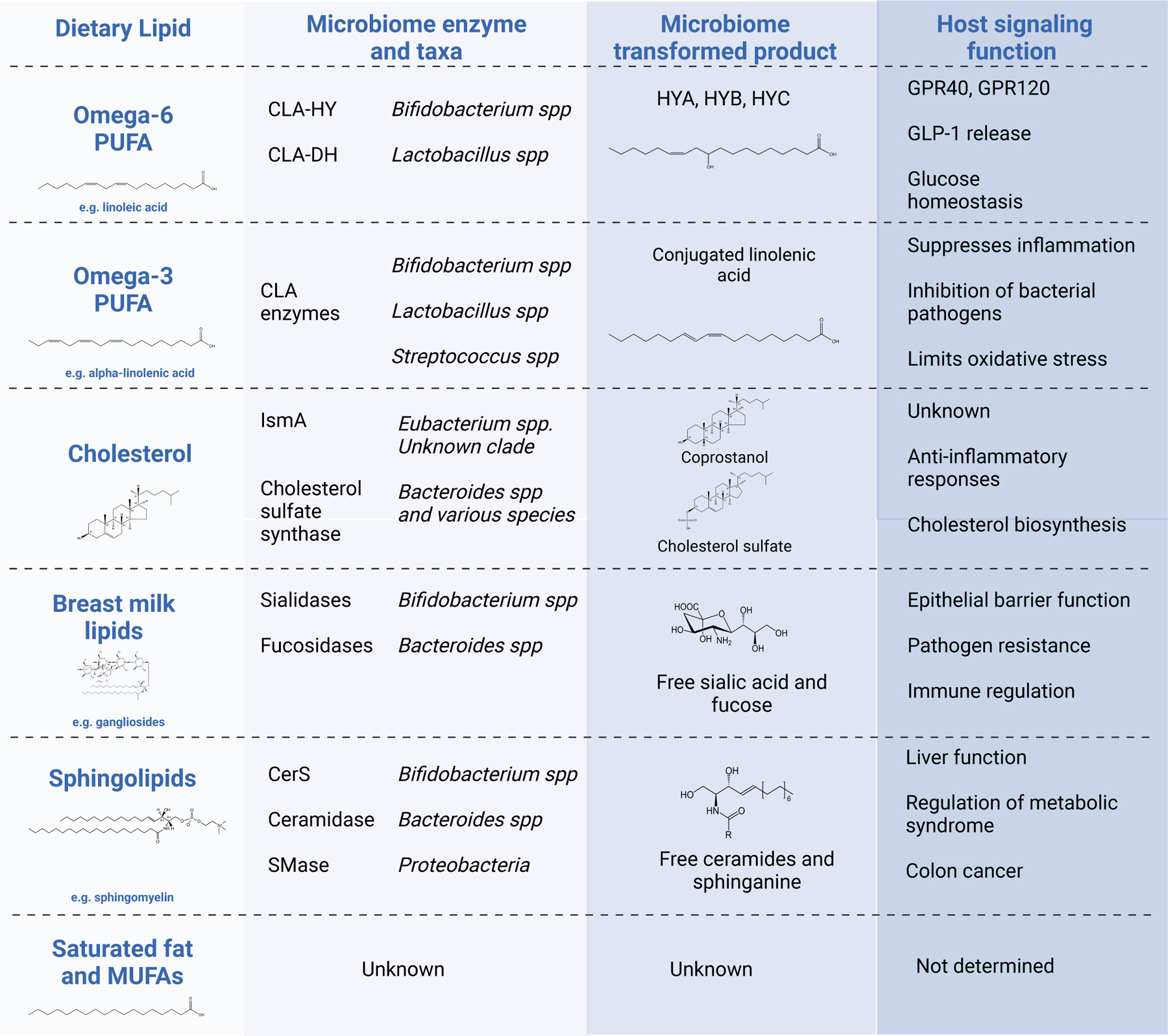
Metabolites produced by commensal gut microbes impact host health through their recognition by the immune system and their influence on numerous metabolic pathways. Notably, the gut microbiota can both transform and synthesize lipids as well as break down dietary lipids to generate secondary metabolites with host modulatory properties. Although lipids have largely been consigned to structural roles, particularly in cell membranes, recent research has led to an increased appreciation of their signaling activities, with potential impacts on host health and physiology. This review focuses on studies that highlight the functions of bioactive lipids in mammalian physiology, with a special emphasis on immunity and metabolism.
共生肠道微生物产生的代谢物通过免疫系统的识别及其对众多代谢途径的影响,对宿主健康产生影响。值得注意的是,肠道微生物群既能转化和合成脂质,又能分解膳食脂质,产生具有宿主调节特性的次级代谢物。尽管脂质在很大程度上被认为是结构成分,特别是在细胞膜中,但最近的研究增加了对其信号活性的认识,这可能对宿主健康和生理学产生影响。本综述重点介绍了生物活性脂质在哺乳动物生理学中的功能研究,特别强调了免疫和代谢。