West China School of Public Health and West China Fourth Hospital, Sichuan University, 16#, Section 3, Renmin Road South, 610041, Chengdu, Sichuan, China.
Chongqing Center for Disease Control and Prevention, Chongqing, China.
BMC Public Health. 2023 Feb 9;23(1):298. doi: 10.1186/s12889-023-15224-7.
Adiposity is widely recognized as one of the risk factors for high blood pressure (BP) and increasing adiposity is associated with elevated BP. However, which measures of adiposity could be most strongly associated with BP in multi-ethnic population remains uncertain, giving rise to implications that population-based adiposity measures could be necessary.
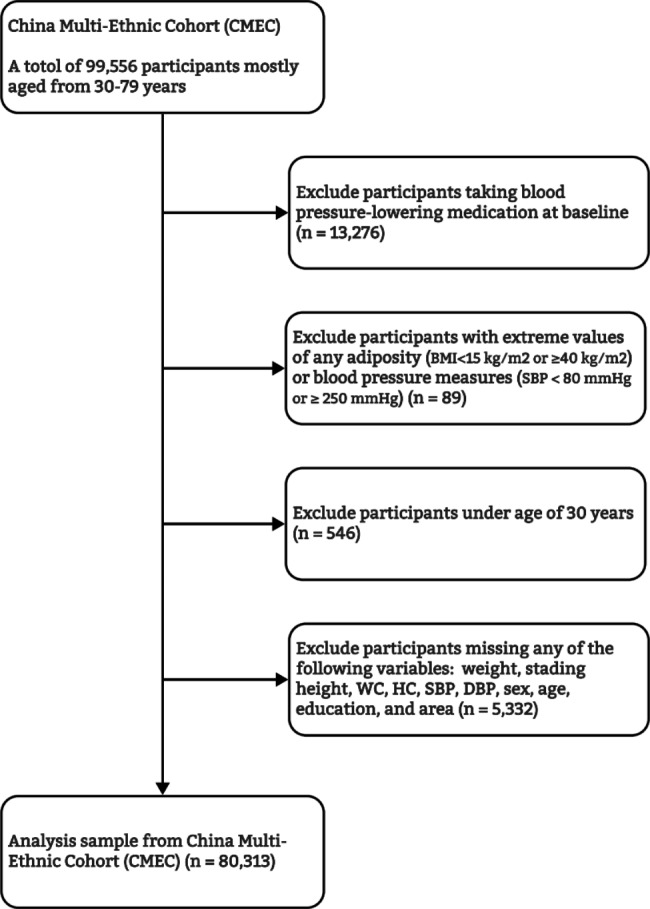
80,000 multi-ethnic adults recruited from 5 provinces across Southwest China during 2018 ~ 2019 were studied. Multiple linear regression was applied to investigate the associations of systolic blood pressure (SBP) with: (1) two measures of general adiposity, body mass index (BMI) and height-adjusted weight; and (2) three measures of central adiposity, waist circumference (WC), hip circumference (HC) and waist hip ratio (WHR).
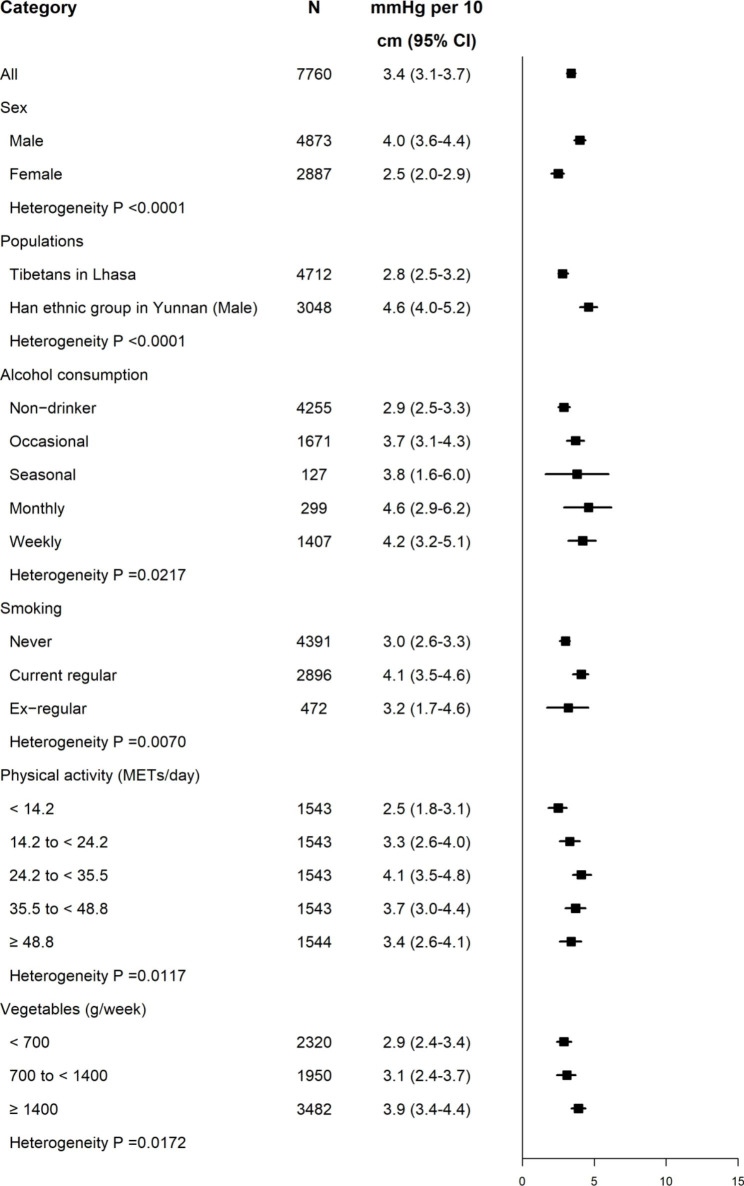
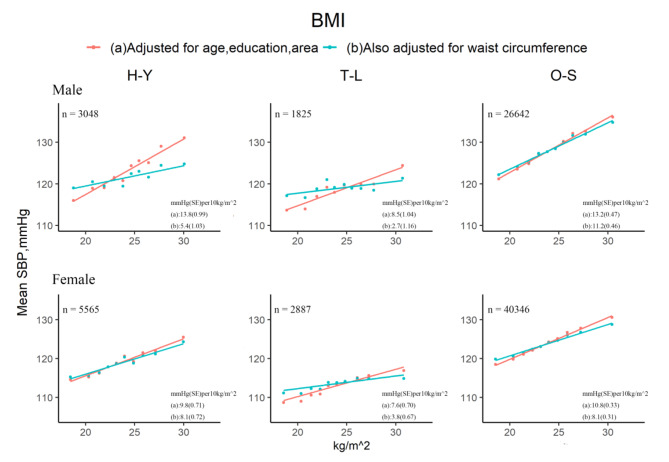
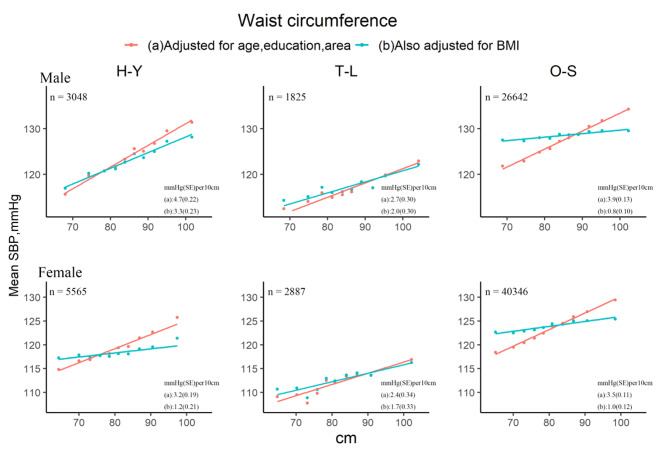
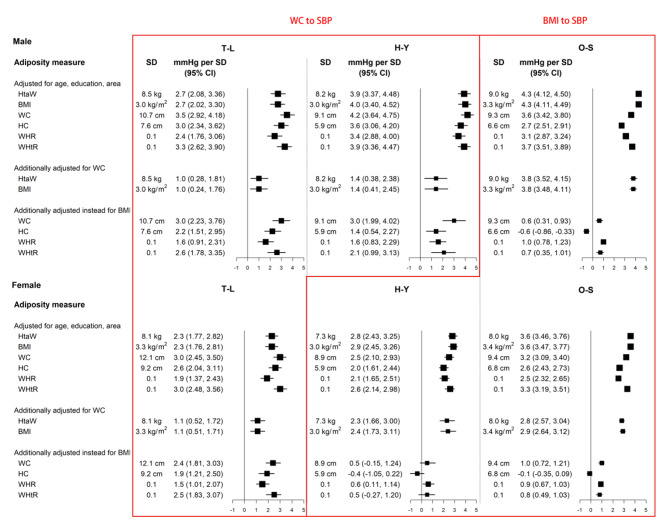
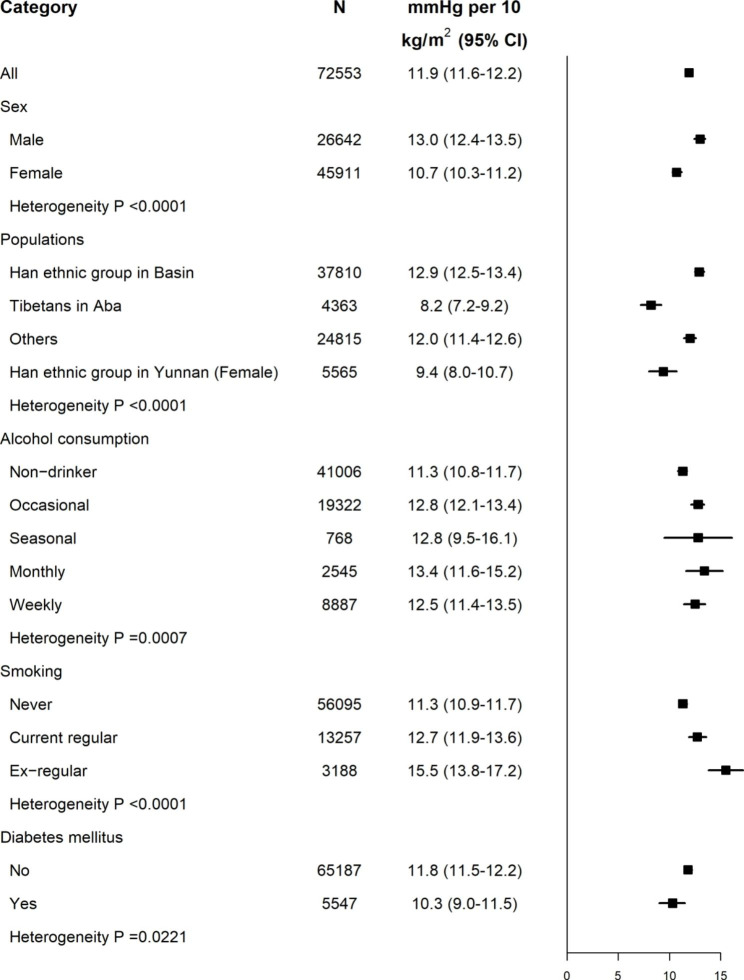
Two distinct population-specific patterns were identified, as "BMI to SBP" and "WC to SBP". 90% of the participants fall into "BMI to SBP" pattern, in which the associations of SBP with BMI were independent of WC, and SBP-WC associations were considerably decreased by adjustment for BMI. And in this pattern, 10 kg/m greater BMI was associated with 11.9 mm Hg higher SBP on average. As for the rest population (Han males in Yunnan and Tibetans in Lhasa), they are suited for "WC to SBP" pattern, 10 cm wider WC was associated with 3.4 mm Hg higher SBP.
Our results indicated that when selecting proper predictors for BP, population-specific adiposity measures are needed, considering ethnicity, sex and residing regions. A better understanding of adiposity and BP may better contribute to the potential clinical practices and developing precision application strategies.
肥胖被广泛认为是高血压(BP)的危险因素之一,随着肥胖程度的增加,BP 也会升高。然而,在多民族人群中,哪种肥胖指标与 BP 的相关性最强尚不确定,这表明基于人群的肥胖指标可能是必要的。
本研究纳入了 2018 年至 2019 年期间在中国西南部 5 个省份招募的 8 万名多民族成年人。采用多元线性回归分析探讨收缩压(SBP)与:(1)两种一般肥胖指标,即体重指数(BMI)和身高校正体重;(2)三种中心性肥胖指标,即腰围(WC)、臀围(HC)和腰臀比(WHR)的关系。
确定了两种独特的人群特异性模式,即“BMI 与 SBP”和“WC 与 SBP”。90%的参与者属于“BMI 与 SBP”模式,其中 SBP 与 BMI 的关系独立于 WC,并且 SBP-WC 关系在调整 BMI 后显著降低。在这种模式下,BMI 每增加 10kg/m,SBP 平均升高 11.9mmHg。对于其余人群(云南汉族男性和拉萨藏族),他们适合“WC 与 SBP”模式,WC 每增加 10cm,SBP 升高 3.4mmHg。
我们的研究结果表明,在选择 BP 的适当预测指标时,需要考虑种族、性别和居住地区等因素,选择人群特异性的肥胖指标。更好地了解肥胖和 BP 可能会更好地为潜在的临床实践和开发精准应用策略做出贡献。