Arizona College of Osteopathic Medicine, Midwestern University, Glendale, Arizona, USA.
Center for Health Promotion and Disease Prevention, Edson College of Nursing and Health Innovation, Arizona State University, Phoenix, Arizona, USA.
Obesity (Silver Spring). 2023 Mar;31(3):665-692. doi: 10.1002/oby.23663. Epub 2023 Feb 10.
Little is known about sex differences in response to lifestyle interventions among pediatric populations. The purpose of this analysis was to evaluate sex differences in adiposity following lifestyle interventions among children and adolescents with overweight or obesity aged 6 to 18 years old.
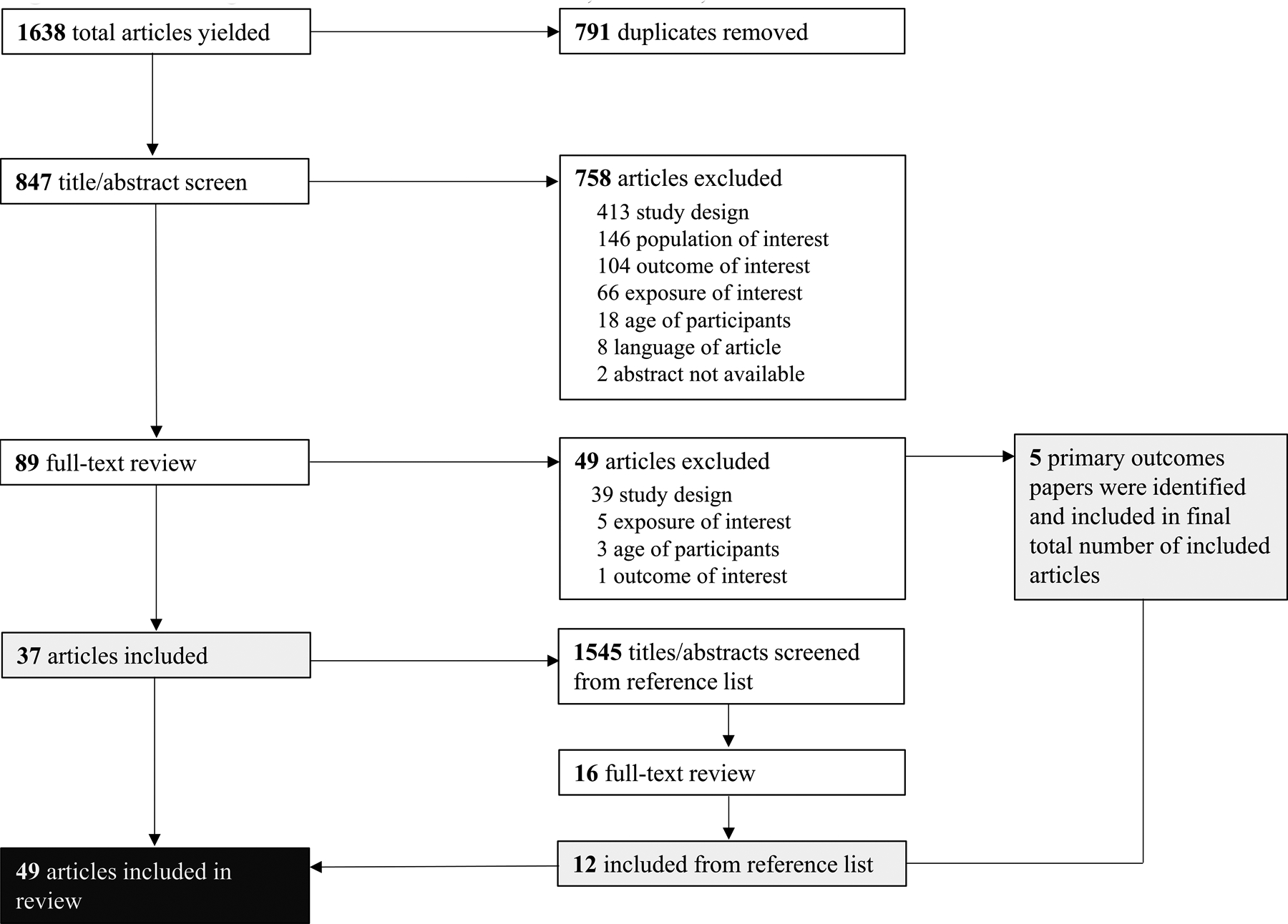
Searches were conducted in PubMed, Web of Science, and MEDLINE (from inception to March 2021), and references from included articles were examined. Eligibility criteria included children and adolescents aged 6 to 18 years with overweight or obesity, randomization to a lifestyle intervention versus a control group, and assessment of at least one adiposity measure. Corresponding authors were contacted to obtain summary statistics by sex (n = 14/49).
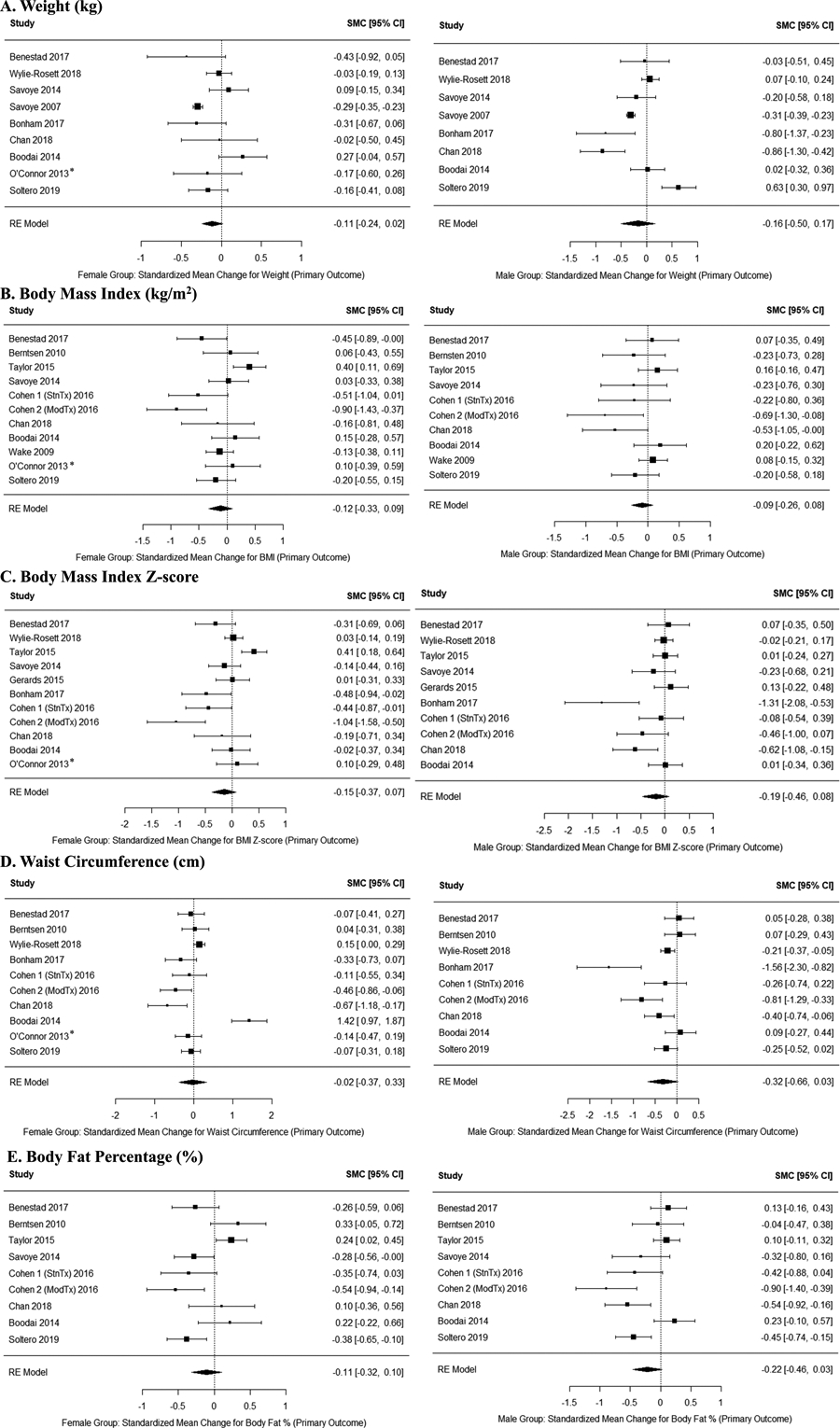
Of 89 full-text articles reviewed, 49 (55%) were included, of which 33 (67%) reported statistically significant intervention effects on adiposity. Only two studies (4%) evaluated sex differences in response to lifestyle intervention, reporting conflicting results. The results of the meta-regression models demonstrated no significant differences in the treatment effect between male and female youth for weight (beta = -0.05, SE = 0.18, z = -0.28, p = 0.8), BMI (beta = 0.03, SE = 0.14, z = 0.19, p = 0.85), BMI z score (beta = -0.04, SE = 0.18, z = -0.23, p = 0.82), percentage body fat (beta = -0.11, SE = 0.16, z = -0.67, p = 0.51), and waist circumference (beta = -0.30, SE = 0.25, z = -1.18, p = 0.24).
The meta-analysis revealed that youth with overweight or obesity do not demonstrate a differential response to lifestyle intervention in relation to adiposity-related outcomes.
对于儿科人群,生活方式干预的反应在性别上的差异知之甚少。本分析的目的是评估超重或肥胖的 6 至 18 岁儿童和青少年接受生活方式干预后肥胖的性别差异。
在 PubMed、Web of Science 和 MEDLINE(从创建到 2021 年 3 月)中进行了检索,并检查了纳入文章的参考文献。纳入标准包括年龄在 6 至 18 岁之间的超重或肥胖的儿童和青少年、随机分为生活方式干预组与对照组、以及评估至少一项肥胖指标。联系相应的作者以按性别(n=14/49)获取汇总统计数据。
在审查的 89 篇全文文章中,有 49 篇(55%)被纳入,其中 33 篇(67%)报告了生活方式干预对肥胖有统计学意义的干预效果。只有两项研究(4%)评估了生活方式干预对性别的反应差异,报告了相互矛盾的结果。荟萃回归模型的结果表明,男性和女性青少年在体重(beta=-0.05,SE=0.18,z=-0.28,p=0.8)、BMI(beta=0.03,SE=0.14,z=-0.19,p=0.85)、BMI z 评分(beta=-0.04,SE=0.18,z=-0.23,p=0.82)、体脂百分比(beta=-0.11,SE=0.16,z=-0.67,p=0.51)和腰围(beta=-0.30,SE=0.25,z=-1.18,p=0.24)方面的治疗效果无显著差异。
荟萃分析显示,超重或肥胖的青少年在与肥胖相关的结果方面,对生活方式干预的反应没有差异。