Buatong Jirayu, Mittal Ajay, Mittraparp-Arthorn Pimonsri, Palamae Suriya, Saetang Jirakrit, Benjakul Soottawat
International Center of Excellence in Seafood Science and Innovation, Faculty of Agro-Industry, Prince of Songkla University, Hat Yai 90110, Songkhla, Thailand.
Division of Biological Science, Faculty of Science, Prince of Songkla University, Hat Yai 90110, Songkhla, Thailand.
Foods. 2023 Feb 2;12(3):634. doi: 10.3390/foods12030634.
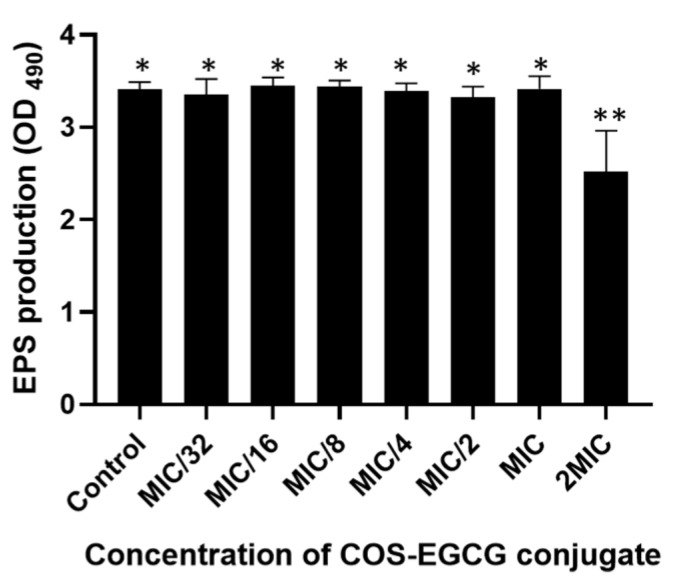
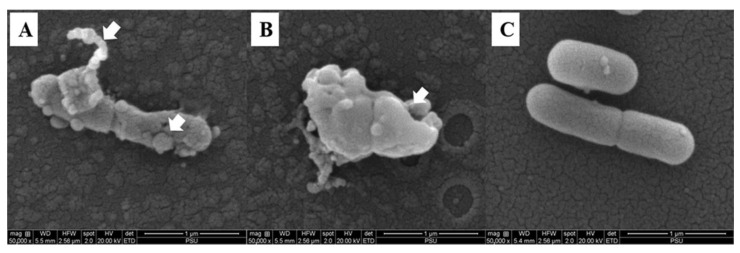
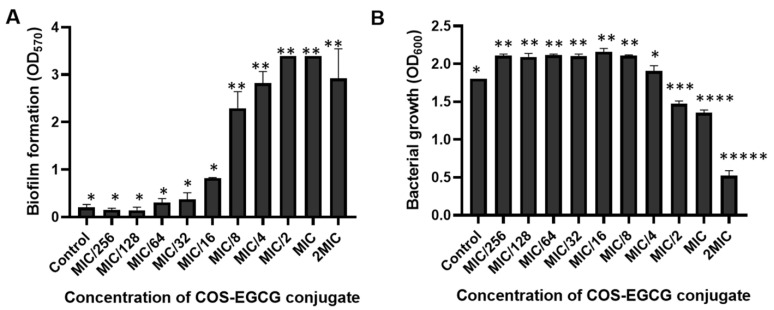
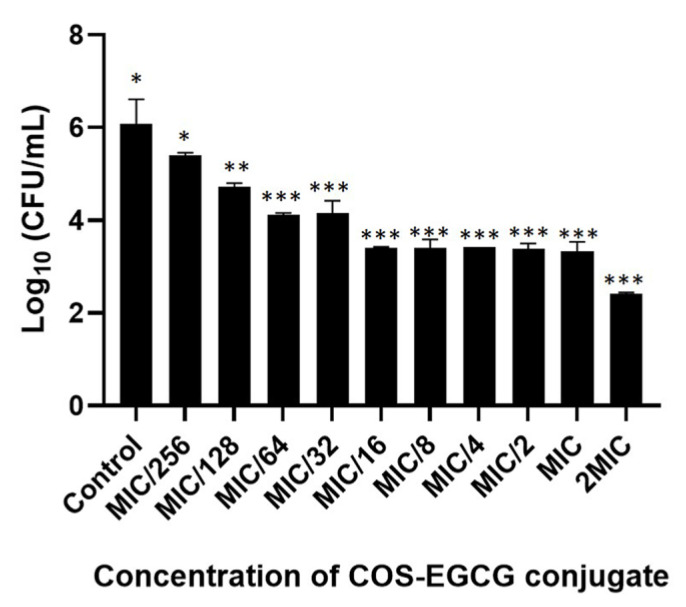
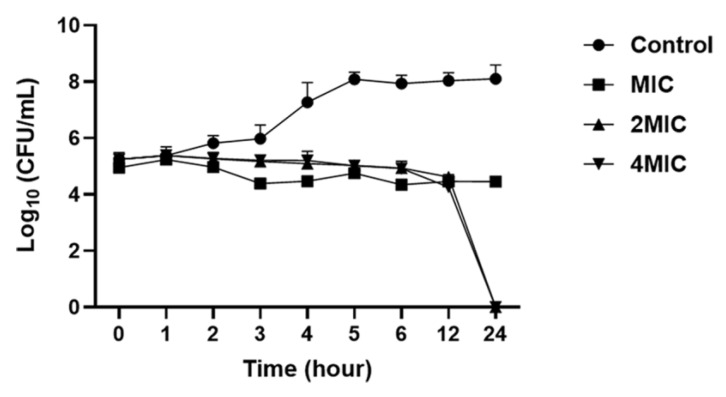
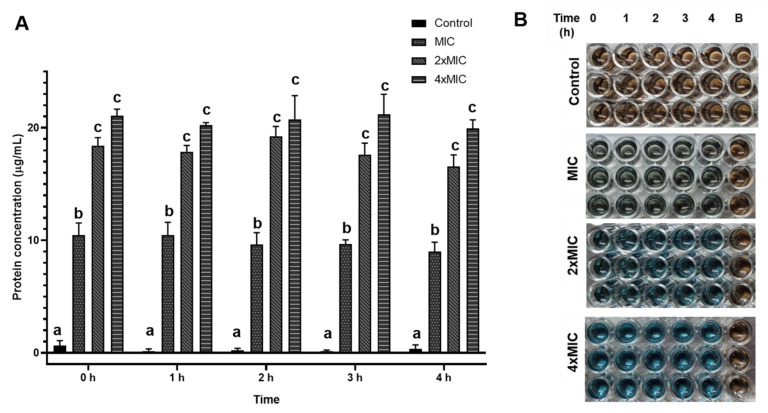
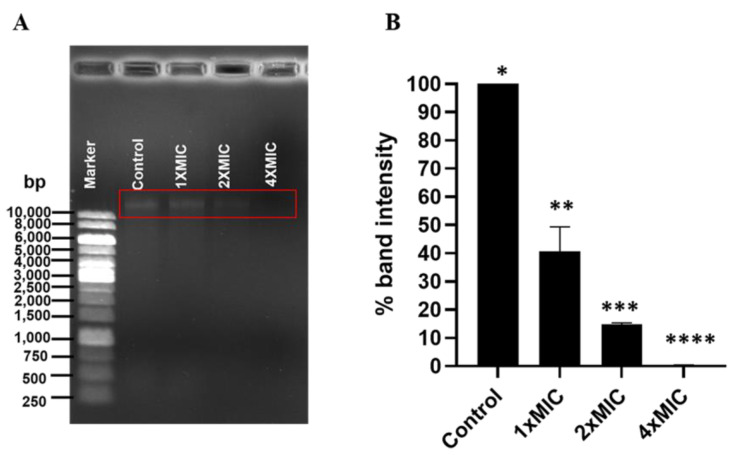
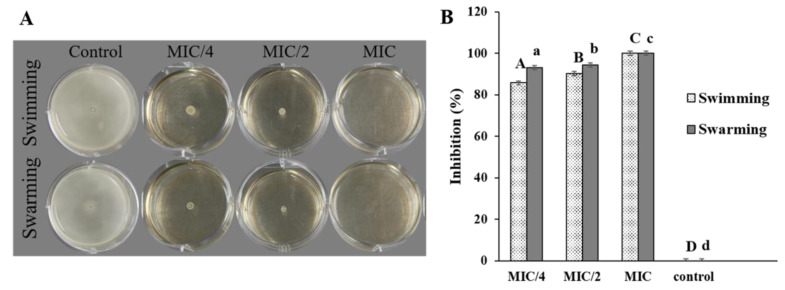
The antibacterial effect of chitooligosaccharide conjugated with five different polyphenols, including catechin (COS-CAT), epigallocatechin gallate (COS-EGCG), gallic acid (COS-GAL), caffeic acid (COS-CAF), and ferulic acid (COS-FER), against was investigated. Among all the conjugates tested, COS-EGCG showed the highest inhibition toward , with a minimum inhibitory concentration (MIC) and minimum bactericidal concentration (MBC) of 1024 and 1024 µg/mL, respectively. The COS-EGCG conjugate also had a bactericidal effect on the environmental and clinical strains of . The low concentration of COS-EGCG conjugate augmented the formation of biofilm and the growth of . Nevertheless, the inhibition of biofilm formation and bacterial growth was achieved when treated with the COS-EGCG conjugate at 2 × MIC for 48 h. In addition, the COS-EGCG conjugate at 2 × MIC had the potential to inactivate the pre-biofilm, and it reduced the production of the extracellular polysaccharides of . The COS-EGCG conjugate at the MIC/4 effectively impeded the motility (the swimming and swarming) of , with an 85.7-94.3% inhibition, while 100% inhibition was achieved with the MIC. Based on scanning electron microscopic (SEM) images, cell wall damage with numerous pores on the cell surface was observed. Such cell distortion resulted in protein leakage. As a result, COS-EGCG could penetrate into the cell and bind with the DNA backbone. Therefore, the COS-EGCG conjugate could be further developed as a natural antimicrobial agent for inhibiting or controlling .
研究了壳寡糖与五种不同多酚(包括儿茶素(COS-CAT)、表没食子儿茶素没食子酸酯(COS-EGCG)、没食子酸(COS-GAL)、咖啡酸(COS-CAF)和阿魏酸(COS-FER))结合物对[具体对象未给出]的抗菌效果。在所有测试的结合物中,COS-EGCG对[具体对象未给出]表现出最高的抑制作用,其最低抑菌浓度(MIC)和最低杀菌浓度(MBC)分别为1024和1024μg/mL。COS-EGCG结合物对[具体对象未给出]的环境菌株和临床菌株也有杀菌作用。低浓度的COS-EGCG结合物促进了生物膜的形成和[具体对象未给出]的生长。然而,当用2×MIC的COS-EGCG结合物处理48小时时,实现了对生物膜形成和细菌生长的抑制。此外,2×MIC的COS-EGCG结合物有使生物膜前体失活的潜力,并减少了[具体对象未给出]细胞外多糖的产生。MIC/4的COS-EGCG结合物有效阻碍了[具体对象未给出]的运动性(游动和群游),抑制率为85.7 - 94.3%,而MIC时抑制率达到100%。基于扫描电子显微镜(SEM)图像,观察到细胞表面有许多孔的细胞壁损伤。这种细胞变形导致蛋白质泄漏。因此,COS-EGCG可以渗透到细胞内并与DNA主链结合。所以,COS-EGCG结合物可进一步开发为抑制或控制[具体对象未给出]的天然抗菌剂。