Institute of Molecular Genetics and Genetic Engineering, University of Belgrade, Vojvode Stepe 444a, 11042 Belgrade, Serbia.
Faculty of Agriculture, University of Belgrade, Nemanjina 6, 11080 Belgrade, Serbia.
Int J Mol Sci. 2023 Jan 18;24(3):1906. doi: 10.3390/ijms24031906.
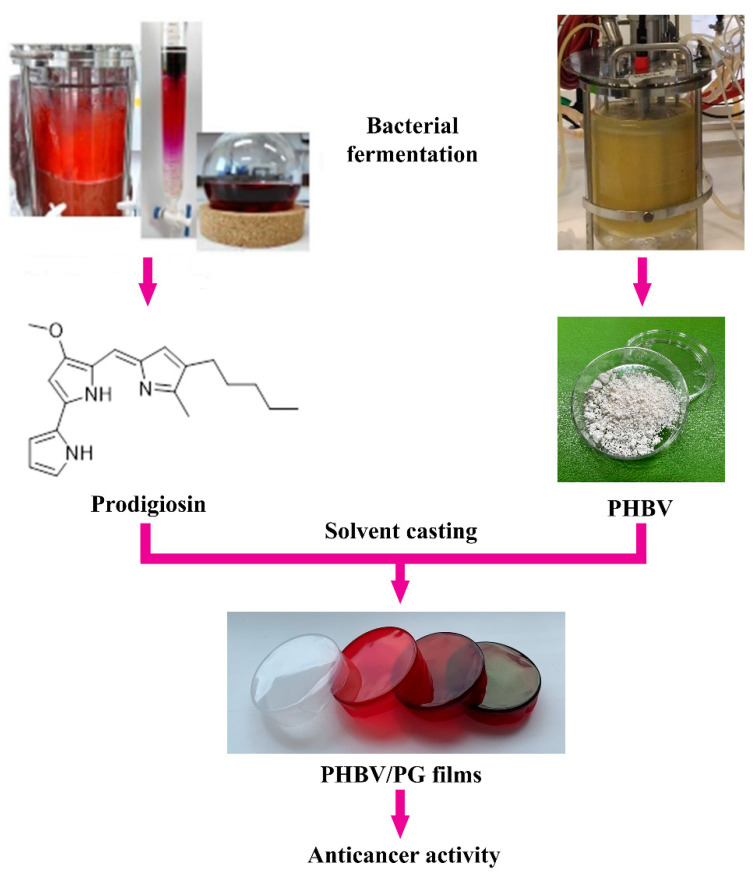
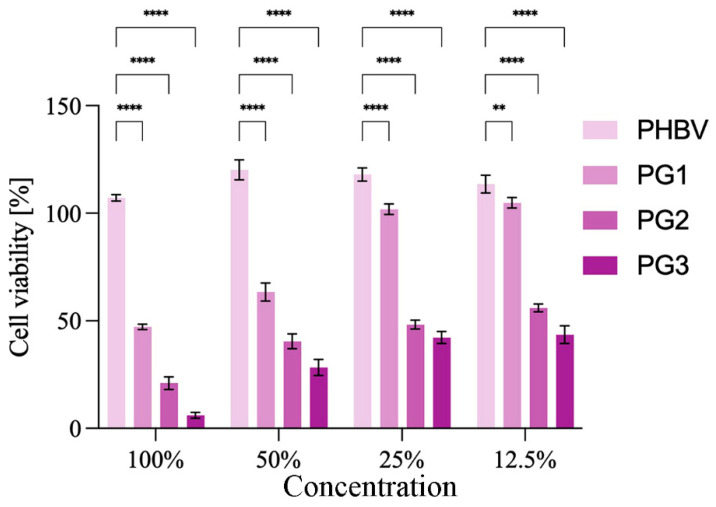
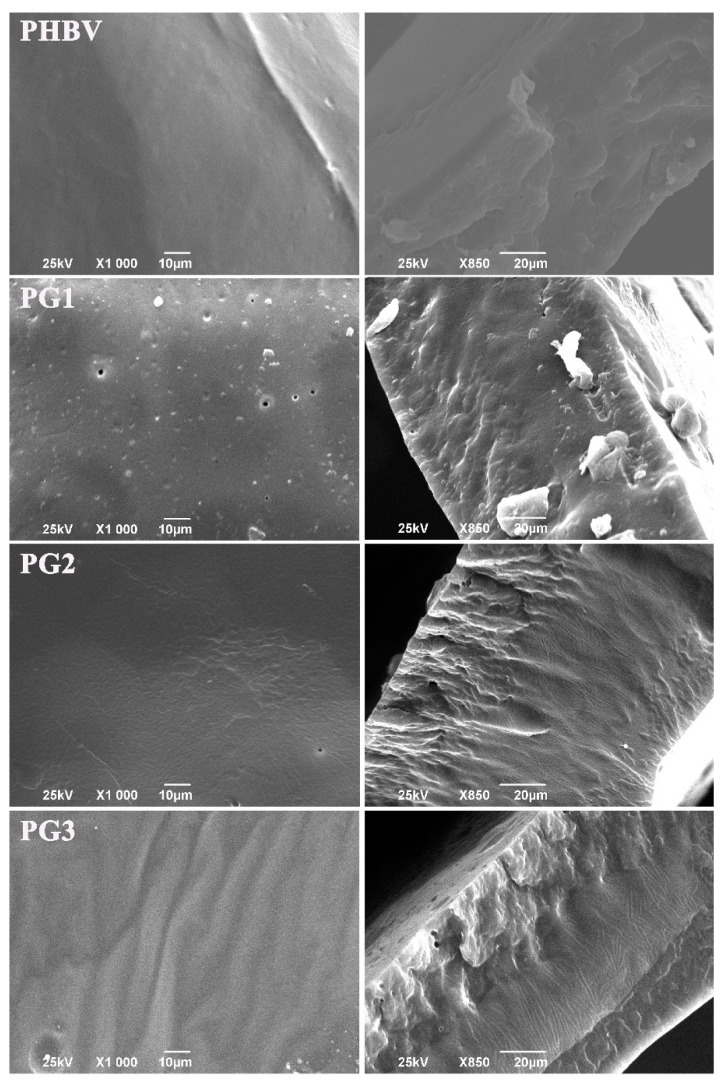
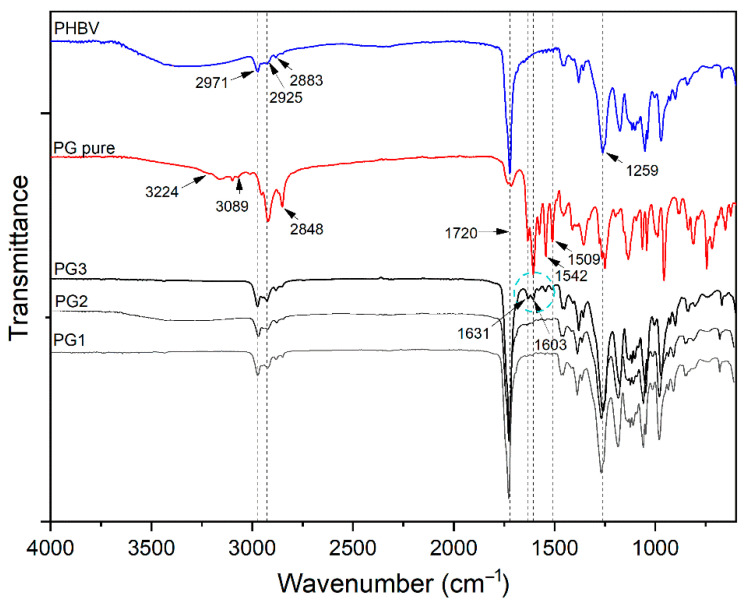
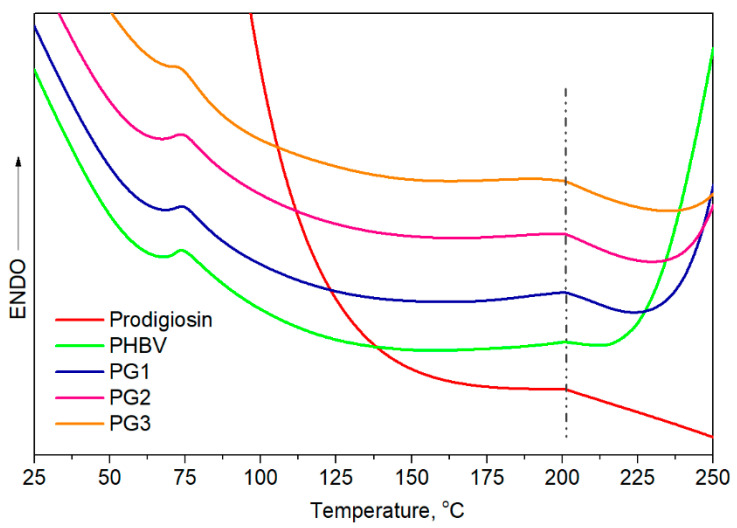
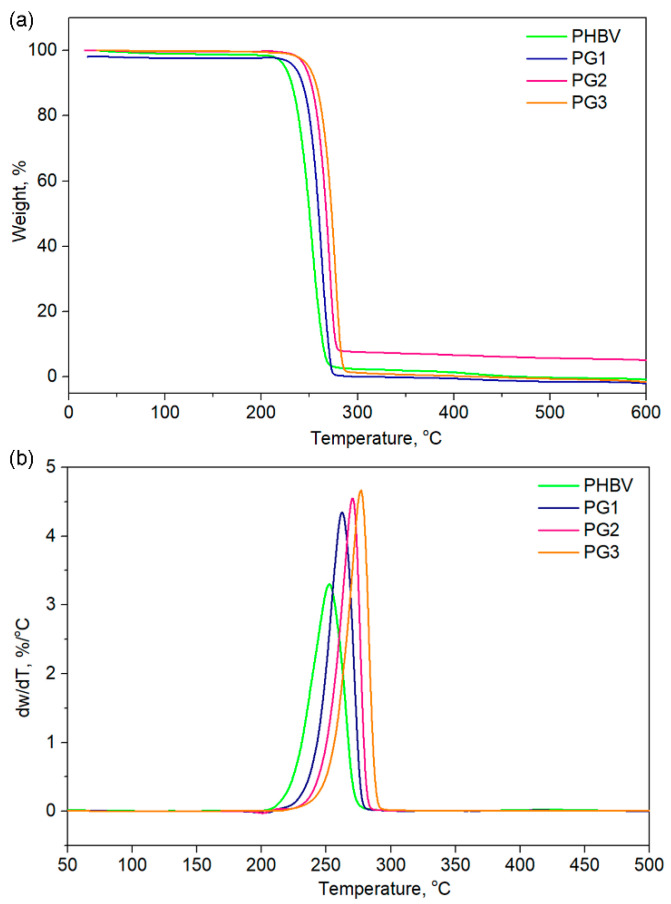
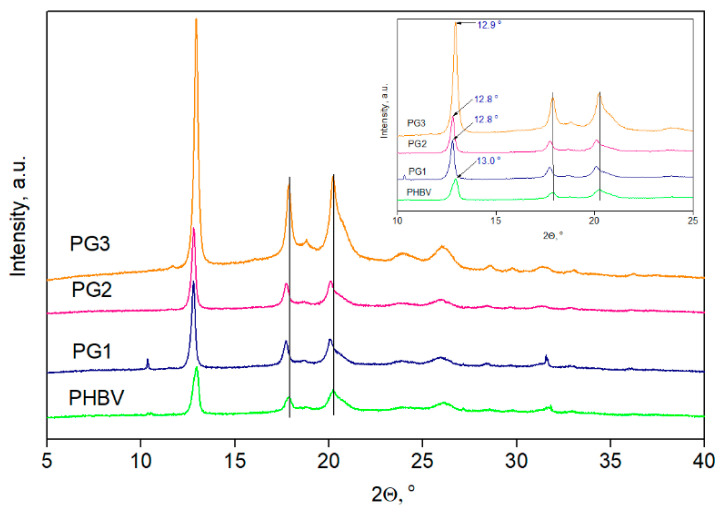
The quest for sustainable biomaterials with excellent biocompatibility and tailorable properties has put polyhydroxyalkanoates (PHAs) into the research spotlight. However, high production costs and the lack of bioactivity limit their market penetration. To address this, poly(3-hydroxybutyrate-co-3-hydroxyvalerate) (PHBV) was combined with a bacterial pigment with strong anticancer activity, prodigiosin (PG), to obtain functionally enhanced PHBV-based biomaterials. The samples were produced in the form of films 115.6-118.8 µm in thickness using the solvent casting method. The effects of PG incorporation on the physical properties (morphology, biopolymer crystallinity and thermal stability) and functionality of the obtained biomaterials were investigated. PG has acted as a nucleating agent, in turn affecting the degree of crystallinity, thermal stability and morphology of the films. All samples with PG had a more organized internal structure and higher melting and degradation temperatures. The calculated degree of crystallinity of the PHBV copolymer was 53%, while the PG1, PG3 and PG3 films had values of 64.0%, 63.9% and 69.2%, respectively. Cytotoxicity studies have shown the excellent anticancer activity of films against HCT116 (colon cancer) cells, thus advancing PHBV biomedical application potential.
追求具有优异生物相容性和可调节性能的可持续生物材料,使聚羟基烷酸酯(PHA)成为研究热点。然而,高生产成本和缺乏生物活性限制了它们的市场渗透。为了解决这个问题,将聚(3-羟基丁酸酯-co-3-羟基戊酸酯)(PHBV)与一种具有强抗癌活性的细菌色素灵菌红素(PG)结合,获得功能增强的基于 PHBV 的生物材料。采用溶剂浇铸法将样品制成厚度为 115.6-118.8μm 的薄膜。研究了 PG 掺入对所得生物材料的物理性能(形态、生物聚合物结晶度和热稳定性)和功能的影响。PG 充当成核剂,从而影响薄膜的结晶度、热稳定性和形态。所有含有 PG 的样品都具有更有序的内部结构和更高的熔融和降解温度。PHBV 共聚物的计算结晶度为 53%,而 PG1、PG3 和 PG3 薄膜的结晶度分别为 64.0%、63.9%和 69.2%。细胞毒性研究表明,薄膜对 HCT116(结肠癌)细胞具有优异的抗癌活性,从而提高了 PHBV 在生物医学中的应用潜力。