Institute of Cell Biophysics of the Russian Academy of Sciences, Federal Research Center "Pushchino Scientific Center for Biological Research of the Russian Academy of Sciences", 142290 Pushchino, Russia.
Prokhorov General Physics Institute of the Russian Academy of Sciences, 38 Vavilove st., 119991 Moscow, Russia.
Int J Mol Sci. 2023 Jan 26;24(3):2411. doi: 10.3390/ijms24032411.
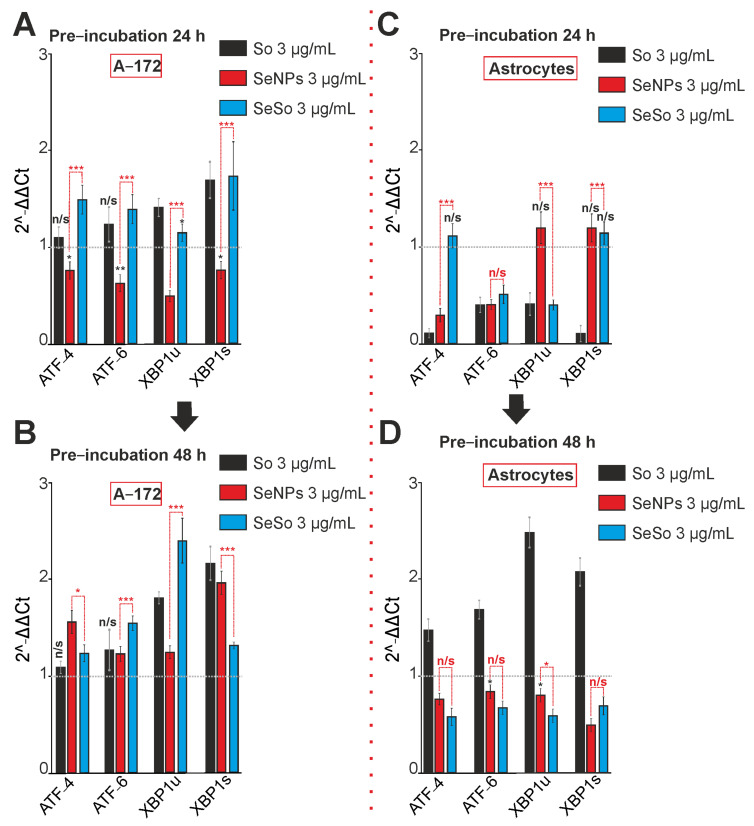
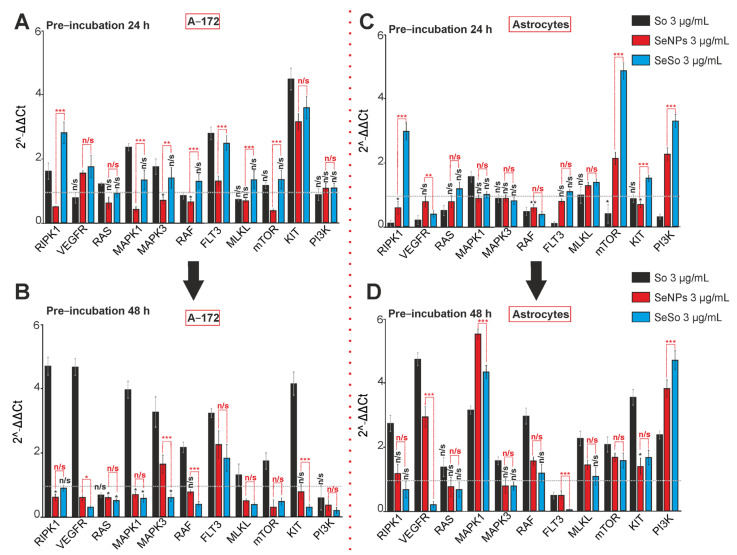
Despite the fact that sorafenib is recommended for the treatment of oncological diseases of the liver, kidneys, and thyroid gland, and recently it has been used for combination therapy of brain cancer of various genesis, there are still significant problems for its widespread and effective use. Among these problems, the presence of the blood-brain barrier of the brain and the need to use high doses of sorafenib, the existence of mechanisms for the redistribution of sorafenib and its release in the brain tissue, as well as the high resistance of gliomas and glioblastomas to therapy should be considered the main ones. Therefore, there is a need to create new methods for delivering sorafenib to brain tumors, enhancing the therapeutic potential of sorafenib and reducing the cytotoxic effects of active compounds on the healthy environment of tumors, and ideally, increasing the survival of healthy cells during therapy. Using vitality tests, fluorescence microscopy, and molecular biology methods, we showed that the selenium-sorafenib (SeSo) nanocomplex, at relatively low concentrations, is able to bypass the mechanisms of glioblastoma cell chemoresistance and to induce apoptosis through Ca-dependent induction of endoplasmic reticulum stress, changes in the expression of selenoproteins and selenium-containing proteins, as well as key kinases-regulators of oncogenicity and cell death. Selenium nanoparticles (SeNPs) also have a high anticancer efficacy in glioblastomas, but are less selective, since SeSo in cortical astrocytes causes a more pronounced activation of the cytoprotective pathways.
尽管索拉非尼被推荐用于治疗肝脏、肾脏和甲状腺的肿瘤疾病,并且最近已被用于各种起源的脑癌的联合治疗,但它的广泛和有效使用仍然存在重大问题。在这些问题中,脑内血脑屏障的存在和需要使用高剂量的索拉非尼、索拉非尼再分布及其在脑组织中释放的机制以及神经胶质瘤和胶质母细胞瘤对治疗的高度耐药性应被认为是主要问题。因此,需要创造将索拉非尼递送到脑肿瘤的新方法,增强索拉非尼的治疗潜力并降低活性化合物对肿瘤健康环境的细胞毒性作用,并且在理想情况下,在治疗过程中增加健康细胞的存活率。使用活力测试、荧光显微镜和分子生物学方法,我们表明,硒-索拉非尼(SeSo)纳米复合物在相对较低的浓度下,能够绕过神经胶质瘤细胞化疗耐药的机制,并通过 Ca 依赖性内质网应激诱导、硒蛋白和含硒蛋白表达的变化以及致癌性和细胞死亡的关键激酶调节剂诱导细胞凋亡。硒纳米颗粒(SeNPs)在神经胶质瘤中也具有很高的抗癌功效,但选择性较低,因为 SeSo 在皮质星形胶质细胞中引起更明显的细胞保护途径的激活。