State Key Laboratory of Biotherapy and Cancer Center, West China Hospital, Sichuan University, and Collaborative Innovation Center for Biotherapy, Chengdu, 610041, P.R. China.
West China School of Basic Medical Sciences & Forensic Medicine, Sichuan University, Chengdu, 610041, P.R. China.
Signal Transduct Target Ther. 2023 Feb 15;8(1):65. doi: 10.1038/s41392-022-01266-7.
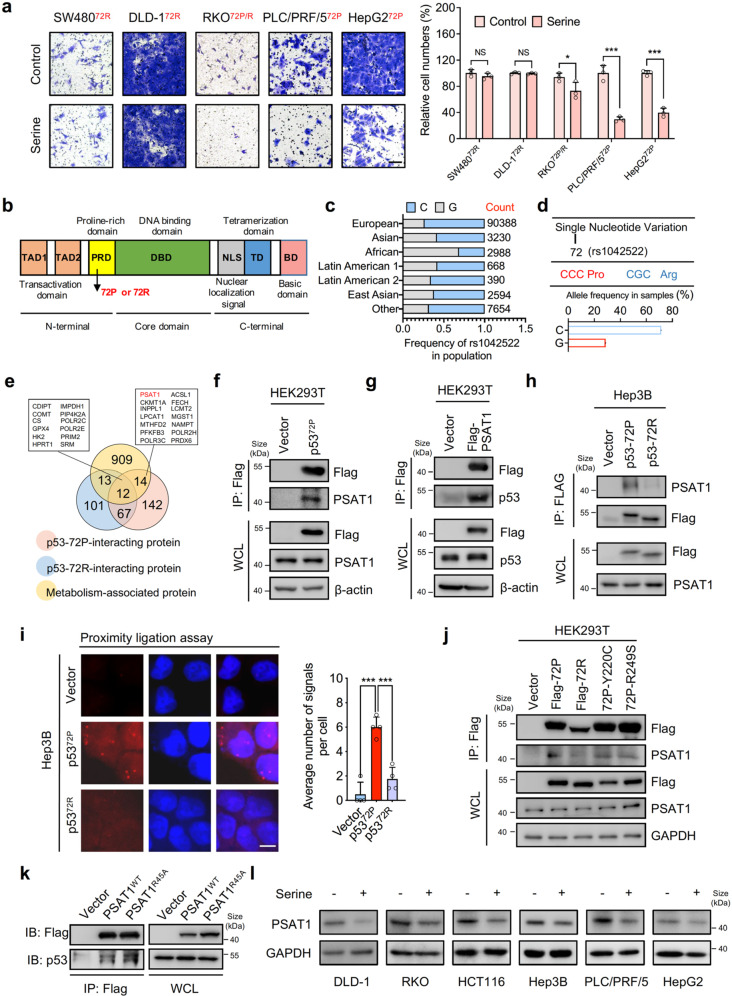
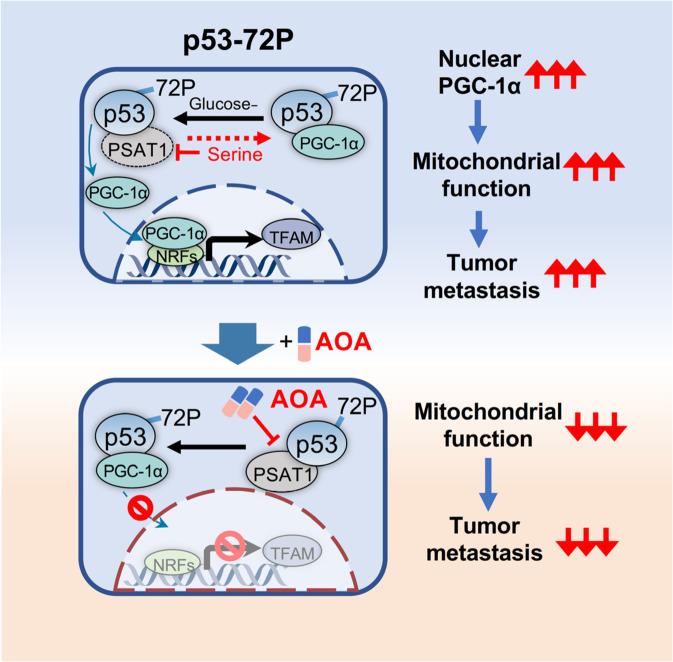
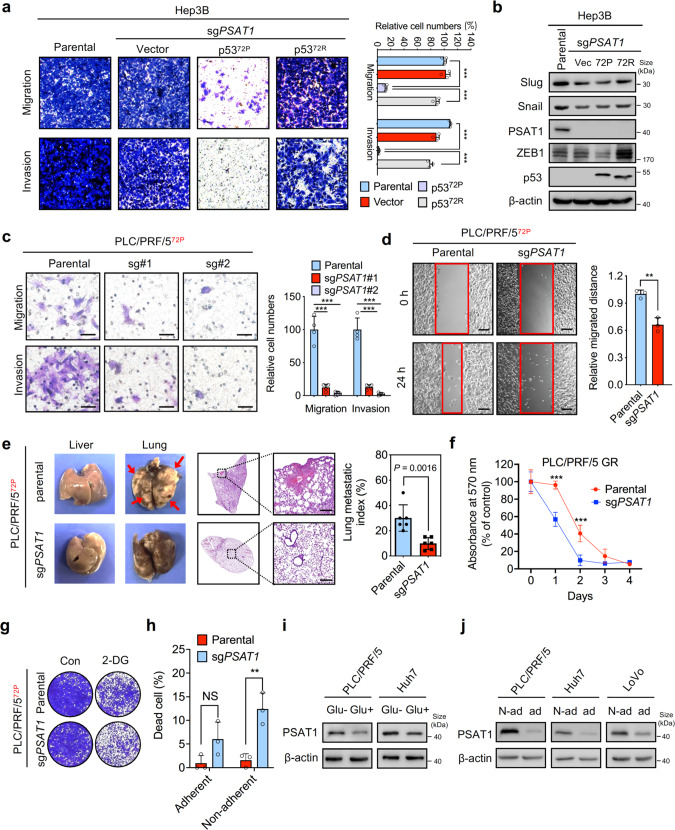
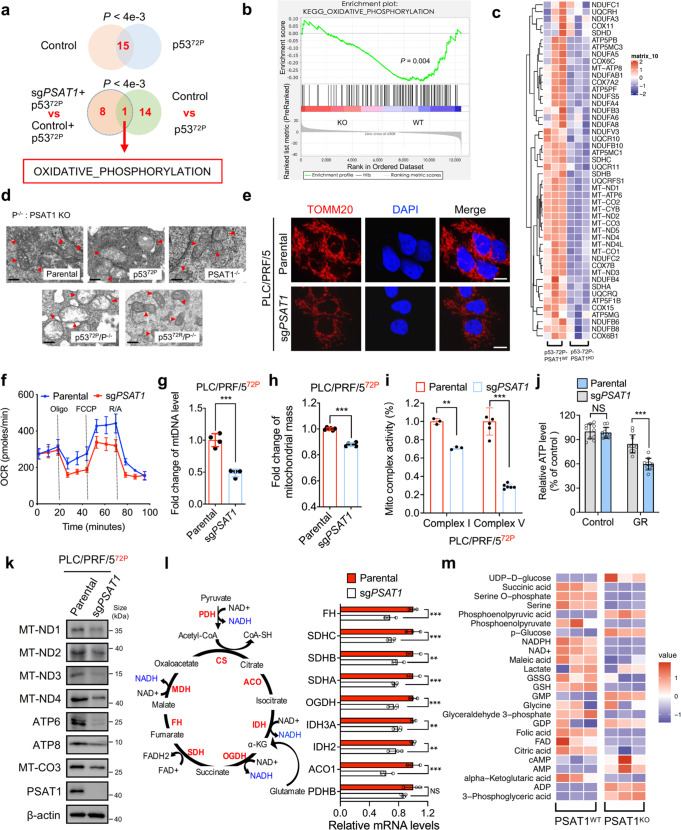
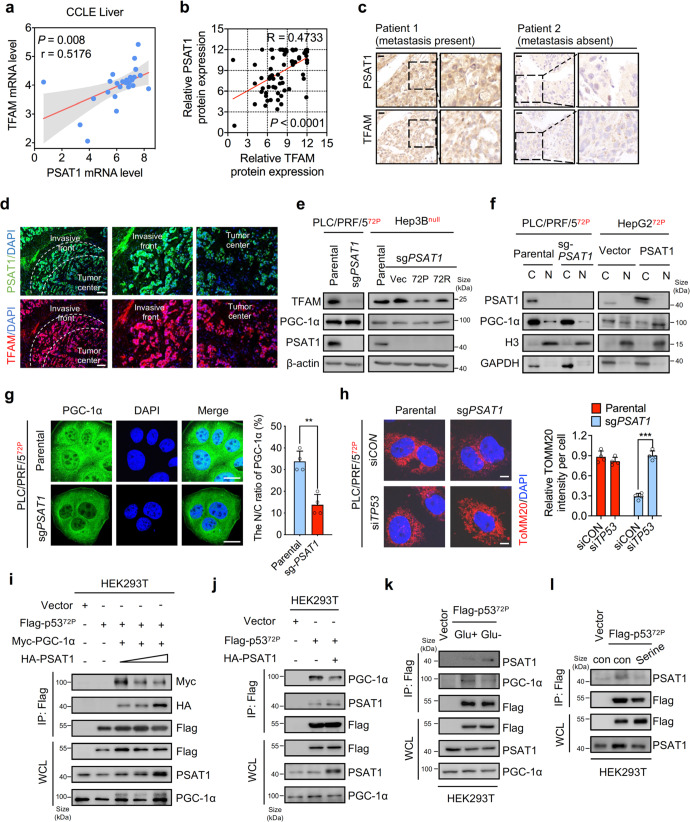
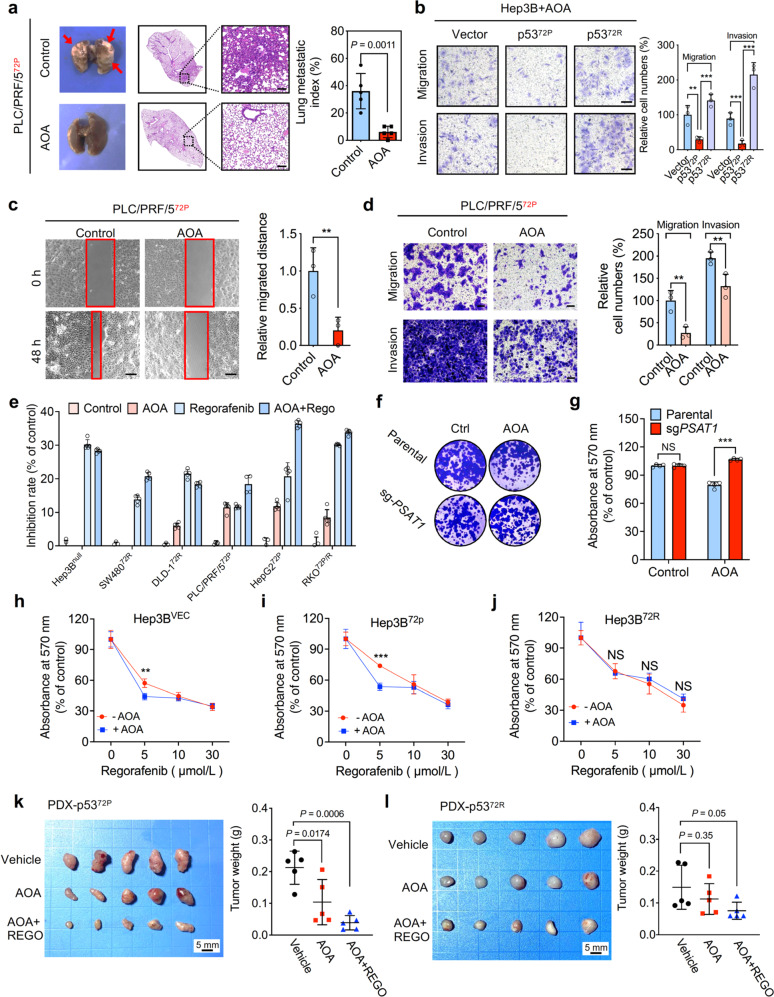
The single-nucleotide polymorphism (SNP) of p53, in particular the codon 72 variants, has recently been implicated as a critical regulator in tumor progression. However, the underlying mechanism remains elusive. Here we found that cancer cells carrying codon 72-Pro variant of p53 showed impaired metastatic potential upon serine supplementation. Proteome-wide mapping of p53-interacting proteins uncovered a specific interaction of the codon 72 proline variant (but not p53) with phosphoserine aminotransferase 1 (PSAT1). Interestingly, p53-PSAT1 interaction resulted in dissociation of peroxisome proliferator-activated receptor-γ coactivator 1α (PGC-1α) that otherwise bound to p53, leading to subsequent nuclear translocation of PGC-1α and activation of oxidative phosphorylation (OXPHOS) and tricarboxylic acid (TCA) cycle. Depletion of PSAT1 restored p53-PGC-1α interaction and impeded the OXPHOS and TCA function, resulting in mitochondrial dysfunction and metastasis suppression. Notably, pharmacological targeting the PSAT1-p53 interaction by aminooxyacetic acid (AOA) crippled the growth of liver cancer cells carrying the p53 variant in both in vitro and patient-derived xenograft models. Moreover, AOA plus regorafenib, an FDA-proved drug for hepatocellular carcinoma and colorectal cancer, achieved a better anti-tumor effect on tumors carrying the p53 variant. Therefore, our findings identified a gain of function of the p53 variant on mitochondrial function and provided a promising precision strategy to treat tumors vulnerable to p53-PSAT1 perturbation.
p53 的单核苷酸多态性(SNP),特别是密码子 72 变体,最近被认为是肿瘤进展的关键调节因子。然而,其潜在机制仍不清楚。在这里,我们发现携带 p53 密码子 72-Pro 变体的癌细胞在丝氨酸补充后表现出受损的转移潜力。p53 相互作用蛋白的蛋白质组学图谱揭示了密码子 72 脯氨酸变体(而非 p53)与磷酸丝氨酸氨基转移酶 1(PSAT1)的特异性相互作用。有趣的是,p53-PSAT1 相互作用导致过氧化物酶体增殖物激活受体-γ 共激活因子 1α(PGC-1α)与 p53 分离,否则 PGC-1α 与 p53 结合,导致 PGC-1α 的核转位以及氧化磷酸化(OXPHOS)和三羧酸(TCA)循环的激活。PSAT1 的耗竭恢复了 p53-PGC-1α 的相互作用,并阻碍了 OXPHOS 和 TCA 功能,导致线粒体功能障碍和转移抑制。值得注意的是,通过氨基酸氧乙酸(AOA)靶向 PSAT1-p53 相互作用抑制了携带 p53 变体的肝癌细胞在体外和患者来源的异种移植模型中的生长。此外,AOA 加regorafenib(一种用于治疗肝细胞癌和结直肠癌的 FDA 批准药物)对携带 p53 变体的肿瘤产生了更好的抗肿瘤效果。因此,我们的研究结果确定了 p53 变体在线粒体功能上的功能获得,并提供了一种有前途的精准治疗策略来治疗易受 p53-PSAT1 干扰的肿瘤。