Laboratory of Persistent Viral Diseases, Division of Intramural Research, Rocky Mountain Laboratories, National Institute of Allergy and Infectious Diseases, National Institutes of Health, 903 South 4th Street, Hamilton, MT, 59840, USA.
Department of Neurosciences, Biomedicine and Movement Sciences, University of Verona, Verona, Italy.
Acta Neuropathol Commun. 2023 Feb 14;11(1):28. doi: 10.1186/s40478-023-01512-1.
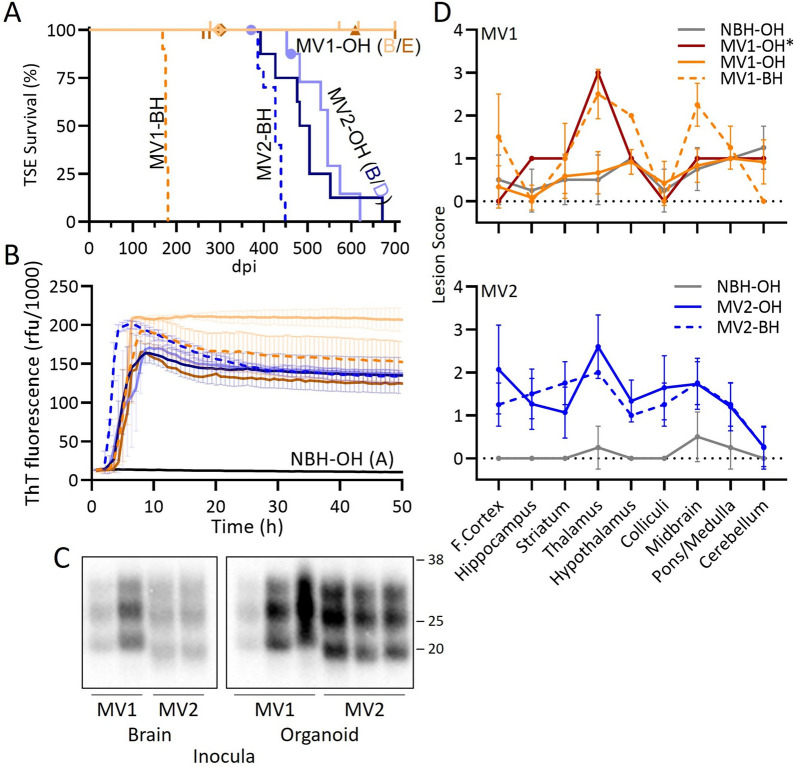
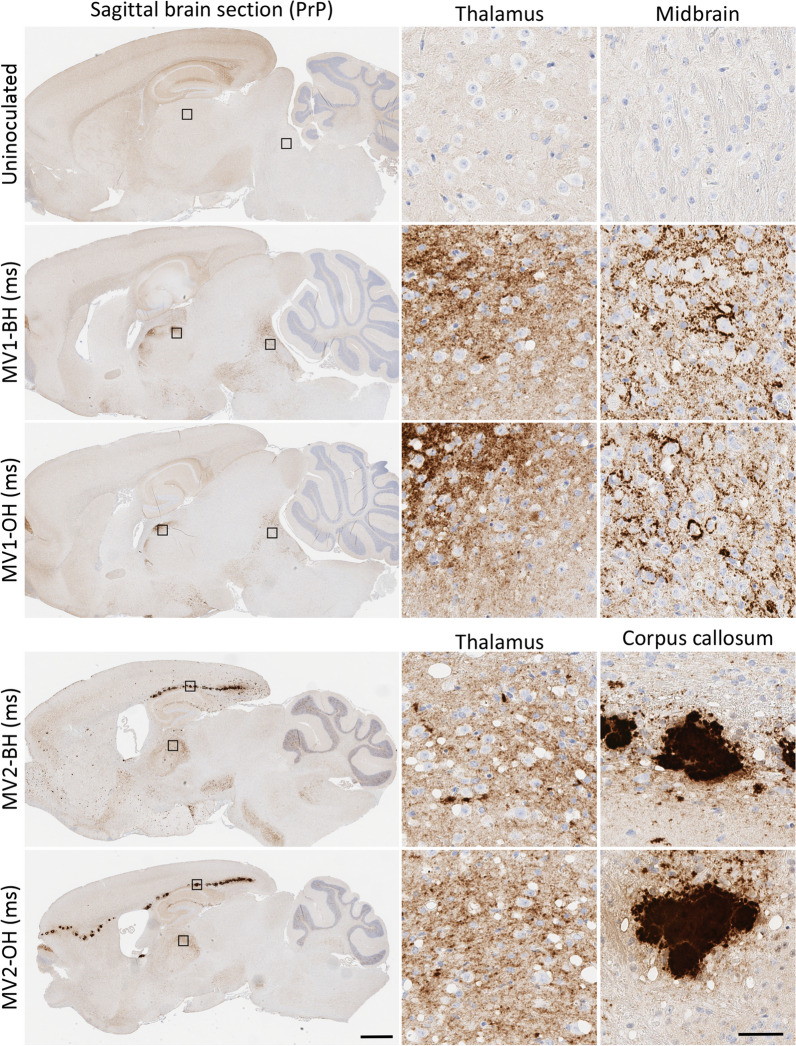
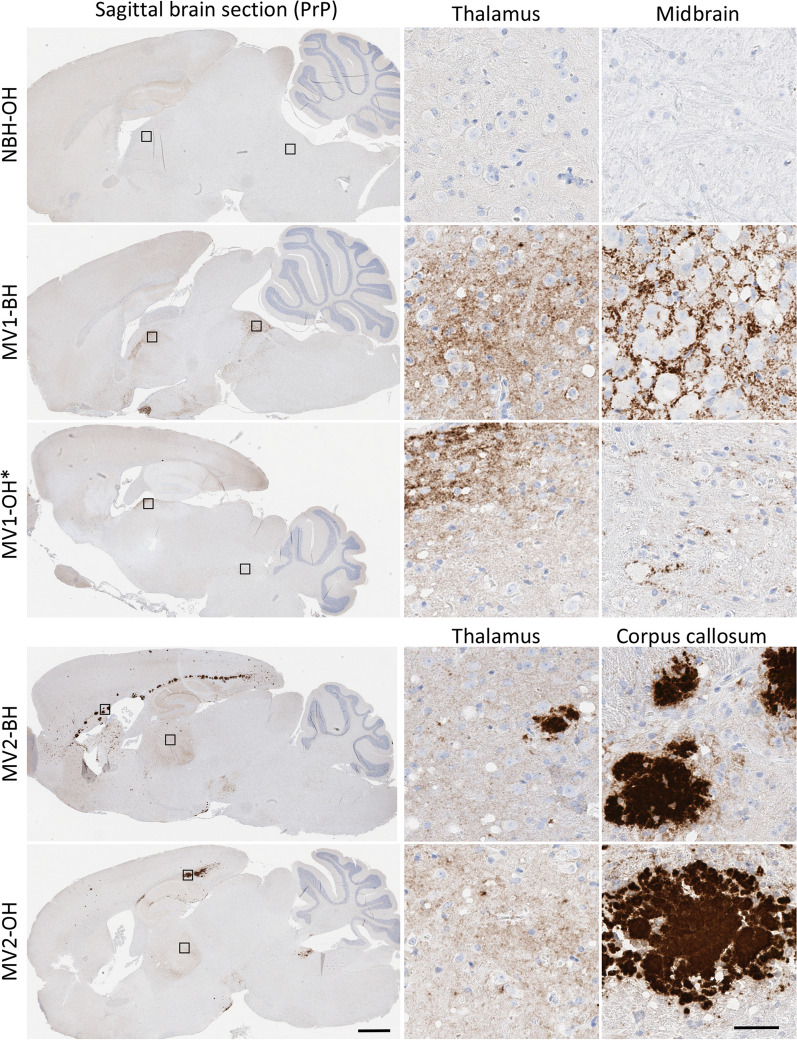
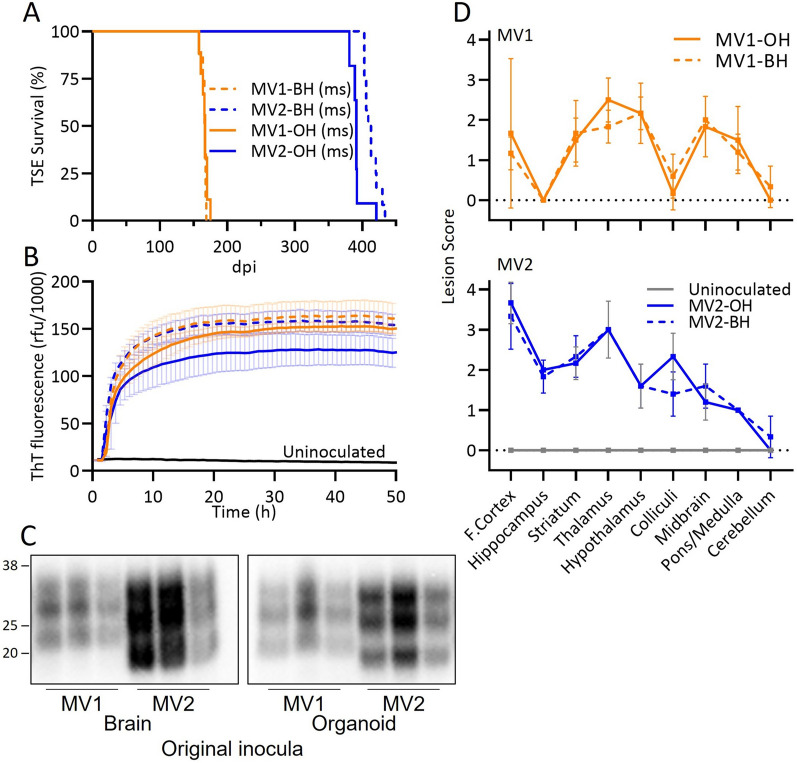
Human cerebral organoids (COs) are three-dimensional self-organizing cultures of cerebral brain tissue differentiated from induced pluripotent stem cells. We have recently shown that COs are susceptible to infection with different subtypes of Creutzfeldt-Jakob disease (CJD) prions, which in humans cause different manifestations of the disease. The ability to study live human brain tissue infected with different CJD subtypes opens a wide array of possibilities from differentiating mechanisms of cell death and identifying neuronal selective vulnerabilities to testing therapeutics. However, the question remained as to whether the prions generated in the CO model truly represent those in the infecting inoculum. Mouse models expressing human prion protein are commonly used to characterize human prion disease as they reproduce many of the molecular and clinical phenotypes associated with CJD subtypes. We therefore inoculated these mice with COs that had been infected with two CJD subtypes (MV1 and MV2) to see if the original subtype characteristics (referred to as strains once transmitted into a model organism) of the infecting prions were maintained in the COs when compared with the original human brain inocula. We found that disease characteristics caused by the molecular subtype of the disease associated prion protein were similar in mice inoculated with either CO derived material or human brain material, demonstrating that the disease associated prions generated in COs shared strain characteristics with those in humans. As the first and only in vitro model of human neurodegenerative disease that can faithfully reproduce different subtypes of prion disease, these findings support the use of the CO model for investigating human prion diseases and their subtypes.
人类大脑类器官(COs)是源自诱导多能干细胞分化的三维自组织脑组织培养物。我们最近表明,COs 易受不同克雅氏病(CJD)朊病毒亚型的感染,而在人类中,这些亚型会导致不同的疾病表现。研究感染不同 CJD 亚型的活体人脑组织的能力为研究细胞死亡的分化机制和识别神经元选择性脆弱性以及测试治疗方法提供了广泛的可能性。然而,问题仍然是 CO 模型中产生的朊病毒是否真正代表感染接种物中的朊病毒。表达人类朊病毒蛋白的小鼠模型常用于表征人类朊病毒病,因为它们复制了与 CJD 亚型相关的许多分子和临床表型。因此,我们用已感染两种 CJD 亚型(MV1 和 MV2)的 COs 感染这些小鼠,以观察感染朊病毒的原始亚型特征(一旦传入模型生物就称为株)是否在 COs 中保持与原始人脑接种物相同。我们发现,用 CO 衍生材料或人脑材料接种的小鼠中,与疾病相关的朊病毒蛋白的分子亚型引起的疾病特征相似,这表明 COs 中产生的与疾病相关的朊病毒与人类中的朊病毒具有株特征。作为首个也是唯一能够忠实地复制不同朊病毒病亚型的人类神经退行性疾病体外模型,这些发现支持使用 CO 模型来研究人类朊病毒病及其亚型。