Huang Ying, Chen Ruman, Jiang Lai, Li Siyuan, Xue Yuchen
Department of Anesthesiology and Surgical Intensive Care Unit, Xin-Hua Hospital Affiliated to Shanghai Jiao Tong University School of Medicine, Shanghai 200092, China.
Department of Blood Purification, Hainan General Hospital Affiliated to Hainan Medical University, Haikou, Hainan 570311, China.
J Intensive Med. 2021 Sep 24;1(2):90-95. doi: 10.1016/j.jointm.2021.08.002. eCollection 2021 Oct.
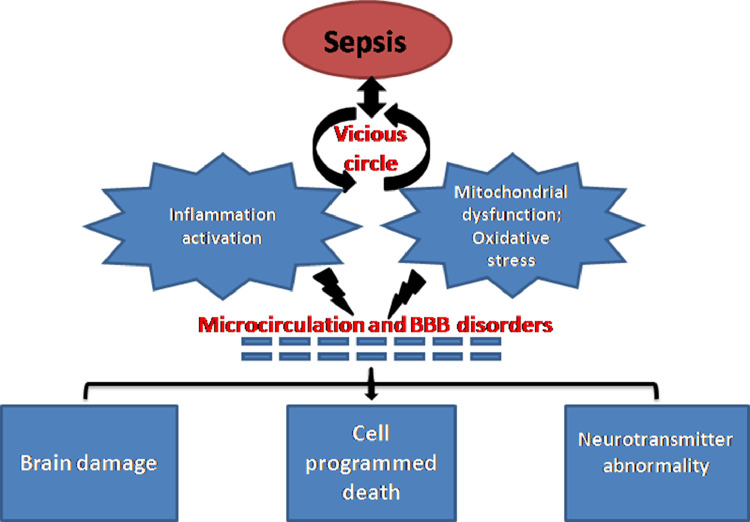
Sepsis-associated encephalopathy (SAE), a major cerebral complication of sepsis, occurs in 70% of patients admitted to the intensive care unit (ICU). This condition can cause serious impairment of consciousness and is associated with a high mortality rate. Thus far, several experimental screenings and radiological techniques (e.g., electroencephalography) have been used for the non-invasive assessment of the structure and function of the brain in patients with SAE. Nevertheless, the pathogenesis of SAE is complicated and remains unclear. In the present article, we reviewed the currently available literature on the epidemiology, clinical manifestations, pathology, diagnosis, and management of SAE. However, currently, there is no ideal pharmacological treatment for SAE. Treatment targeting mitochondrial dysfunction may be useful in the management of SAE.
脓毒症相关性脑病(SAE)是脓毒症的一种主要脑部并发症,在入住重症监护病房(ICU)的患者中发生率为70%。这种情况可导致严重的意识障碍,并伴有高死亡率。迄今为止,已经采用了几种实验性筛查和放射学技术(如脑电图)对SAE患者的大脑结构和功能进行无创评估。然而,SAE的发病机制复杂,仍不清楚。在本文中,我们综述了目前关于SAE的流行病学、临床表现、病理学、诊断和管理的文献。然而,目前尚无针对SAE的理想药物治疗方法。针对线粒体功能障碍的治疗可能对SAE的管理有用。