Liu Yu-Xiao, Yu Yang, Liu Jing-Peng, Liu Wen-Jia, Cao Yang, Yan Run-Min, Yao Yong-Ming
Translational Medicine Research Center, Medical Innovation Research Division and Fourth Medical Center of the Chinese PLA General Hospital, Beijing, China.
Department of Neurosurgery, The Chinese PLA General Hospital, Beijing, China.
Front Neurol. 2022 Jun 27;13:892480. doi: 10.3389/fneur.2022.892480. eCollection 2022.
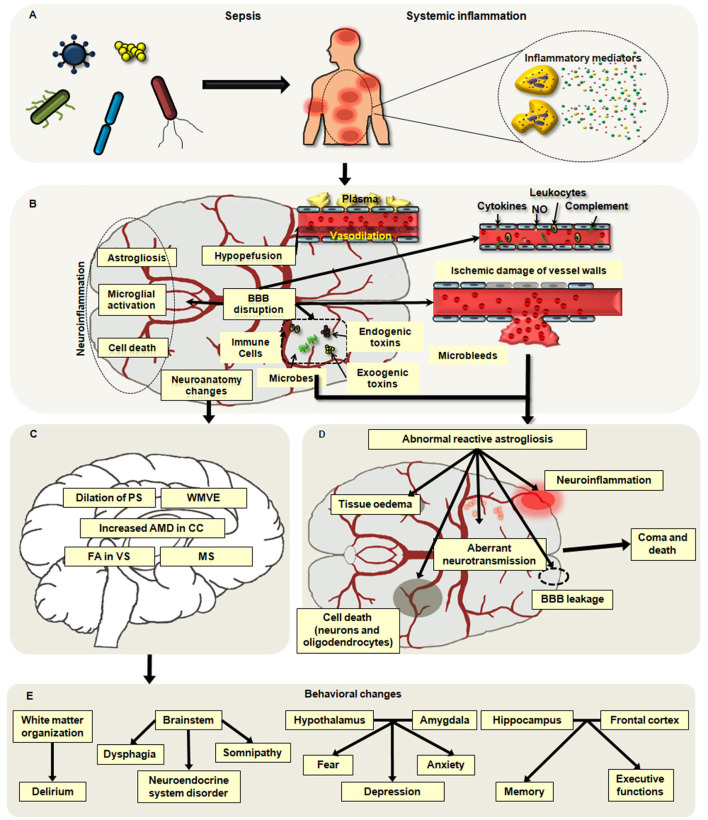
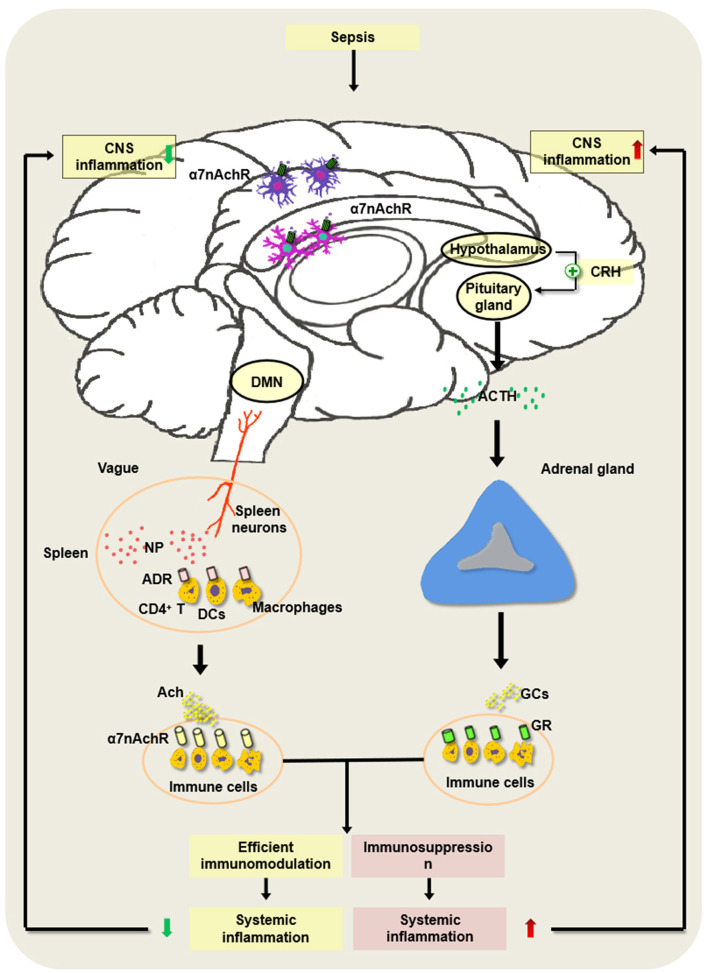
Sepsis-associated encephalopathy (SAE), the most popular cause of coma in the intensive care unit (ICU), is the diffuse cerebral damage caused by the septic challenge. SAE is closely related to high mortality and extended cognitive impairment in patients in septic shock. At present, many studies have demonstrated that SAE might be mainly associated with blood-brain barrier damage, abnormal neurotransmitter secretion, oxidative stress, and neuroimmune dysfunction. Nevertheless, the precise mechanism which initiates SAE and contributes to the long-term cognitive impairment remains largely unknown. Recently, a growing body of evidence has indicated that there is close crosstalk between SAE and peripheral immunity. The excessive migration of peripheral immune cells to the brain, the activation of glia, and resulting dysfunction of the central immune system are the main causes of septic nerve damage. This study reviews the update on the pathogenesis of septic encephalopathy, focusing on the over-activation of immune cells in the central nervous system (CNS) and the "neurocentral-endocrine-immune" networks in the development of SAE, aiming to further understand the potential mechanism of SAE and provide new targets for diagnosis and management of septic complications.
脓毒症相关性脑病(SAE)是重症监护病房(ICU)中最常见的昏迷原因,是由脓毒症激发引起的弥漫性脑损伤。SAE与脓毒性休克患者的高死亡率和长期认知障碍密切相关。目前,许多研究表明,SAE可能主要与血脑屏障损伤、神经递质分泌异常、氧化应激和神经免疫功能障碍有关。然而,引发SAE并导致长期认知障碍的精确机制在很大程度上仍不清楚。最近,越来越多的证据表明,SAE与外周免疫之间存在密切的相互作用。外周免疫细胞过度迁移至大脑、神经胶质细胞的激活以及由此导致的中枢免疫系统功能障碍是脓毒性神经损伤的主要原因。本研究综述了脓毒症脑病发病机制的最新进展,重点关注中枢神经系统(CNS)中免疫细胞的过度激活以及SAE发生发展过程中的“神经-中枢-内分泌-免疫”网络,旨在进一步了解SAE的潜在机制,并为脓毒症并发症的诊断和管理提供新的靶点。