Cancer Research Unit, Sumitomo Pharma Co. Ltd., Osaka, Japan.
Front Immunol. 2023 Jan 30;14:1055671. doi: 10.3389/fimmu.2023.1055671. eCollection 2023.
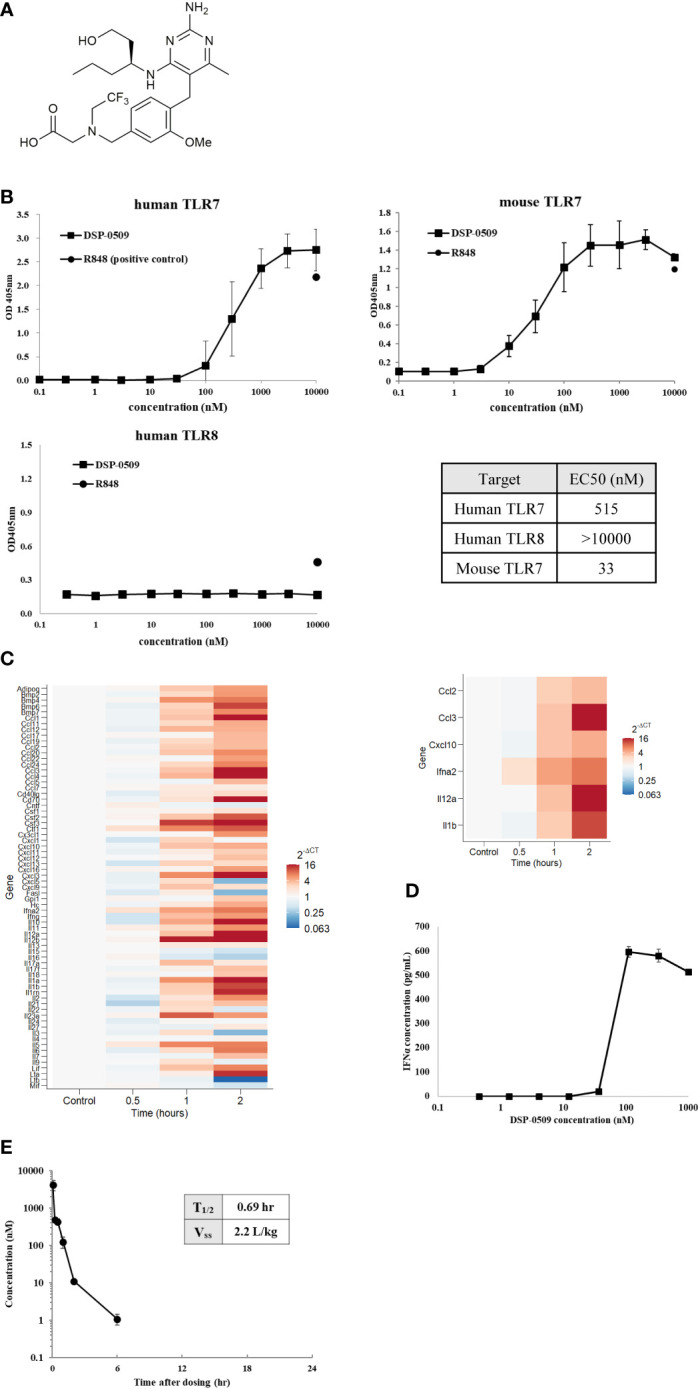
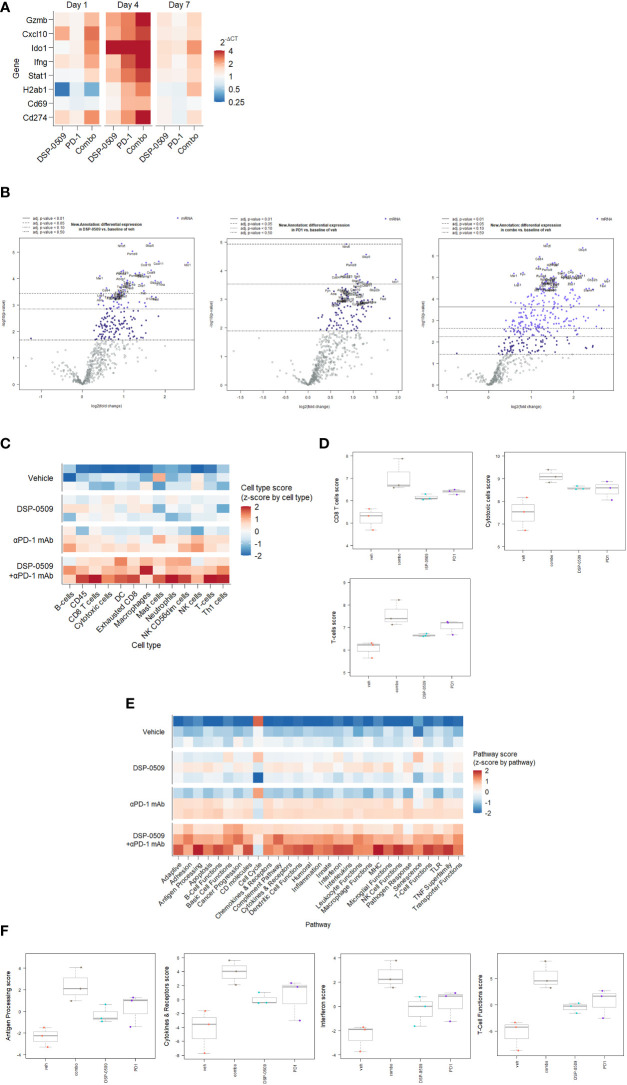
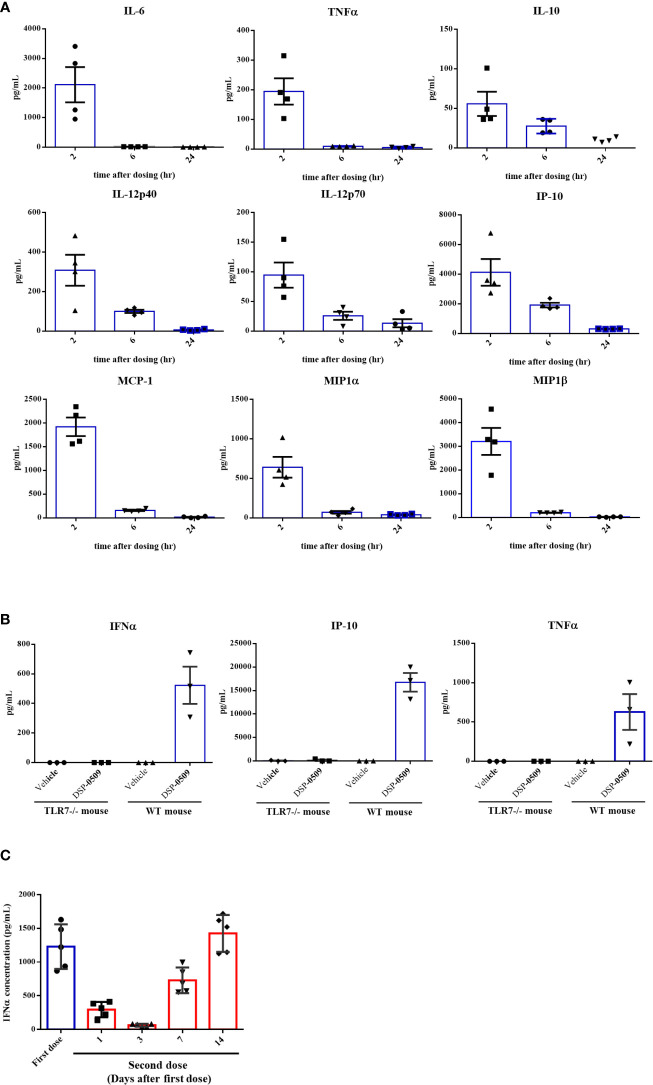
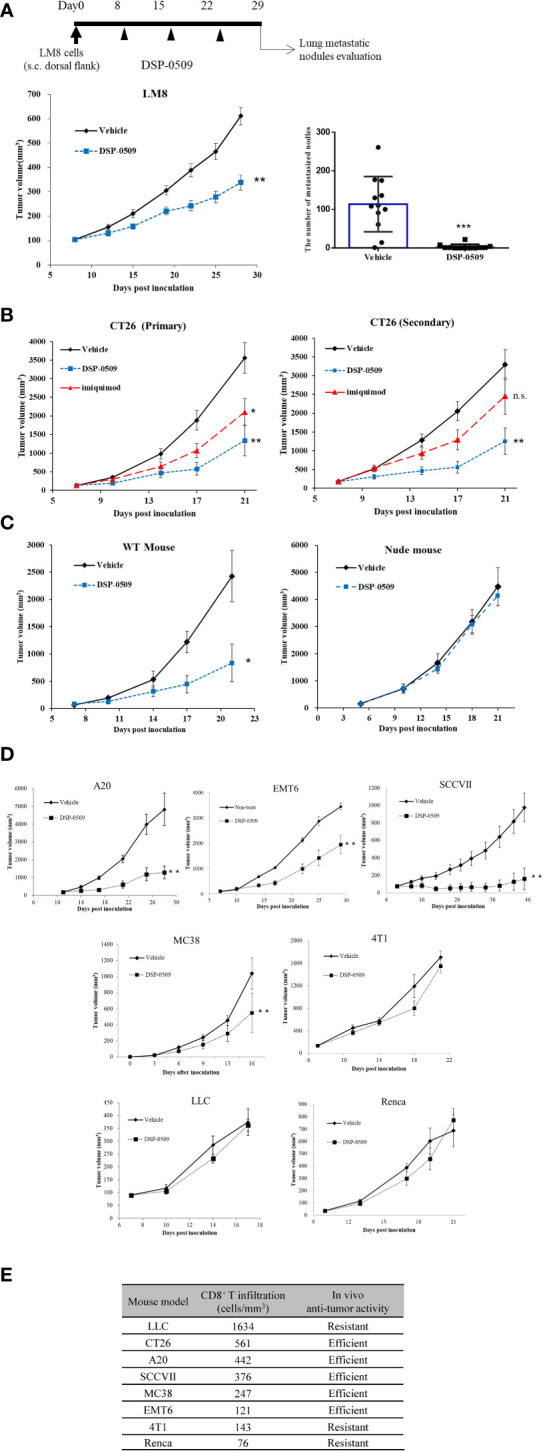
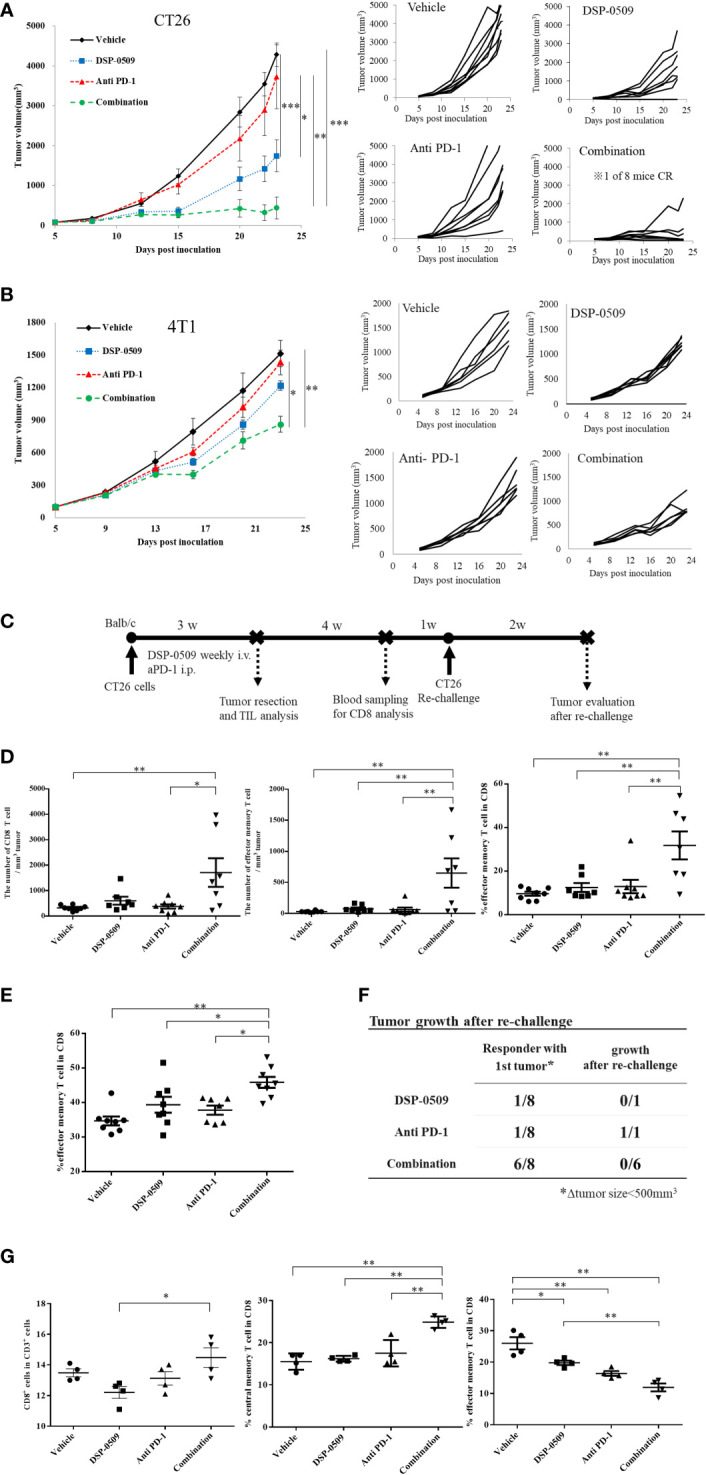
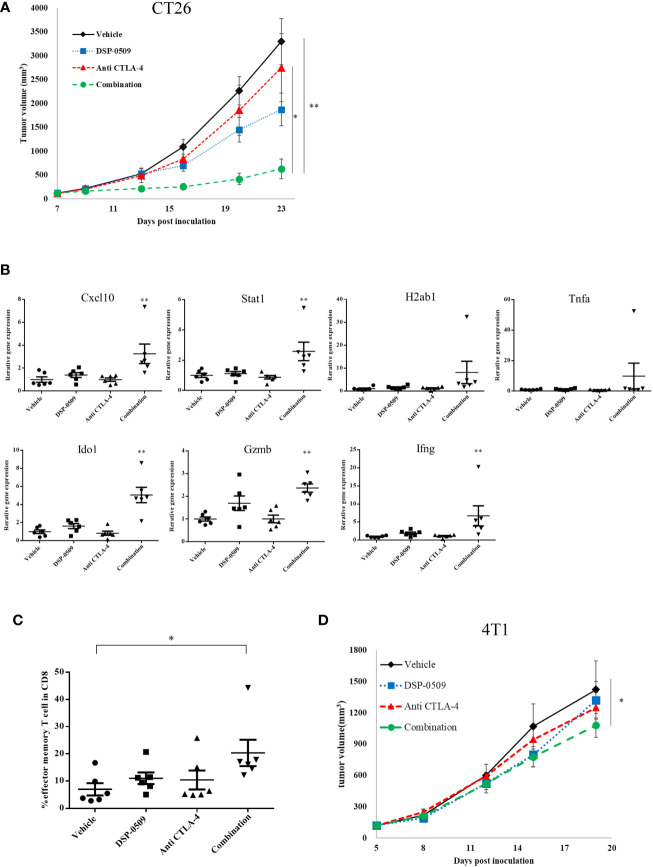
TLR7 is an innate immune receptor that recognizes single-stranded RNAs, and its activation leads to anti-tumor immune effects. Although it is the only approved TLR7 agonist in cancer therapy, imiquimod is allowed to be administered with topical formulation. Thus, systemic administrative TLR7 agonist is expected in terms of expanding applicable cancer types. Here, we demonstrated the identification and characterization of DSP-0509 as a novel small-molecule TLR7 agonist. DSP-0509 is designed to have unique physicochemical features that could be administered systemically with a short half-life. DSP-0509 activated bone marrow-derived dendritic cells (BMDCs) and induced inflammatory cytokines including type I interferons. In the LM8 tumor-bearing mouse model, DSP-0509 reduced tumor growth not only in subcutaneous primary lesions but also in lung metastatic lesions. DSP-0509 inhibited tumor growth in several syngeneic tumor-bearing mouse models. We found that the CD8 T cell infiltration of tumor before treatment tended to be positively correlated with anti-tumor efficacy in several mouse tumor models. The combination of DSP-0509 with anti-PD-1 antibody significantly enhanced the tumor growth inhibition compared to each monotherapy in CT26 model mice. In addition, the effector memory T cells were expanded in both the peripheral blood and tumor, and rejection of tumor re-challenge occurred in the combination group. Moreover, synergistic anti-tumor efficacy and effector memory T cell upregulation were also observed for the combination with anti-CTLA-4 antibody. The analysis of the tumor-immune microenvironment by using the nCounter assay revealed that the combination of DSP-0509 with anti-PD-1 antibody enhanced infiltration by multiple immune cells including cytotoxic T cells. In addition, the T cell function pathway and antigen presentation pathway were activated in the combination group. We confirmed that DSP-0509 enhanced the anti-tumor immune effects of anti-PD-1 antibody by inducing type I interferons activation of dendritic cells and even CTLs. In conclusion, we expect that DSP-0509, a new TLR7 agonist that synergistically induces anti-tumor effector memory T cells with immune checkpoint blockers (ICBs) and can be administered systemically, will be used in the treatment of multiple cancers.
TLR7 是一种先天免疫受体,可识别单链 RNA,其激活可产生抗肿瘤免疫效应。虽然它是癌症治疗中唯一批准的 TLR7 激动剂,但咪喹莫特允许以局部制剂给药。因此,预计在扩大适用癌症类型方面,将使用全身性管理 TLR7 激动剂。在这里,我们证明了 DSP-0509 的鉴定和表征,它是一种新型小分子 TLR7 激动剂。DSP-0509 的设计具有独特的理化特性,可具有较短的半衰期进行全身给药。DSP-0509 激活骨髓来源的树突状细胞 (BMDC),并诱导包括 I 型干扰素在内的炎症细胞因子。在 LM8 荷瘤小鼠模型中,DSP-0509 不仅减少了皮下原发性病变,而且减少了肺部转移病变的肿瘤生长。DSP-0509 在几种同种异体肿瘤荷瘤小鼠模型中抑制肿瘤生长。我们发现,在几种小鼠肿瘤模型中,治疗前肿瘤中 CD8 T 细胞浸润与抗肿瘤疗效呈正相关。与单独用药相比,DSP-0509 与抗 PD-1 抗体联合显著增强 CT26 模型小鼠的肿瘤生长抑制作用。此外,在外周血和肿瘤中均扩增了效应记忆 T 细胞,并且在联合组中发生了肿瘤再挑战的排斥。此外,与抗 CTLA-4 抗体联合也观察到协同的抗肿瘤疗效和效应记忆 T 细胞上调。通过 nCounter 检测分析肿瘤免疫微环境显示,DSP-0509 与抗 PD-1 抗体联合增强了包括细胞毒性 T 细胞在内的多种免疫细胞的浸润。此外,联合组中 T 细胞功能途径和抗原呈递途径被激活。我们证实,DSP-0509 通过诱导 I 型干扰素激活树突状细胞甚至 CTL,增强了抗 PD-1 抗体的抗肿瘤免疫效应。总之,我们预计新型 TLR7 激动剂 DSP-0509 与免疫检查点抑制剂 (ICB) 协同诱导抗肿瘤效应记忆 T 细胞,并可全身给药,将用于治疗多种癌症。