Department of Infectious Disease Research, Health & Environment Research Institute of Gwangju, 584 Mujin-Daero, Seogu, Gwangju, Republic of Korea, 61954.
Sci Rep. 2023 Feb 16;13(1):2798. doi: 10.1038/s41598-023-29461-8.
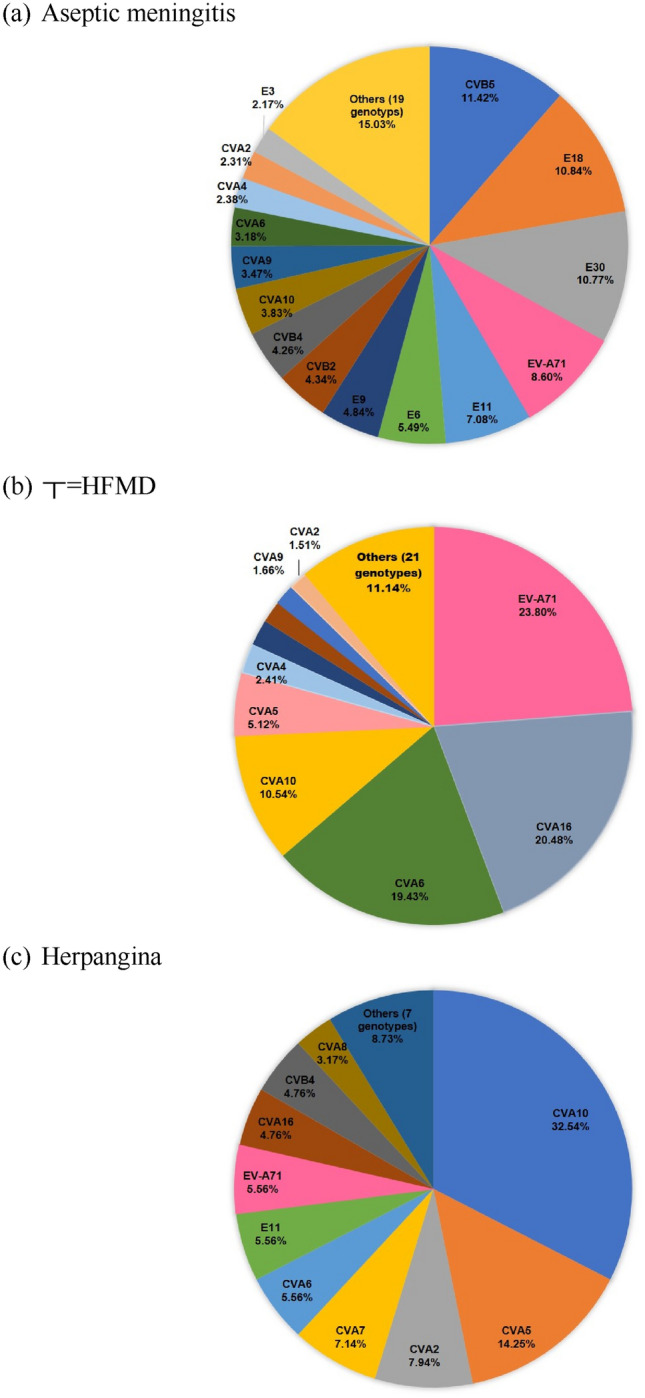
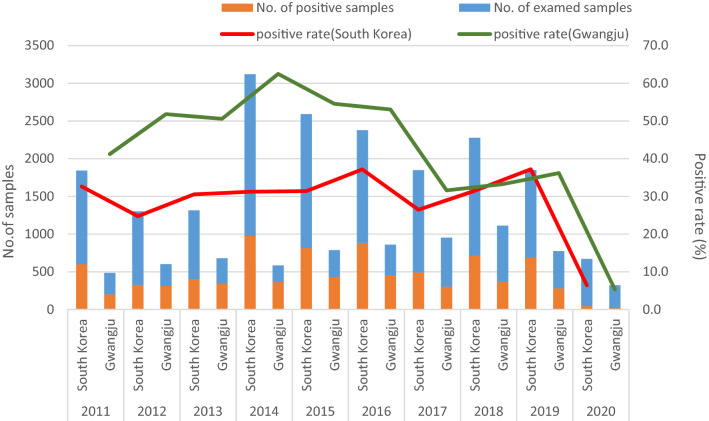
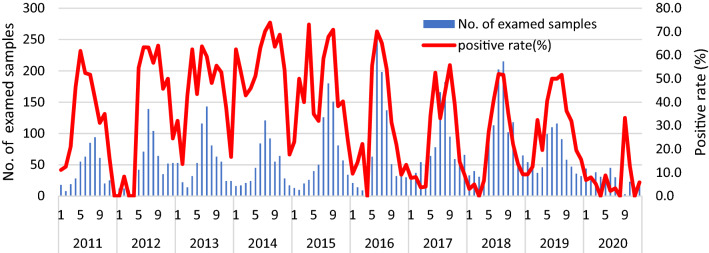
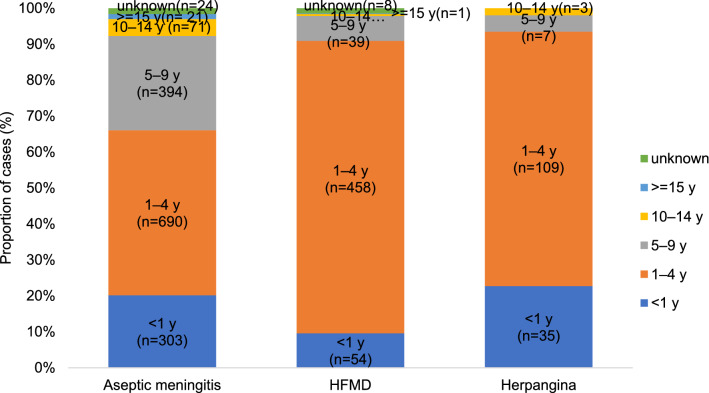
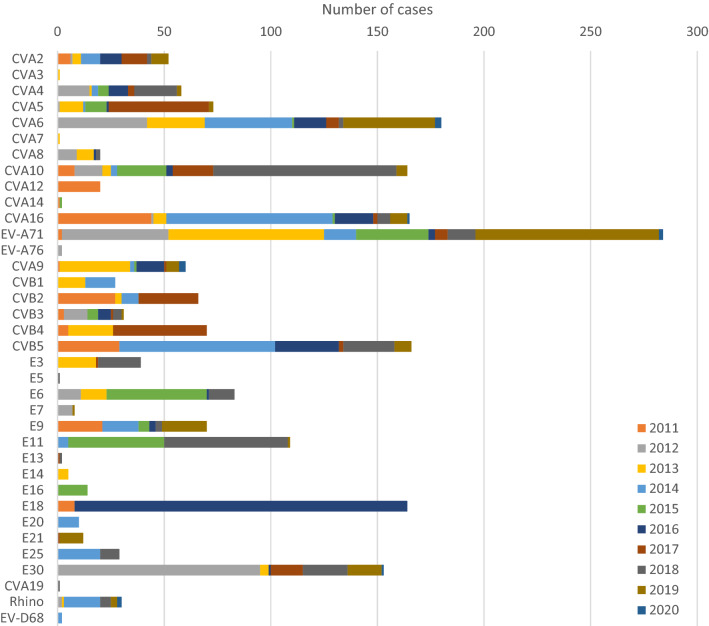
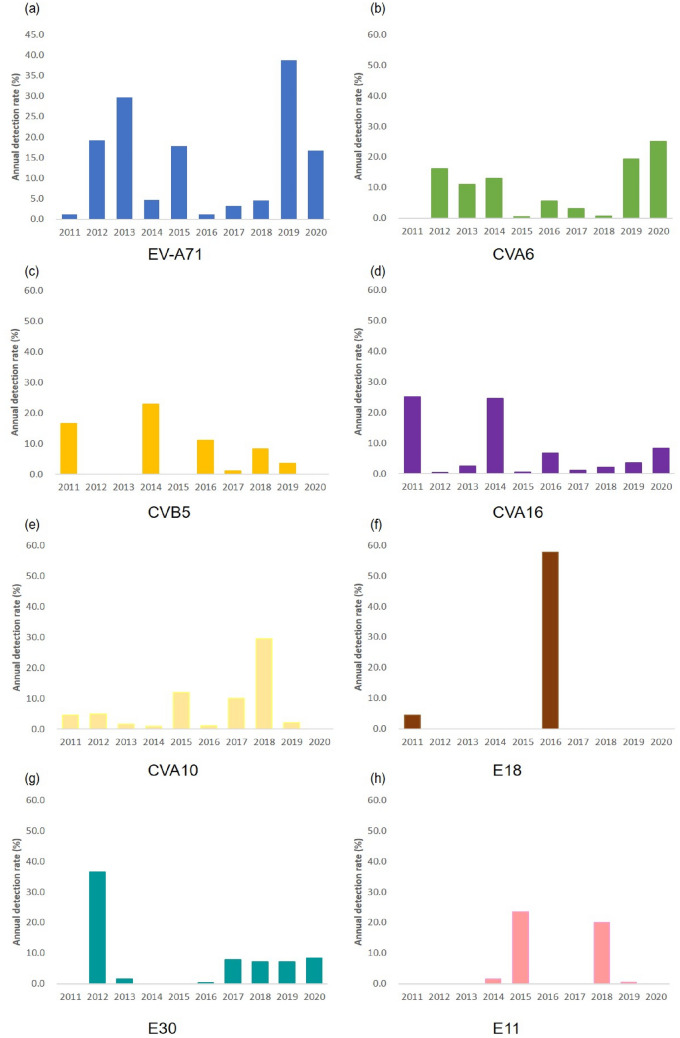
Human enteroviruses (EVs) are associated with a broad spectrum of diseases. To understand EV epidemiology, we present longitudinal data reflecting changing EV prevalence patterns in South Korea. We collected 7160 specimens from patients with suspected EV infections in ten hospitals in Gwangju, Korea during 2011-2020. RNA extraction and real-time reverse transcription polymerase chain reaction using EV-specific probes and primers were performed. EV genotyping and phylogenetic analysis were performed; EVs were detected in 3076 samples (43.0%), and the annual EV detection rate varied. EV infection rates did not differ with sex, and children aged ≤ 4 years were the most prone to EV infection; this trend did not change over time. Overall, 35 different EV types belonging to four distinctive species and rhinoviruses were identified. Although serotype distribution changed annually, the most frequently observed EVs were EV-A71 (13.1% of the cases), CVA6 (8.3%), CVB5 (7.6%), CVA16 (7.6%), CVA10 (7.5%), E18 (7.5%), E30 (7.0%), and E11 (5.0%) during 2011-2020. The predominant EV genotypes by clinical manifestation were CVB5 for aseptic meningitis; EV-A71 for hand, foot, and mouth disease cases; and CVA10 for herpangina. These results will aid the development of vaccines against EV infection and allow comprehensive disease control.
人类肠道病毒(EVs)与广泛的疾病有关。为了了解 EV 的流行病学,我们提供了反映韩国 EV 流行模式变化的纵向数据。我们在 2011 年至 2020 年期间从韩国光州的十家医院中疑似 EV 感染的患者中收集了 7160 份标本。使用 EV 特异性探针和引物进行 RNA 提取和实时逆转录聚合酶链反应。进行 EV 基因分型和系统发育分析;在 3076 份样本(43.0%)中检测到 EV,并且 EV 的年检出率存在差异。EV 感染率与性别无关,年龄≤4 岁的儿童最易感染 EV;这种趋势随着时间的推移没有变化。总体而言,鉴定出属于四个不同种属和鼻病毒的 35 种不同的 EV 型。尽管血清型分布每年都在变化,但最常见的 EV 是 EV-A71(占病例的 13.1%)、CVA6(8.3%)、CVB5(7.6%)、CVA16(7.6%)、CVA10(7.5%)、E18(7.5%)、E30(7.0%)和 E11(5.0%)。根据临床表现,主要的 EV 基因型为无菌性脑膜炎的 CVB5;手足口病病例的 EV-A71;和疱疹性咽峡炎的 CVA10。这些结果将有助于开发针对 EV 感染的疫苗,并实现全面的疾病控制。