Department of Environmental Sciences, University of Basel, Basel, Switzerland.
State Key Laboratory of Marine Environmental Science, College of Ocean and Earth Sciences, Xiamen University, Xiamen, China.
ISME J. 2023 May;17(5):693-702. doi: 10.1038/s41396-023-01382-4. Epub 2023 Feb 20.
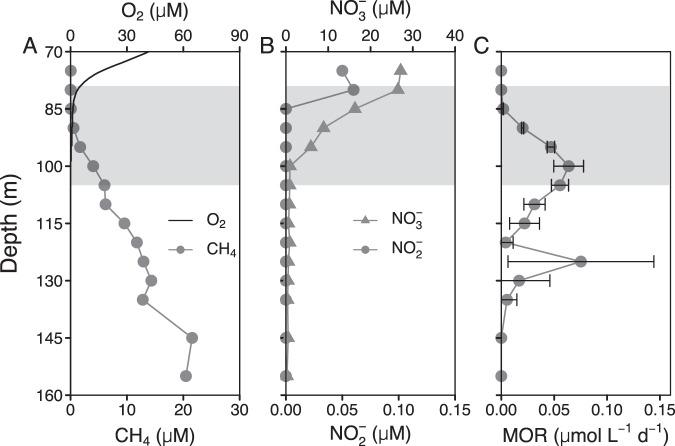
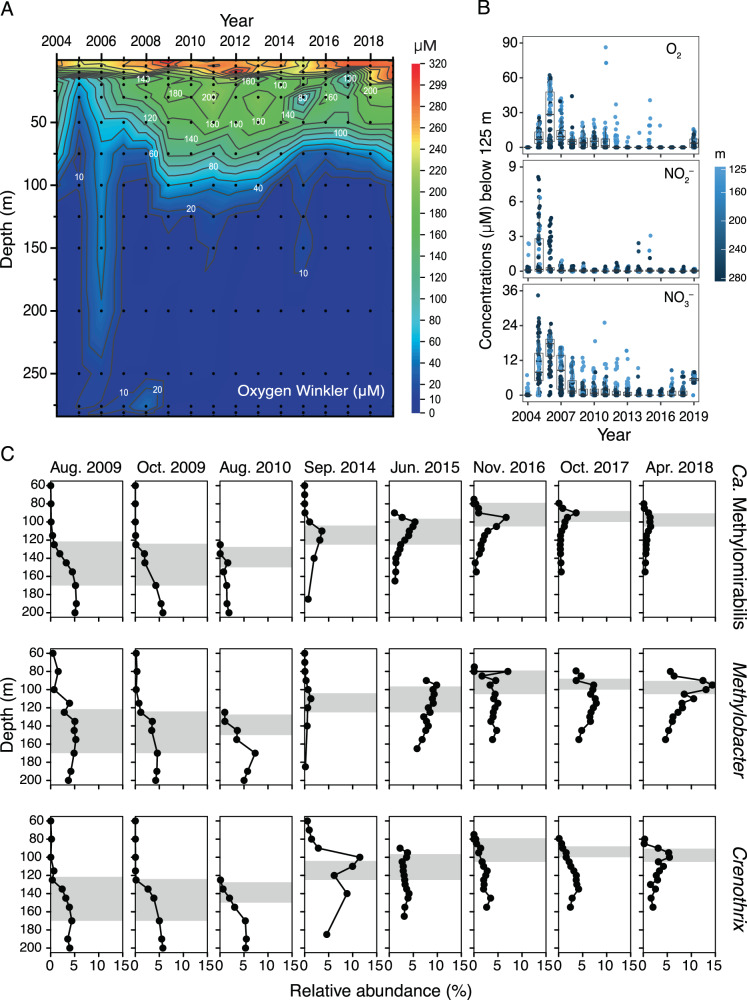
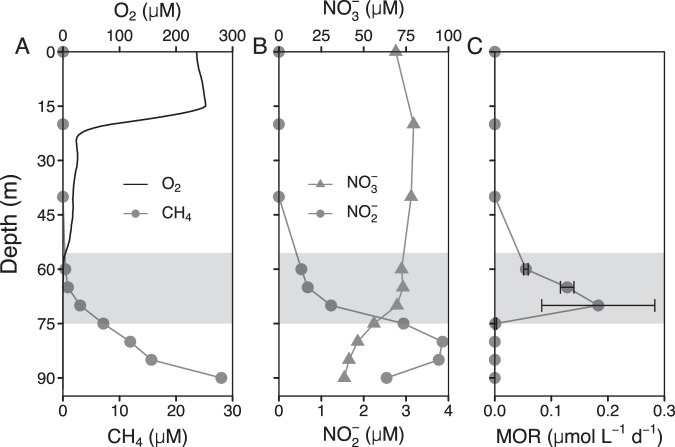
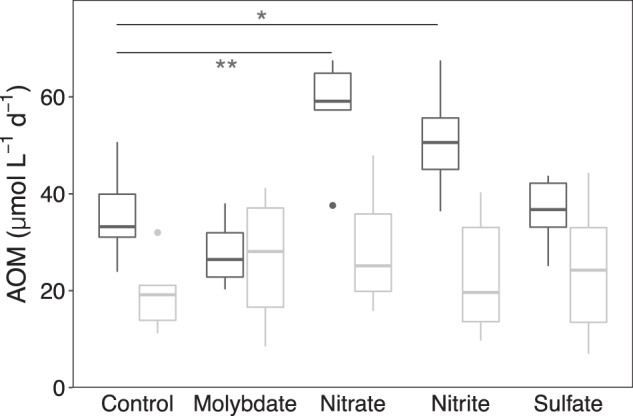
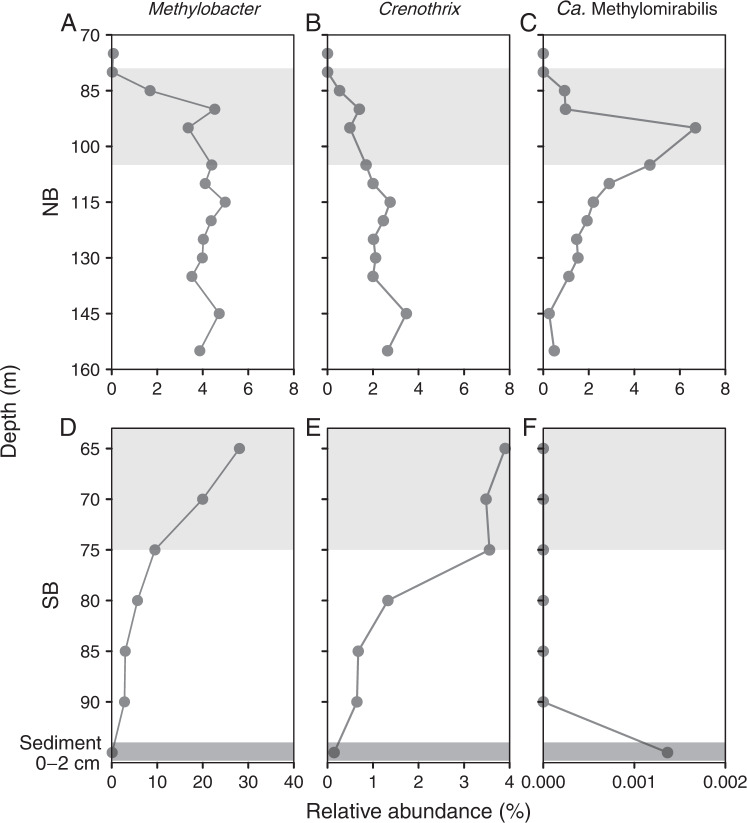
We investigated microbial methane oxidation in the water column of two connected but hydrodynamically contrasting basins of Lake Lugano, Switzerland. Both basins accumulate large amounts of methane in the water column below their chemoclines, but methane oxidation efficiently prevents methane from reaching surface waters. Here we show that in the meromictic North Basin water column, a substantial fraction of methane was eliminated through anaerobic methane oxidation (AOM) coupled to nitrite reduction by Candidatus Methylomirabilis. Incubations with CH and concentrated biomass from this basin showed enhanced AOM rates with nitrate (+62%) and nitrite (+43%). In the more dynamic South Basin, however, aerobic methanotrophs prevailed, Ca. Methylomirabilis was absent in the anoxic water column, and no evidence was found for nitrite-dependent AOM. Here, the duration of seasonal stratification and anoxia seems to be too short, relative to the slow growth rate of Ca. Methylomirabilis, to allow for the establishment of anaerobic methanotrophs, in spite of favorable hydrochemical conditions. Using 16 S rRNA gene sequence data covering nearly ten years of community dynamics, we show that Ca. Methylomirabilis was a permanent element of the pelagic methane filter in the North Basin, which proliferated during periods of stable water column conditions and became the dominant methanotroph in the system. Conversely, more dynamic water column conditions led to a decline of Ca. Methylomirabilis and induced blooms of the faster-growing aerobic methanotrophs Methylobacter and Crenothrix. Our data highlight that physical (mixing) processes and ecosystem stability are key drivers controlling the community composition of aerobic and anaerobic methanotrophs.
我们研究了瑞士卢加诺湖两个连通但水动力条件截然不同的盆地水柱中的微生物甲烷氧化作用。两个盆地的化学跃层以下的水柱中都积累了大量的甲烷,但甲烷氧化作用有效地阻止了甲烷到达地表水。在这里,我们表明,在分层的北盆地水柱中,大量的甲烷通过与硝酸盐还原偶联的厌氧甲烷氧化(AOM)被消除,由候选甲烷杆菌属(Candidatus Methylomirabilis)进行。与来自该盆地的 CH 和浓缩生物量进行的孵育显示,AOM 速率随着硝酸盐(+62%)和亚硝酸盐(+43%)的增加而增加。然而,在更动态的南盆地,好氧甲烷氧化菌占主导地位,缺氧水柱中没有候选甲烷杆菌属,也没有发现依赖亚硝酸盐的 AOM 的证据。在这里,与候选甲烷杆菌属缓慢的生长速度相比,季节性分层和缺氧的持续时间似乎太短,无法在缺氧条件下建立厌氧甲烷氧化菌,尽管水化学条件有利。使用涵盖近十年群落动态的 16S rRNA 基因序列数据,我们表明候选甲烷杆菌属是北盆地水柱中浮游甲烷过滤器的永久组成部分,它在水柱条件稳定的时期繁殖,并成为系统中的主要甲烷氧化菌。相反,更动态的水柱条件导致候选甲烷杆菌属的减少,并诱导生长更快的好氧甲烷氧化菌甲基杆菌属和纤发菌属的大量繁殖。我们的数据强调,物理(混合)过程和生态系统稳定性是控制好氧和厌氧甲烷氧化菌群落组成的关键驱动因素。