Department of Neurological Surgery, Washington University School of Medicine, St. Louis, Missouri, USA.
Department of Medicine, Washington University School of Medicine, St. Louis, Missouri, USA.
J Immunother Cancer. 2023 Feb;11(2). doi: 10.1136/jitc-2022-006121.
Adoptive cellular therapies with chimeric antigen receptor T cells have revolutionized the treatment of some malignancies but have shown limited efficacy in solid tumors such as glioblastoma and face a scarcity of safe therapeutic targets. As an alternative, T cell receptor (TCR)-engineered cellular therapy against tumor-specific neoantigens has generated significant excitement, but there exist no preclinical systems to rigorously model this approach in glioblastoma.
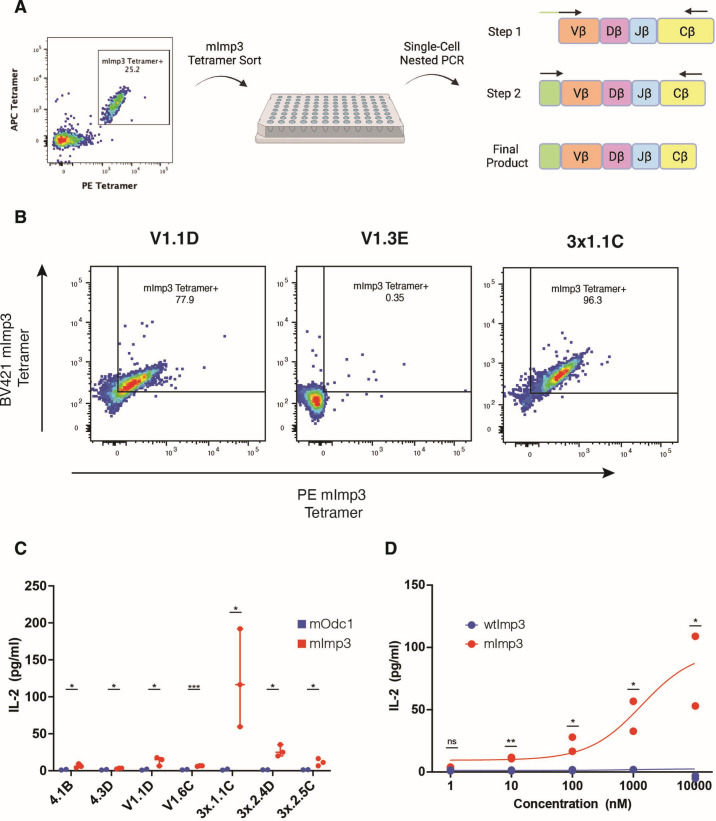
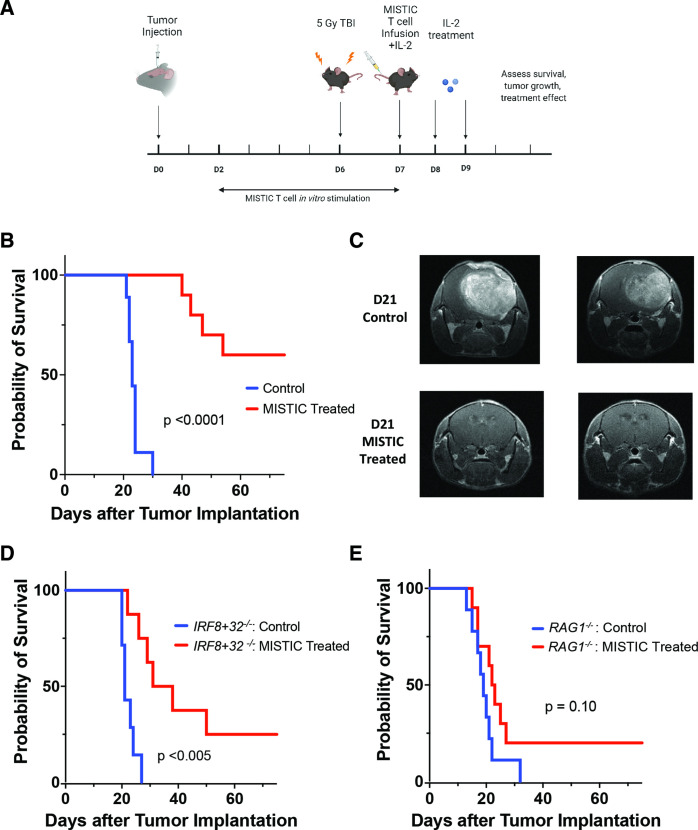
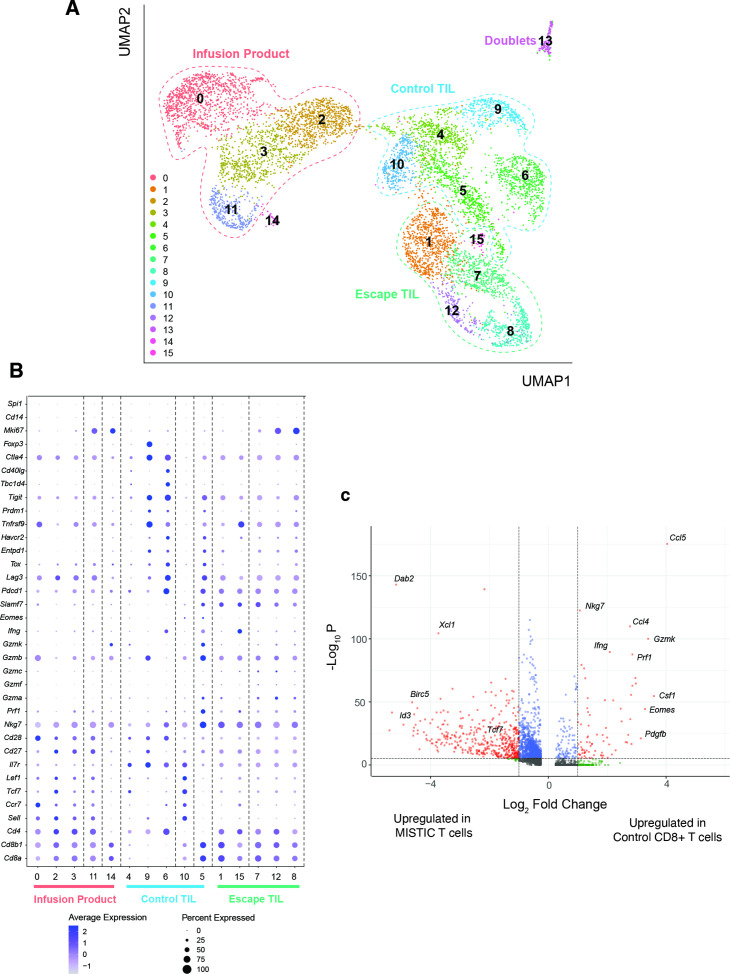
We employed single-cell PCR to isolate a TCR specific for the Imp3 neoantigen (mImp3) previously identified within the murine glioblastoma model GL261. This TCR was used to generate the Mutant Imp3-Specific TCR TransgenIC (MISTIC) mouse in which all CD8 T cells are specific for mImp3. The therapeutic efficacy of neoantigen-specific T cells was assessed through a model of cellular therapy consisting of the transfer of activated MISTIC T cells and interleukin 2 into lymphodepleted tumor-bearing mice. We employed flow cytometry, single-cell RNA sequencing, and whole-exome and RNA sequencing to examine the factors underlying treatment response.
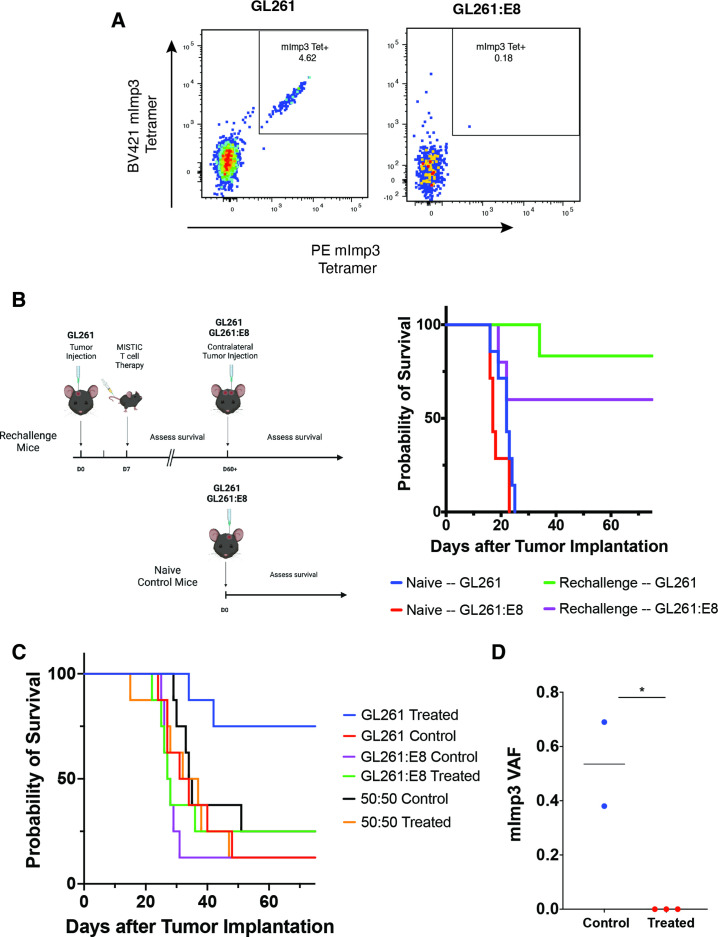
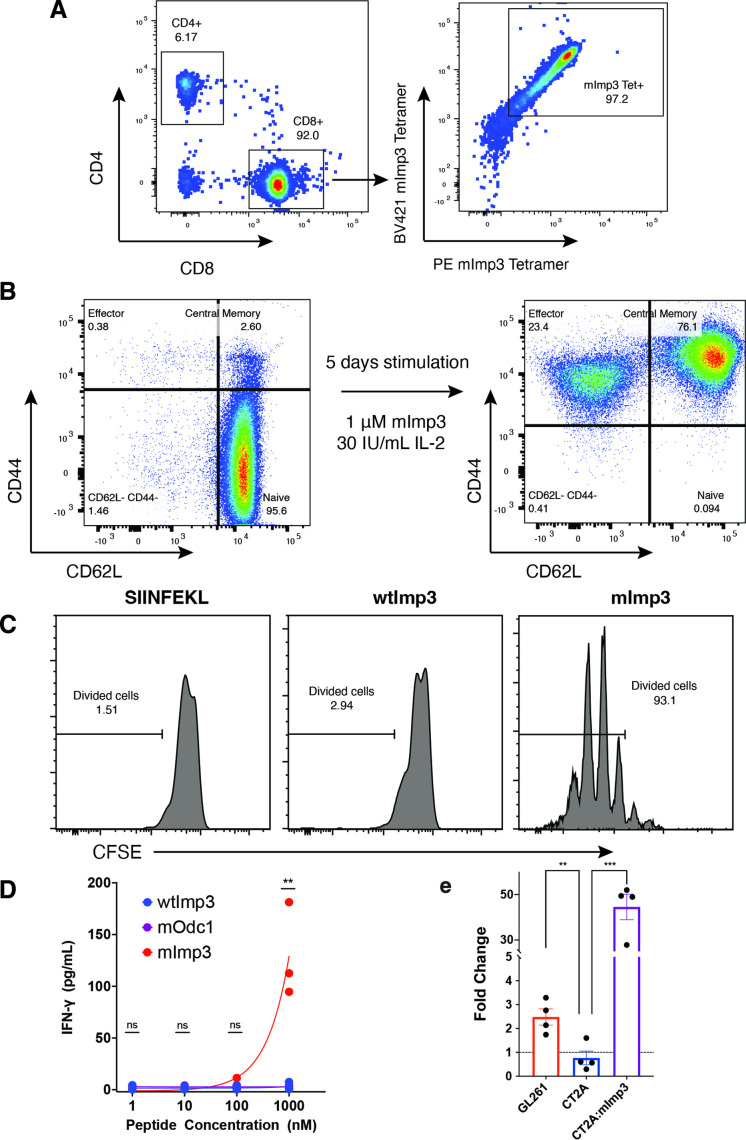
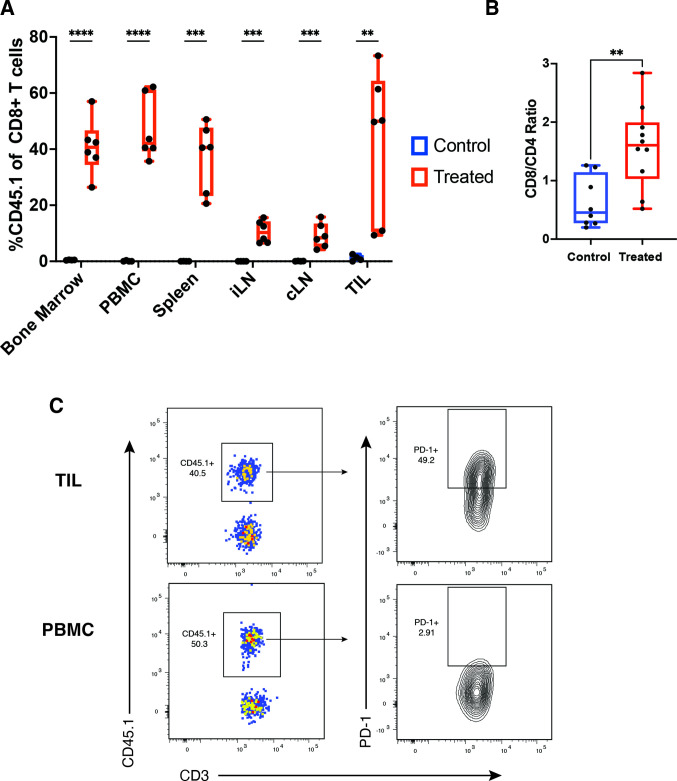
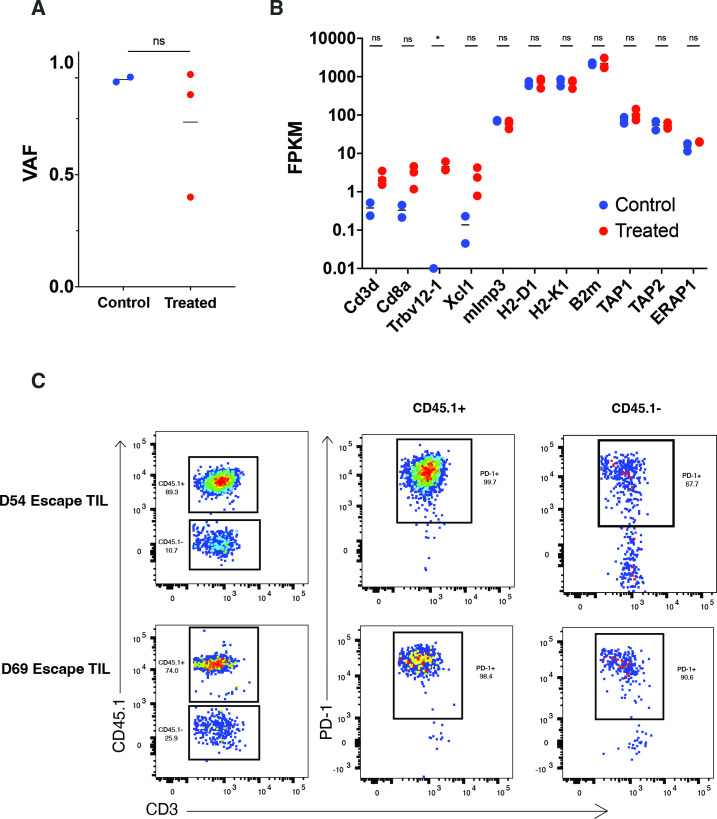
We isolated and characterized the 3×1.1C TCR that displayed a high affinity for mImp3 but no wild-type cross-reactivity. To provide a source of mImp3-specific T cells, we generated the MISTIC mouse. In a model of adoptive cellular therapy, the infusion of activated MISTIC T cells resulted in rapid intratumoral infiltration and profound antitumor effects with long-term cures in a majority of GL261-bearing mice. The subset of mice that did not respond to the adoptive cell therapy showed evidence of retained neoantigen expression but intratumoral MISTIC T cell dysfunction. The efficacy of MISTIC T cell therapy was lost in mice bearing a tumor with heterogeneous mImp3 expression, showcasing the barriers to targeted therapy in polyclonal human tumors.
We generated and characterized the first TCR transgenic against an endogenous neoantigen within a preclinical glioma model and demonstrated the therapeutic potential of adoptively transferred neoantigen-specific T cells. The MISTIC mouse provides a powerful novel platform for basic and translational studies of antitumor T-cell responses in glioblastoma.
嵌合抗原受体 T 细胞的过继细胞疗法已经彻底改变了一些恶性肿瘤的治疗方式,但在胶质母细胞瘤等实体肿瘤中的疗效有限,且安全的治疗靶点稀缺。作为替代方案,针对肿瘤特异性新生抗原的 T 细胞受体(TCR)工程细胞疗法引起了广泛关注,但目前尚无临床前系统能够严格模拟胶质母细胞瘤中的这种方法。
我们采用单细胞 PCR 技术从先前在 GL261 小鼠胶质母细胞瘤模型中鉴定出的 Imp3 新生抗原(mImp3)中分离出 TCR。我们利用该 TCR 生成了 Mutant Imp3-Specific TCR TransgenIC(MISTIC)小鼠,其中所有 CD8 T 细胞均特异性识别 mImp3。通过将激活的 MISTIC T 细胞和白细胞介素 2 转移到淋巴耗竭的荷瘤小鼠中,我们评估了针对新生抗原的 T 细胞的治疗效果。我们采用流式细胞术、单细胞 RNA 测序以及全外显子和 RNA 测序来研究治疗反应的相关因素。
我们分离并鉴定了对 mImp3 具有高亲和力但对野生型无交叉反应的 3×1.1C TCR。为了提供 mImp3 特异性 T 细胞的来源,我们生成了 MISTIC 小鼠。在过继细胞治疗模型中,激活的 MISTIC T 细胞的输注导致肿瘤内快速浸润和显著的抗肿瘤作用,大多数 GL261 荷瘤小鼠得到了长期治愈。在未对过继细胞治疗产生反应的小鼠亚群中,我们观察到保留的新生抗原表达证据,但肿瘤内 MISTIC T 细胞功能障碍。在表达不均一 mImp3 的肿瘤小鼠中,MISTIC T 细胞治疗的疗效丧失,这突显了靶向治疗在多克隆人类肿瘤中的障碍。
我们在临床前胶质母细胞瘤模型中生成并鉴定了首个针对内源性新生抗原的 TCR 转基因,并展示了过继转移的新生抗原特异性 T 细胞的治疗潜力。MISTIC 小鼠为研究胶质母细胞瘤中抗肿瘤 T 细胞反应提供了一个强大的新型平台。