Saleh Ahmed Meqdad, Abdulrahman Zirak Faqe Ahmed, Taha Zanan Mohammed Ameen
College of Veterinary Medicine Department of Pathology and Microbiology, University of Duhok, Dahuk, Iraq.
College of Education, Department of Biology, Salahaddin University-Erbil, Erbil, Iraq.
Can J Infect Dis Med Microbiol. 2023 Feb 13;2023:3139270. doi: 10.1155/2023/3139270. eCollection 2023.
The secondary infection of multi and extensively drug-resistant "" in severely ill COVID-19 individuals is usually associated with extended hospitalisation and a high mortality rate. The current study aimed to assess the exact incidence rate of coinfection in severely ill COVID-19 patients admitted to intensive care unit (ICUs), to identify the possible mechanism of transfer to COVID-19 patients and to find out their resistance rate against different antibiotics.
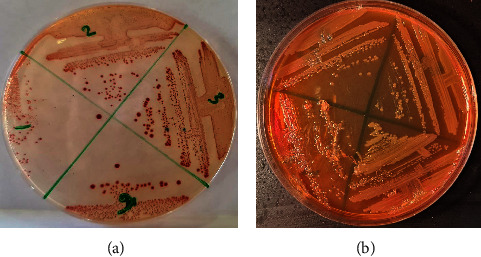
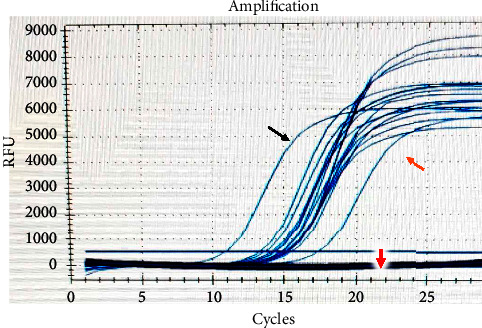
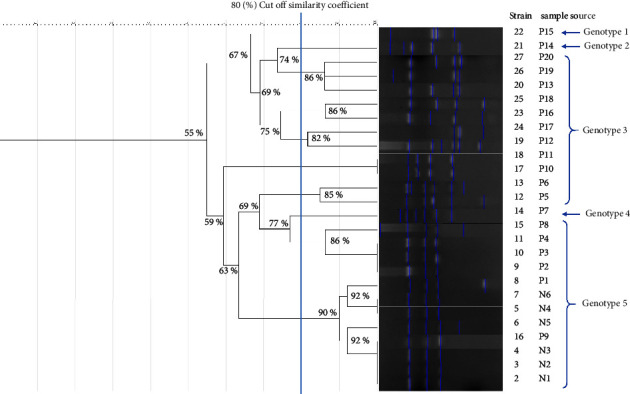
Fifty severely ill "COVID-19" individuals on respiratory support were selected with samples being collected from the pharynx. In addition, another 60 samples were collected from the surrounding environment. Bacterial isolates were diagnosed by microbiological cultures and confirmed by "Vitek 2 system" and real-time PCR. The "Vitek 2 Compact system" was used to evaluate these isolates for antimicrobial susceptibility. The recovered isolates' DNA fingerprints and genetic similarities were performed using ERIC-PCR.
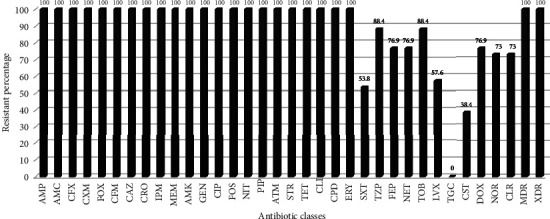
Twenty-six samples were tested positive for (20 out of 50 samples taken from patients, 40%; 6 out of 60 swabs from a nosocomial setting, 10%). All strains isolated from the nosocomial sites were clonally related (have the same genetic lineage) to some strains isolated from patients. However, the majority of the patients' strains were categorised as belonging to the same genetic lineage. Furthermore, "the multi and extensively drug" resistance patterns were seen in all isolates. In addition, total isolates showed resistance to the most commonly tested antibiotics, while none of them was found to be resistant to tigecycline.
Secondary "" infection in severely ill "COVID-19" patients is a serious matter, especially when it has one spot of transmission in the ICU as well as when it is extensively drug-resistant, necessitating an immediate and tactical response to secure the issue.
重症 COVID-19 患者中多重耐药和广泛耐药菌的继发感染通常与住院时间延长和高死亡率相关。本研究旨在评估入住重症监护病房(ICU)的重症 COVID-19 患者合并感染的确切发生率,确定细菌传播至 COVID-19 患者的可能机制,并了解其对不同抗生素的耐药率。
选取 50 例接受呼吸支持的重症“COVID-19”患者,采集咽拭子样本。此外,从周围环境中采集另外 60 份样本。通过微生物培养诊断细菌分离株,并通过“Vitek 2 系统”和实时 PCR 进行确认。使用“Vitek 2 Compact 系统”评估这些分离株的抗菌药敏性。使用 ERIC-PCR 对回收的分离株进行 DNA 指纹图谱和遗传相似性分析。
26 份样本检测出[细菌名称未给出]呈阳性(50 份患者样本中有 20 份,占 40%;60 份医院环境拭子中有 6 份,占 10%)。从医院环境中分离出的所有[细菌名称未给出]菌株与从患者中分离出的一些菌株具有克隆相关性(具有相同的遗传谱系)。然而,大多数患者菌株被归类为属于同一遗传谱系。此外,所有分离株均呈现多重耐药和广泛耐药模式。此外,所有分离株对最常检测的抗生素均耐药,而未发现它们对替加环素耐药。
重症“COVID-19”患者的继发[细菌名称未给出]感染是一个严重问题,尤其是当它在 ICU 中有一个传播点以及出现广泛耐药时,需要立即采取策略性应对措施以解决该问题。