Braxton Emily, Fox David J, Breeze Ben G, Tully Joshua J, Levey Katherine J, Newton Mark E, Macpherson Julie V
Department of Chemistry, University of Warwick, CoventryCV4 7AL, U.K.
Molecular Analytical Science Centre for Doctoral Training, University of Warwick, CoventryCV4 7AL, U.K.
ACS Meas Sci Au. 2022 Sep 26;3(1):21-31. doi: 10.1021/acsmeasuresciau.2c00049. eCollection 2023 Feb 15.
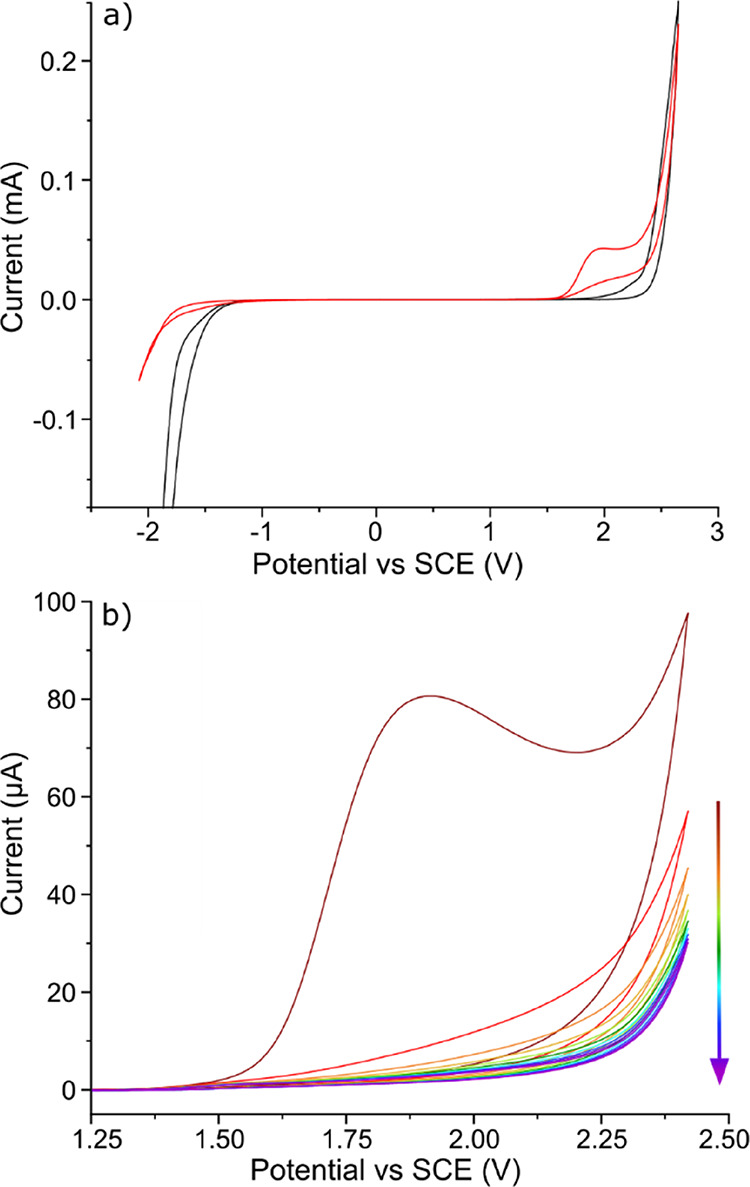
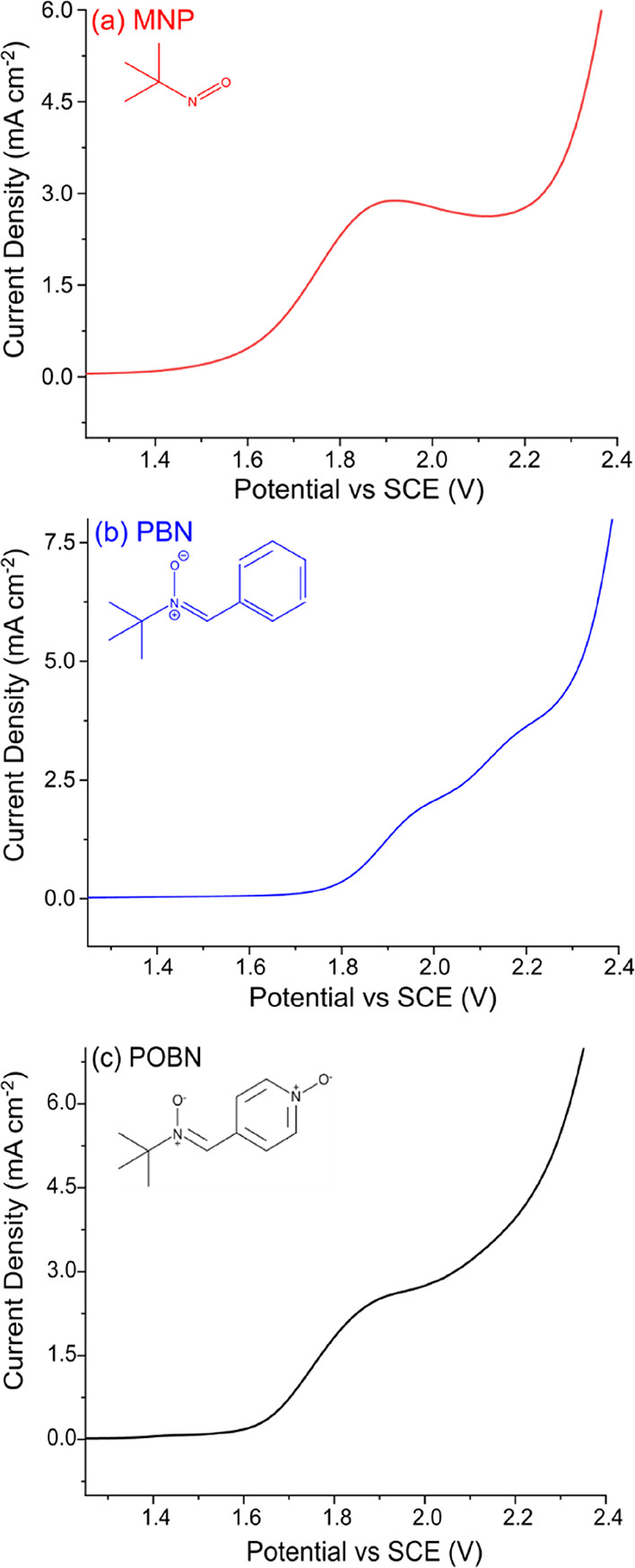
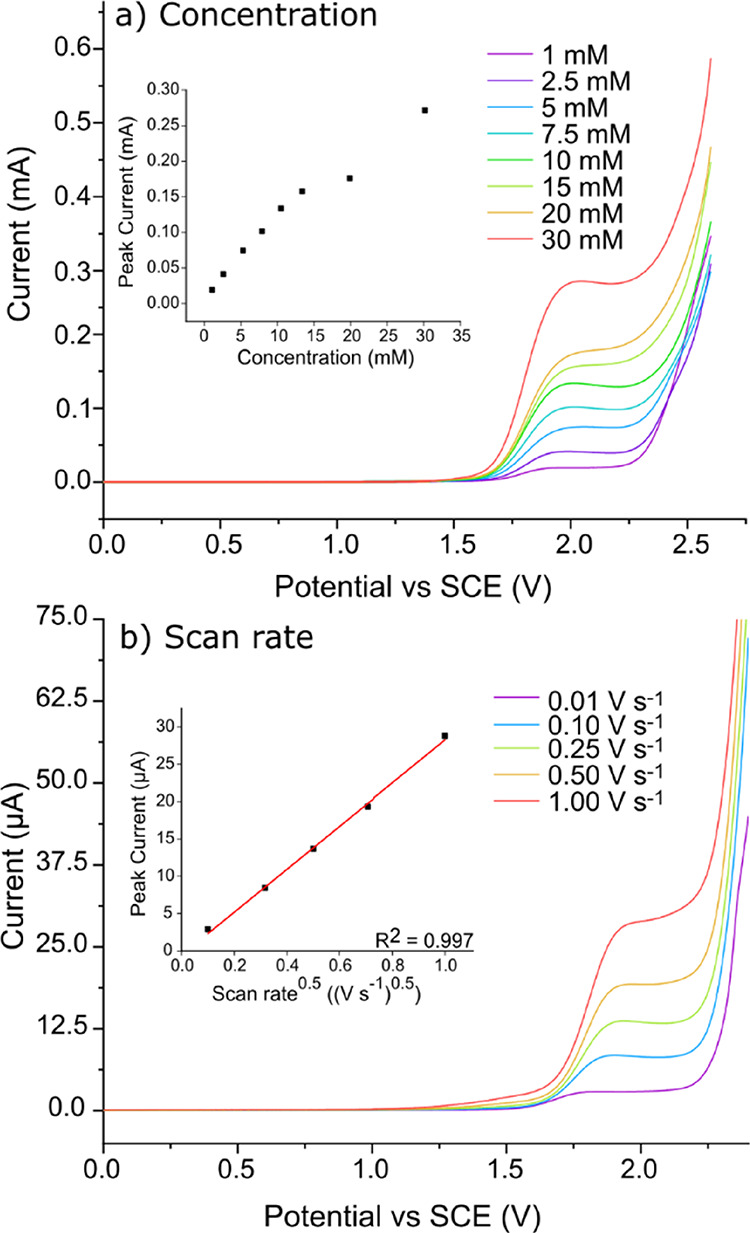
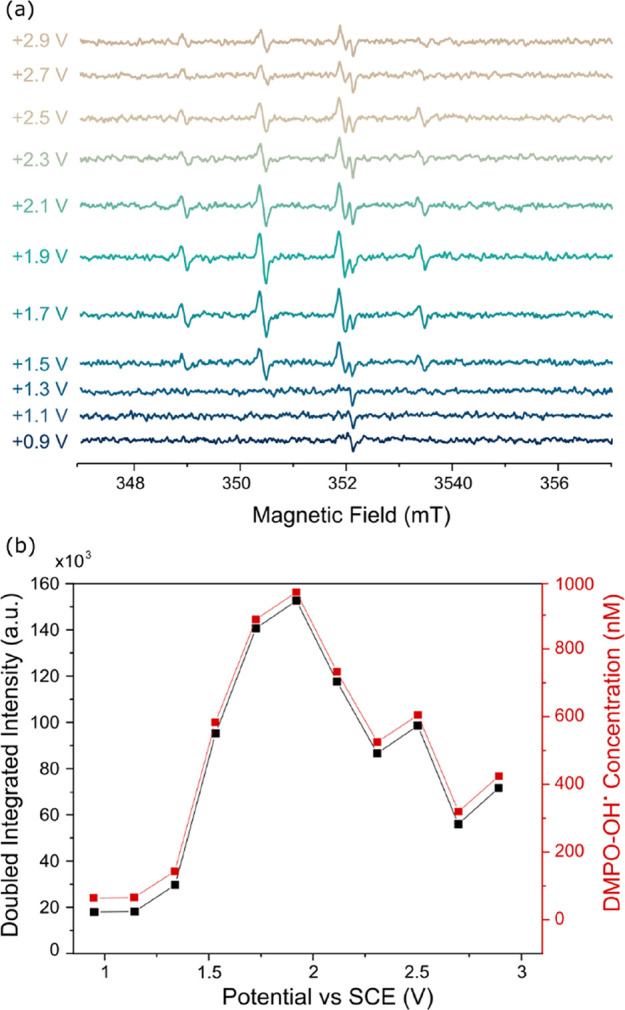
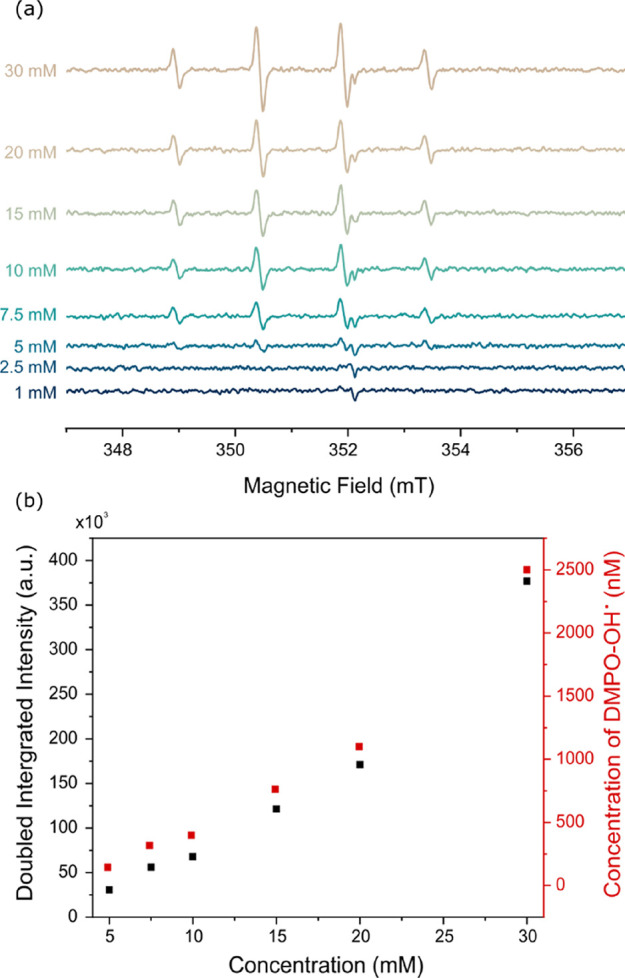
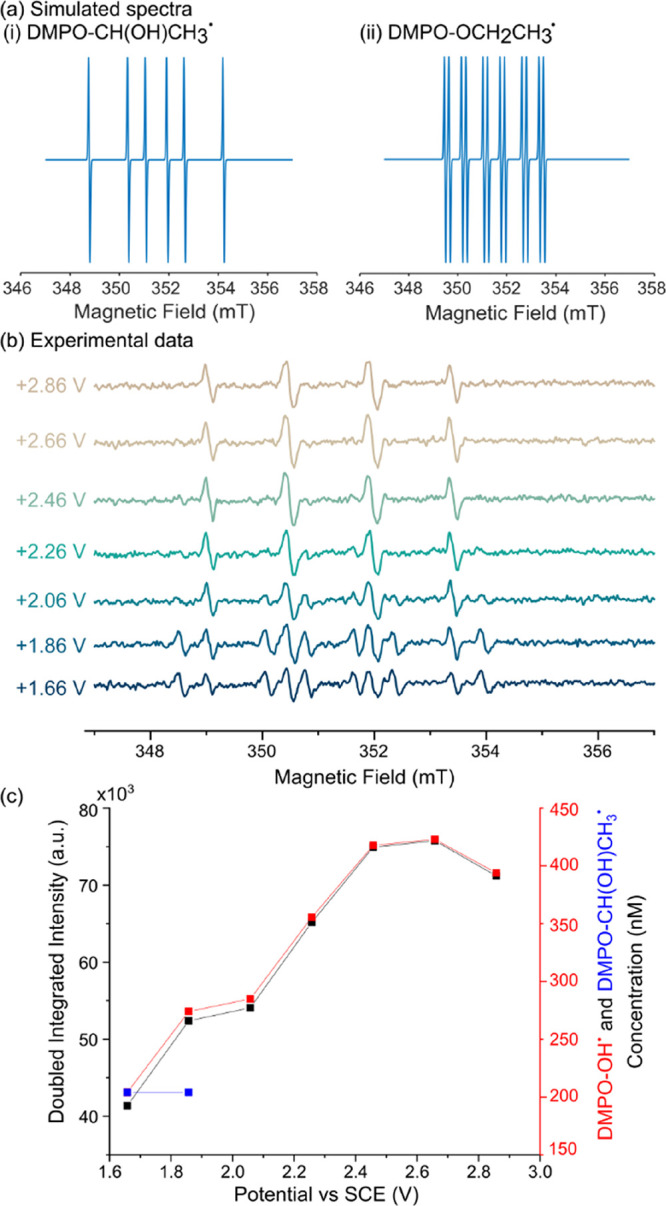
For the detection of electrochemically produced hydroxyl radicals (HO) from the oxidation of water on a boron-doped diamond (BDD) electrode, electron paramagnetic resonance spectroscopy (EPR) in combination with spin trap labels is a popular technique. Here, we show that quantification of the concentration of HO from water oxidation via spin trap electrochemical (EC)-EPR is problematic. This is primarily due to the spin trap oxidizing at potentials less positive than water, resulting in the same spin trap-OH adduct as formed from the solution reaction of OH with the spin trap. We illustrate this through consideration of 5,5-dimethyl-1-pyrroline -oxide (DMPO) as a spin trap for OH. DMPO oxidation on a BDD electrode in an acidic aqueous solution occurs at a peak current potential of +1.90 V vs SCE; the current for water oxidation starts to rise rapidly at ca. +2.3 V vs SCE. EC-EPR spectra show signatures due to the spin trap adduct (DMPO-OH) at potentials lower than that predicted thermodynamically (for water/HO) and in the region for DMPO oxidation. Increasing the potential into the water oxidation region, surprisingly, shows a lower DMPO-OH concentration than when the potential is in the DMPO oxidation region. This behavior is attributed to further oxidation of DMPO-OH, production of fouling products on the electrode surface, and bubble formation. Radical scavengers (ethanol) and other spin traps, here --butyl--phenylnitrone, -(4-pyridyl -oxide)---butylnitrone, and 2-methyl-2-nitrosopropane dimer, also show electrochemical oxidation signals less positive than that of water on a BDD electrode. Such behavior also complicates their use for the intended application.
对于检测硼掺杂金刚石(BDD)电极上水电氧化产生的电化学羟基自由基(HO),电子顺磁共振光谱(EPR)结合自旋捕获标记是一种常用技术。在此,我们表明通过自旋捕获电化学(EC)-EPR对水电氧化产生的HO浓度进行定量存在问题。这主要是由于自旋捕获剂在比水更正的电位下氧化,导致形成与OH与自旋捕获剂的溶液反应相同的自旋捕获-OH加合物。我们通过考虑5,5-二甲基-1-吡咯啉-N-氧化物(DMPO)作为OH的自旋捕获剂来说明这一点。在酸性水溶液中,BDD电极上DMPO的氧化发生在相对于饱和甘汞电极(SCE)为+1.90 V的峰值电流电位处;水氧化的电流在约+2.3 V vs SCE时开始迅速上升。EC-EPR光谱显示在低于热力学预测(对于水/HO)的电位以及DMPO氧化区域出现自旋捕获加合物(DMPO-OH)的信号特征。令人惊讶的是,将电位增加到水氧化区域时,DMPO-OH浓度比电位处于DMPO氧化区域时更低。这种行为归因于DMPO-OH的进一步氧化、电极表面污垢产物的产生以及气泡形成。自由基清除剂(乙醇)和其他自旋捕获剂,此处为叔丁基苯基硝酮、4-吡啶基氧化物叔丁基硝酮和2-甲基-2-亚硝基丙烷二聚体,在BDD电极上也显示出比水更正的电化学氧化信号。这种行为也使其在预期应用中的使用变得复杂。