Yu Yao, Zhang Ning, Xiang Ben, Ding Ning, Liu Jian, Huang Jiangmei, Zhao Min, Zhao Yuqian, Wang Yi, Ma Zhenhe
Northeastern University at Qinhuangdao, School of Control Engineering, Qinhuangdao, China.
Hebei Key Laboratory of Micro-Nano Precision Optical Sensing and Measurement Technology, Qinhuangdao, China.
Neurophotonics. 2023 Jan;10(1):015005. doi: 10.1117/1.NPh.10.1.015005. Epub 2023 Feb 16.
Antiamyloid ( ) immunotherapy is a promising therapeutic strategy for Alzheimer's disease (AD) but generates large amounts of soluble peptides that could overwhelm the clearance pathway, leading to serious side effects. Direct implications of in glymphatic drainage transport for cerebral vasculature and tissue are not well known. Studies are needed to resolve this issue and pave the way to better monitoring abnormal vascular events that may occur in -modifying therapies for AD.
The objective is to characterize the modification of cerebral vasculature and tissue induced by soluble abundantly present in the glymphatic clearance system.
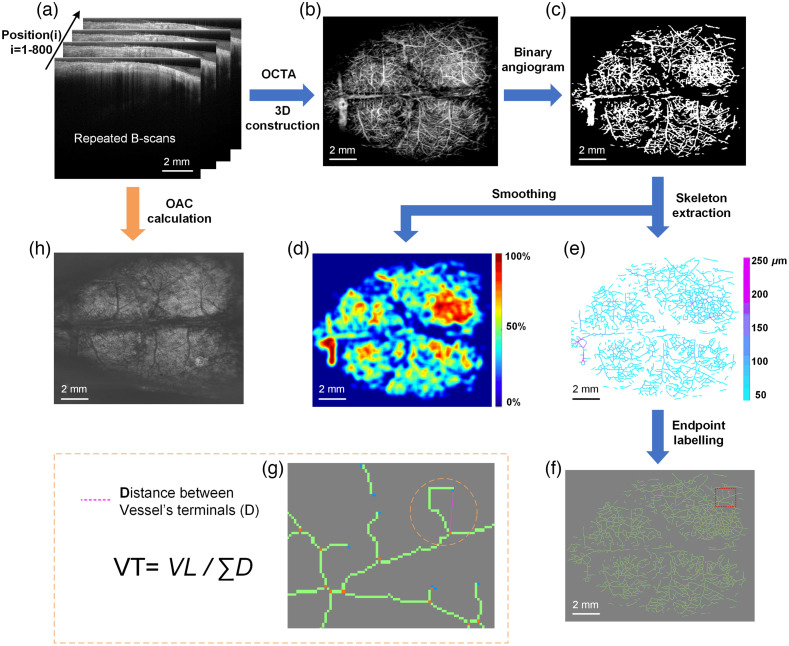
peptide was injected intracerebroventricularly and swept-source optical coherence tomography (SS-OCT) was used to monitor the progression of changes in the brain microvascular network and tissue over 14 days. Parameters reflecting vascular morphology and structure as well as tissue status were quantified and compared before treatment.
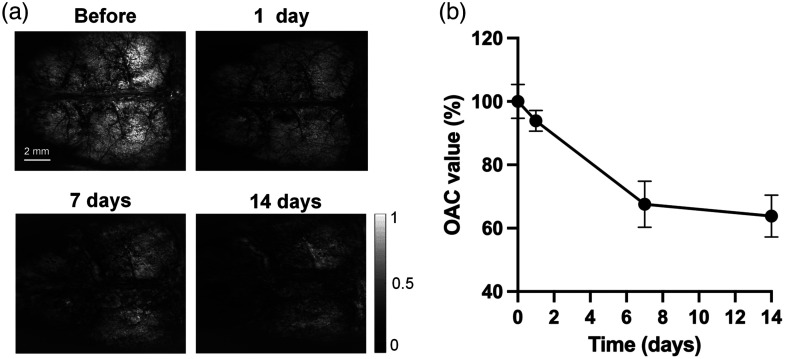
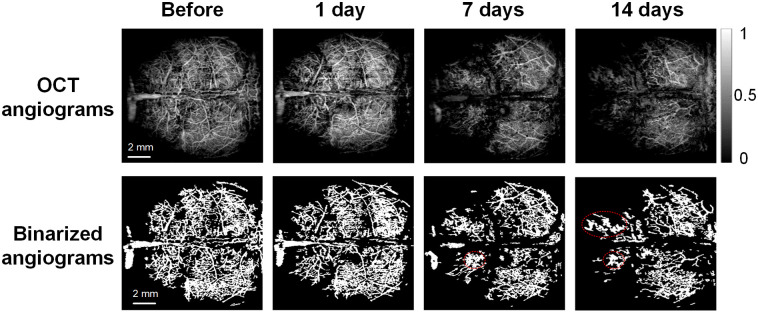
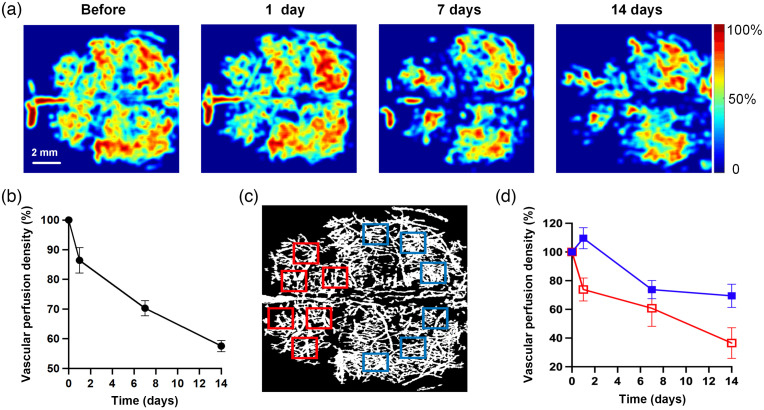
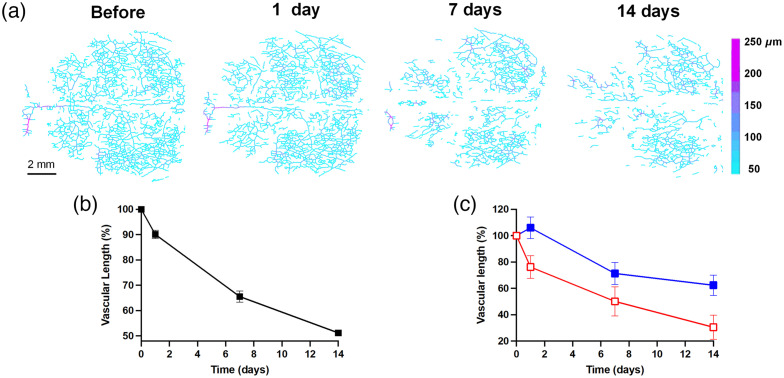
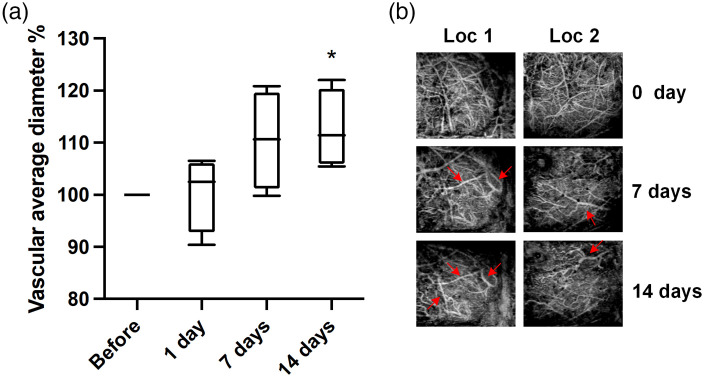
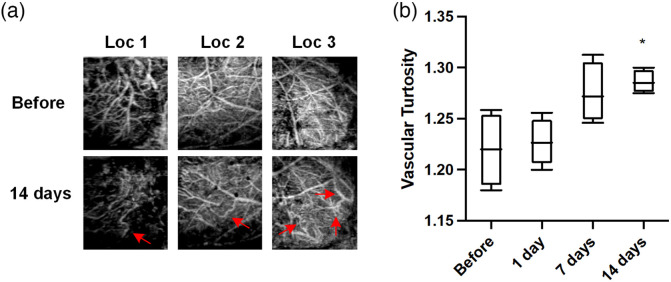
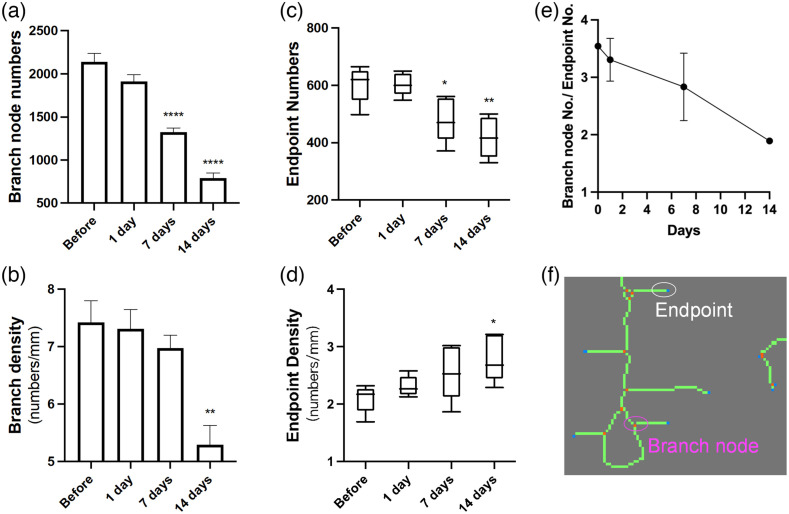
Vascular perfusion density, vessel length, and branch density decreased sharply and persistently following peptide administration. In comparison, vascular average diameter and vascular tortuosity were moderately increased at the late stage of monitoring. Endpoint density gradually increased, and the global optical attenuation coefficient value decreased significantly over time.
burden in the glymphatic system directly contributes to cerebrovascular structural and morphological abnormalities and global brain tissue damage, suggesting severe deleterious properties of soluble cerebrospinal fluid- . We also show that OCT can be used as an effective tool to monitor cerebrovascular dynamics and tissue property changes in response to therapeutic treatments in drug discovery research.
抗淀粉样蛋白( )免疫疗法是治疗阿尔茨海默病(AD)的一种有前景的治疗策略,但会产生大量可溶性 肽,这可能会超出清除途径的负荷,导致严重的副作用。 在脑淋巴引流运输中对脑血管和组织的直接影响尚不清楚。需要开展研究来解决这一问题,并为更好地监测AD的 修饰疗法中可能发生的异常血管事件铺平道路。
目的是表征脑淋巴清除系统中大量存在的可溶性 对脑血管和组织的修饰作用。
将 肽脑室内注射,并使用扫频光学相干断层扫描(SS-OCT)监测14天内脑微血管网络和组织变化的进展。对反映血管形态和结构以及组织状态的参数进行量化,并与治疗前进行比较。
给予 肽后,血管灌注密度、血管长度和分支密度急剧且持续下降。相比之下,在监测后期血管平均直径和血管迂曲度适度增加。端点密度逐渐增加,整体光学衰减系数值随时间显著下降。
脑淋巴系统中的 负荷直接导致脑血管结构和形态异常以及全脑组织损伤,表明可溶性脑脊液 具有严重的有害特性。我们还表明,在药物发现研究中,OCT可作为监测治疗反应中脑血管动力学和组织特性变化的有效工具。