Vizely Katrina, Wagner Karl T, Mandla Serena, Gustafson Dakota, Fish Jason E, Radisic Milica
Department of Chemical Engineering and Applied Chemistry, University of Toronto, Toronto, ON M5S 3E5, Canada.
Institute of Biomaterials and Biomedical Engineering, University of Toronto, Toronto, ON M5S 3G9, Canada.
iScience. 2023 Jan 14;26(2):105984. doi: 10.1016/j.isci.2023.105984. eCollection 2023 Feb 17.
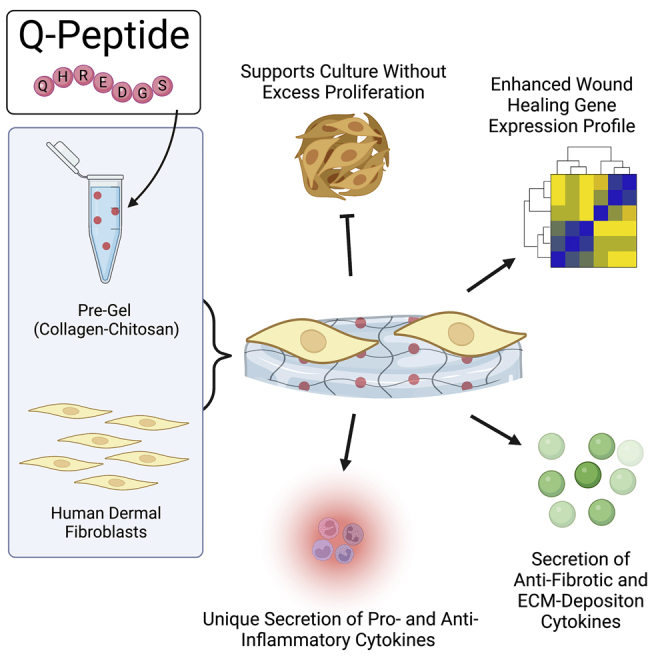
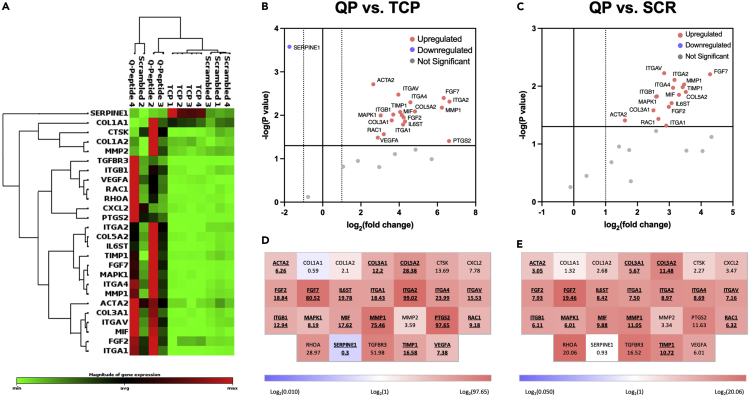
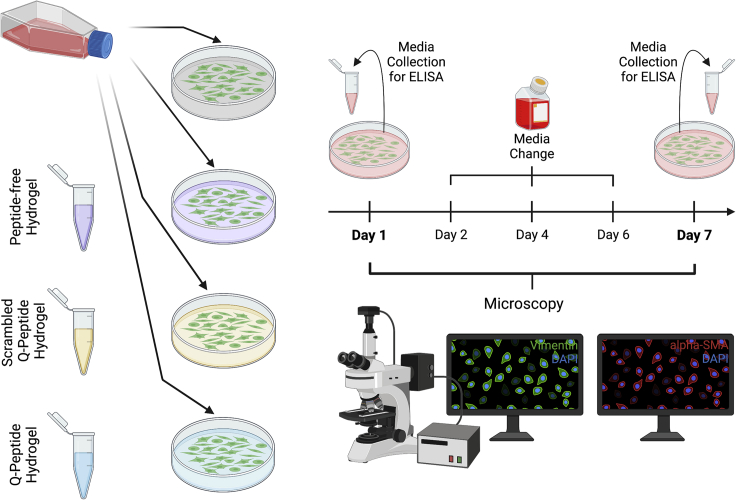
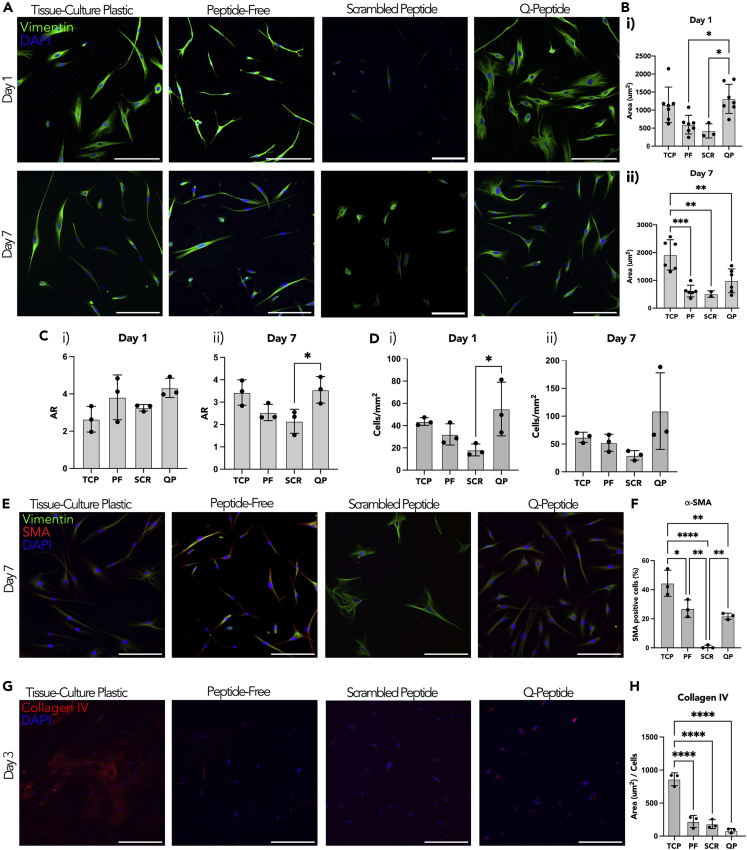
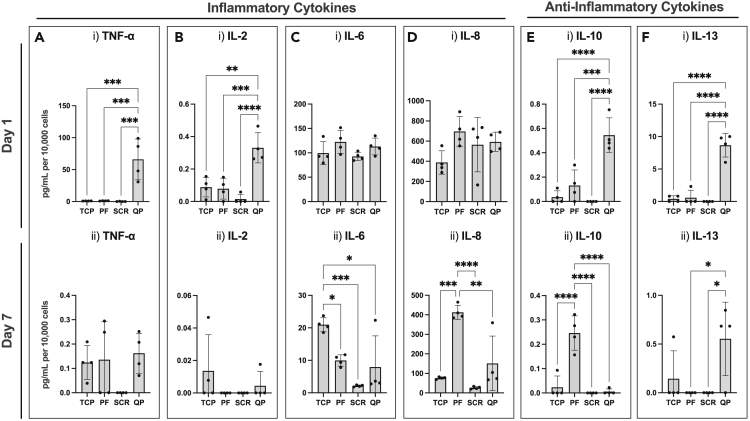
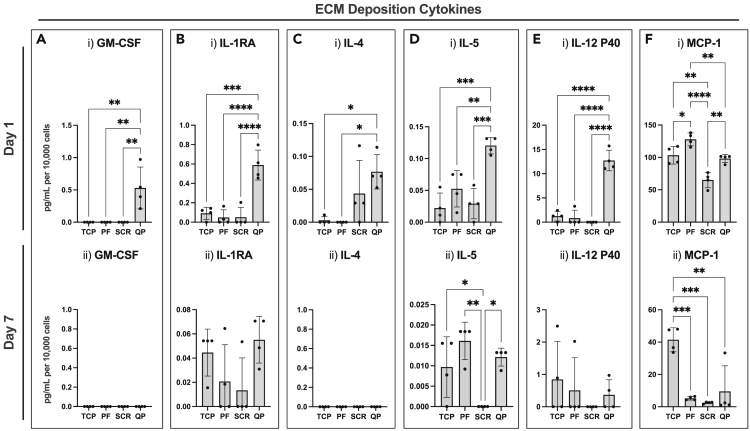
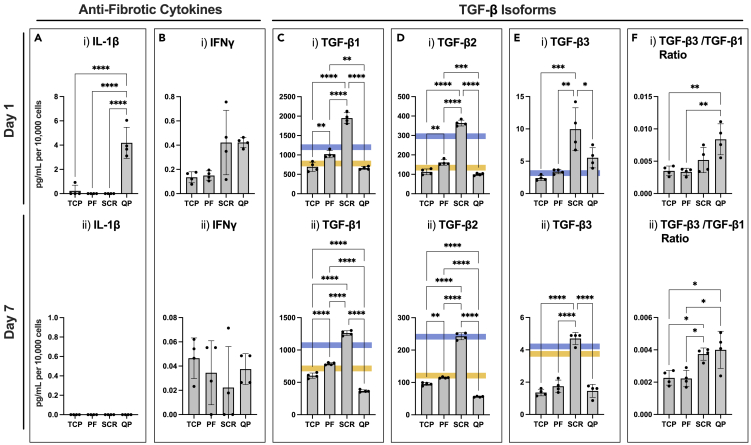
By providing an ideal environment for healing, biomaterials can be designed to facilitate and encourage wound regeneration. As the wound healing process is complex, there needs to be consideration for the cell types playing major roles, such as fibroblasts. As a major cell type in the dermis, fibroblasts have a large impact on the processes and outcomes of wound healing. Prevopisly, conjugating the angiopoietin-1 derived Q-peptide (QHREDGS) to a collagen-chitosan hydrogel created a biomaterial with success in accelerating wound healing. This study utilized solvent cast Q-peptide conjugated collagen-chitosan seeded with fibroblast monolayers to investigate the direct impact of the material on this major cell type. After 24 h, fibroblasts had a significant change in release of anti-inflammatory, pro-healing, and ECM deposition cytokines, with demonstrated immunomodulatory effects on macrophages and upregulated expression of critical wound healing genes.
通过提供理想的愈合环境,可以设计生物材料来促进和鼓励伤口再生。由于伤口愈合过程复杂,需要考虑起主要作用的细胞类型,如成纤维细胞。作为真皮中的主要细胞类型,成纤维细胞对伤口愈合的过程和结果有很大影响。此前,将血管生成素-1衍生的Q肽(QHREDGS)与胶原-壳聚糖水凝胶结合,成功制备出一种能加速伤口愈合的生物材料。本研究利用溶剂浇铸法将Q肽偶联到接种有成纤维细胞单层的胶原-壳聚糖上,以研究该材料对这种主要细胞类型的直接影响。24小时后,成纤维细胞在抗炎、促进愈合和细胞外基质沉积细胞因子的释放方面有显著变化,对巨噬细胞具有免疫调节作用,并上调关键伤口愈合基因的表达。