V G Rahul, Ellur Govindaraj, A Gaber Amir, Govindappa Prem Kumar, Elfar John C
Department of Orthopaedics and Sports Medicine, University of Arizona College of Medicine, Tucson, AZ, 85724, USA.
Cell Death Discov. 2024 Oct 4;10(1):428. doi: 10.1038/s41420-024-02199-6.
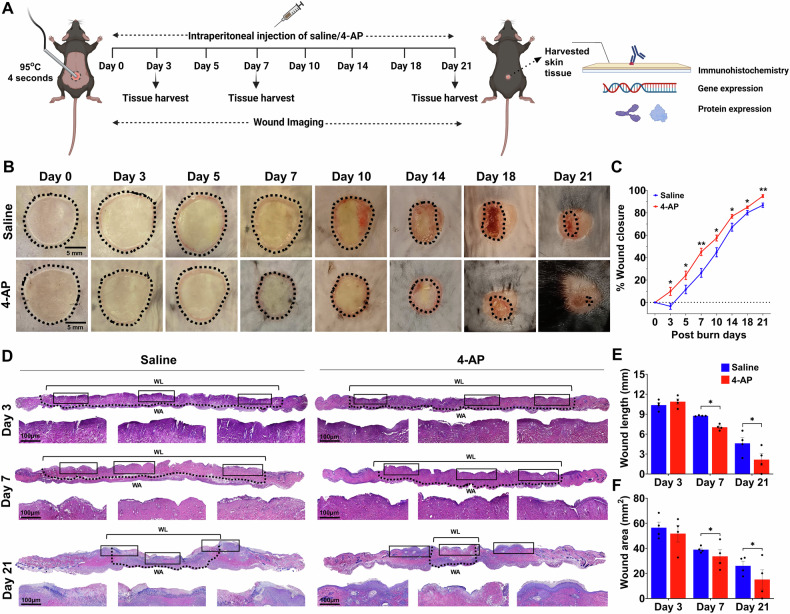
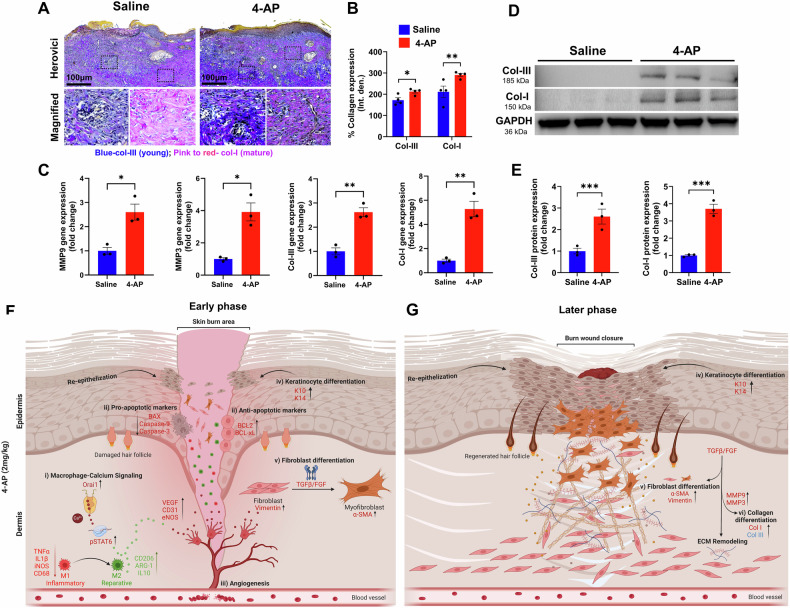
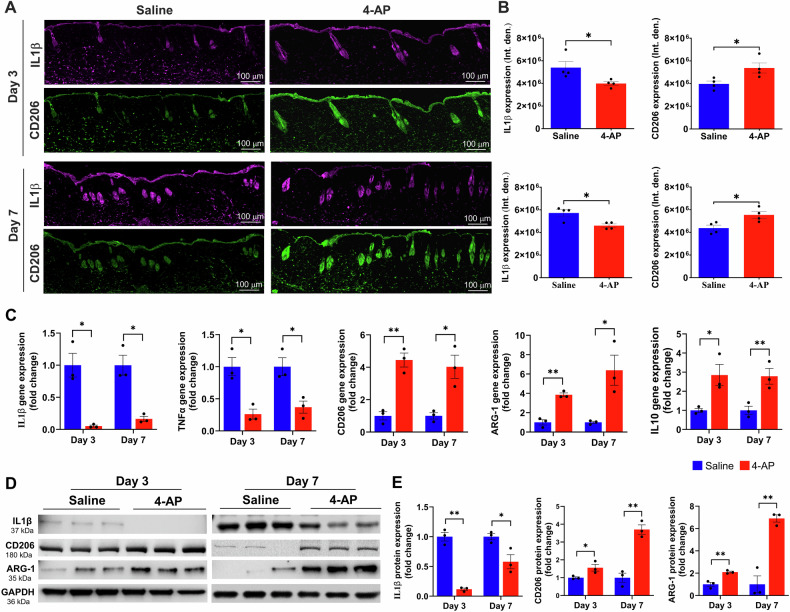
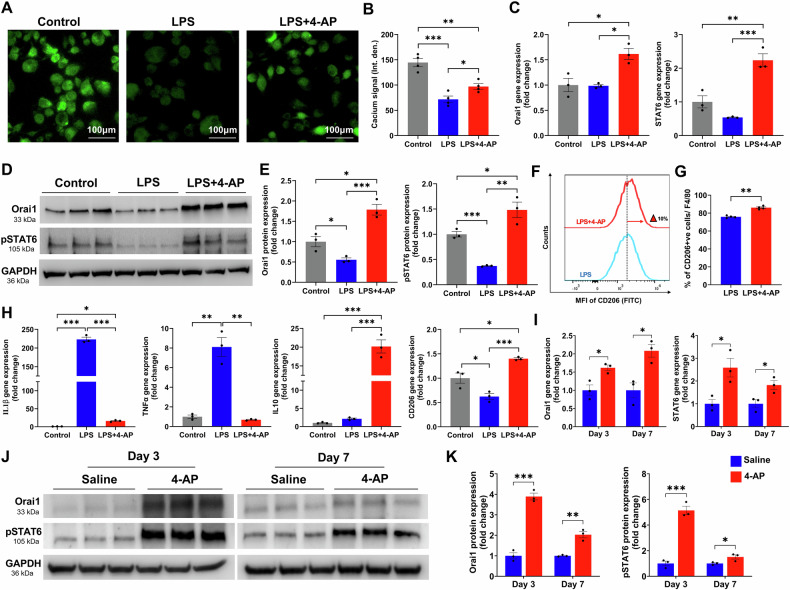
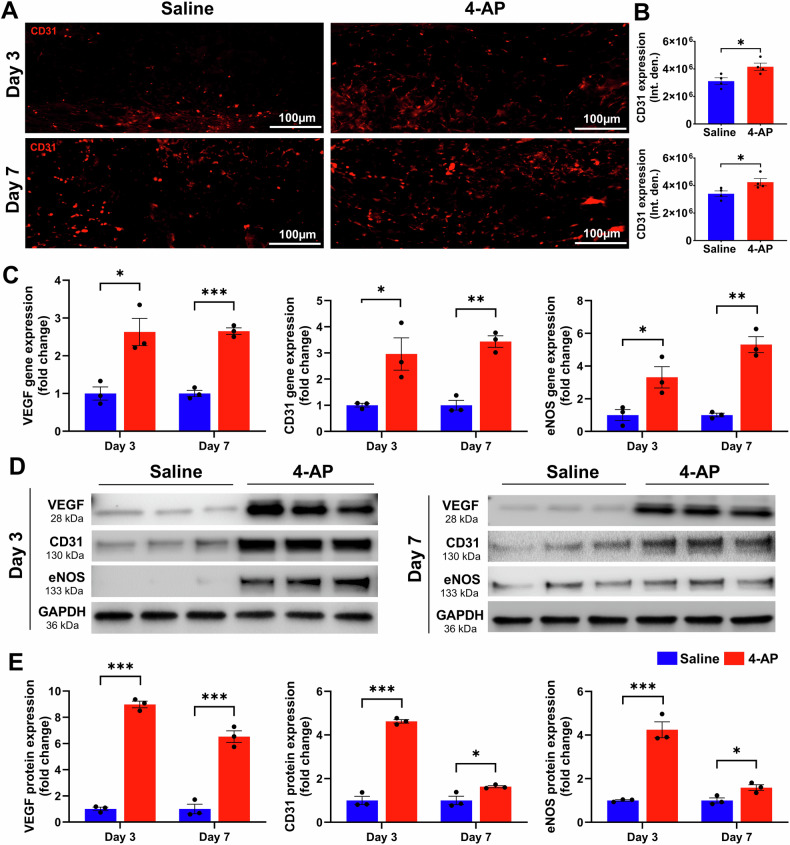
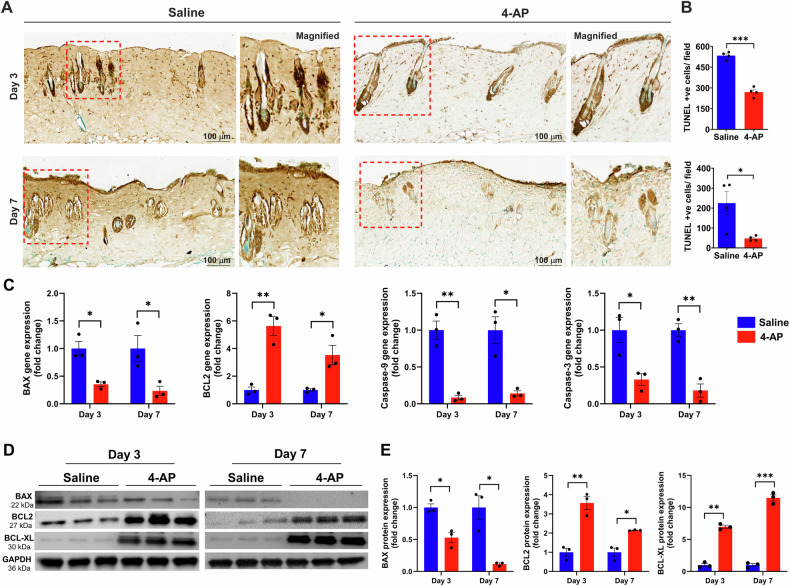
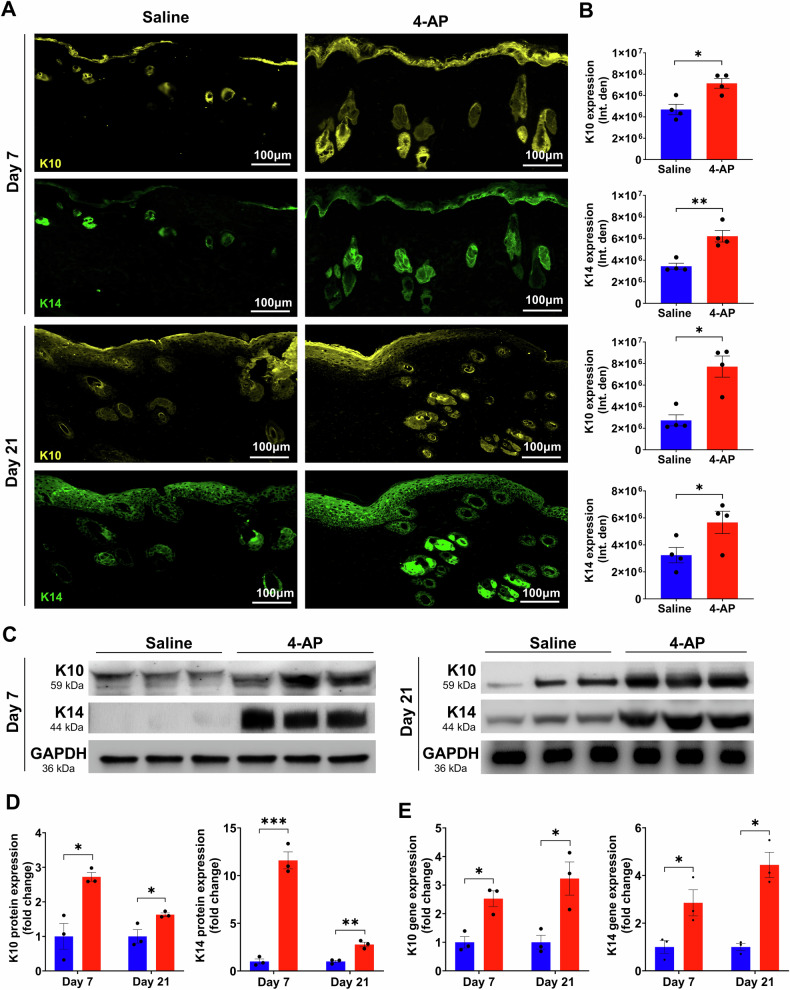
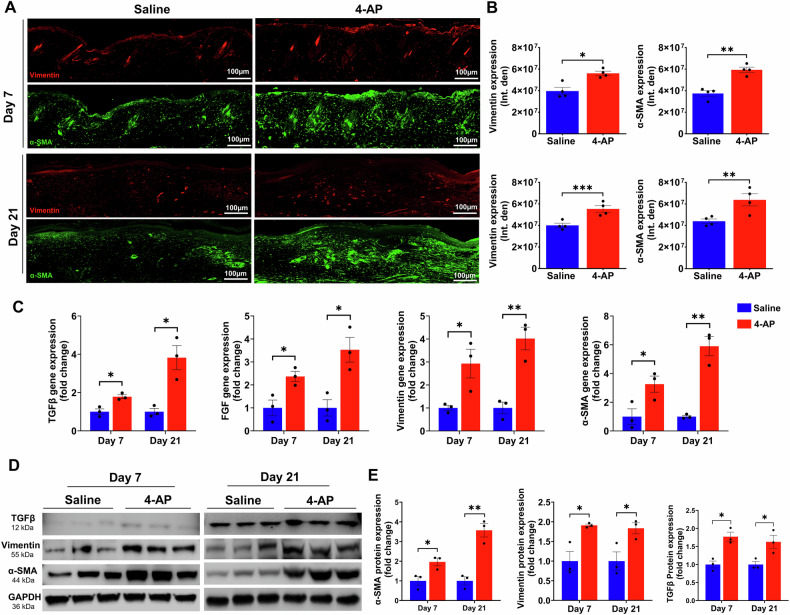
Severe thermal skin burns are complicated by inflammation and apoptosis, which delays wound healing and contributes to significant morbidity. Diverse treatments demonstrate limited success in mitigating these processes to accelerate healing. Agents that alter cell behavior to improve healing would alter treatment paradigms. We repurposed 4-aminopyridine (4-AP), a drug approved by the US FDA for multiple sclerosis, to treat severe burns in mice (10-week-old C57BL/6 J male mice weighing 25 ± 3 g). We found that 4-AP, in the early stages of burn healing, significantly reduced the expression of pro-inflammatory cytokines IL1β and TNFα while increasing the expression of anti-inflammatory markers CD206, ARG-1, and IL10. We demonstrated increased intracellular calcium effects of 4-AP through Orai1-pSTAT6 signaling, where 4-AP significantly mitigated inflammatory effects by promoting M2 macrophage differentiation in in-vitro macrophages and post-skin burn tissues. 4-AP attenuated apoptosis, with decreases in apoptotic markers BAX, caspase-9, and caspase-3 and increases in anti-apoptotic markers BCL2 and BCL-XL. Furthermore, 4-AP promoted angiogenesis through increases in the expression of CD31, VEGF, and eNOS. Together, these likely contributed to accelerated burn wound closure, as demonstrated in increased keratinocyte proliferation (K14) and differentiation (K10) markers. In the later stages of burn healing, 4-AP increased TGFβ and FGF levels, which are known to mark the transformation of fibroblasts to myofibroblasts. This was further demonstrated by an increased expression of α-SMA and vimentin, as well as higher levels of collagen I and III, MMP 3, and 9 in mice treated with 4-AP. Our findings support the idea that 4-AP may have a novel, clinically relevant therapeutic use in promoting burn wound healing.
严重的皮肤热烧伤会并发炎症和细胞凋亡,这会延迟伤口愈合并导致显著的发病率。各种治疗方法在减轻这些过程以加速愈合方面取得的成功有限。改变细胞行为以促进愈合的药物将改变治疗模式。我们将美国食品药品监督管理局(FDA)批准用于治疗多发性硬化症的药物4-氨基吡啶(4-AP)重新用于治疗小鼠(10周龄、体重25±3 g的C57BL/6 J雄性小鼠)的严重烧伤。我们发现,在烧伤愈合的早期阶段,4-AP显著降低促炎细胞因子IL1β和TNFα的表达,同时增加抗炎标志物CD206、ARG-1和IL10的表达。我们通过Orai1-pSTAT6信号通路证明了4-AP增加细胞内钙的作用,其中4-AP通过促进体外巨噬细胞和皮肤烧伤后组织中的M2巨噬细胞分化,显著减轻炎症作用。4-AP减轻细胞凋亡,凋亡标志物BAX、半胱天冬酶-9和半胱天冬酶-3减少,抗凋亡标志物BCL2和BCL-XL增加。此外,4-AP通过增加CD31、VEGF和eNOS的表达促进血管生成。这些共同作用可能促成了烧伤创面愈合的加速,角质形成细胞增殖(K14)和分化(K10)标志物的增加证明了这一点。在烧伤愈合的后期阶段,4-AP增加了TGFβ和FGF水平,已知这些水平标志着成纤维细胞向肌成纤维细胞的转变。4-AP处理的小鼠中α-SMA和波形蛋白的表达增加,以及I型和III型胶原蛋白、MMP 3和9的水平升高,进一步证明了这一点。我们的研究结果支持这样一种观点,即4-AP在促进烧伤创面愈合方面可能具有新的、与临床相关的治疗用途。