Kerner Gaspard, Neehus Anna-Lena, Philippot Quentin, Bohlen Jonathan, Rinchai Darawan, Kerrouche Nacim, Puel Anne, Zhang Shen-Ying, Boisson-Dupuis Stéphanie, Abel Laurent, Casanova Jean-Laurent, Patin Etienne, Laval Guillaume, Quintana-Murci Lluis
Institut Pasteur, Université Paris Cité, CNRS UMR2000, Human Evolutionary Genetics Unit, 75015 Paris, France.
Laboratory of Human Genetics of Infectious Diseases, INSERM UMR 1163, Necker Hospital for Sick Children, 75015 Paris, France.
Cell Genom. 2023 Jan 13;3(2):100248. doi: 10.1016/j.xgen.2022.100248. eCollection 2023 Feb 8.
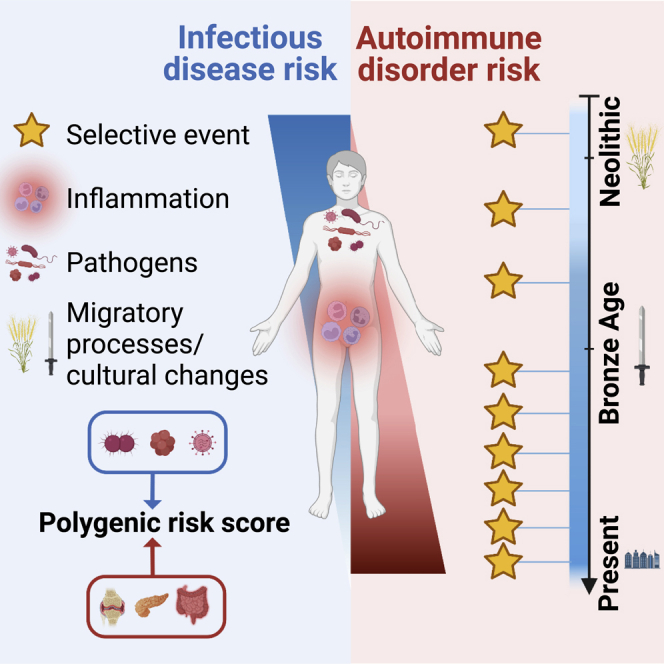
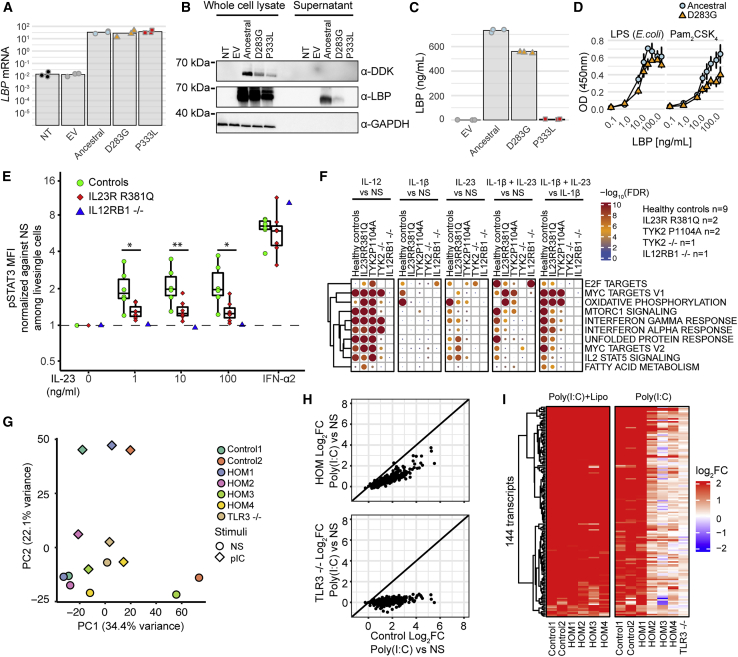
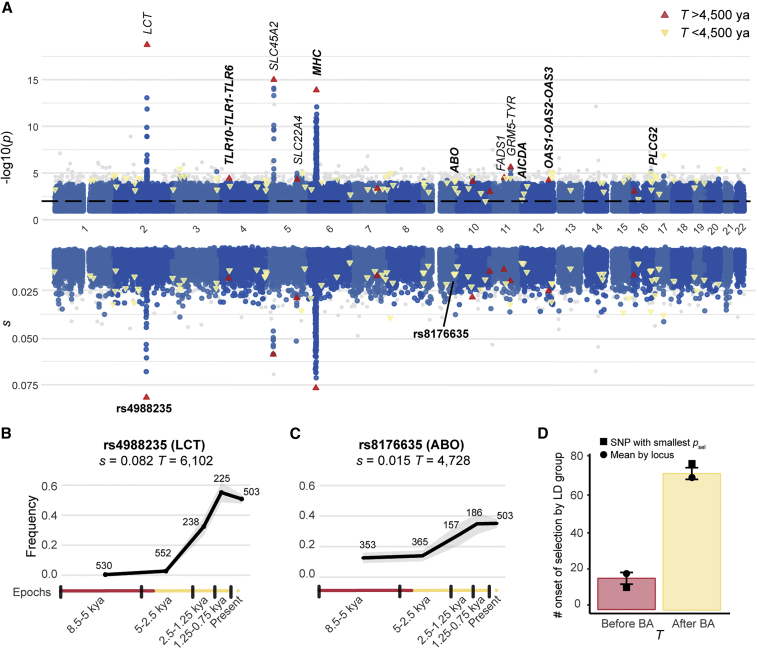
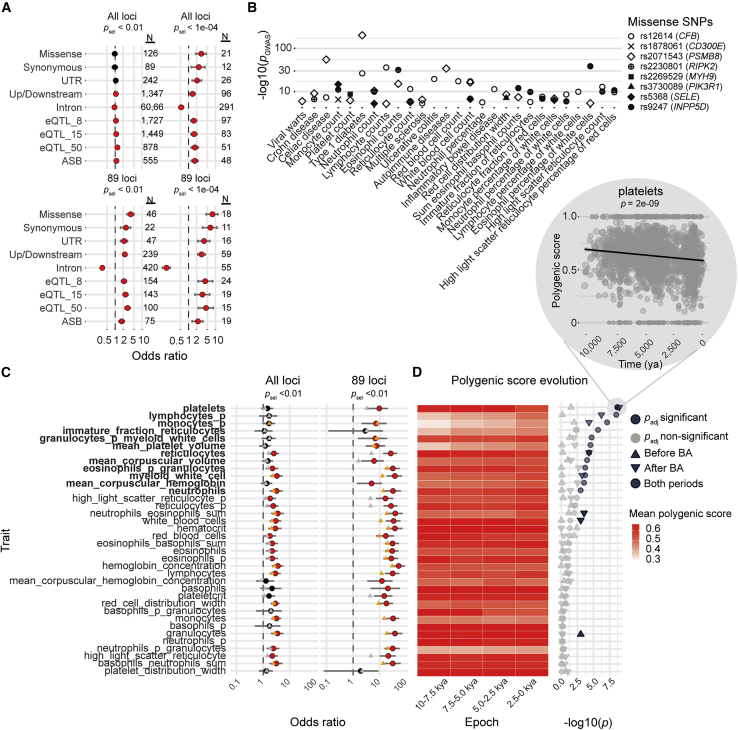
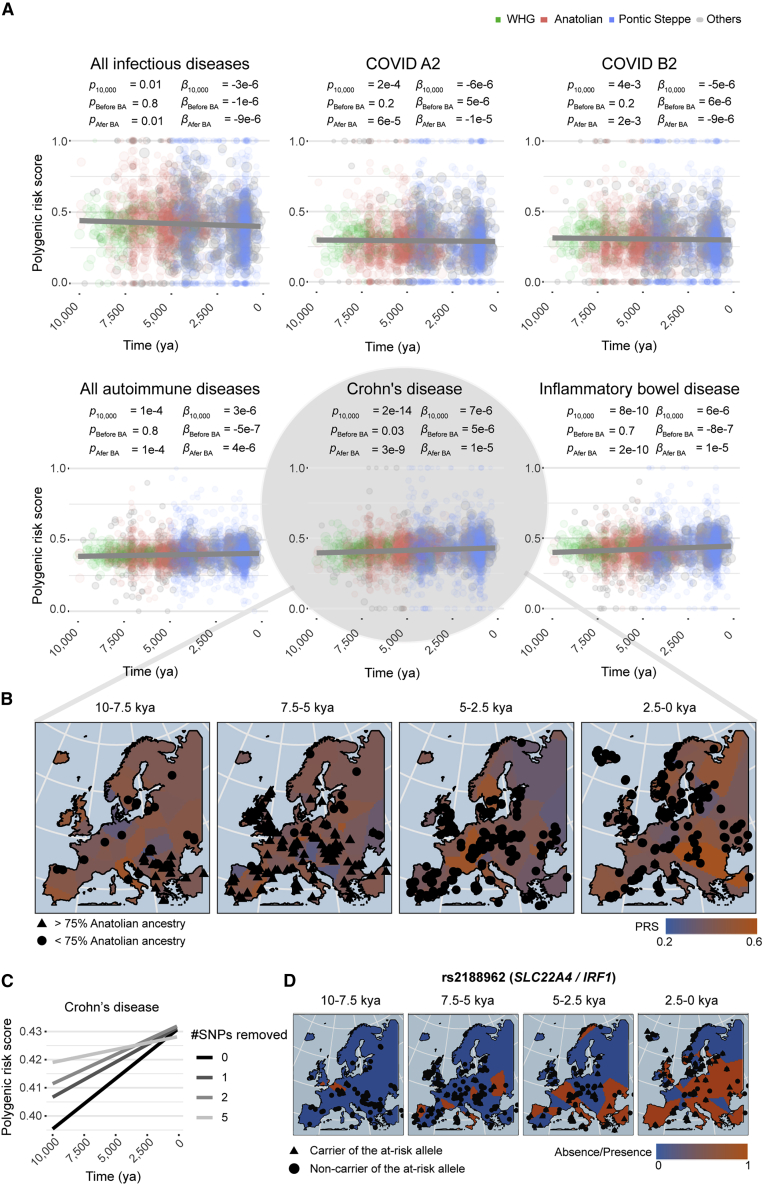
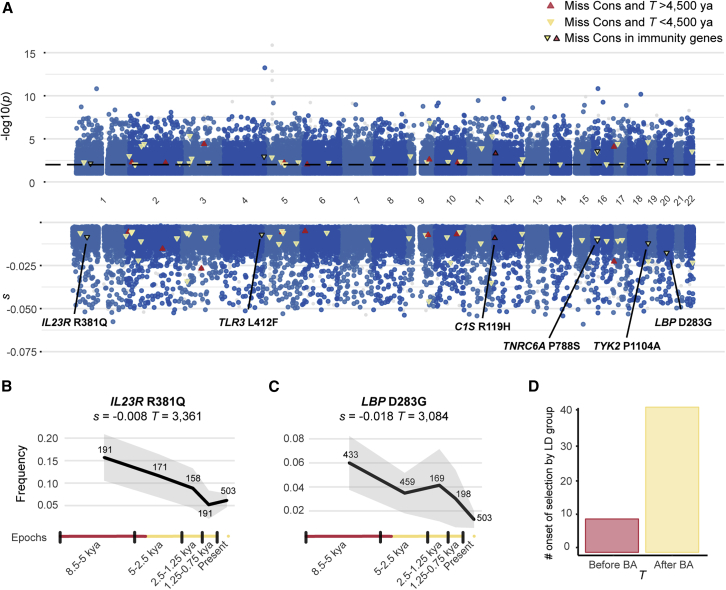
Ancient genomics can directly detect human genetic adaptation to environmental cues. However, it remains unclear how pathogens have exerted selective pressures on human genome diversity across different epochs and affected present-day inflammatory disease risk. Here, we use an ancestry-aware approximate Bayesian computation framework to estimate the nature, strength, and time of onset of selection acting on 2,879 ancient and modern European genomes from the last 10,000 years. We found that the bulk of genetic adaptation occurred after the start of the Bronze Age, <4,500 years ago, and was enriched in genes relating to host-pathogen interactions. Furthermore, we detected directional selection acting on specific leukocytic lineages and experimentally demonstrated that the strongest negatively selected candidate variant in immunity genes, lipopolysaccharide-binding protein () D283G, is hypomorphic. Finally, our analyses suggest that the risk of inflammatory disorders has increased in post-Neolithic Europeans, possibly because of antagonistic pleiotropy following genetic adaptation to pathogens.
古代基因组学能够直接检测人类对环境线索的遗传适应性。然而,目前尚不清楚病原体如何在不同时期对人类基因组多样性施加选择压力,并影响当今炎症性疾病的风险。在此,我们使用一种考虑祖先的近似贝叶斯计算框架,来估计过去一万年中作用于2879个古代和现代欧洲基因组的选择的性质、强度和起始时间。我们发现,大部分遗传适应发生在青铜时代开始之后,即距今不到4500年前,并且在与宿主-病原体相互作用相关的基因中富集。此外,我们检测到针对特定白细胞谱系的定向选择,并通过实验证明,免疫基因中最强的负选择候选变体脂多糖结合蛋白(LBP)D283G是低表达的。最后,我们的分析表明,新石器时代后的欧洲人患炎症性疾病的风险有所增加,这可能是由于对病原体的遗传适应后出现的拮抗多效性所致。