Department of Psychology, Denison University, Granville, OH, United States of America.
PLoS One. 2023 Feb 24;18(2):e0282146. doi: 10.1371/journal.pone.0282146. eCollection 2023.
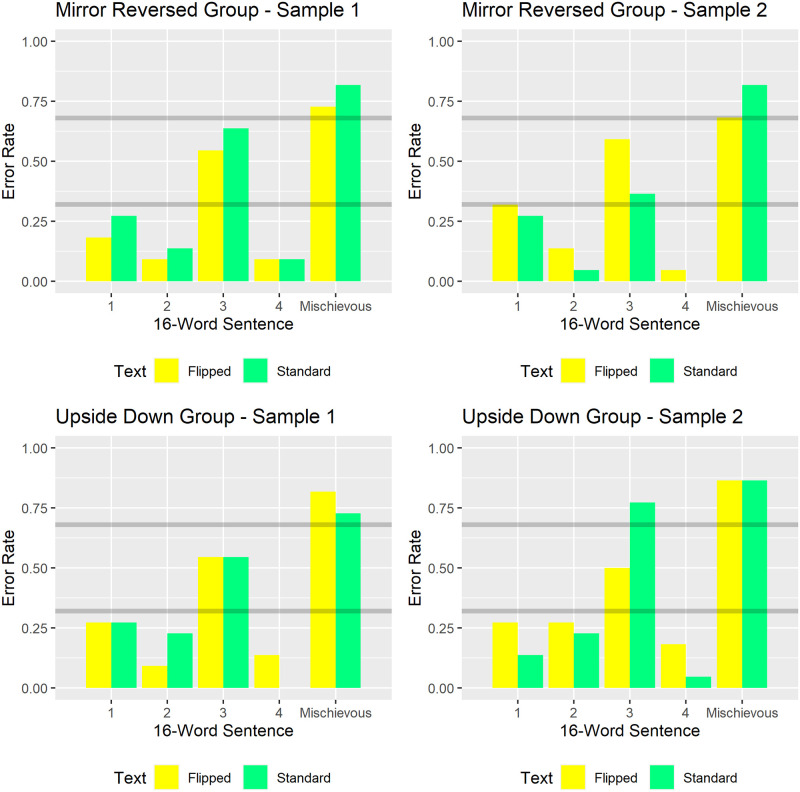
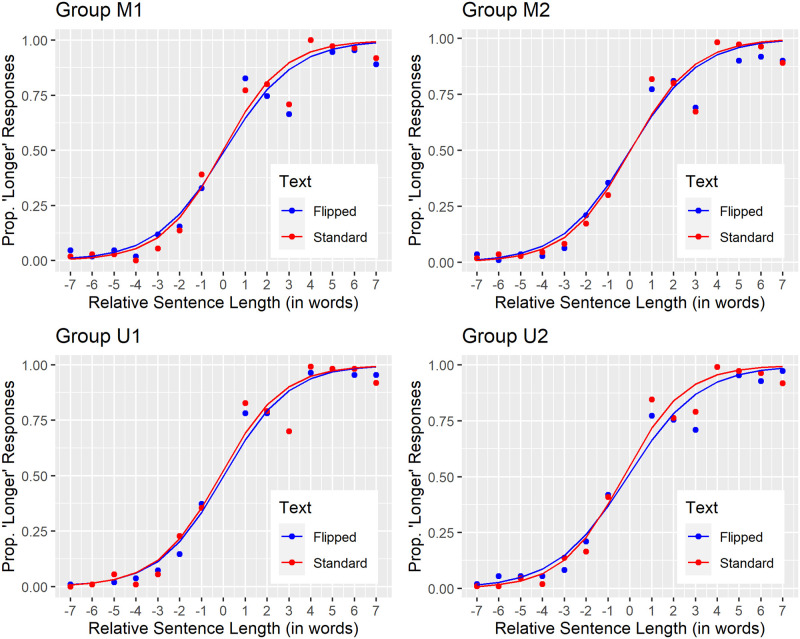
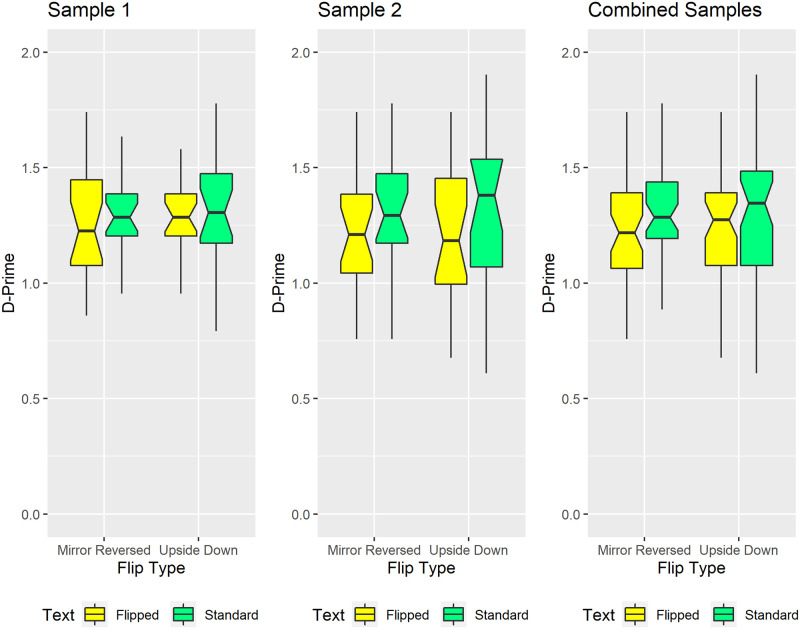
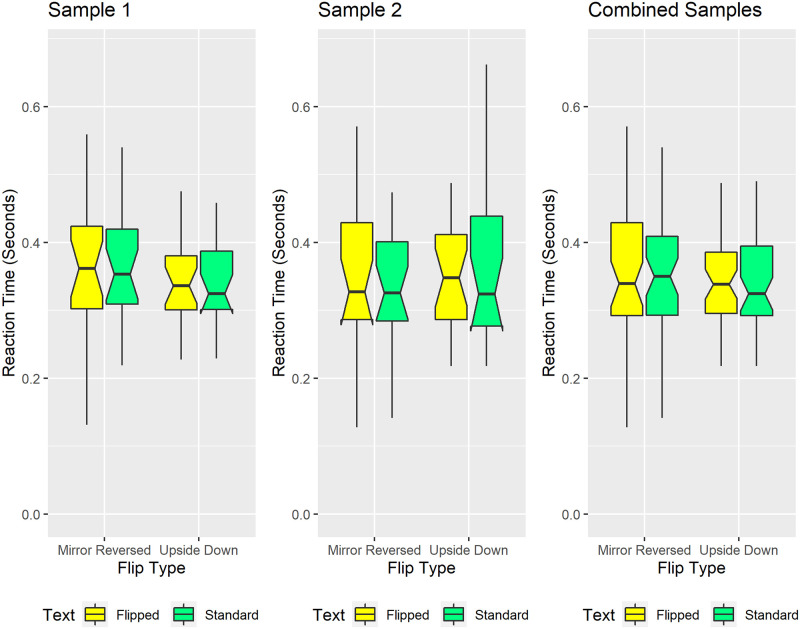
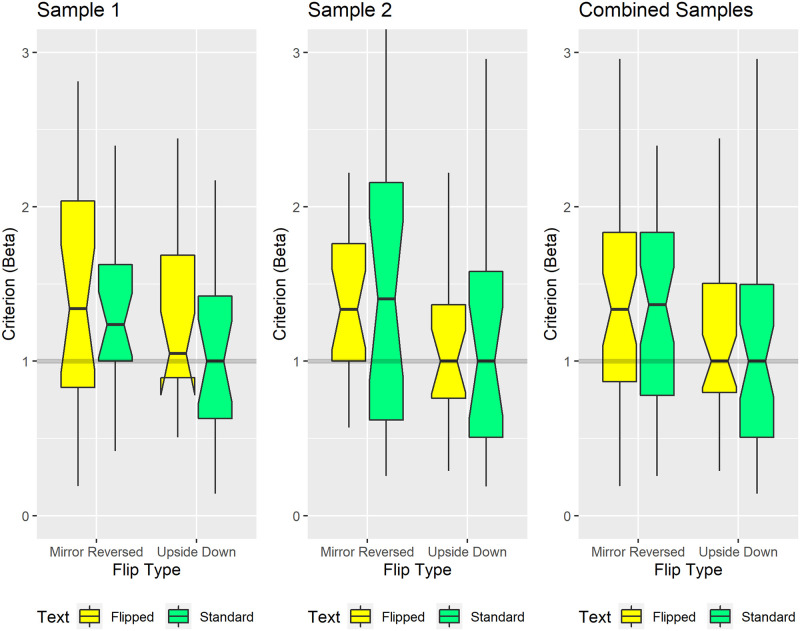
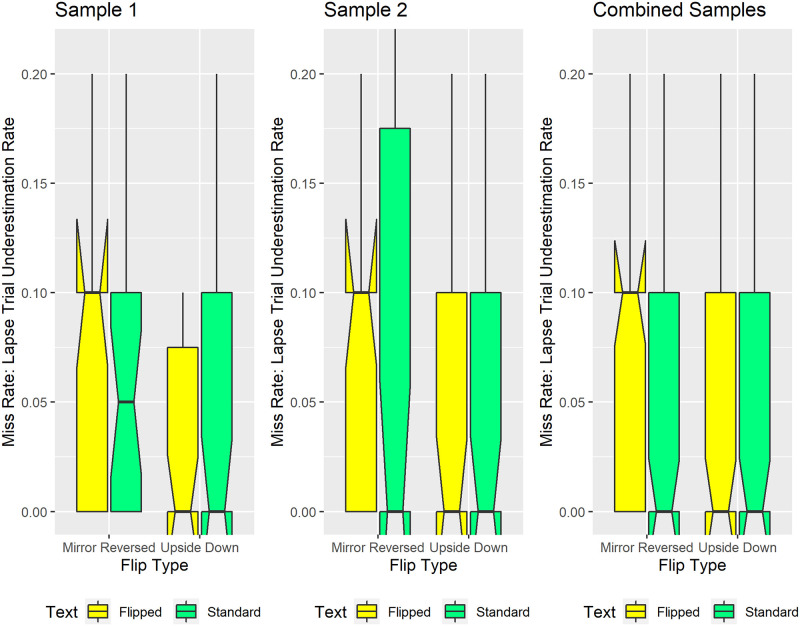
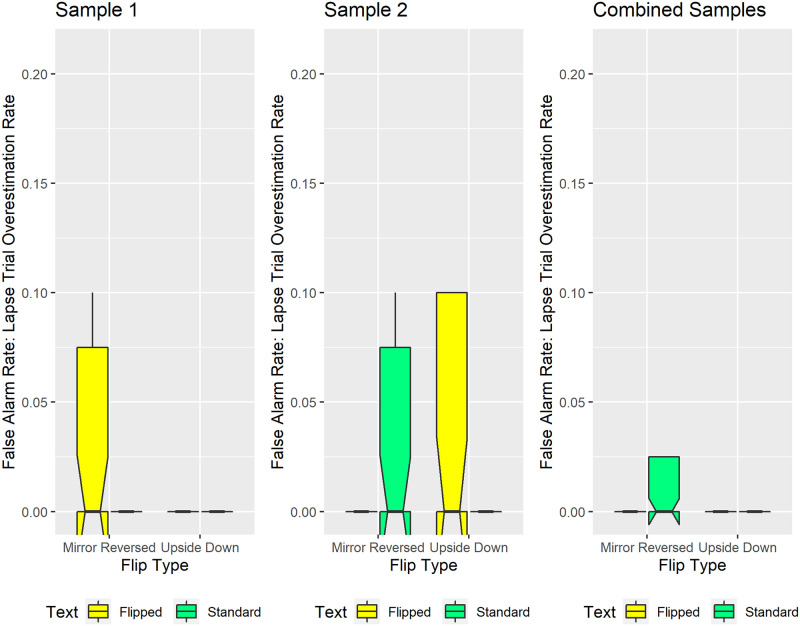
Short sentences improve readability. Short sentences also promote social justice through accessibility and inclusiveness. Despite this, much remains unknown about sentence length perception-an important factor in producing readable writing. Accordingly, we conducted a psychophysical study using procedures from Signal Detection Theory to examine sentence length perception in naive adults. Participants viewed real-world full-page text samples and judged whether a bolded target sentence contained more or fewer than 17 words. The experiment yielded four findings. First, naïve adults perceived sentence length in real-world text samples quickly (median = 300-400 ms) and precisely (median = ~90% correct). Second, flipping real-world text samples upside-down generated no reaction-time cost and nearly no loss in the precision of sentence length perception. This differs from the large inversion effects that characterize other highly practiced, real-world perceptual tasks involving canonically oriented stimuli, most notably face perception and reading. Third, participants significantly underestimated the length of mirror-reversed sentences-but not upside-down, nor standard sentences. This finding parallels participants' familiarity with commonly occurring left-justified right-ragged text, and suggests a novel demonstration of left-lateralized anchoring in scene syntax. Fourth, error patterns demonstrated that participants achieved their high speed, high precision sentence-length judgments by heuristically counting text lines, not by explicitly counting words. This suggests practical advice for writing instructors to offer students. When copy editing, students can quickly and precisely identify their long sentences via a line-counting heuristic, e.g., "a 17-word sentence spans about 1.5 text lines". Students can subsequently improve a long sentence's readability and inclusiveness by omitting needless words.
短句能提高可读性。短句还通过可及性和包容性促进社会公平。尽管如此,对于句子长度感知这一产生易读文本的重要因素,我们仍知之甚少。因此,我们使用来自信号检测理论的程序进行了一项心理物理学研究,以检查新手成年人对句子长度的感知。参与者观看了现实世界的全页文本样本,并判断加粗的目标句子包含的单词多于 17 个还是少于 17 个。该实验得出了四项发现。首先,新手成年人能够快速(中位数=300-400 毫秒)且准确(中位数=~90%正确)地感知现实世界文本样本中的句子长度。其次,将现实世界的文本样本上下颠倒并不会产生反应时间成本,也几乎不会影响句子长度感知的准确性。这与其他高度实践的、涉及规范定向刺激的现实世界感知任务(尤其是面部感知和阅读)的巨大反转效应形成鲜明对比。第三,参与者显著低估了镜像反转句子的长度——但不会低估上下颠倒或标准句子的长度。这一发现与参与者对常见的左对齐右不齐文本的熟悉程度相吻合,并为场景语法中的左侧锚定提供了一种新的演示。第四,错误模式表明,参与者通过启发式地计算文本行数,而不是明确地计算单词数,从而实现了其高速、高精度的句子长度判断。这为写作教师提供了实用的建议。在复制编辑时,学生可以通过行计数启发式快速准确地识别他们的长句,例如,“一个 17 个单词的句子跨越大约 1.5 行文本”。学生随后可以通过省略不必要的单词来提高长句的可读性和包容性。