Parker Kyle, Wood Hillary, Russell Joseph A, Yarmosh David, Shteyman Alan, Bagnoli John, Knight Brittany, Aspinwall Jacob R, Jacobs Jonathan, Werking Kristine, Winegar Richard
MRIGlobal, 425 Dr. Martin Luther King Jr. Blvd, Kansas City, MO 64110, USA.
MRIGlobal, 65 West Watkins Mill Road, Gaithersburg, MD 20850, USA.
Trop Med Infect Dis. 2023 Feb 15;8(2):121. doi: 10.3390/tropicalmed8020121.
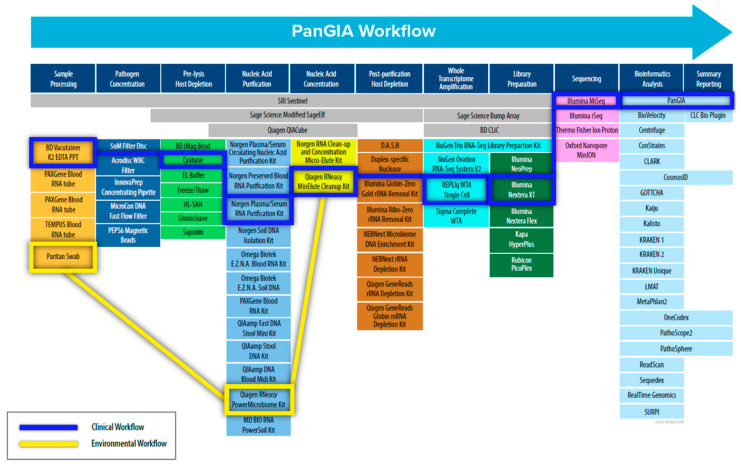
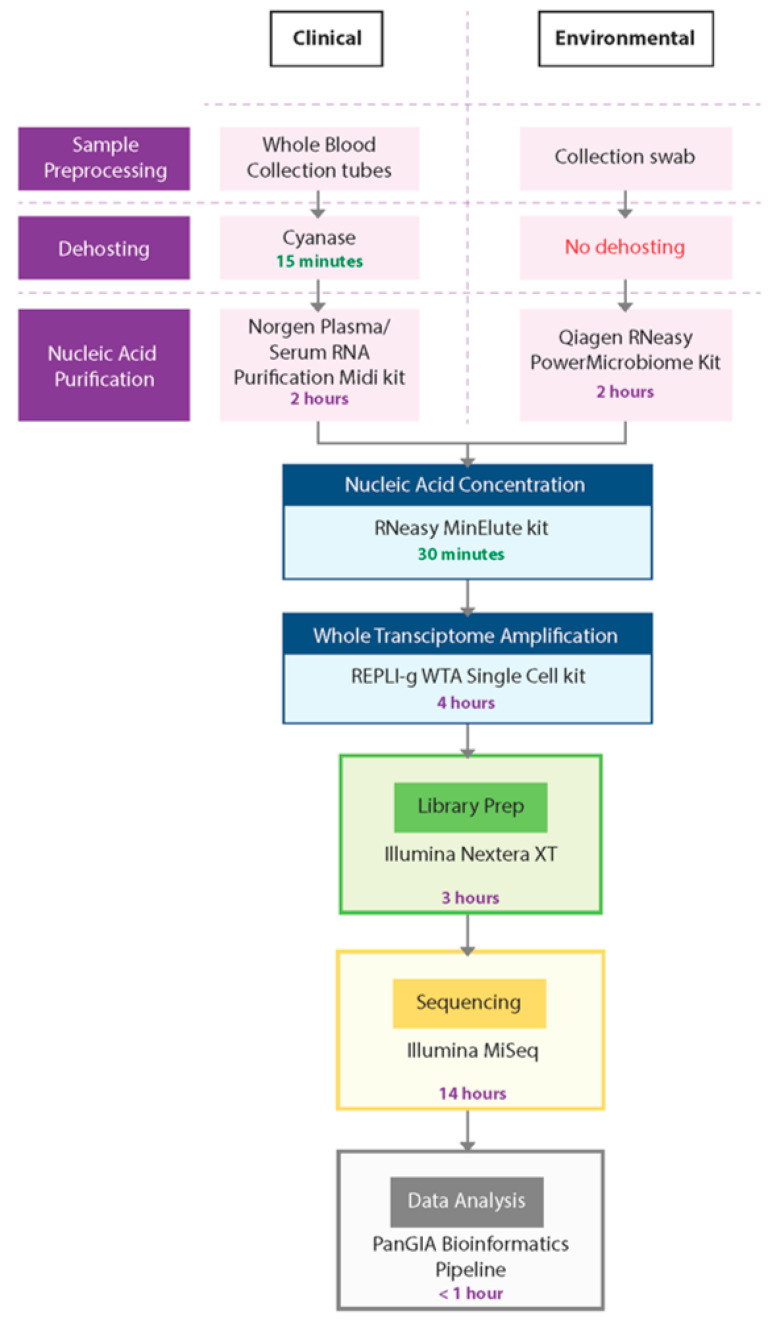
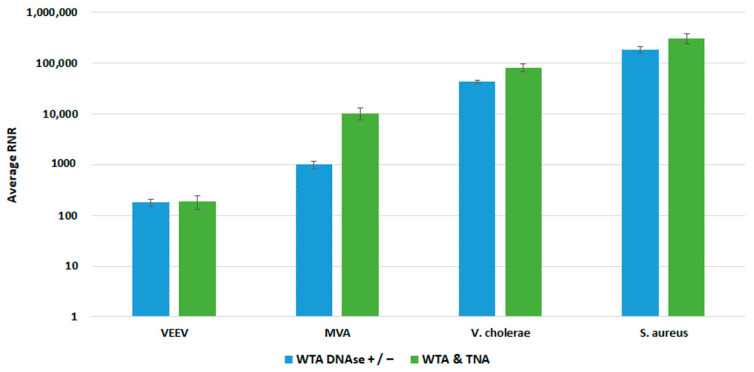
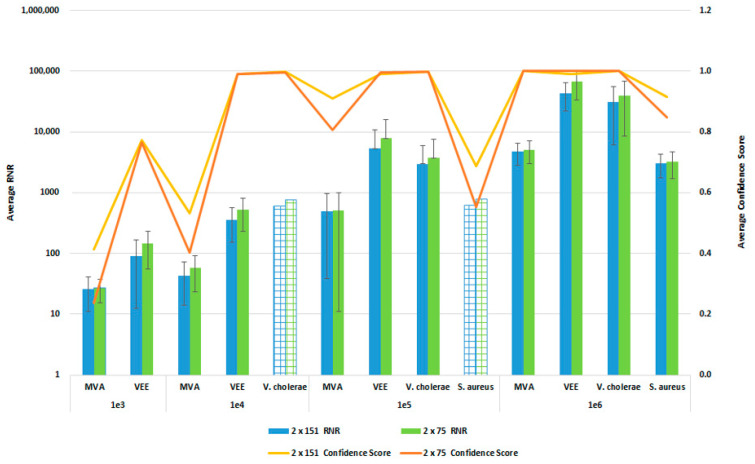
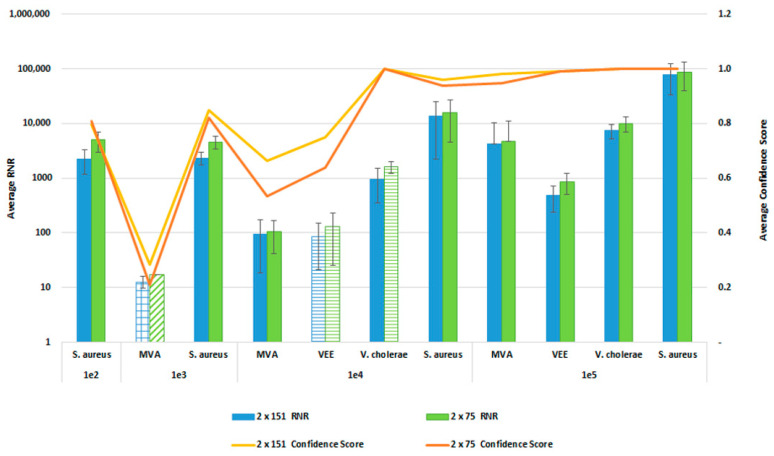
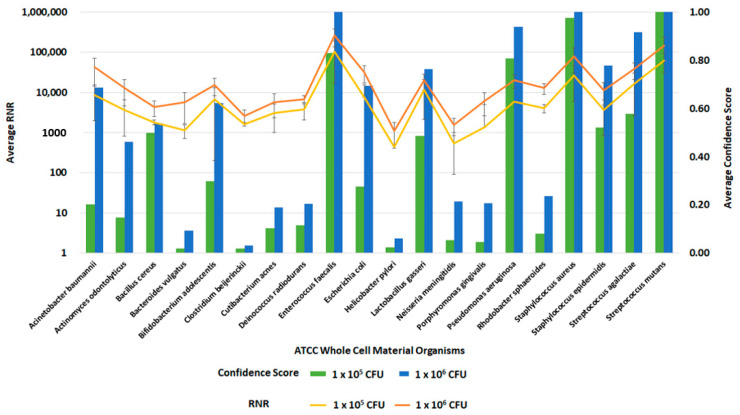
Rapid, specific, and sensitive identification of microbial pathogens is critical to infectious disease diagnosis and surveillance. Classical culture-based methods can be applied to a broad range of pathogens but have long turnaround times. Molecular methods, such as PCR, are time-effective but are not comprehensive and may not detect novel strains. Metagenomic shotgun next-generation sequencing (NGS) promises specific identification and characterization of any pathogen (viruses, bacteria, fungi, and protozoa) in a less biased way. Despite its great potential, NGS has yet to be widely adopted by clinical microbiology laboratories due in part to the absence of standardized workflows. Here, we describe a sample-to-answer workflow called PanGIA (Pan-Genomics for Infectious Agents) that includes simplified, standardized wet-lab procedures and data analysis with an easy-to-use bioinformatics tool. PanGIA is an end-to-end, multi-use workflow that can be used for pathogen detection and related applications, such as biosurveillance and biothreat detection. We performed a comprehensive survey and assessment of current, commercially available wet-lab technologies and open-source bioinformatics tools for each workflow component. The workflow includes total nucleic acid extraction from clinical human whole blood and environmental microbial forensic swabs as sample inputs, host nucleic acid depletion, dual DNA and RNA library preparation, shotgun sequencing on an Illumina MiSeq, and sequencing data analysis. The PanGIA workflow can be completed within 24 h and is currently compatible with bacteria and viruses. Here, we present data from the development and application of the clinical and environmental workflows, enabling the specific detection of pathogens associated with bloodstream infections and environmental biosurveillance, without the need for targeted assay development.
快速、特异且灵敏地鉴定微生物病原体对于传染病的诊断和监测至关重要。传统的基于培养的方法可应用于多种病原体,但周转时间长。分子方法,如聚合酶链反应(PCR),虽省时但不全面,可能无法检测到新菌株。宏基因组鸟枪法下一代测序(NGS)有望以较少偏差的方式对任何病原体(病毒、细菌、真菌和原生动物)进行特异性鉴定和特征描述。尽管具有巨大潜力,但由于缺乏标准化工作流程,NGS尚未被临床微生物实验室广泛采用。在此,我们描述了一种名为PanGIA(病原体泛基因组学)的从样本到答案的工作流程,它包括简化、标准化的湿实验程序以及使用易于操作的生物信息学工具进行数据分析。PanGIA是一种端到端、多用途的工作流程,可用于病原体检测及相关应用,如生物监测和生物威胁检测。我们对每个工作流程组件的当前市售湿实验技术和开源生物信息学工具进行了全面调查和评估。该工作流程包括从临床人类全血和环境微生物法医拭子中提取总核酸作为样本输入、去除宿主核酸、制备DNA和RNA双重文库、在Illumina MiSeq上进行鸟枪法测序以及对测序数据进行分析。PanGIA工作流程可在24小时内完成,目前与细菌和病毒兼容。在此,我们展示了临床和环境工作流程的开发与应用数据,能够特异性检测与血流感染和环境生物监测相关的病原体,而无需进行靶向检测开发。