Institute of Genetics and Biophysics Adriano Buzzati Traverso, (IGB-ABT) CNR, Naples 80131, Italy.
Department of Genetics and Developmental Biology, Rappaport Faculty of Medicine and Research Institute, Technion, Haifa 31096, Israel.
Genome Res. 2023 Feb;33(2):169-183. doi: 10.1101/gr.276986.122. Epub 2023 Feb 24.
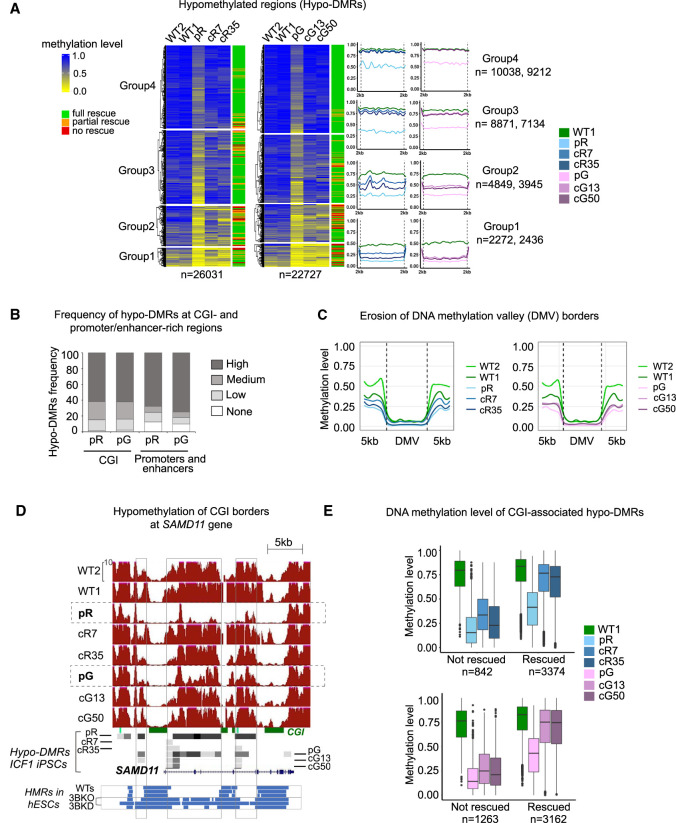
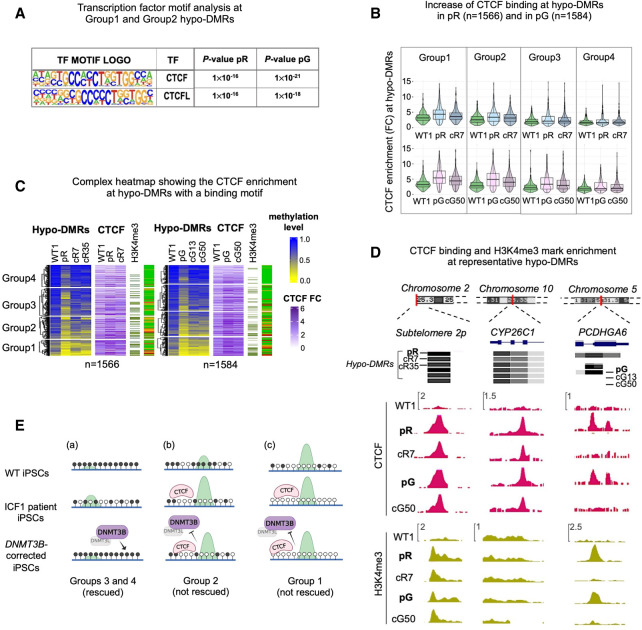
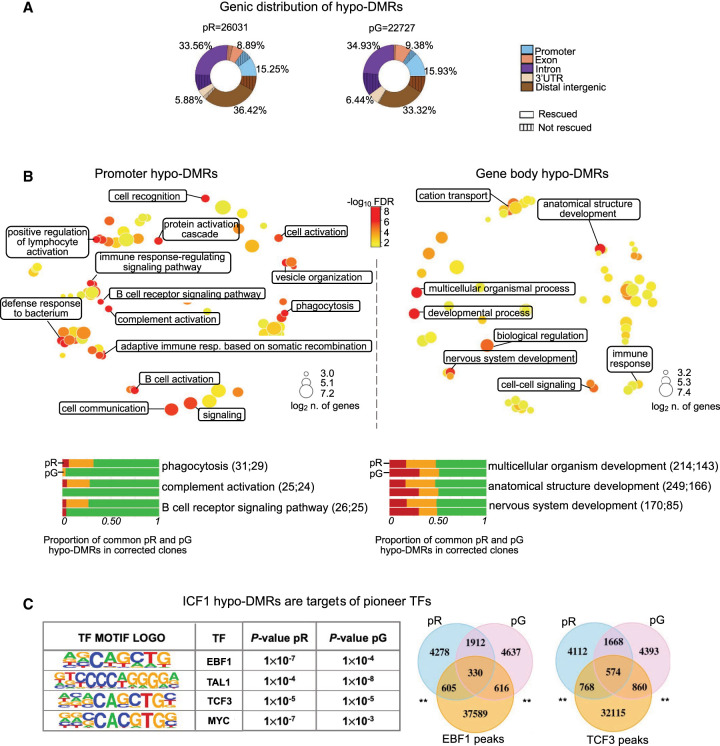
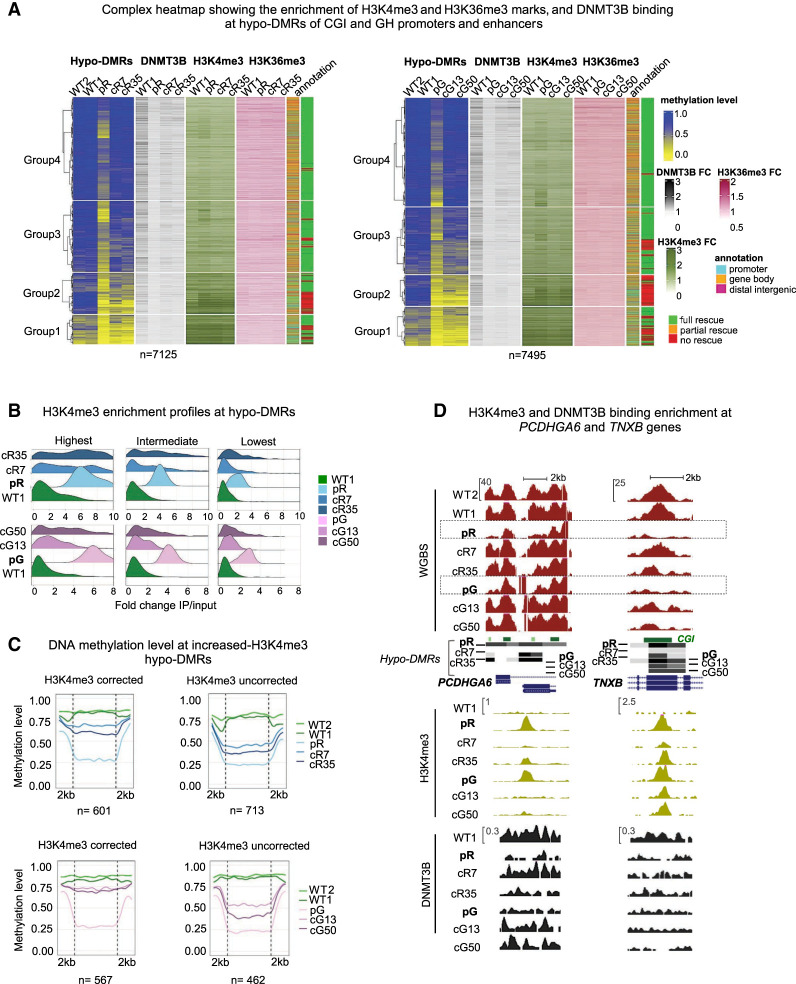
Bi-allelic hypomorphic mutations in disrupt DNA methyltransferase activity and lead to immunodeficiency, centromeric instability, facial anomalies syndrome, type 1 (ICF1). Although several ICF1 phenotypes have been linked to abnormally hypomethylated repetitive regions, the unique genomic regions responsible for the remaining disease phenotypes remain largely uncharacterized. Here we explored two ICF1 patient-derived induced pluripotent stem cells (iPSCs) and their CRISPR-Cas9-corrected clones to determine whether correction can globally overcome DNA methylation defects and related changes in the epigenome. Hypomethylated regions throughout the genome are highly comparable between ICF1 iPSCs carrying different variants, and significantly overlap with those in ICF1 patient peripheral blood and lymphoblastoid cell lines. These regions include large CpG island domains, as well as promoters and enhancers of several lineage-specific genes, in particular immune-related, suggesting that they are premarked during early development. CRISPR-corrected ICF1 iPSCs reveal that the majority of phenotype-related hypomethylated regions reacquire normal DNA methylation levels following editing. However, at the most severely hypomethylated regions in ICF1 iPSCs, which also display the highest increases in H3K4me3 levels and/or abnormal CTCF binding, the epigenetic memory persists, and hypomethylation remains uncorrected. Overall, we demonstrate that restoring the catalytic activity of DNMT3B can reverse the majority of the aberrant ICF1 epigenome. However, a small fraction of the genome is resilient to this rescue, highlighting the challenge of reverting disease states that are due to genome-wide epigenetic perturbations. Uncovering the basis for the persistent epigenetic memory will promote the development of strategies to overcome this obstacle.
双等位基因功能降低的突变会破坏 DNA 甲基转移酶的活性,导致免疫缺陷、着丝粒不稳定、面中部发育不全伴先天愚型 1 型(ICF1)。尽管几种 ICF1 表型与异常低甲基化的重复区域有关,但导致其余疾病表型的独特基因组区域在很大程度上仍未被阐明。在这里,我们研究了两名 ICF1 患者来源的诱导多能干细胞(iPSC)及其 CRISPR-Cas9 校正克隆,以确定 校正是否可以全局克服 DNA 甲基化缺陷和表观基因组的相关变化。在携带不同 变异的 ICF1 iPSC 中,整个基因组中的低甲基化区域高度相似,并且与 ICF1 患者外周血和淋巴母细胞系中的低甲基化区域显著重叠。这些区域包括大的 CpG 岛结构域,以及几个谱系特异性基因的启动子和增强子,特别是与免疫相关的基因,这表明它们在早期发育过程中就已经被预先标记。CRISPR 校正的 ICF1 iPSC 表明,大多数与表型相关的低甲基化区域在编辑后会重新获得正常的 DNA 甲基化水平。然而,在 ICF1 iPSC 中最严重的低甲基化区域,其 H3K4me3 水平升高和/或异常 CTCF 结合的程度也最高,表观遗传记忆仍然存在,低甲基化状态未得到纠正。总体而言,我们证明了恢复 DNMT3B 的催化活性可以逆转大多数异常的 ICF1 表观基因组。然而,基因组的一小部分对这种挽救具有抗性,这凸显了克服由于全基因组表观遗传扰动引起的疾病状态的挑战。揭示持久的表观遗传记忆的基础将促进开发克服这一障碍的策略。