Department of Neurology, Danish Headache Center, Copenhagen University Hospital - Rigshospitalet, Copenhagen, Denmark.
Danish Knowledge Center On Headache Disorders, Glostrup, Denmark.
J Headache Pain. 2023 Feb 24;24(1):18. doi: 10.1186/s10194-023-01553-w.
Worldwide, far from all of those who would benefit make use of headache services, largely because of clinical, social, and political barriers to access. Identifying the factors contributing to low healthcare utilization can generate evidence to guide health policy. Our purpose here is better to characterize healthcare utilization patterns in Denmark.
The Headache in Denmark (HINDER) study is a nationwide cross-sectional survey of people with headache, conducted using SurveyXact (Rambøll Group A/S, Copenhagen). Healthcare utilization was assessed in a study sample generated by population screening and recruitment. Data collection occurred over two weeks, from September 23 until October 4, 2021. The questions enquired into disease characteristics, management, burden, medication intake and healthcare utilization.
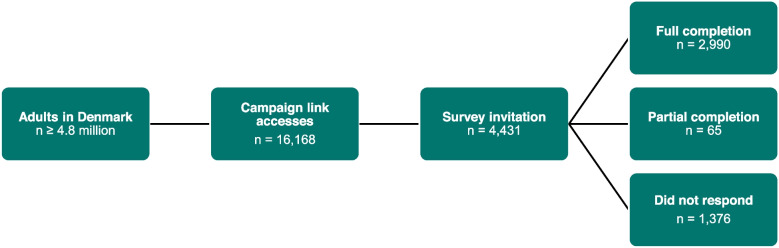
The number of participants included in the HINDER panel was 4,431, with 2,990 (67.5%: 2,522 [84.3%] female, 468 [15.7%] male; mean age 40.9 ± 11.6 years) completing the survey. One quarter of participants (27.7%) disagreed or strongly disagreed that they were able to manage their headache attacks. Most participants (81.7%) agreed or strongly agreed that their headache was a burden in their everyday lives. The most reported acute medications, by 87.2% of participants, were simple analgesics; of note, 8.6% reported using opioids for their headache. One quarter of participants (24.4%) had never consulted a medical doctor for their headache; one in six (16.5%: more than two thirds of the 24.4%) had never done so despite agreeing or strongly agreeing that their headache was a burden in their everyday lives. Two thirds (65.3%) of participants overall, and almost three quarters (72.4%) of those with weekly headache, had tried one or more complementary or alternative therapies outside conventional medical care.
Our findings are indicative of inadequate delivery of headache care in a country that provides free and universal coverage for all its residents. The implications are twofold. First, it is not sufficient merely to make services available: public education and increased awareness are necessary to encourage uptake by those who would benefit. Second, educational interventions in both pre- and postgraduate settings are necessary, but a prerequisite for these is a resetting of policy priorities, properly to reflect the very high population ill-health burden of headache.
在全球范围内,远非所有受益人群都能利用头痛服务,这主要是由于获取服务存在临床、社会和政治障碍。确定导致医疗保健利用率低的因素可以为指导卫生政策提供证据。我们的目的是更好地描述丹麦的医疗保健利用模式。
丹麦头痛研究(HINDER)是一项全国性的头痛横断面调查,使用 SurveyXact(Rambøll Group A/S,哥本哈根)进行。通过人群筛查和招募生成研究样本,评估医疗保健的利用情况。数据收集于 2021 年 9 月 23 日至 10 月 4 日期间的两周内进行。调查询问了疾病特征、管理、负担、药物摄入和医疗保健利用情况。
HINDER 小组纳入的参与者人数为 4431 人,其中 2990 人(67.5%:2522 人[84.3%]为女性,468 人[15.7%]为男性;平均年龄 40.9±11.6 岁)完成了调查。四分之一的参与者(27.7%)不同意或强烈不同意他们能够控制头痛发作。大多数参与者(81.7%)同意或强烈同意头痛对他们的日常生活造成负担。87.2%的参与者最常报告使用的急性药物是简单的镇痛药;值得注意的是,8.6%的参与者报告使用阿片类药物治疗头痛。四分之一的参与者(24.4%)从未因头痛就诊过医生;六分之一(16.5%:其中四分之三以上的 24.4%)从未就诊过,但他们同意或强烈同意头痛对日常生活造成负担。总体而言,三分之二(65.3%)的参与者,以及几乎四分之三(72.4%)每周头痛的参与者,除了常规医疗护理外,还尝试了一种或多种补充或替代疗法。
我们的研究结果表明,在一个为所有居民提供免费和普遍覆盖的国家,头痛护理的提供不足。这意味着两方面的问题。首先,仅仅提供服务是不够的:需要进行公众教育和提高认识,以鼓励那些受益的人使用服务。其次,需要在研究生前和研究生阶段进行教育干预,但前提是重新设定政策重点,正确反映头痛给民众健康带来的巨大负担。