Department of Food Science, Fu Jen Catholic University, New Taipei City 242062, Taiwan.
Int J Mol Sci. 2023 Feb 15;24(4):3934. doi: 10.3390/ijms24043934.
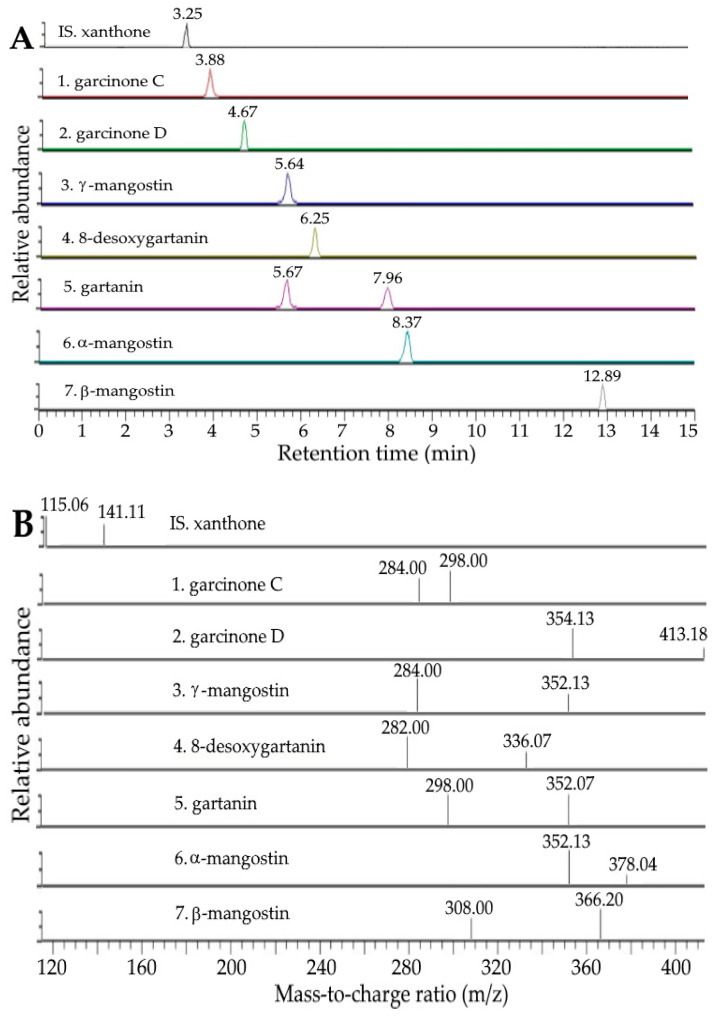
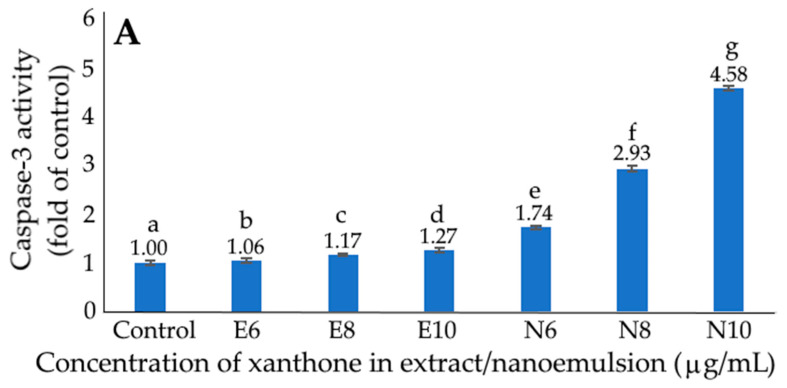
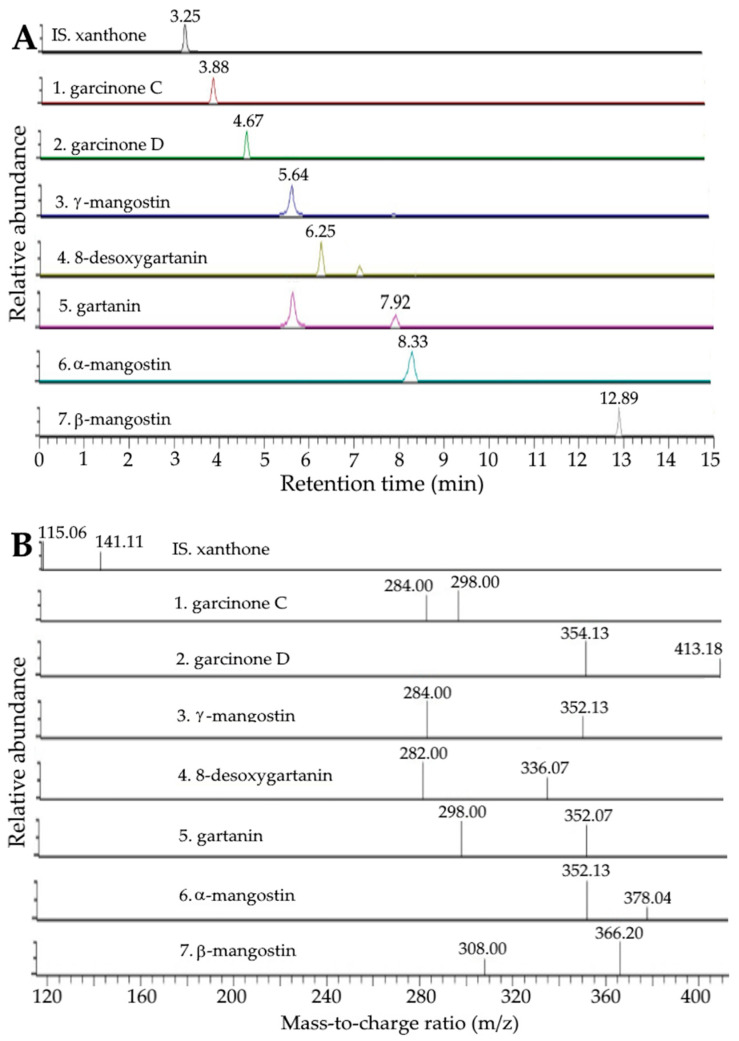
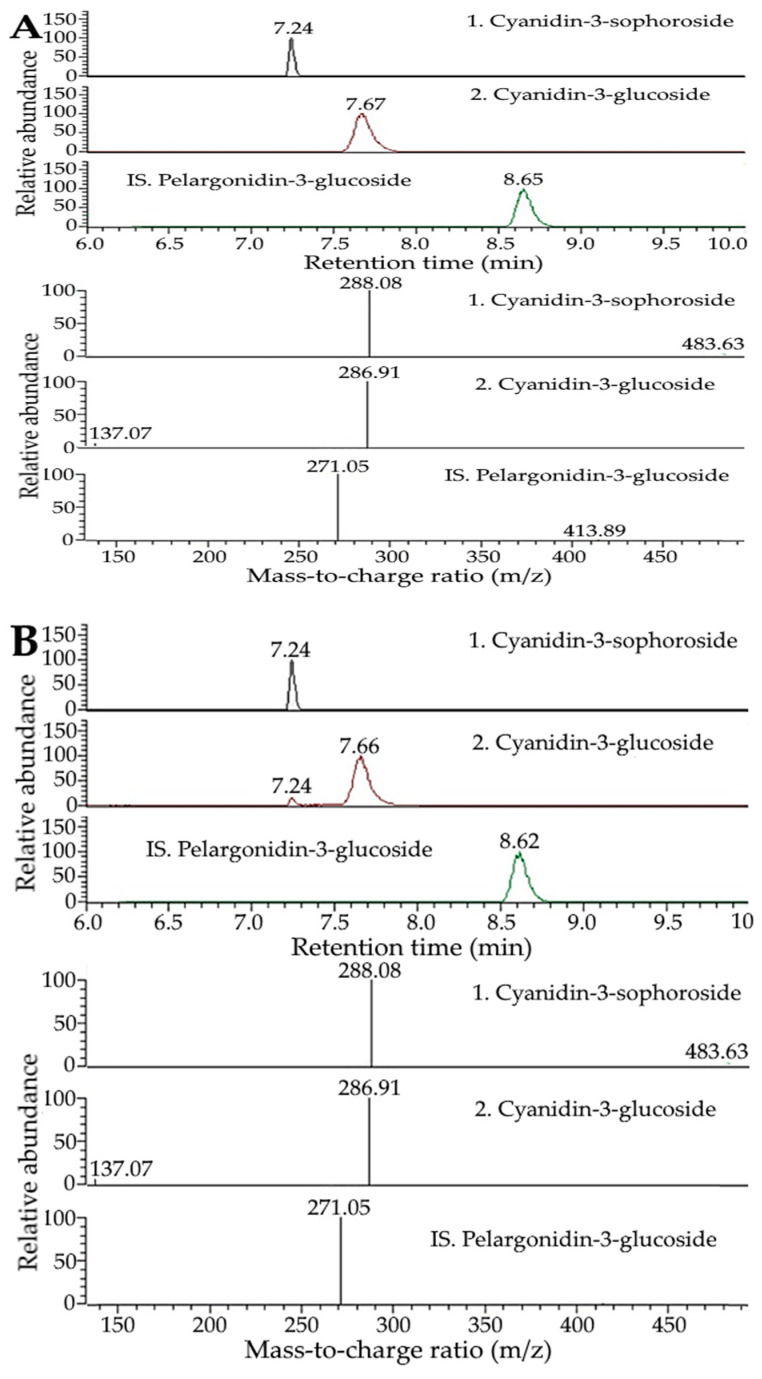
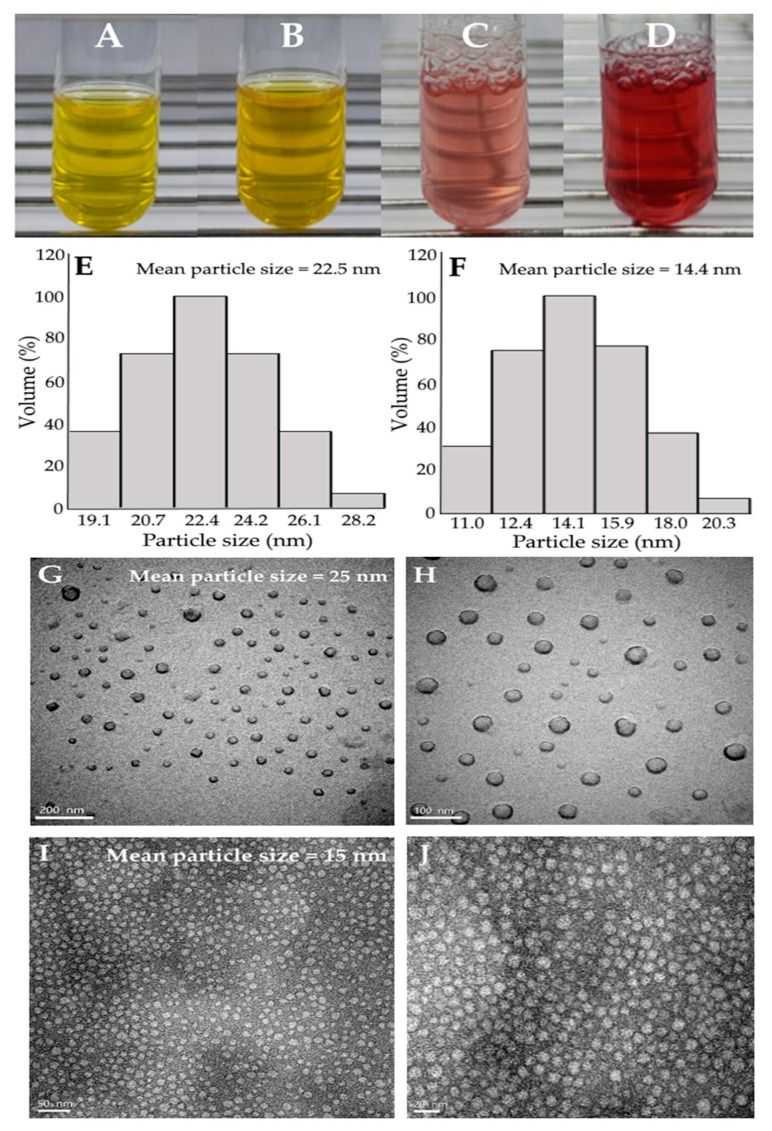
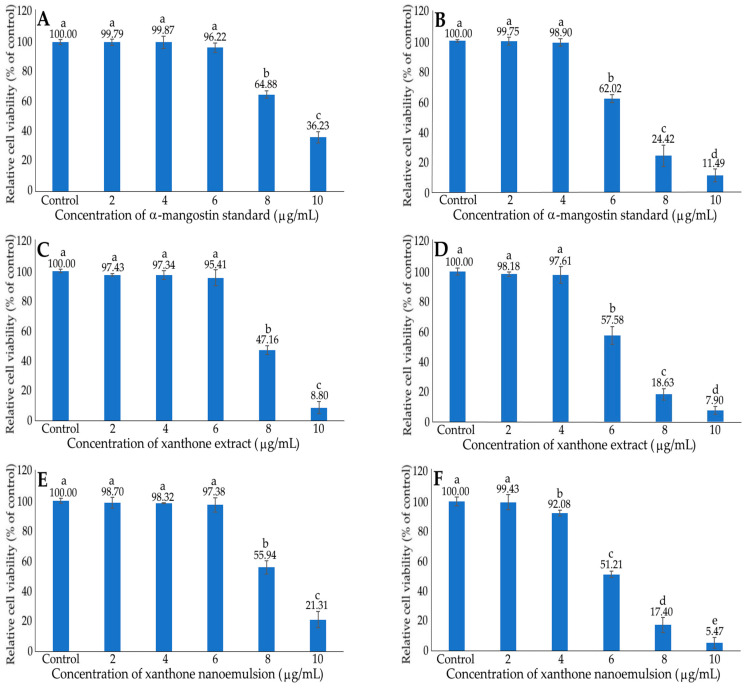
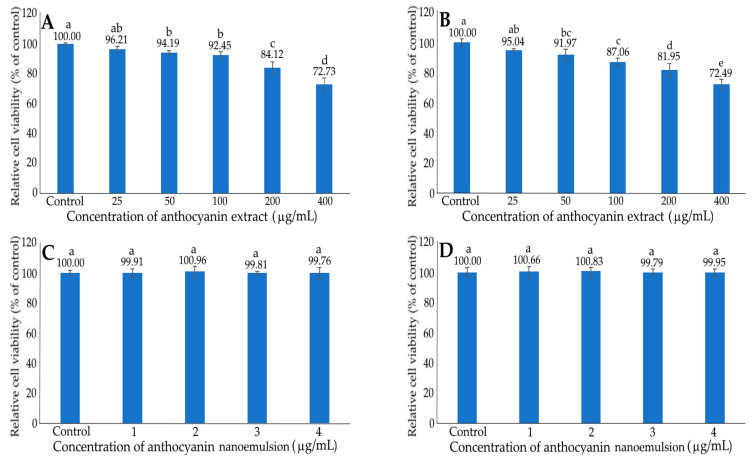
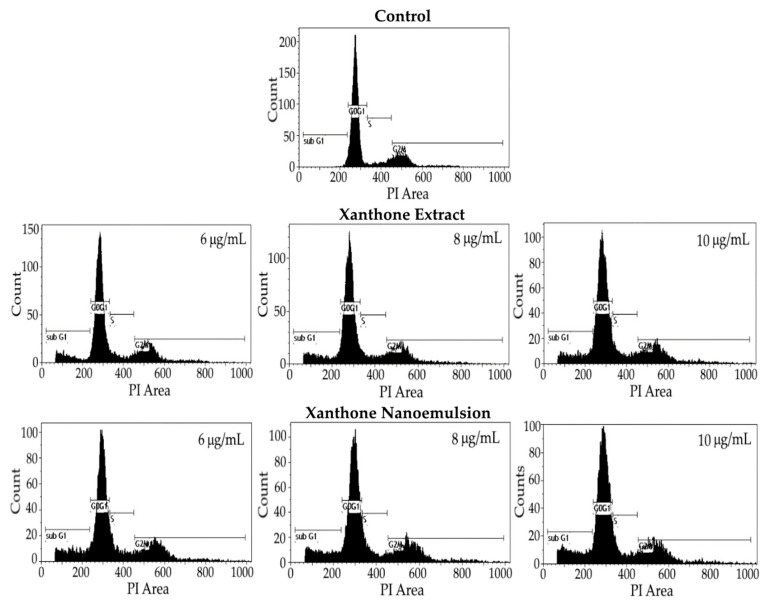
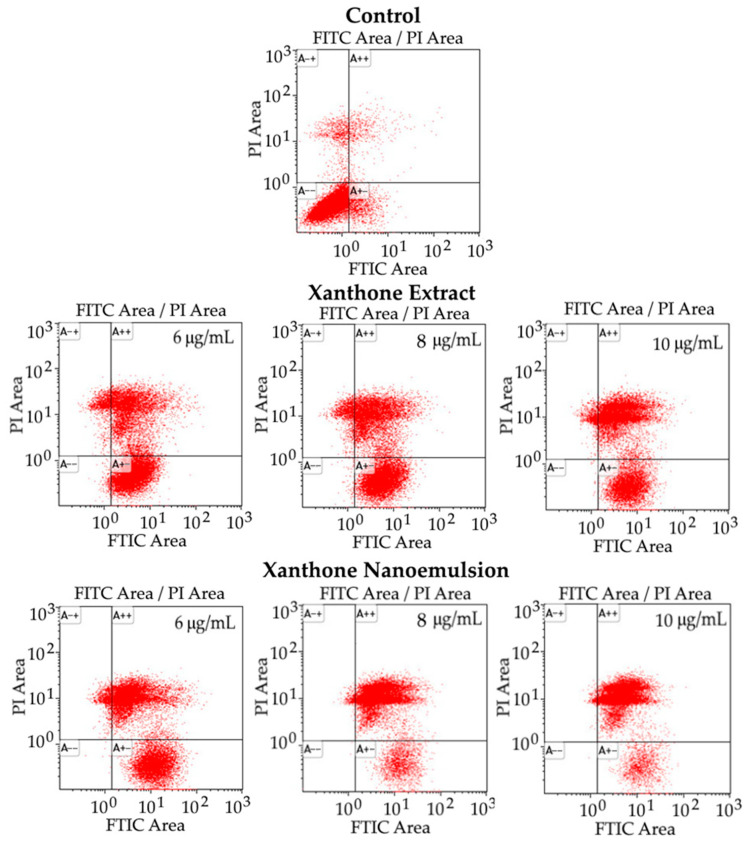
Mangosteen peel, a waste produced during mangosteen processing, has been reported to be rich in xanthone and anthocyanin, both of which possess vital biological activities such as anti-cancer properties. The objectives of this study were to analyze various xanthones and anthocyanins in mangosteen peel by UPLC-MS/MS for the subsequent preparation of both xanthone and anthocyanin nanoemulsions to study their inhibition effects on liver cancer cells HepG2. Results showed that methanol was the optimal solvent for the extraction of xanthones and anthocyanins, with a total amount of 68,543.39 and 2909.57 μg/g, respectively. A total of seven xanthones, including garcinone C (513.06 μg/g), garcinone D (469.82 μg/g), γ-mangostin (11,100.72 μg/g), 8-desoxygartanin (1490.61 μg/g), gartanin (2398.96 μg/g), α-mangostin (51,062.21 μg/g) and β-mangostin (1508.01 μg/g), as well as two anthocyanins including cyanidin-3-sophoroside (2889.95 μg/g) and cyanidin-3-glucoside (19.72 μg/g), were present in mangosteen peel. The xanthone nanoemulsion was prepared by mixing an appropriate portion of soybean oil, CITREM, Tween 80 and deionized water, while the anthocyanin nanoemulsion composed of soybean oil, ethanol, PEG400, lecithin, Tween 80, glycerol and deionized water was prepared as well. The mean particle size of the xanthone extract and nanoemulsion were, respectively, 22.1 and 14.0 nm as determined by DLS, while the zeta potential was -87.7 and -61.5 mV. Comparatively, xanthone nanoemulsion was more effective than xanthone extract in inhibiting the growth of HepG2 cells, with the IC being 5.78 μg/mL for the former and 6.23 μg/mL for the latter. However, the anthocyanin nanoemulsion failed to inhibit growth of HepG2 cells. Cell cycle analysis revealed that the proportion of the sub-G1 phase followed a dose-dependent increase, while that of the G0/G1 phase showed a dose-dependent decline for both xanthone extracts and nanoemulsions, with the cell cycle being possibly arrested at the S phase. The proportion of late apoptosis cells also followed a dose-dependent rise for both xanthone extracts and nanoemulsions, with the latter resulting in a much higher proportion at the same dose. Similarly, the activities of caspase-3, caspase-8 and caspase-9 followed a dose-dependent increase for both xanthone extracts and nanoemulsions, with the latter exhibiting a higher activity at the same dose. Collectively, xanthone nanoemulsion was more effective than xanthone extract in inhibiting the growth of HepG2 cells. Further research is needed to study the anti-tumor effect in vivo.
山竹果皮是山竹加工过程中的一种废弃物,据报道富含黄烷酮和花青素,这两种物质都具有重要的生物活性,如抗癌特性。本研究的目的是通过 UPLC-MS/MS 分析山竹果皮中的各种黄烷酮和花青素,随后制备黄烷酮和花青素纳米乳液,以研究它们对肝癌细胞 HepG2 的抑制作用。结果表明,甲醇是提取黄烷酮和花青素的最佳溶剂,其总量分别为 68543.39 和 2909.57μg/g。共鉴定出 7 种黄烷酮,包括 Garcinone C(513.06μg/g)、Garcinone D(469.82μg/g)、γ-倒捻子素(11100.72μg/g)、8-去氧甘特纳林(1490.61μg/g)、甘特纳林(2398.96μg/g)、α-倒捻子素(51062.21μg/g)和β-倒捻子素(1508.01μg/g),以及 2 种花青素,包括矢车菊素-3-桑布双糖苷(2889.95μg/g)和矢车菊素-3-葡萄糖苷(19.72μg/g)。山竹果皮黄烷酮纳米乳液通过混合适量的大豆油、CITREM、吐温 80 和去离子水制备,而山竹果皮花青素纳米乳液由大豆油、乙醇、PEG400、卵磷脂、吐温 80、甘油和去离子水组成。DLS 测定黄烷酮提取物和纳米乳液的平均粒径分别为 22.1nm 和 14.0nm,zeta 电位分别为-87.7mV 和-61.5mV。相比之下,黄烷酮纳米乳液比黄烷酮提取物更能有效抑制 HepG2 细胞的生长,前者的 IC 为 5.78μg/mL,后者的 IC 为 6.23μg/mL。然而,花青素纳米乳液未能抑制 HepG2 细胞的生长。细胞周期分析显示,亚 G1 期比例呈剂量依赖性增加,而 G0/G1 期比例呈剂量依赖性下降,细胞周期可能被阻滞在 S 期。黄烷酮提取物和纳米乳液的晚期凋亡细胞比例也呈剂量依赖性上升,后者在相同剂量下的比例更高。同样,黄烷酮提取物和纳米乳液的 caspase-3、caspase-8 和 caspase-9 活性均呈剂量依赖性增加,后者在相同剂量下的活性更高。综上所述,黄烷酮纳米乳液比黄烷酮提取物更能有效抑制 HepG2 细胞的生长。需要进一步研究其在体内的抗肿瘤作用。