Fritsche Lars G, Jin Weijia, Admon Andrew J, Mukherjee Bhramar
Department of Biostatistics, University of Michigan School of Public Health, Ann Arbor, MI 48109, USA.
Center for Precision Health Data Science, University of Michigan School of Public Health, Ann Arbor, MI 48109, USA.
J Clin Med. 2023 Feb 7;12(4):1328. doi: 10.3390/jcm12041328.
A growing number of Coronavirus Disease-2019 (COVID-19) survivors are affected by post-acute sequelae of SARS CoV-2 infection (PACS). Using electronic health record data, we aimed to characterize PASC-associated diagnoses and develop risk prediction models.
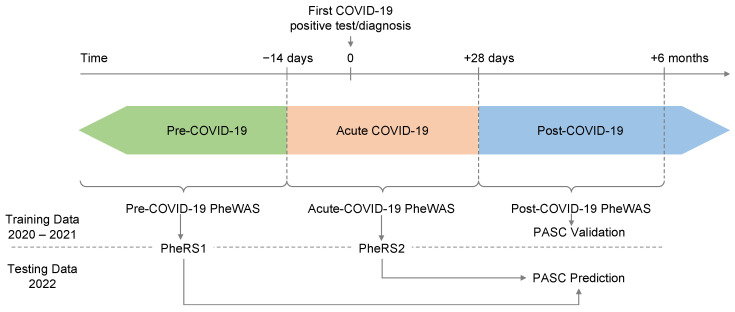
In our cohort of 63,675 patients with a history of COVID-19, 1724 (2.7%) had a recorded PASC diagnosis. We used a case-control study design and phenome-wide scans to characterize PASC-associated phenotypes of the pre-, acute-, and post-COVID-19 periods. We also integrated PASC-associated phenotypes into phenotype risk scores (PheRSs) and evaluated their predictive performance.
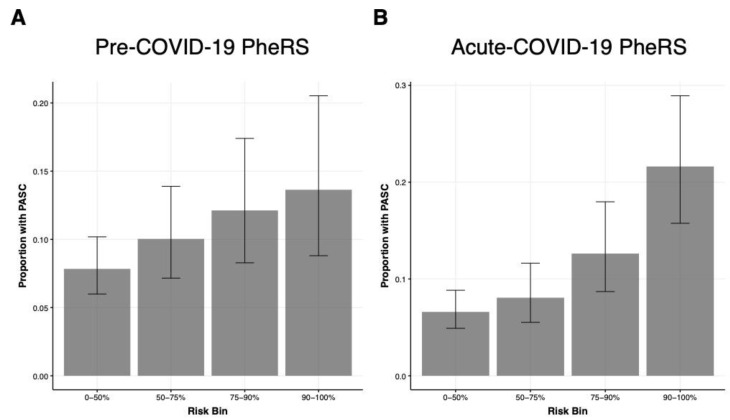
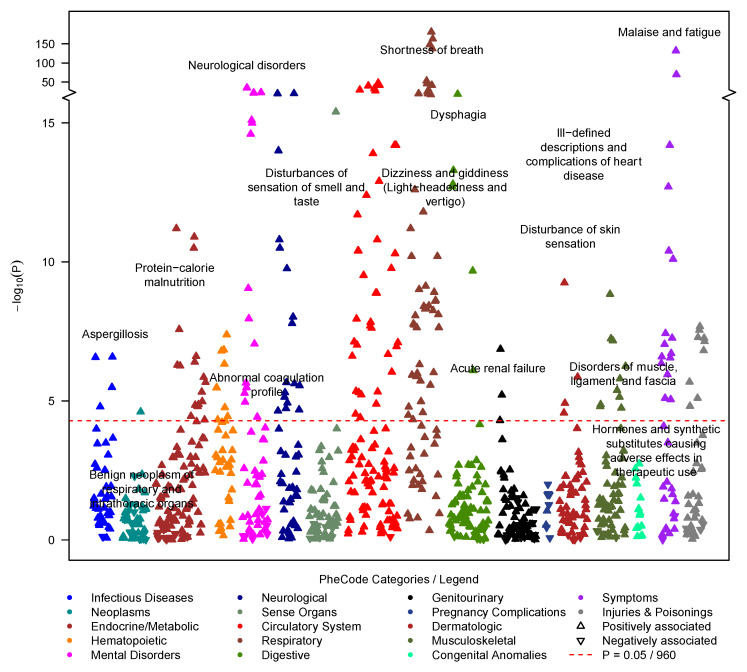
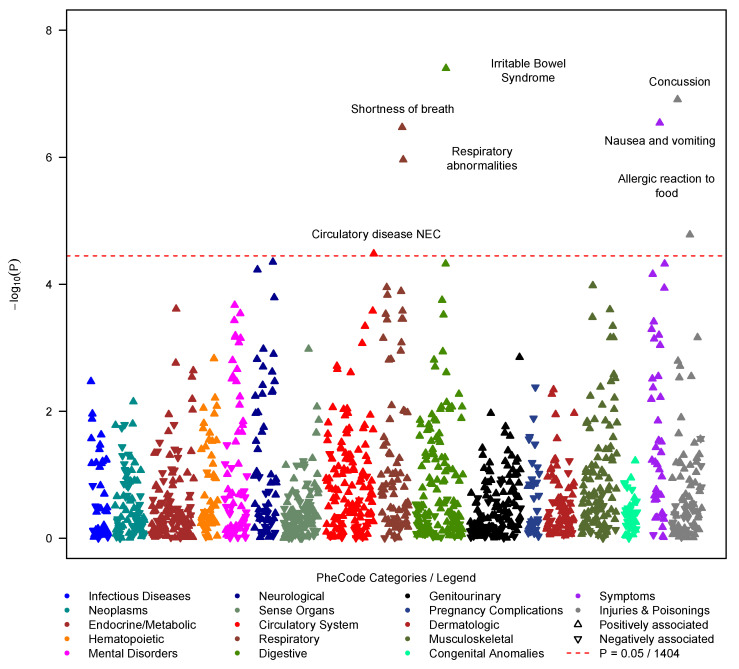
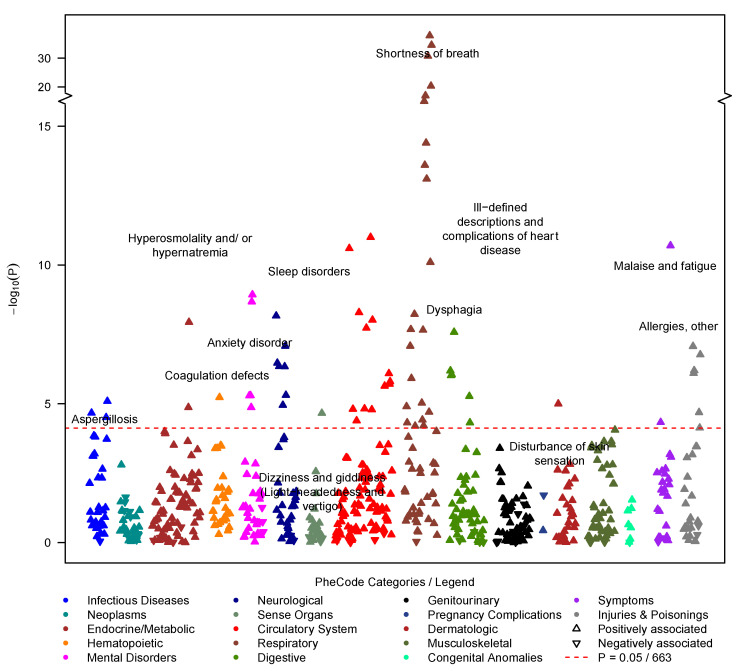
In the post-COVID-19 period, known PASC symptoms (e.g., shortness of breath, malaise/fatigue) and musculoskeletal, infectious, and digestive disorders were enriched among PASC cases. We found seven phenotypes in the pre-COVID-19 period (e.g., irritable bowel syndrome, concussion, nausea/vomiting) and sixty-nine phenotypes in the acute-COVID-19 period (predominantly respiratory, circulatory, neurological) associated with PASC. The derived pre- and acute-COVID-19 PheRSs stratified risk well, e.g., the combined PheRSs identified a quarter of the cohort with a history of COVID-19 with a 3.5-fold increased risk (95% CI: 2.19, 5.55) for PASC compared to the bottom 50%.
The uncovered PASC-associated diagnoses across categories highlighted a complex arrangement of presenting and likely predisposing features, some with potential for risk stratification approaches.
越来越多的2019冠状病毒病(COVID-19)幸存者受到严重急性呼吸综合征冠状病毒2感染的急性后遗症(PACS)的影响。我们利用电子健康记录数据,旨在描述与PASC相关的诊断,并开发风险预测模型。
在我们63675例有COVID-19病史的患者队列中,1724例(2.7%)有PASC诊断记录。我们采用病例对照研究设计和全表型扫描来描述COVID-19前、急性和后时期与PASC相关的表型。我们还将与PASC相关的表型整合到表型风险评分(PheRSs)中,并评估其预测性能。
在COVID-19后时期,已知的PASC症状(如呼吸急促、不适/疲劳)以及肌肉骨骼、感染和消化系统疾病在PASC病例中更为常见。我们在COVID-19前时期发现了7种表型(如肠易激综合征、脑震荡、恶心/呕吐),在急性COVID-19时期发现了69种表型(主要是呼吸、循环、神经方面的)与PASC相关。推导得出的COVID-19前和急性时期的PheRSs对风险分层效果良好,例如,综合PheRSs识别出四分之一有COVID-19病史的队列,其发生PASC的风险比最低的50%人群高3.5倍(95%CI:2.19,5.55)。
各类中发现的与PASC相关的诊断突出了呈现特征和可能的易感特征的复杂组合,其中一些具有进行风险分层方法的潜力。