Loublier Clémence, Taminiau Bernard, Heinen Julia, Lecoq Laureline, Amory Hélène, Daube Georges, Cesarini Carla
Equine Clinical Department, Faculty of Veterinary Medicine, University of Liège, Bât. B41, 4000 Liège, Belgium.
Fundamental and Applied Research for Animals & Health (FARAH), Faculty of Veterinary Medicine, University of Liège, 4000 Liège, Belgium.
Microorganisms. 2023 Jan 17;11(2):231. doi: 10.3390/microorganisms11020231.
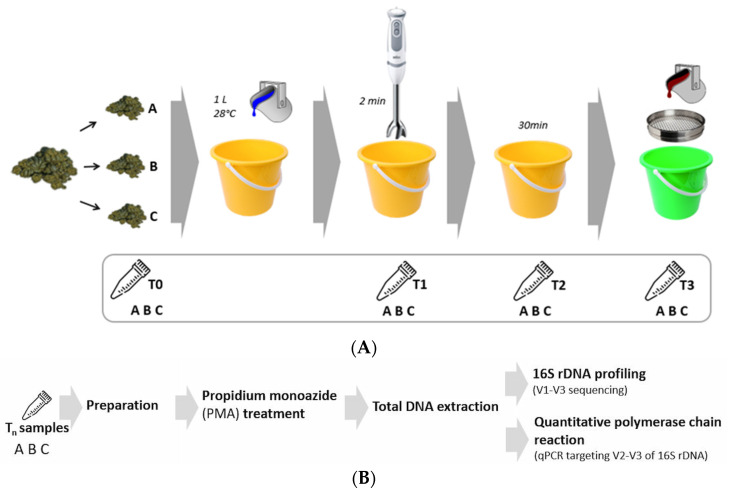
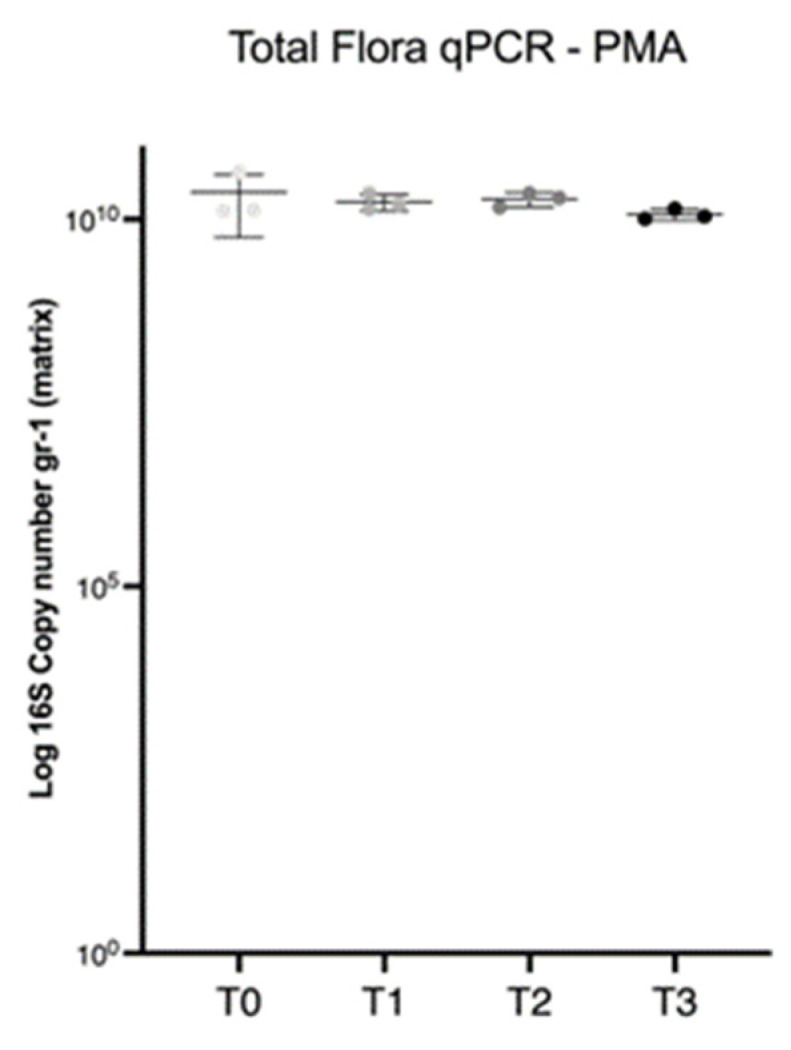
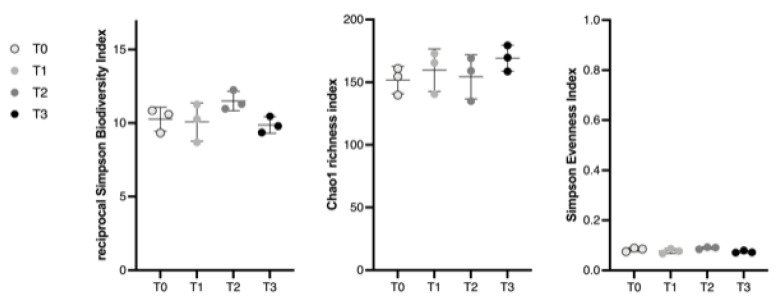
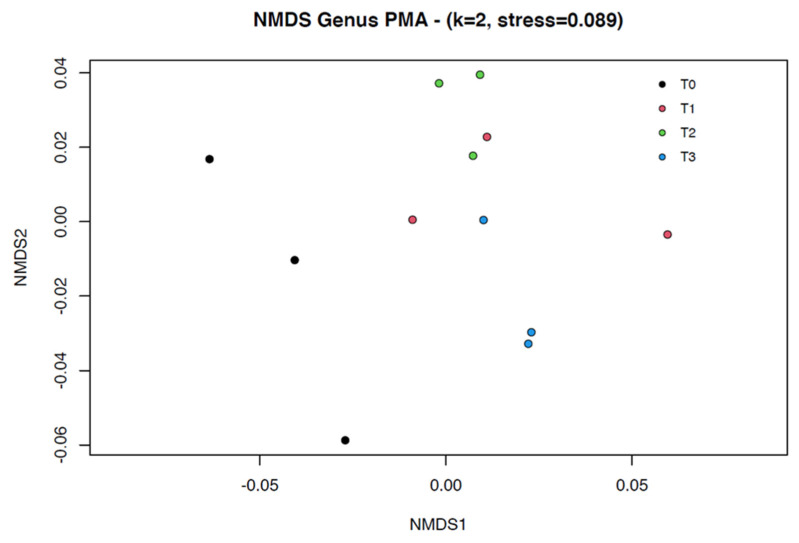
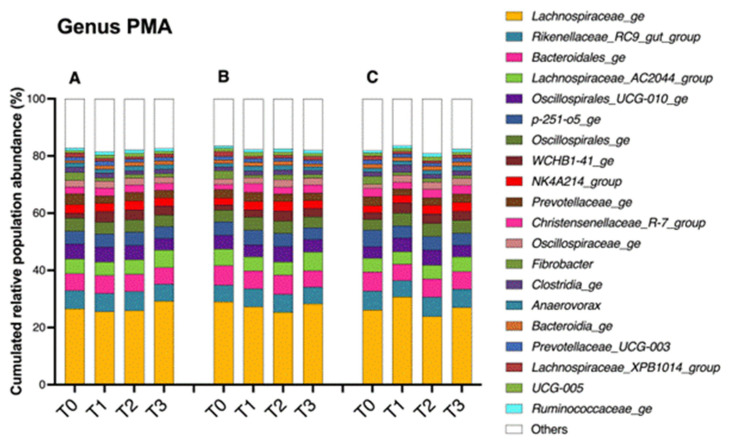
Fecal microbiota transplantation (FMT) has been used empirically for decades in equine medicine to treat intestinal dysbiosis but evidence-based information is scarce. This in vitro study aimed at assessing the effect of a commonly used pre-FMT processing method on the bacterial composition and viability of the fecal filtrate. Three samples of fresh equine manure (T) were processed identically: the initial manure was mixed with 1 L of lukewarm water and chopped using an immersion blender to obtain a mixture (T), which was left uncovered during 30 min (T) and percolated through a sieve to obtain a fecal filtrate (T). Samples were taken throughout the procedure (Tn) and immediately stored at 4 °C until processing. The 16S rDNA amplicon profiling associated with propidium monoazide treatment was performed on each sample to select live bacteria. Analyses of α and β diversity and main bacterial populations and quantitative (qPCR) analysis were performed and statistically compared (significance < 0.05) between time points (T-T). No significant differences in ecological indices or mean estimated total living bacteria were found in the final fecal filtrate (T) in regard to the original manure (T); however, relative abundances of some minor genera (, WCHB1-41_ge and ) were significantly different in the final filtrate. In conclusion, the results support the viability of the major bacterial populations in equine feces when using the described pre-FMT protocol.
粪便微生物群移植(FMT)在马医学中经验性使用已有数十年,用于治疗肠道菌群失调,但基于证据的信息却很少。这项体外研究旨在评估一种常用的FMT前处理方法对粪便滤液细菌组成和活力的影响。对三份新鲜马粪样本(T)进行相同处理:将初始粪便与1升温水混合,并用浸入式搅拌机切碎以获得混合物(T),将其在30分钟内不覆盖放置(T),然后通过筛网过滤以获得粪便滤液(T)。在整个过程中采集样本(Tn),并立即在4°C下储存直至处理。对每个样本进行与单叠氮化丙锭处理相关的16S rDNA扩增子分析,以选择活细菌。进行α和β多样性分析、主要细菌种群分析以及定量(qPCR)分析,并在各时间点(T - T)之间进行统计学比较(显著性<0.05)。最终粪便滤液(T)与原始粪便(T)相比,在生态指数或平均估计总活菌数方面未发现显著差异;然而,最终滤液中一些次要属(如WCHB1 - 41_ge等)的相对丰度存在显著差异。总之,结果支持使用所述FMT前方案时马粪便中主要细菌种群的活力。