Department of Clinical Studies, New Bolton Center, University of Pennsylvania, Kennett Square, PA, USA.
Veterinary Innovative Partners, New York, NY, USA.
BMC Vet Res. 2024 Jul 10;20(1):306. doi: 10.1186/s12917-024-04166-w.
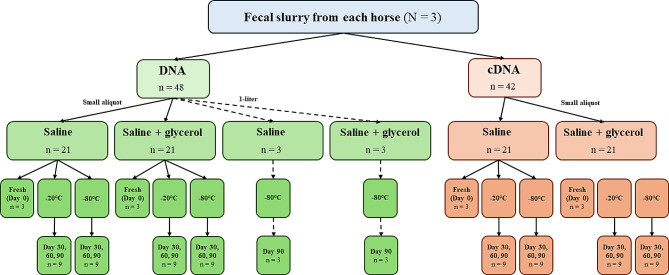
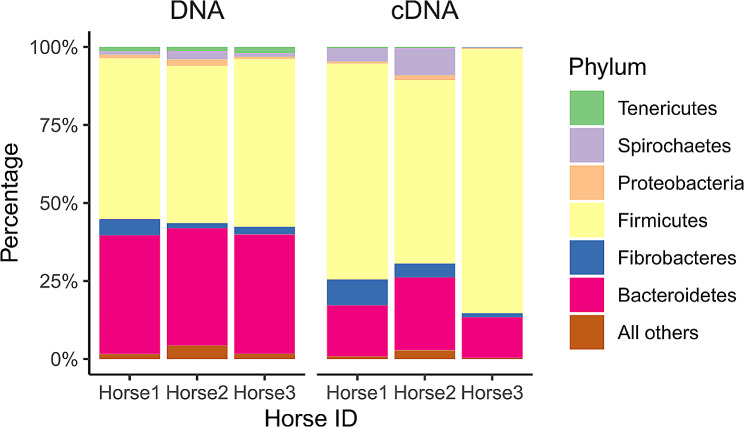
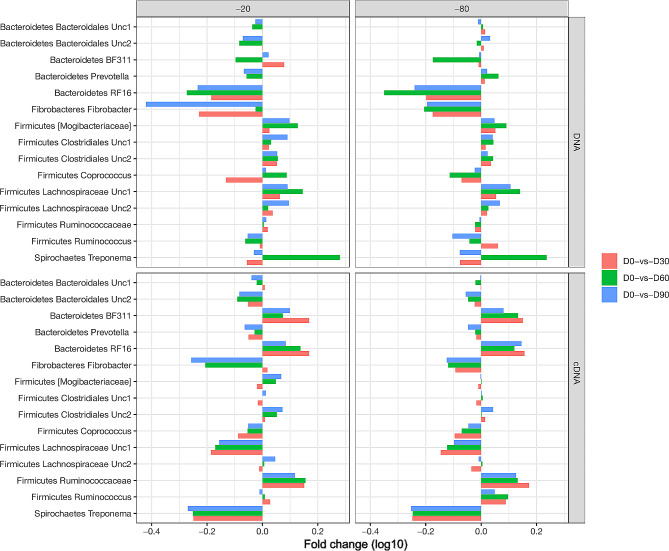
Currently, lack of standardization for fecal microbiota transplantation (FMT) in equine practice has resulted in highly variable techniques, and there is no data on the bacterial metabolic activity or viability of the administered product. The objectives of this study were to compare the total and potentially metabolically active bacterial populations in equine FMT, and assess the effect of different frozen storage times, buffers, and temperatures on an equine FMT product. Fresh feces collected from three healthy adult horses was subjected to different storage methods. This included different preservation solutions (saline plus glycerol or saline only), temperature (-20 °C or -80 °C), and time (fresh, 30, 60, or 90 days). Samples underwent DNA extraction to assess total bacterial populations (both live and dead combined) and RNA extraction followed by reverse transcription to cDNA as a proxy to assess viable bacteria, then 16s rRNA gene amplicon sequencing using the V1-V2 region.
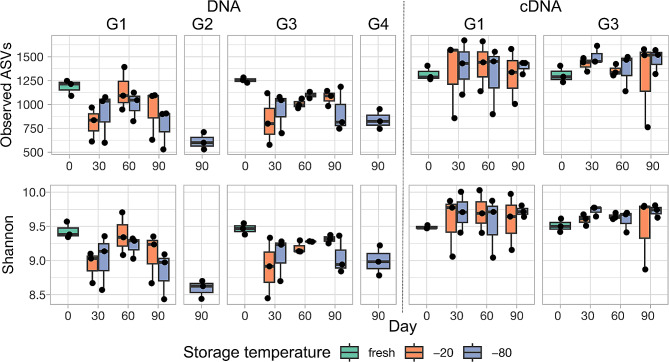
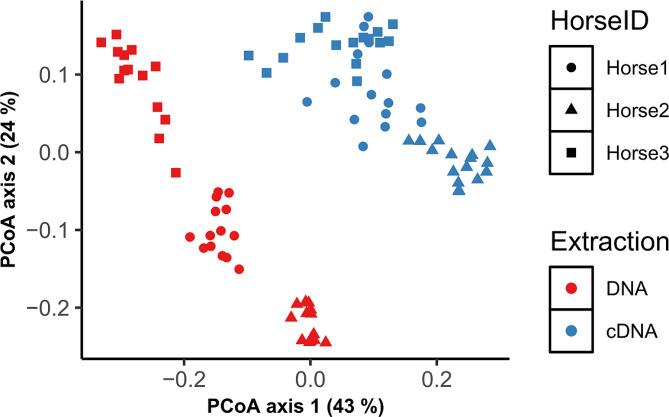
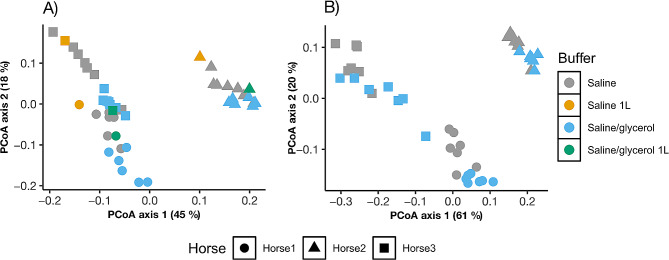
The largest difference in population indices and taxonomic composition at the genus level was seen when evaluating the results of DNA-based (total) and cDNA-based (potentially metabolically active) extraction method. At the community level, alpha diversity (observed species, Shannon diversity) was significantly decreased in frozen samples for DNA-based analysis (P < 0.05), with less difference seen for cDNA-based sequencing. Using DNA-based analysis, length of storage had a significant impact (P < 0.05) on the bacterial community profiles. For potentially metabolically active populations, storage overall had less of an effect on the bacterial community composition, with a significant effect of buffer (P < 0.05). Individual horse had the most significant effect within both DNA and cDNA bacterial communities.
Frozen storage of equine FMT material can preserve potentially metabolically active bacteria of the equine fecal microbiome, with saline plus glycerol preservation more effective than saline alone. Larger studies are needed to determine if these findings apply to other individual horses. The ability to freeze FMT material for use in equine patients could allow for easier clinical use of fecal transplant in horses with disturbances in their intestinal microbiome.
目前,马科动物粪便微生物群移植(FMT)缺乏标准化,导致技术差异很大,而且对于给予产品的细菌代谢活性或生存能力没有数据。本研究的目的是比较马科 FMT 中的总细菌和潜在代谢活性细菌群,并评估不同冷冻储存时间、缓冲液和温度对马科 FMT 产品的影响。从 3 匹健康成年马采集新鲜粪便,进行不同的储存方法。这包括不同的保存液(盐水加甘油或仅盐水)、温度(-20°C 或-80°C)和时间(新鲜、30、60 或 90 天)。样本进行 DNA 提取以评估总细菌群(包括死活细菌)和 RNA 提取,然后进行逆转录至 cDNA,作为评估活菌的替代物,然后使用 V1-V2 区进行 16s rRNA 基因扩增子测序。
在评估基于 DNA(总)和 cDNA(潜在代谢活性)提取方法的结果时,种群指数和分类组成在属水平上的差异最大。在群落水平上,基于 DNA 的分析(P<0.05)的冷冻样本中 alpha 多样性(观察到的物种、香农多样性)显著降低,基于 cDNA 的测序差异较小。使用基于 DNA 的分析,储存时间对细菌群落图谱有显著影响(P<0.05)。对于潜在代谢活性种群,储存总体上对细菌群落组成的影响较小,缓冲液有显著影响(P<0.05)。个体马在 DNA 和 cDNA 细菌群落中都有最显著的影响。
冷冻储存马科 FMT 材料可以保存马科粪便微生物群的潜在代谢活性细菌,盐水加甘油保存比盐水单独保存更有效。需要更大的研究来确定这些发现是否适用于其他个体马。冷冻 FMT 材料的能力可使粪便移植更容易用于马的肠道微生物群紊乱。