Shahbaz Muhammad, Akram Abida, Mehak Asma, Haq Ehsan Ul, Fatima Noor, Wareen Gull, Fitriatin Betty Natalie, Sayyed R Z, Ilyas Noshin, Sabullah Mohd Khalizan
Department of Botany, PMAS-Arid Agriculture University Rawalpindi, Rawalpindi 46300, Pakistan.
Department of Agronomy, PMAS-Arid Agriculture University Rawalpindi, Rawalpindi 46300, Pakistan.
Plants (Basel). 2023 Feb 8;12(4):761. doi: 10.3390/plants12040761.
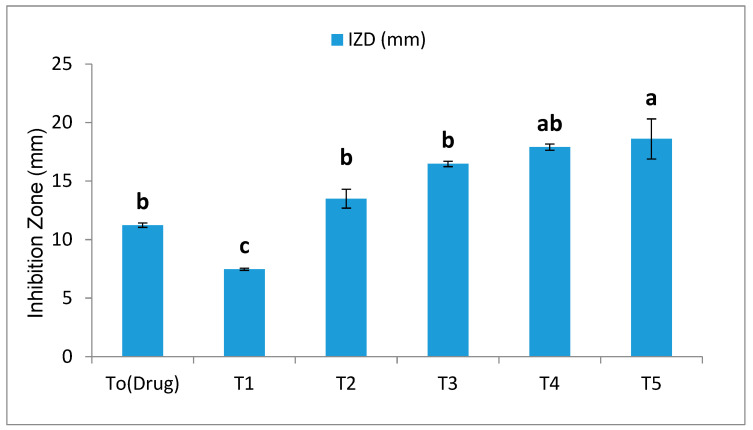
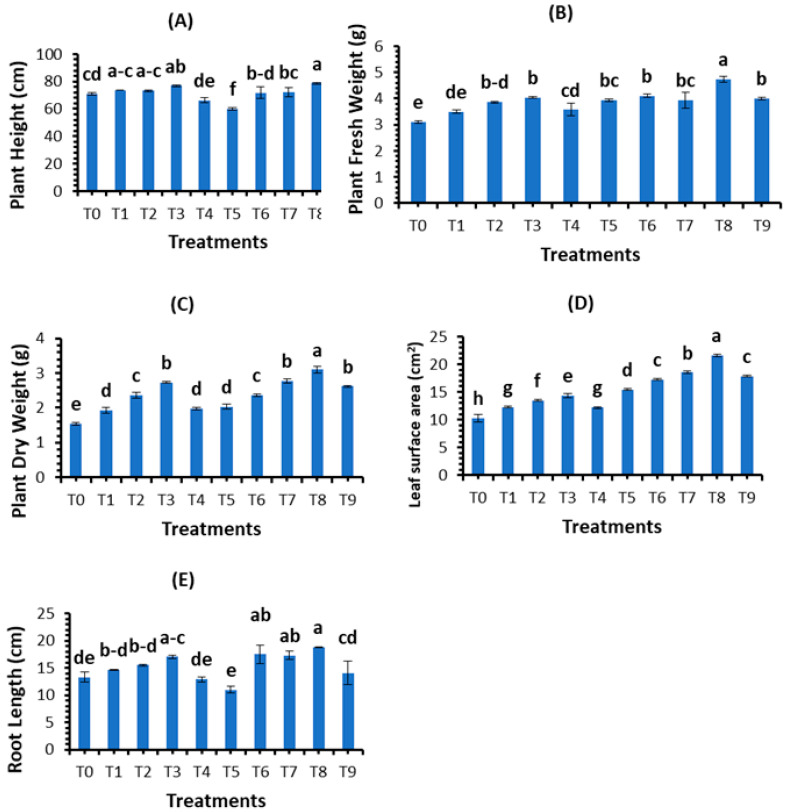
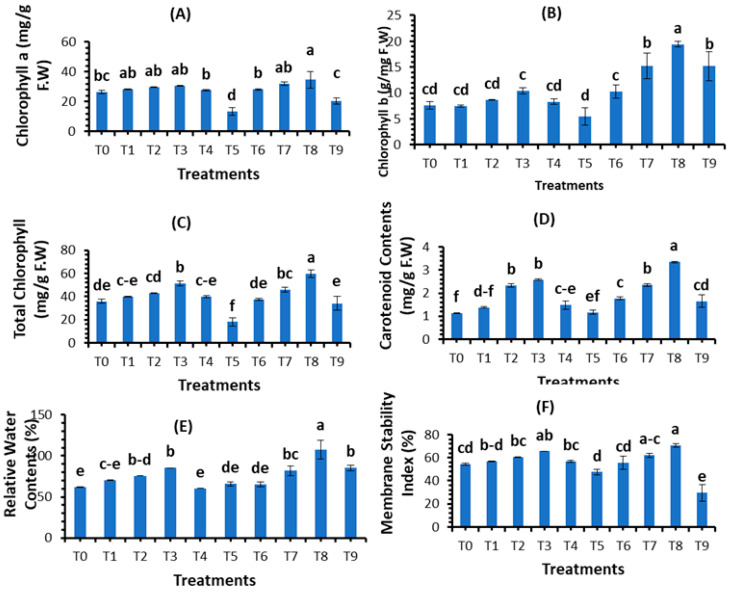
In the present study, SeNPs were synthesized using leaf extracts and investigated for growth promotion in wheat under the biotic stress of spot blotch disease. The phytosynthesized SeNPs were characterized using UV-visible spectroscopy, scanning electron microscopy (SEM), energy-dispersive X-ray (EDX), and Fourier-transformed infrared spectroscopy (FTIR). The in vitro efficacy of different concentrations of phytosynthesized SeNPs (i.e., 100 μg/mL, 150 μg/mL, 200 μg/mL, 250 μg/mL, and 300 μg/mL) was evaluated using the well diffusion method, which reported that 300 μg/mL showed maximum fungus growth inhibition. For in vivo study, different concentrations (10, 20, 30, and 40 mg/L) of SeNPs were applied exogenously to evaluate the morphological, physiological, and biochemical parameters under control conditions and determine when infection was induced. Among all treatments, 30 mg/L of SeNPs performed well and increased the plant height by 2.34% compared to the control and 30.7% more than fungus-inoculated wheat. Similarly, fresh plant weight and dry weight increased by 17.35% and 13.43% over the control and 20.34% and 52.48% over the fungus-treated wheat, respectively. In leaf surface area and root length, our findings were 50.11% and 10.37% higher than the control and 40% and 71% higher than diseased wheat, respectively. Plant physiological parameters i.e., chlorophyll a, chlorophyll b, and total chlorophyll content, were increased 14, 133, and 16.1 times over the control and 157, 253, and 42 times over the pathogen-inoculated wheat, respectively. Our findings regarding carotenoid content, relative water content, and the membrane stability index were 29-, 49-, and 81-fold higher than the control and 187-, 63-, and 48-fold higher than the negative control, respectively. In the case of plant biochemical parameters, proline, sugar, flavonoids, and phenolic contents were recorded at 6, 287, 11, and 34 times higher than the control and 32, 107, 33, and 4 times more than fungus-inoculated wheat, respectively. This study is considered the first biocompatible approach to evaluate the potential of green-synthesized SeNPs as growth-promoting substances in wheat under the spot blotch stress and effective management strategy to inhibit fungal growth.
在本研究中,利用叶片提取物合成了硒纳米颗粒(SeNPs),并研究了其在小麦叶斑病生物胁迫下对小麦生长的促进作用。采用紫外可见光谱、扫描电子显微镜(SEM)、能量色散X射线(EDX)和傅里叶变换红外光谱(FTIR)对植物合成的SeNPs进行了表征。采用平板扩散法评估了不同浓度(即100μg/mL、150μg/mL、200μg/mL、250μg/mL和300μg/mL)的植物合成SeNPs的体外功效,结果表明300μg/mL的SeNPs对真菌生长的抑制作用最大。在体内研究中,外源施加不同浓度(10、20、30和40mg/L)的SeNPs,以评估对照条件下的形态、生理和生化参数,并确定诱导感染的时间。在所有处理中,30mg/L的SeNPs表现良好,与对照相比,株高增加了2.34%,比接种真菌的小麦高30.7%。同样,鲜重和干重分别比对照增加了17.35%和13.43%,比真菌处理的小麦增加了20.34%和52.48%。在叶面积和根长方面,我们的研究结果分别比对照高50.11%和10.37%,比患病小麦高40%和71%。植物生理参数,即叶绿素a、叶绿素b和总叶绿素含量,分别比对照增加了14倍、133倍和16.1倍,比接种病原体的小麦增加了157倍、253倍和42倍。我们关于类胡萝卜素含量、相对含水量和膜稳定性指数的研究结果分别比对照高29倍、49倍和81倍,比阴性对照高187倍、63倍和48倍。在植物生化参数方面,脯氨酸、糖、黄酮类化合物和酚类物质的含量分别比对照高6倍、287倍、11倍和34倍,比接种真菌的小麦高32倍、107倍、33倍和4倍。本研究被认为是第一种生物相容性方法,用于评估绿色合成的SeNPs在小麦叶斑病胁迫下作为生长促进物质的潜力以及抑制真菌生长的有效管理策略。