Department of Obstetrics and Gynecology, Division of Maternal Fetal Medicine, Washington University School of Medicine, St. Louis, MO, United States.
Department of Pediatrics, Division of Infectious Diseases, Washington University School of Medicine, St. Louis, MO, United States.
Front Cell Infect Microbiol. 2023 Feb 9;13:1061230. doi: 10.3389/fcimb.2023.1061230. eCollection 2023.
Nucleic acid from viruses is common in peripheral blood, even in asymptomatic individuals. How physiologic changes of pregnancy impact host-virus dynamics for acute, chronic, and latent viral infections is not well described. Previously we found higher viral diversity in the vagina during pregnancy associated with preterm birth (PTB) and Black race. We hypothesized that higher diversity and viral copy numbers in the plasma would show similar trends.
To test this hypothesis, we evaluated longitudinally collected plasma samples from 23 pregnant patients (11 term and 12 preterm) using metagenomic sequencing with ViroCap enrichment to enhance virus detection. Sequence data were analyzed with the ViroMatch pipeline.
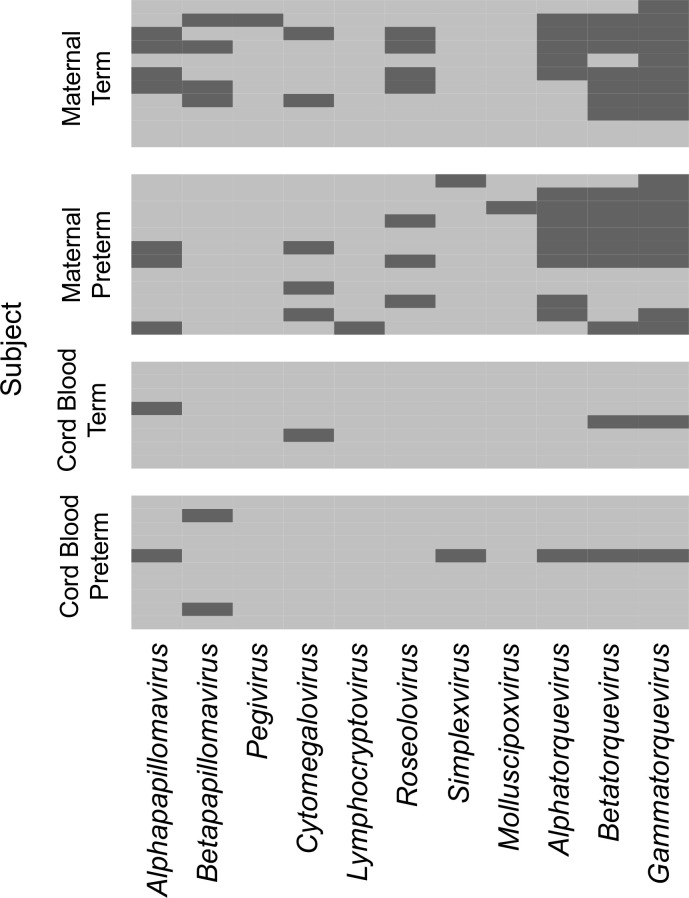
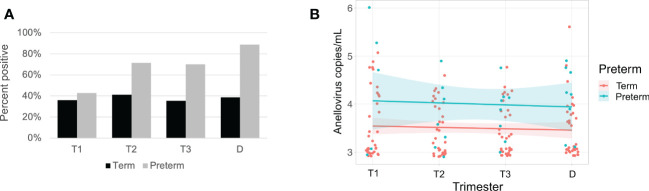
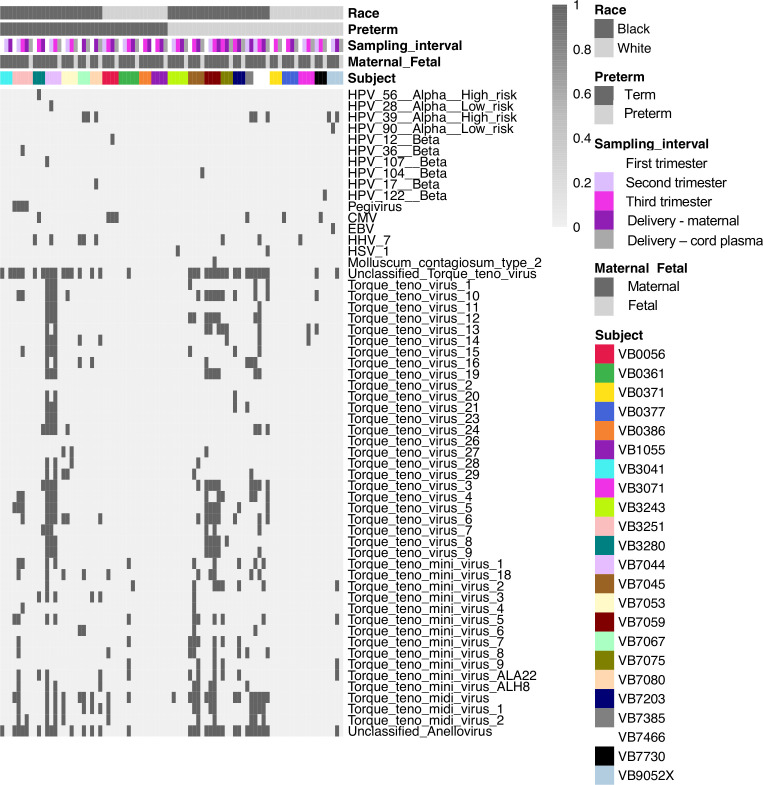
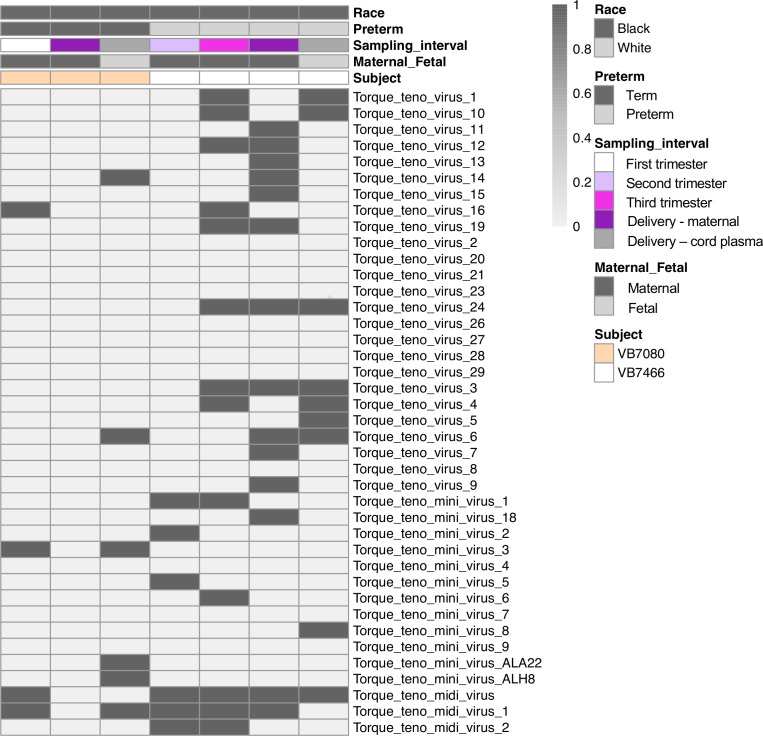
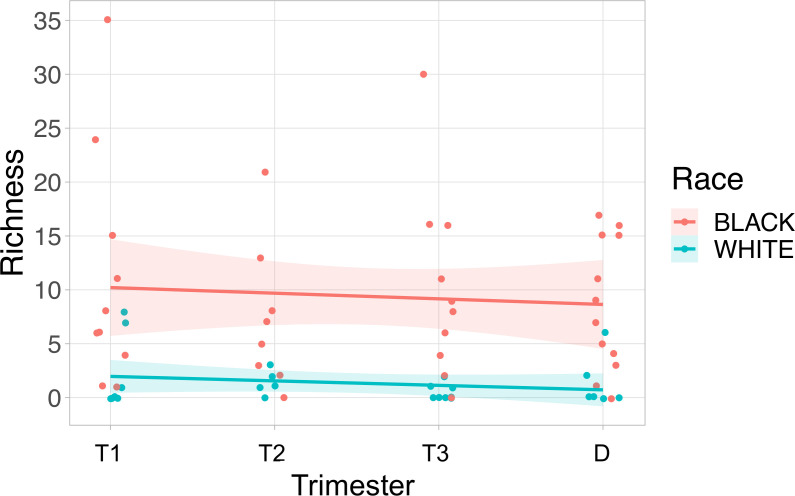
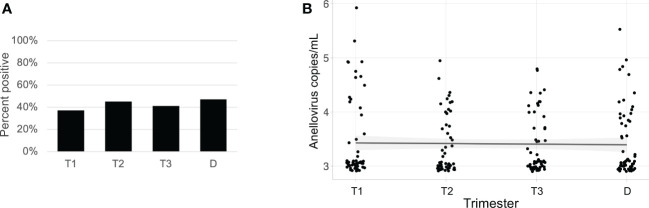
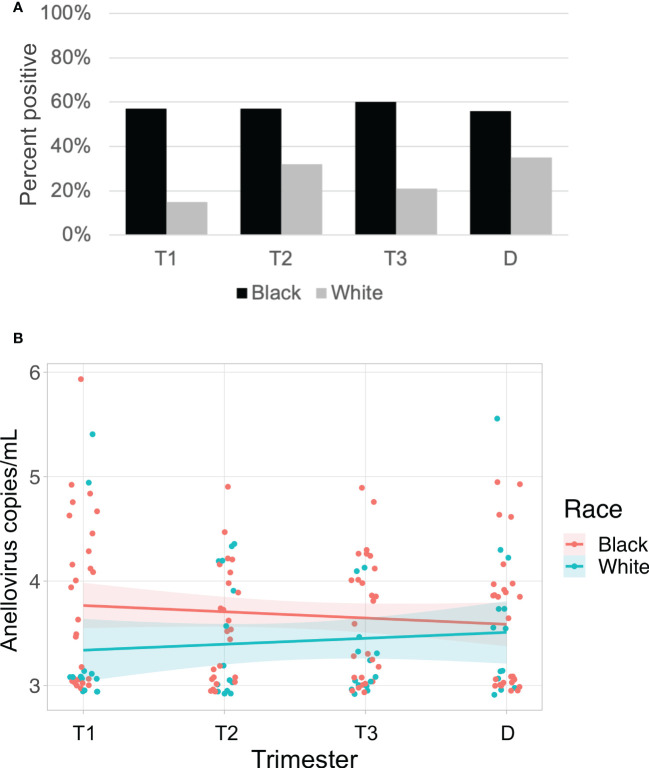
We detected nucleic acid from at least 1 virus in at least 1 sample from 87% (20/23) of the maternal subjects. The viruses represented 5 families: , and We analyzed cord plasma from 18 of the babies from those patients and found nucleic acid from viruses in 33% of the samples (6/18) from 3 families: , and Some viral genomes were found in both maternal plasma and cord plasma from maternal-fetal pairs (e.g. cytomegalovirus, anellovirus). We found that Black race associated with higher viral richness (number of different viruses detected) in the maternal blood samples (P=0.003), consistent with our previous observations in vaginal samples. We did not detect associations between viral richness and PTB or the trimester of sampling. We then examined anelloviruses, a group of viruses that is ubiquitous and whose viral copy numbers fluctuate with immunological state. We tested anellovirus copy numbers in plasma from 63 pregnant patients sampled longitudinally using qPCR. Black race associated with higher anellovirus positivity (P<0.001) but not copy numbers (P=0.1). Anellovirus positivity and copy numbers were higher in the PTB group compared to the term group (P<0.01, P=0.003, respectively). Interestingly, these features did not occur at the time of delivery but appeared earlier in pregnancy, suggesting that although anelloviruses were biomarkers for PTB they were not triggering parturition.
These results emphasize the importance of longitudinal sampling and diverse cohorts in studies of virome dynamics during pregnancy.
病毒的核酸常见于外周血中,即使在无症状个体中也是如此。妊娠期间的生理变化如何影响急性、慢性和潜伏性病毒感染的宿主-病毒动力学尚不清楚。我们之前发现早产(PTB)和黑种人孕妇的阴道中病毒多样性更高。我们假设血浆中的多样性和病毒拷贝数也会出现类似的趋势。
为了验证这一假设,我们使用 ViroCap 富集的宏基因组测序对 23 名孕妇(11 名足月和 12 名早产)的纵向采集的血浆样本进行了评估。使用 ViroMatch 管道对序列数据进行了分析。
我们从 23 名产妇受试者中的 20 名(87%)至少在 1 个样本中检测到至少 1 种病毒的核酸。这些病毒代表了 5 个家族: 。我们分析了来自这些患者的 18 名婴儿的脐带血浆,发现 3 个家族的样本中有病毒核酸(6/18): 。一些病毒基因组存在于母婴对的母血浆和脐带血浆中(例如巨细胞病毒、环状病毒)。我们发现,黑种人产妇的血液样本中病毒丰富度(检测到的不同病毒数量)更高(P=0.003),这与我们之前在阴道样本中的观察结果一致。我们没有发现病毒丰富度与 PTB 或采样的孕中期之间的关联。然后,我们检查了环状病毒,这是一组无处不在的病毒,其病毒拷贝数随免疫状态而波动。我们使用 qPCR 对 63 名接受纵向采样的孕妇的血浆中的环状病毒拷贝数进行了测试。黑种人产妇的环状病毒阳性率更高(P<0.001),但拷贝数无差异(P=0.1)。与足月组相比,PTB 组的环状病毒阳性率和拷贝数更高(P<0.01,P=0.003)。有趣的是,这些特征不是在分娩时发生的,而是在妊娠早期出现的,这表明虽然环状病毒是 PTB 的生物标志物,但它们不是触发分娩的原因。
这些结果强调了在妊娠期间病毒组动力学研究中进行纵向采样和多样化队列的重要性。