Pathology Center, Xinjiang Medical University Affiliated Tumor Hospital, Urumqi, Xinjiang, China.
The Second Department of Gastroenterology, the First Affiliated Hospital of Xinjiang Medical University, Urumqi, Xinjiang, China.
Front Immunol. 2023 Feb 8;14:1135930. doi: 10.3389/fimmu.2023.1135930. eCollection 2023.
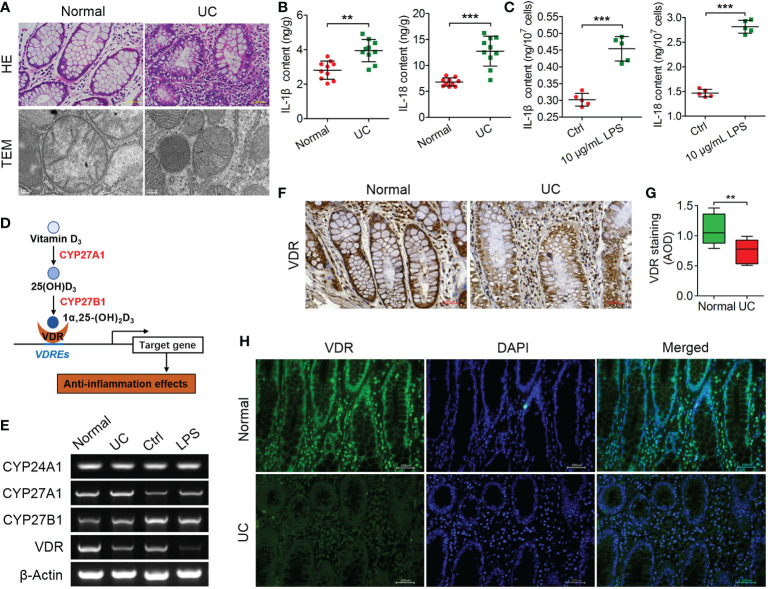
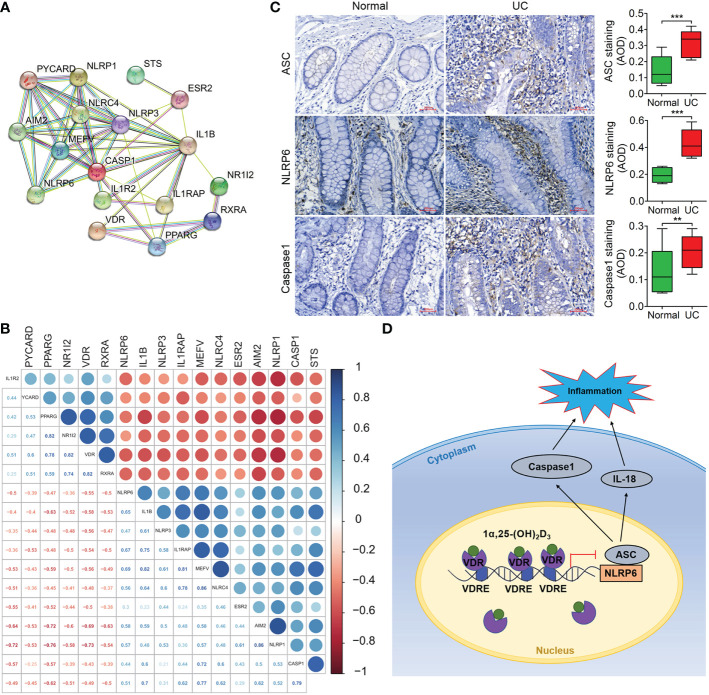
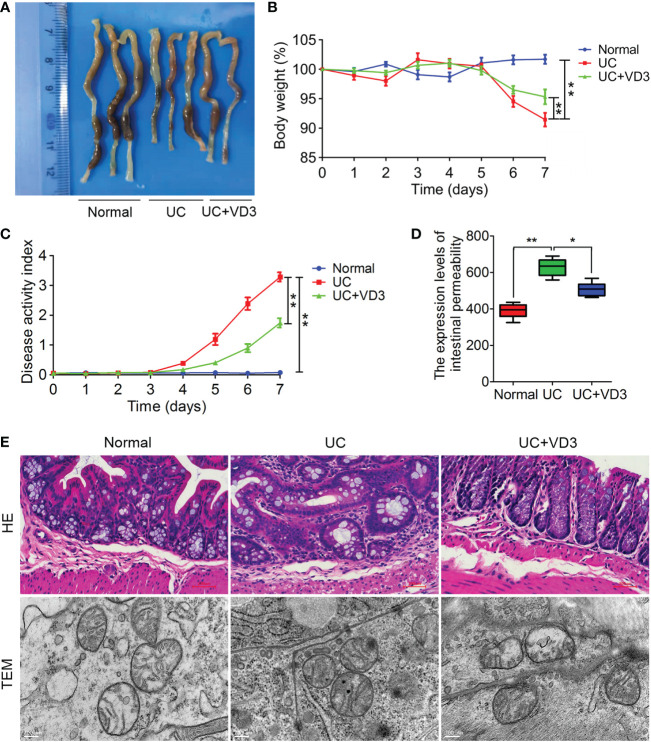
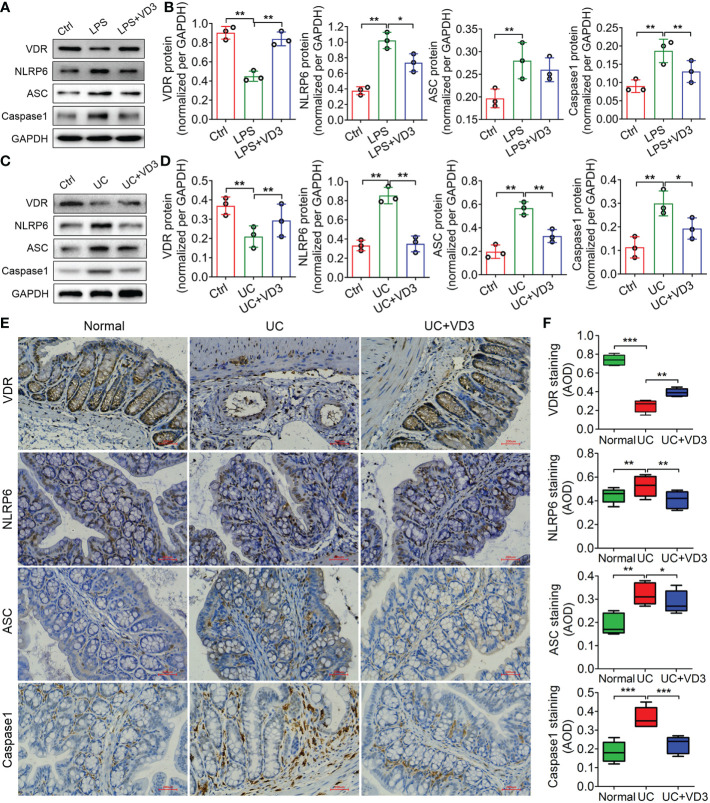
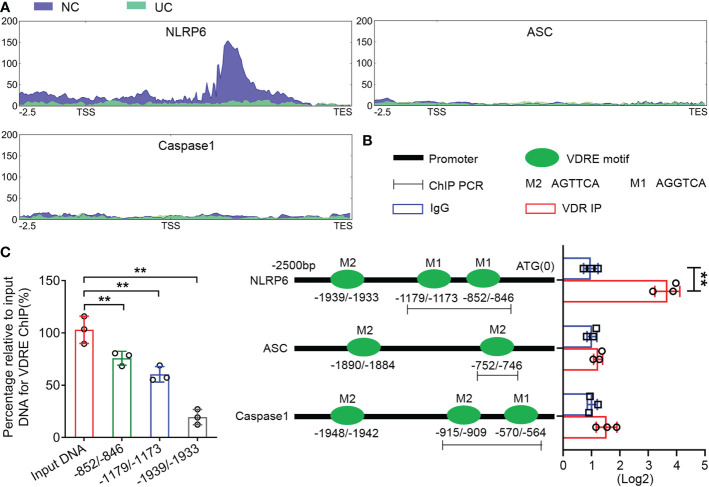
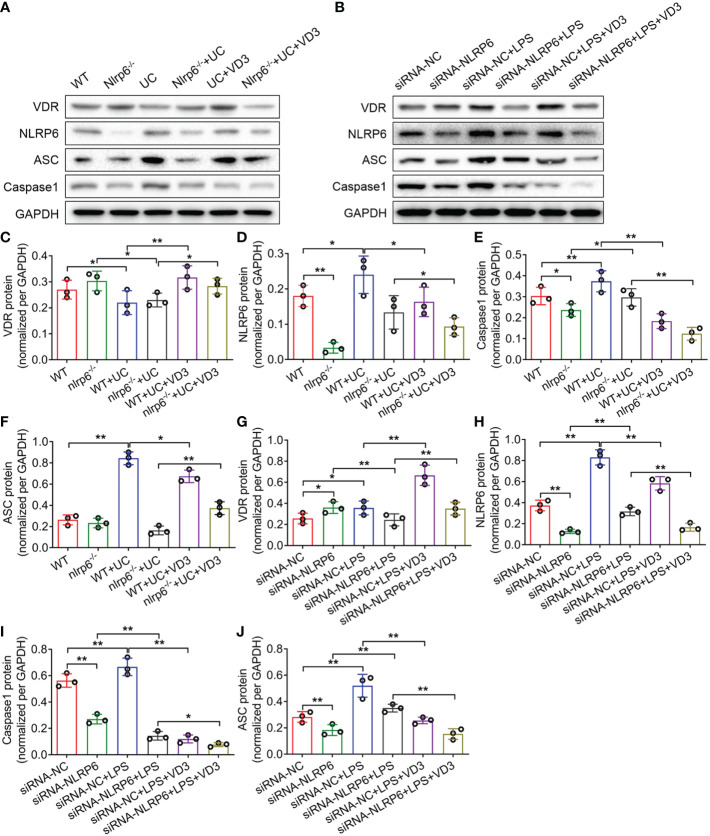
Inflammation is a key factor in the development of ulcerative colitis (UC). 1,25-dihydroxyvitamin D (1,25(OH)D, VD), as the major active ingredient of vitamin D and an anti-inflammatory activator, is closely related to the initiation and development of UC, but its regulatory mechanism remains unclear. In this study, we carried out histological and physiological analyses in UC patients and UC mice. RNA sequencing (RNA-seq), assays for transposase-accessible chromatin with high-throughput sequencing (ATAC-seq), chromatin immunoprecipitation (ChIP) assays and protein and mRNA expression were performed to analyze and identify the potential molecular mechanism in UC mice and lipopolysaccharide (LPS)-induced mouse intestinal epithelial cells (MIECs). Moreover, we established nucleotide-binding oligomerization domain (NOD)-like receptor protein mice and siRNA-NLRP6 MIECs to further characterize the role of NLRP6 in anti-inflammation of VD. Our study revealed that VD abolished NOD-like receptor protein 6 (NLRP6) inflammasome activation, suppressing NLRP6, apoptosis-associated speck-like protein (ASC) and Caspase-1 levels the vitamin D receptor (VDR). ChIP and ATAC-seq showed that VDR transcriptionally repressed NLRP6 by binding to vitamin D response elements (VDREs) in the promoter of NLRP6, impairing UC development. Importantly, VD had both preventive and therapeutic effects on the UC mouse model inhibition of NLRP6 inflammasome activation. Our results demonstrated that VD substantially represses inflammation and the development of UC . These findings reveal a new mechanism by which VD affects inflammation in UC by regulating the expression of NLRP6 and show the potential clinical use of VD in autoimmune syndromes or other NLRP6 inflammasome-driven inflammatory diseases.
炎症是溃疡性结肠炎(UC)发展的关键因素。1,25-二羟维生素 D(1,25(OH)D,VD)作为维生素 D 的主要活性成分和抗炎激活剂,与 UC 的发生和发展密切相关,但调节机制尚不清楚。在这项研究中,我们对 UC 患者和 UC 小鼠进行了组织学和生理学分析。进行了 RNA 测序(RNA-seq)、高通量测序的转座酶可及染色质分析(ATAC-seq)、染色质免疫沉淀(ChIP)测定以及蛋白质和 mRNA 表达分析,以分析和鉴定 UC 小鼠和脂多糖(LPS)诱导的小鼠肠上皮细胞(MIECs)中的潜在分子机制。此外,我们建立了核苷酸结合寡聚化结构域(NOD)样受体蛋白 3 (NLRP3)和 NLRP6 siRNA-MIECs 以进一步研究 NLRP6 在 VD 抗炎中的作用。我们的研究表明,VD 可消除 NOD 样受体蛋白 6(NLRP6)炎性小体激活,抑制 NLRP6、凋亡相关斑点样蛋白(ASC)和 Caspase-1 水平。VD 受体(VDR)。ChIP 和 ATAC-seq 表明,VDR 通过结合 NLRP6 启动子中的维生素 D 反应元件(VDRE)转录抑制 NLRP6,损害 UC 的发展。重要的是,VD 对 UC 小鼠模型具有预防和治疗作用,抑制 NLRP6 炎性小体激活。我们的结果表明,VD 可显著抑制炎症和 UC 的发展。这些发现揭示了 VD 通过调节 NLRP6 的表达影响 UC 中炎症的新机制,并显示了 VD 在自身免疫综合征或其他 NLRP6 炎性小体驱动的炎症性疾病中的潜在临床用途。