Department Trauma & Orthopedic Surgery, Septic & Reconstructive Surgery, Research and Treatment Center Septic Defect Wounds, Federal Armed Forces of Germany, Military Academic Hospital Berlin, Scharnhorststr. 13, 10115 Berlin, Germany.
Bundeswehr Institute of Microbiology, Neuherbergstr. 11, 80937 Munich, Germany.
Viruses. 2023 Feb 20;15(2):588. doi: 10.3390/v15020588.
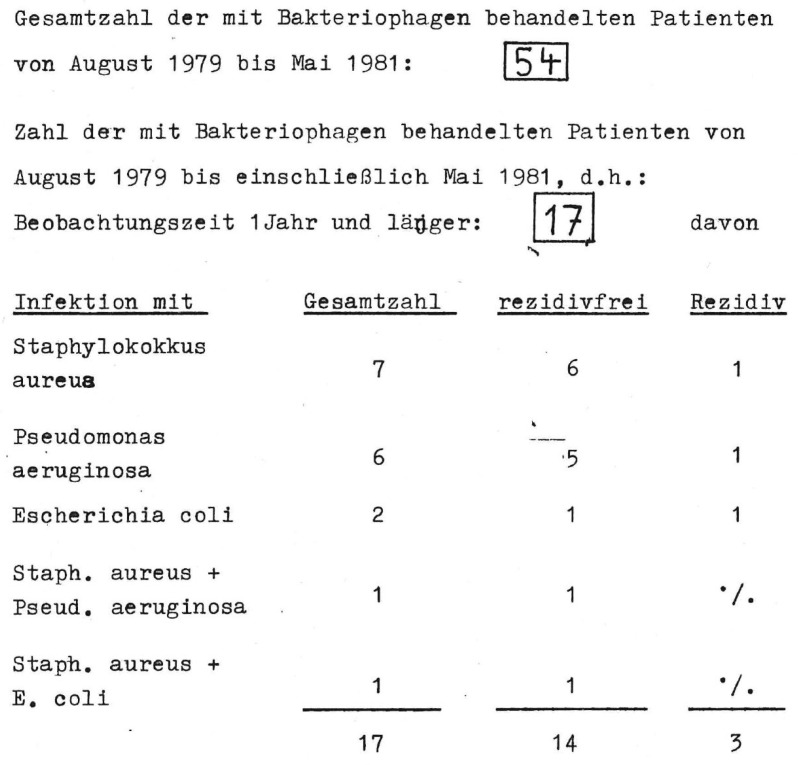
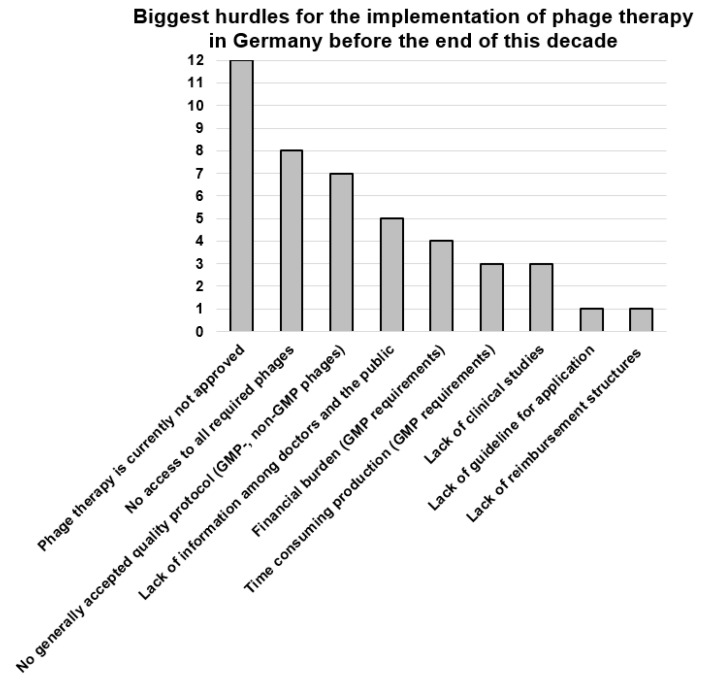
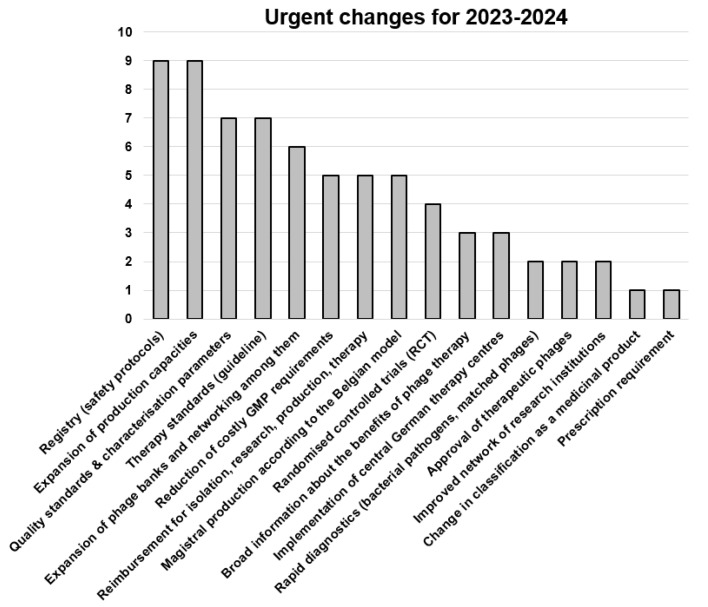
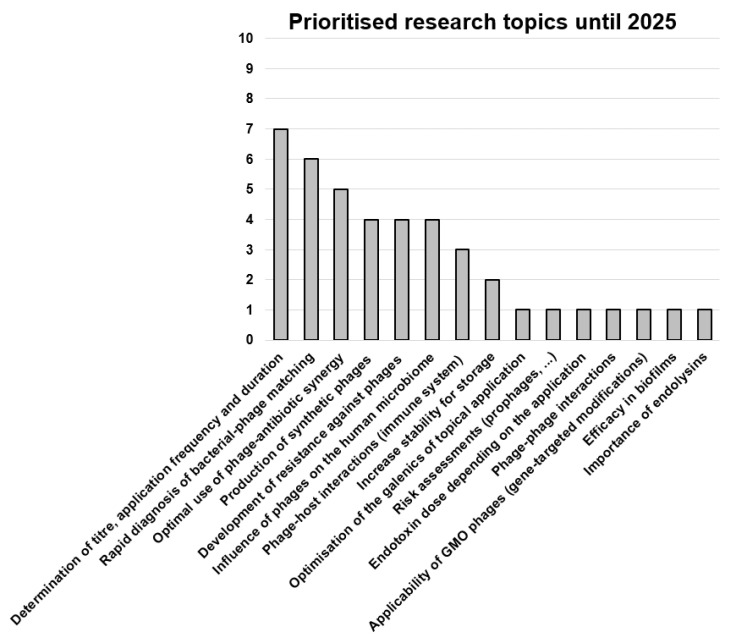
Bacteriophage therapy holds promise in addressing the antibiotic-resistance crisis, globally and in Germany. Here, we provide an overview of the current situation (2023) of applied phage therapy and supporting research in Germany. The authors, an interdisciplinary group working on patient-focused bacteriophage research, addressed phage production, phage banks, susceptibility testing, clinical application, ongoing translational research, the regulatory situation, and the network structure in Germany. They identified critical shortcomings including the lack of clinical trials, a paucity of appropriate regulation and a shortage of phages for clinical use. Phage therapy is currently being applied to a limited number of patients as individual treatment trials. There is presently only one site in Germany for large-scale good-manufacturing-practice (GMP) phage production, and one clinic carrying out permission-free production of medicinal products. Several phage banks exist, but due to varying institutional policies, exchange among them is limited. The number of phage research projects has remarkably increased in recent years, some of which are part of structured networks. There is a demand for the expansion of production capacities with defined quality standards, a structured registry of all treated patients and clear therapeutic guidelines. Furthermore, the medical field is still poorly informed about phage therapy. The current status of non-approval, however, may also be regarded as advantageous, as insufficiently restricted use of phage therapy without adequate scientific evidence for effectiveness and safety must be prevented. In close coordination with the regulatory authorities, it seems sensible to first allow some centers to treat patients following the Belgian model. There is an urgent need for targeted networking and funding, particularly of translational research, to help advance the clinical application of phages.
噬菌体疗法有望解决全球和德国的抗生素耐药性危机。在这里,我们概述了德国当前应用噬菌体疗法和支持研究的情况(2023 年)。作者是一个专注于噬菌体研究的跨学科团队,他们探讨了噬菌体生产、噬菌体库、药敏试验、临床应用、正在进行的转化研究、监管情况以及德国的网络结构。他们发现了一些关键的不足之处,包括缺乏临床试验、适当监管的缺乏以及可用于临床应用的噬菌体短缺。噬菌体疗法目前作为个别治疗试验应用于少数患者。德国目前只有一个用于大规模良好生产规范(GMP)噬菌体生产的地点,以及一个无需许可即可生产药物的诊所。有几个噬菌体库存在,但由于机构政策不同,它们之间的交流受到限制。近年来,噬菌体研究项目的数量显著增加,其中一些项目是结构化网络的一部分。有必要扩大生产能力,并制定明确的质量标准,建立所有治疗患者的结构化登记册和明确的治疗指南。此外,医学界对噬菌体疗法的了解仍然很差。然而,目前未经批准的情况也可能被视为有利,因为必须防止在没有充分的有效性和安全性科学证据的情况下,对噬菌体疗法的限制不足的使用。与监管机构密切协调,似乎明智的是首先允许一些中心按照比利时模式治疗患者。迫切需要有针对性的网络和资金,特别是转化研究,以帮助推进噬菌体的临床应用。