Zhou Quan, Chen Weikai, Gu Chao, Liu Hao, Hu Xiayu, Deng Lei, He Wei, Xu Yong, Zhu Xuesong, Yang Huilin, Chen Xi, He Fan, Liu Tao
Department of Orthopaedics, The First Affiliated Hospital of Soochow University, Suzhou 215006, China.
Orthopaedic Institute, Medical College, Soochow University, Suzhou 215007, China.
Regen Biomater. 2023 Feb 14;10:rbad011. doi: 10.1093/rb/rbad011. eCollection 2023.
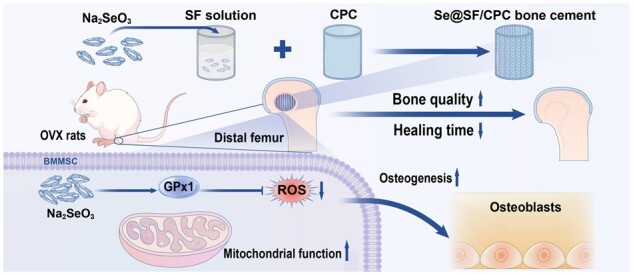
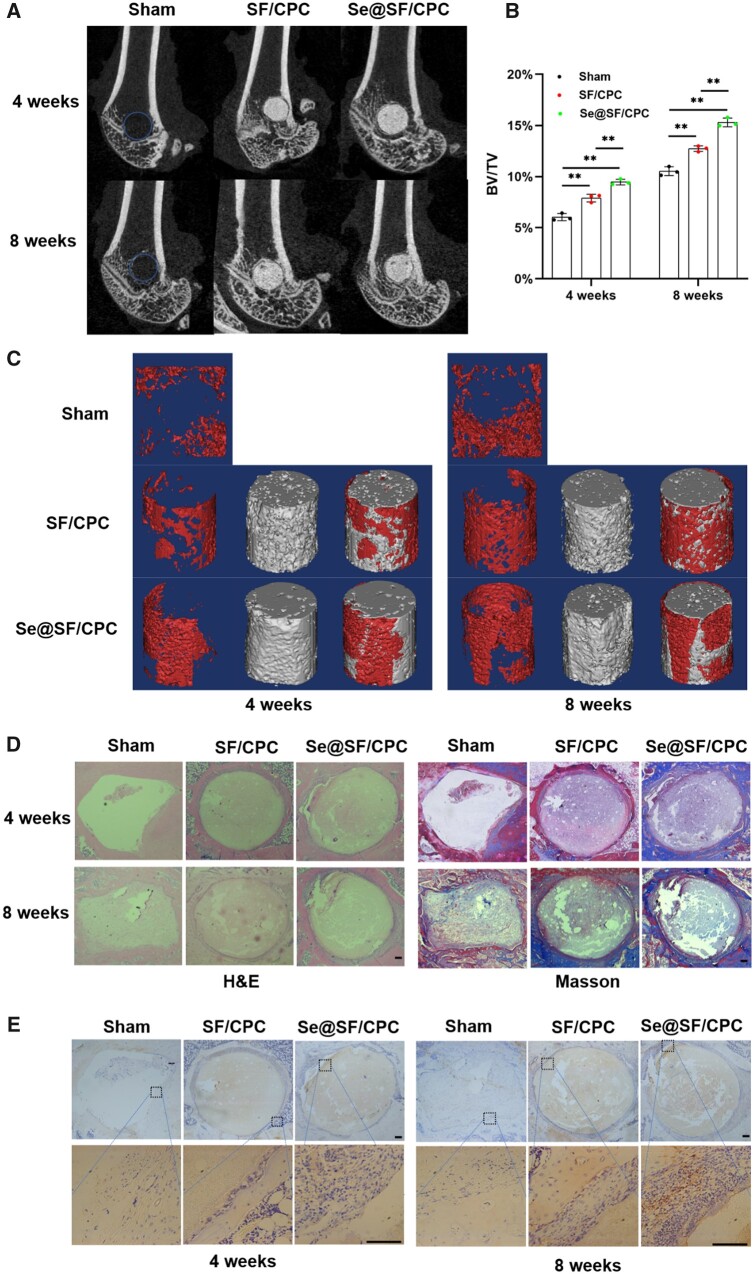
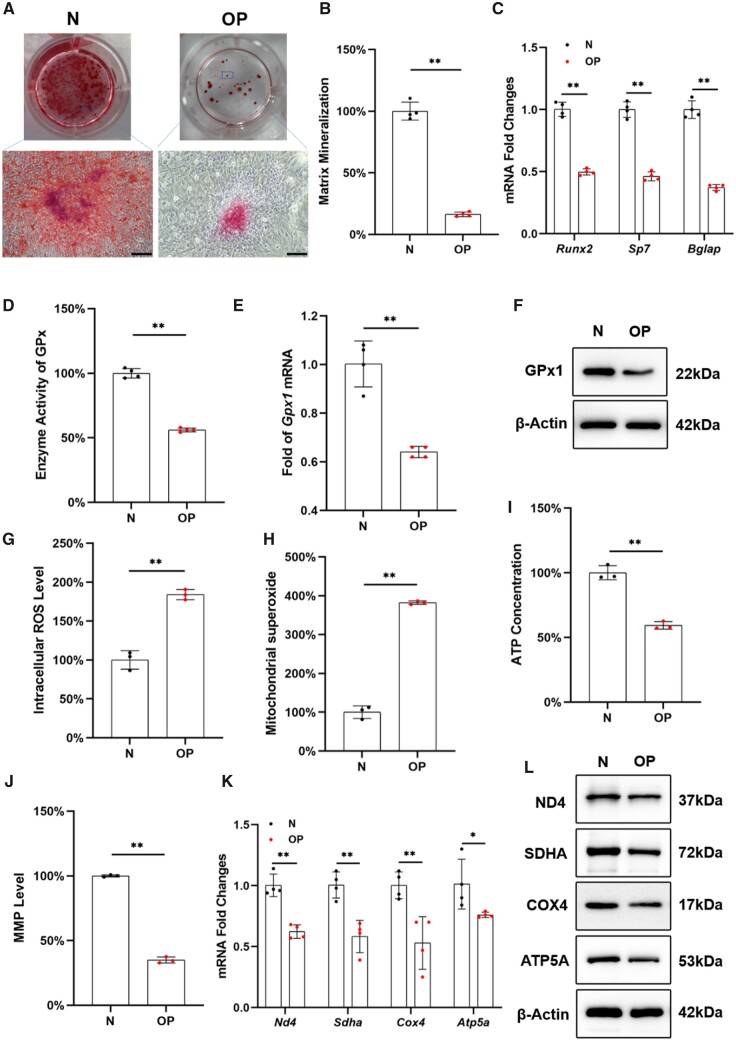
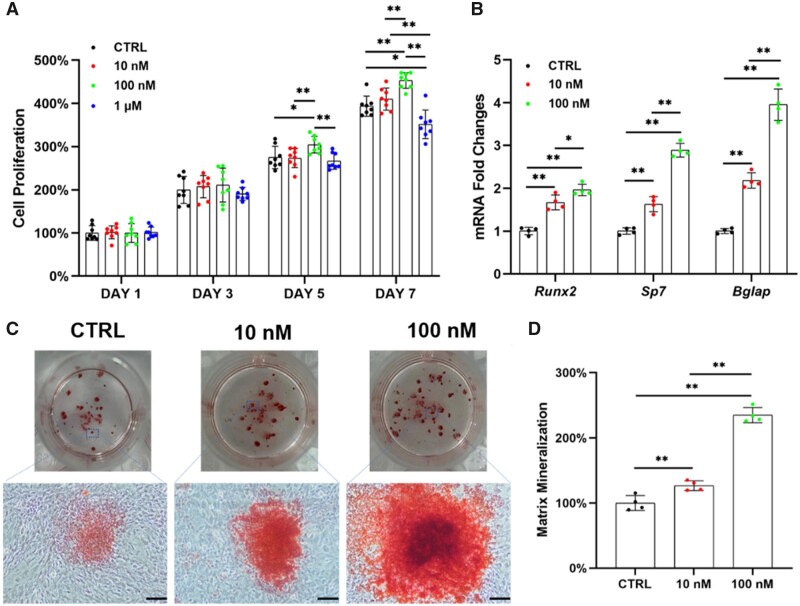
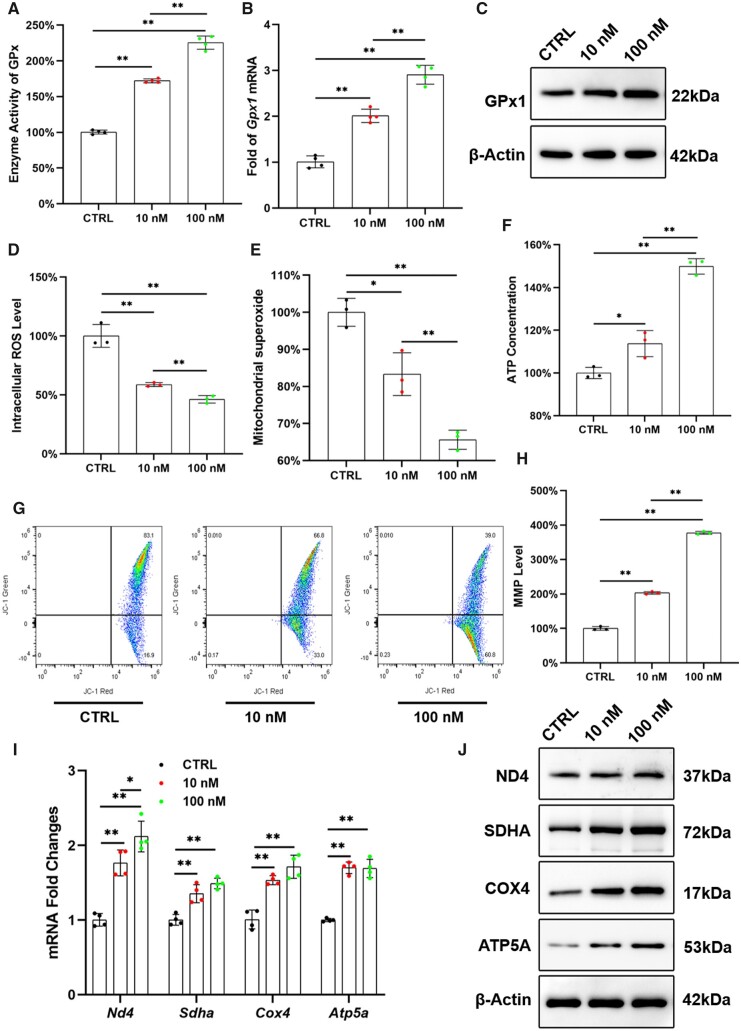
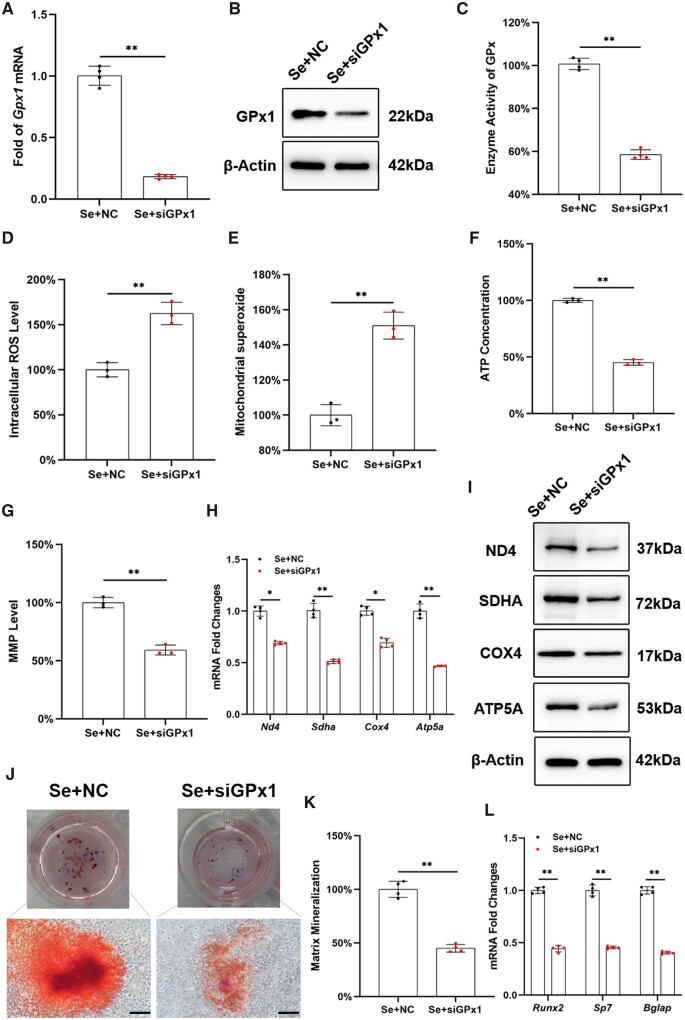
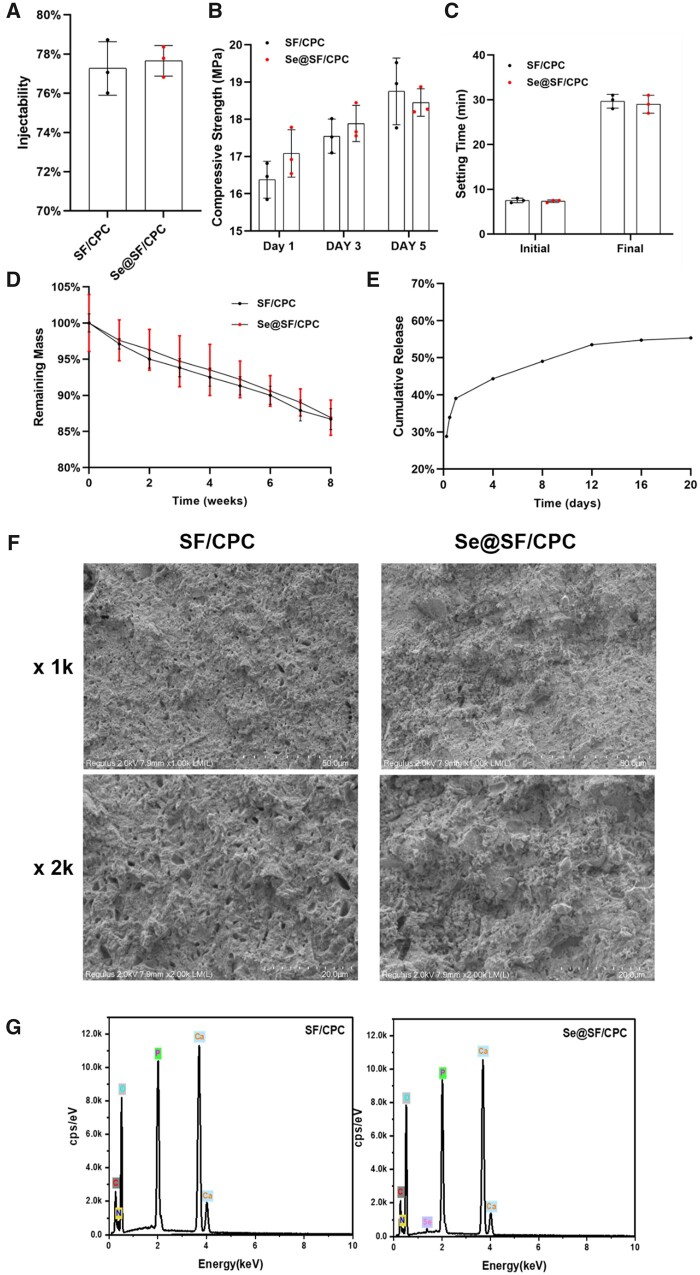
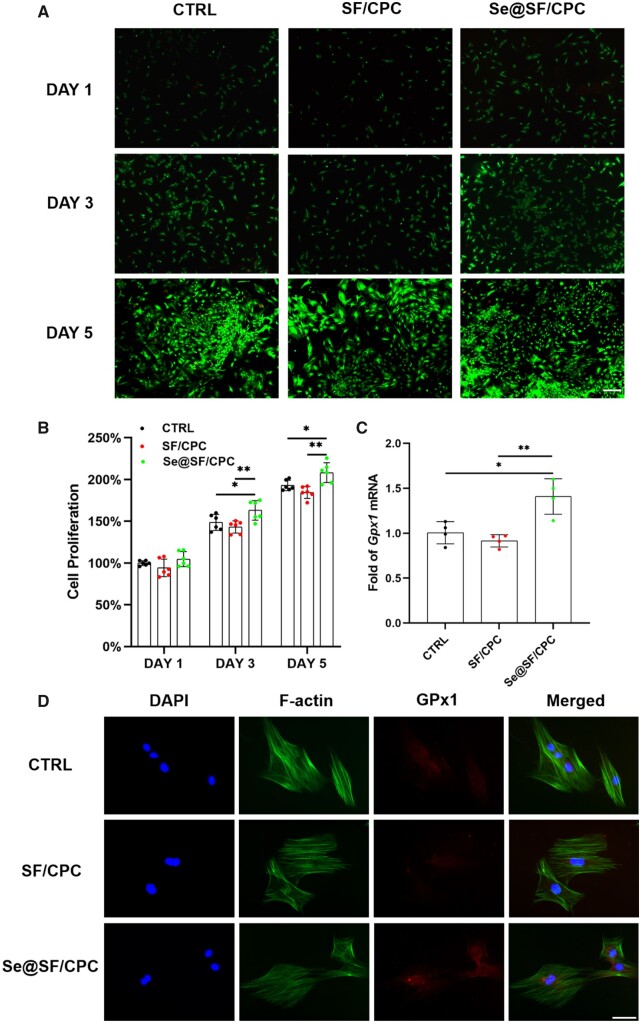
Over-accumulation of reactive oxygen species (ROS) causes mitochondrial dysfunction and impairs the osteogenic potential of bone marrow-derived mesenchymal stem cells (BMMSCs). Selenium (Se) protects BMMSCs from oxidative stress-induced damage; however, it is unknown whether Se supplementation can promote the repair of osteoporotic bone defects by rescuing the impaired osteogenic potential of osteoporotic BMMSCs (OP-BMMSCs). treatment with sodium selenite (NaSeO) successfully improved the osteogenic differentiation of OP-BMMSCs, as demonstrated by increased matrix mineralization and up-regulated osteogenic genes expression. More importantly, NaSeO restored the impaired mitochondrial functions of OP-BMMSCs, significantly up-regulated glutathione peroxidase 1 (GPx1) expression and attenuated the intracellular ROS and mitochondrial superoxide. Silencing of completely abrogated the protective effects of NaSeO on mitochondrial functions of OP-BMMSCs, suggesting the important role of GPx1 in protecting OP-BMMSCs from oxidative stress. We further fabricated Se-modified bone cement based on silk fibroin and calcium phosphate cement (SF/CPC). After 8 weeks of implantation, Se-modified bone cement significantly promoted bone defect repair, evidenced by the increased new bone tissue formation and enhanced GPx1 expression in ovariectomized rats. These findings revealed that Se supplementation rescued mitochondrial functions of OP-BMMSCs through activation of the GPx1-mediated antioxidant pathway, and more importantly, supplementation with Se in SF/CPC accelerated bone regeneration in ovariectomized rats, representing a novel strategy for treating osteoporotic bone fractures or defects.
活性氧(ROS)的过度积累会导致线粒体功能障碍,并损害骨髓间充质干细胞(BMMSCs)的成骨潜能。硒(Se)可保护BMMSCs免受氧化应激诱导的损伤;然而,补充硒是否能通过挽救骨质疏松性BMMSCs(OP-BMMSCs)受损的成骨潜能来促进骨质疏松性骨缺损的修复尚不清楚。亚硒酸钠(NaSeO)治疗成功改善了OP-BMMSCs的成骨分化,表现为基质矿化增加和成骨基因表达上调。更重要的是,NaSeO恢复了OP-BMMSCs受损的线粒体功能,显著上调了谷胱甘肽过氧化物酶1(GPx1)的表达,并减轻了细胞内ROS和线粒体超氧化物。GPx1的沉默完全消除了NaSeO对OP-BMMSCs线粒体功能的保护作用,表明GPx1在保护OP-BMMSCs免受氧化应激方面发挥着重要作用。我们进一步基于丝素蛋白和磷酸钙骨水泥(SF/CPC)制备了硒改性骨水泥。植入8周后,硒改性骨水泥显著促进了骨缺损修复,表现为去卵巢大鼠新骨组织形成增加和GPx1表达增强。这些发现表明,补充硒通过激活GPx1介导的抗氧化途径挽救了OP-BMMSCs的线粒体功能,更重要的是,在SF/CPC中补充硒加速了去卵巢大鼠的骨再生,代表了一种治疗骨质疏松性骨折或缺损的新策略。