Mancinelli Elisa, Dell'Arciprete Gaia, Pattarozzi Davide, Gabrielli Silvia, Salcuni Silvia
Department of Developmental and Socialization Psychology, University of Padova, Padova, Italy.
Digital Health Lab, Centre for Digital Health and Wellbeing, Fondazione Bruno Kessler, Trento, Italy.
JMIR Pediatr Parent. 2023 Feb 28;6:e40937. doi: 10.2196/40937.
Pregnancy is a complex period that implies many biopsychosocial changes, and the way women adapt to these changes impacts their well-being and the chances of developing mental health problems. During the perinatal period, women have expressed a preference for support delivered on the web. In this regard, interventions such as behavioral activation (BA), which are brief and structured psychosocial interventions, seem particularly suited to be delivered through digital solutions.
This study aimed to map the literature investigating digital BA interventions deployed during the perinatal period. We paid particular attention to the methodological underpinnings of the studies, the potential impact of BA interventions on symptoms other than depression, and the existence of differences occurring when these interventions were administered during pregnancy versus the postpartum period.
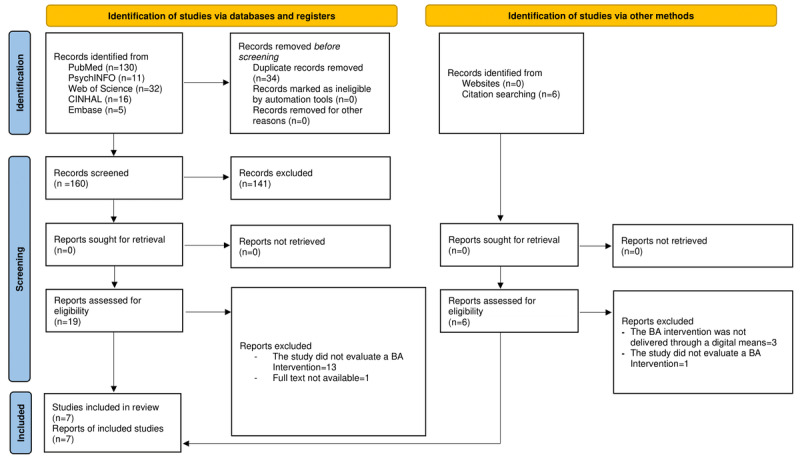
A systematic search compliant with the PRISMA-ScR (Preferred Reporting Items for Systematic Reviews and Meta-Analysis extension for Scoping Reviews) guidelines was conducted considering 5 bibliographic databases; reference lists and key journals were also screened by 2 independent authors following a double-blind approach.
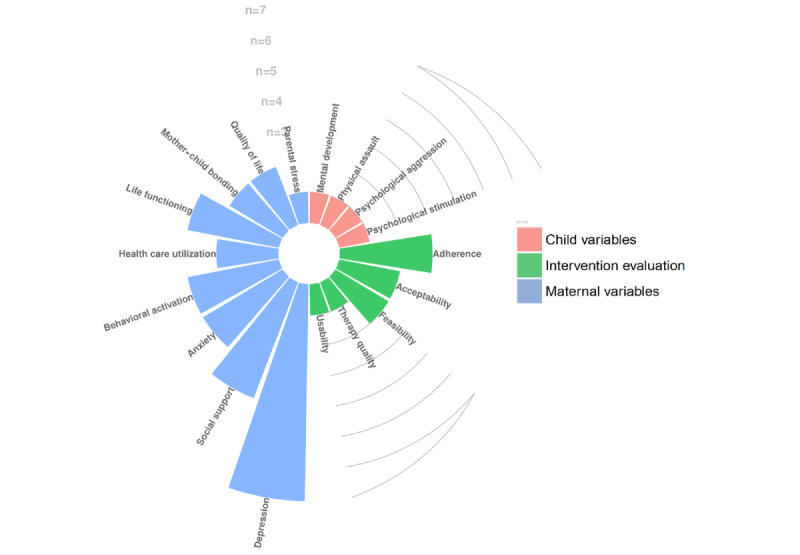
A total of 7 studies published between 2013 and 2022 were included. In total, 2 studies were protocols for randomized controlled trials, 5 were empirical studies, and 1 was a qualitative study. All studies focused on the postpartum period, except for 1 that focused on the broader perinatal period. Promising effects on depression symptoms were reported but not on other psychosocial symptoms. Low intervention adherence has emerged, whereas the usability associated with the digital means used to deploy interventions was scarcely addressed; moreover, information on the digital platforms used was poorly reported overall.
Our findings highlight the scarcity and preliminary nature of digital BA interventions deployed during the perinatal period, where the focus seems more on treatment rather than prevention. Moreover, future studies should also consider and address usability and user engagement, given their relevance to intervention efficacy.
怀孕是一个复杂的时期,意味着许多生物心理社会方面的变化,而女性适应这些变化的方式会影响她们的幸福感以及出现心理健康问题的几率。在围产期,女性表示倾向于接受网络提供的支持。在这方面,诸如行为激活(BA)等简短且结构化的心理社会干预措施似乎特别适合通过数字解决方案来实施。
本研究旨在梳理有关围产期采用的数字行为激活干预措施的文献。我们特别关注了这些研究的方法学基础、行为激活干预措施对除抑郁之外的症状的潜在影响,以及在孕期与产后实施这些干预措施时是否存在差异。
按照PRISMA - ScR(系统评价和Meta分析扩展版的范围综述优先报告项目)指南进行系统检索,检索了5个文献数据库;还由2位独立作者采用双盲法筛选了参考文献列表和重点期刊。
共纳入了2013年至2022年间发表的7项研究。其中,2项是随机对照试验方案,5项是实证研究,1项是定性研究。除1项关注更广泛的围产期外,所有研究都聚焦于产后时期。研究报告了对抑郁症状有积极效果,但对其他心理社会症状没有效果。出现了干预依从性低的情况,而用于实施干预的数字手段的可用性几乎未得到探讨;此外,总体上关于所使用数字平台的信息报告不足。
我们的研究结果凸显了围产期采用的数字行为激活干预措施的稀缺性和初步性,其重点似乎更多在于治疗而非预防。此外,鉴于可用性和用户参与度与干预效果相关,未来的研究也应予以考虑和探讨。