University of Mary Hardin-Baylor, Human Performance Lab, School of Exercise and Sport Science, Belton, TX, USA.
Texas Tech University, Energy Balance & Body Composition Lab; Department of Kinesiology & Sport Management, Lubbock, TX, USA.
J Int Soc Sports Nutr. 2023 Dec;20(1):2185538. doi: 10.1080/15502783.2023.2185538.
Thermogenic supplements are widely used in the general population to support attempted fat loss; however, the efficacy and safety of these supplements are questioned.
To determine whether a thermogenic supplement affects metabolic rate, hemodynamic responses, and mood states.
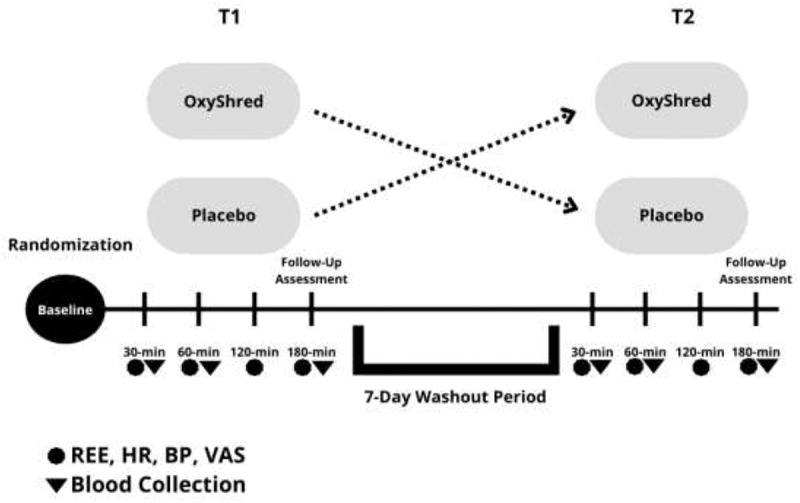
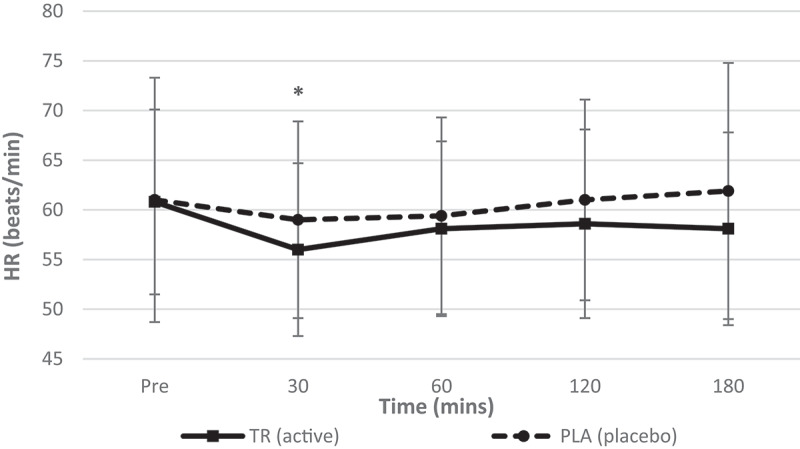
In a randomized double-blind crossover design, 23 females (22.2 ± 3.5 years; 164.8 ± 6.4 cm; 73.5 ± 6.9 kg) who were moderate caffeine consumers (<150 mg/day) reported to the lab after a 12 h fast for baseline assessments of resting energy expenditure (REE) via indirect calorimetry, heart rate (HR), blood pressure (SBP and DBP), blood variables, and hunger, satiety, and mood states. Thereafter, subjects ingested the assigned treatment (active treatment containing caffeine, micronutrients, and phytochemicals [TR] or placebo [PL]). All variables were reassessed at 30-, 60-, 120-, and 180 min post-ingestion. Subjects repeated the same protocol with ingestion of the opposite treatment on a separate day. All data were analyzed using a 2 × 5 ANOVA with repeated measures and significance was accepted a priori at < 0.05.
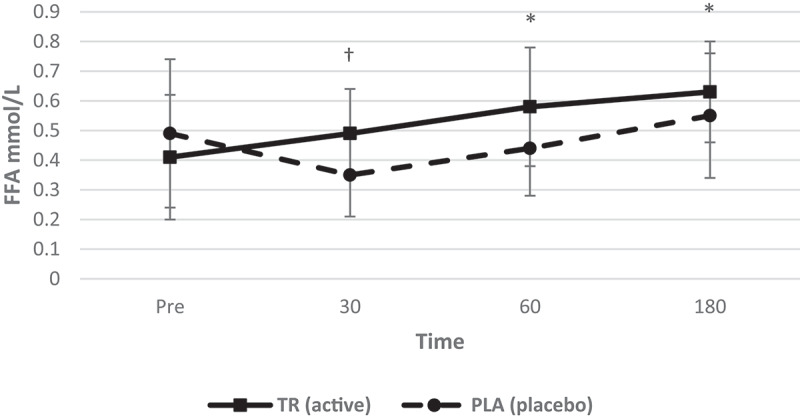
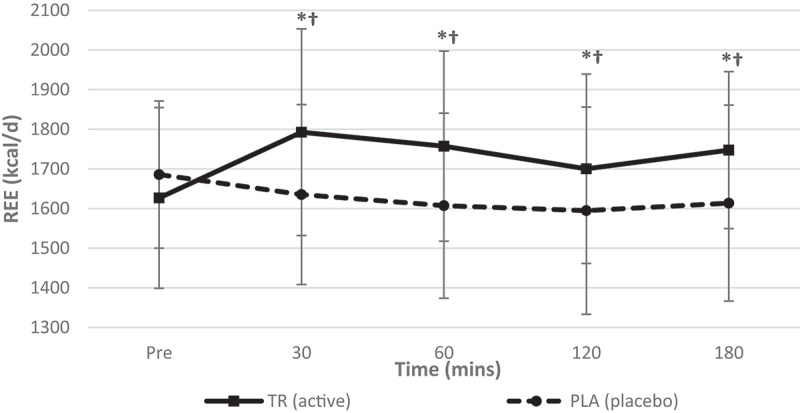
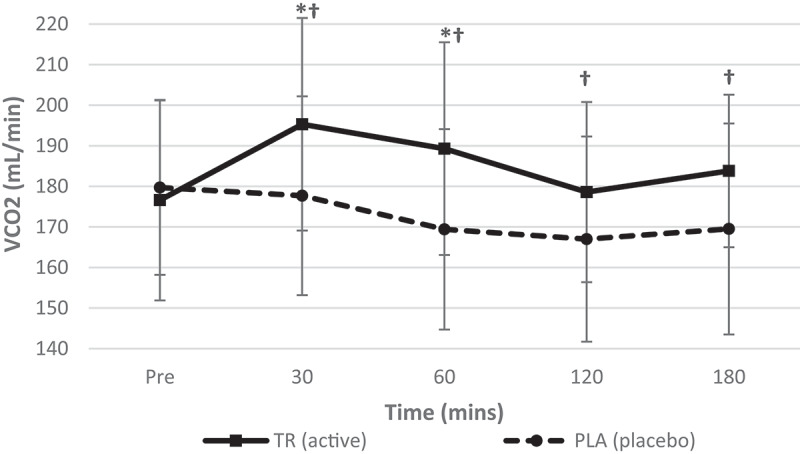
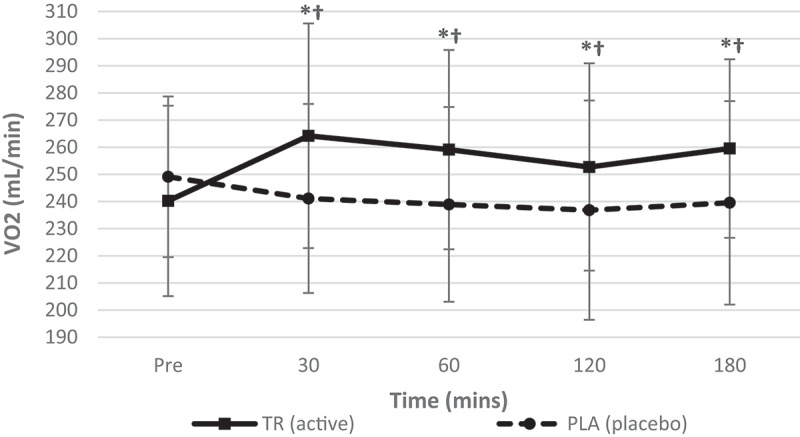
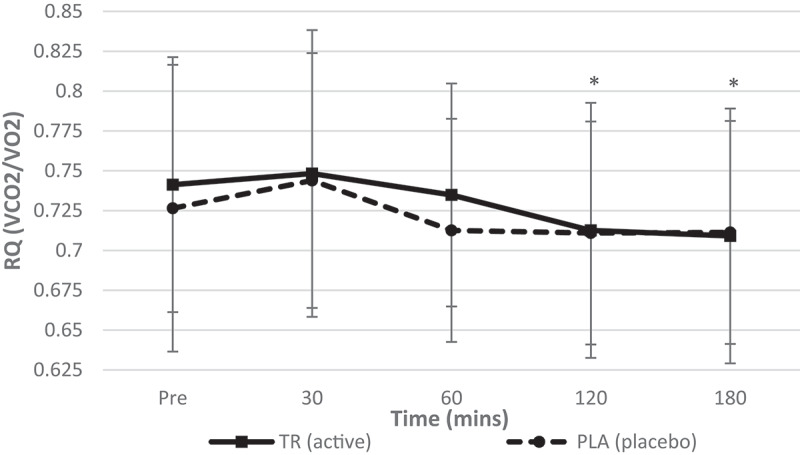
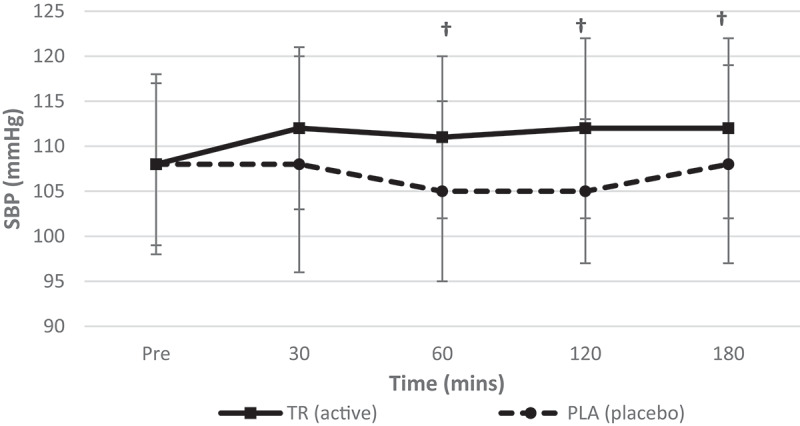
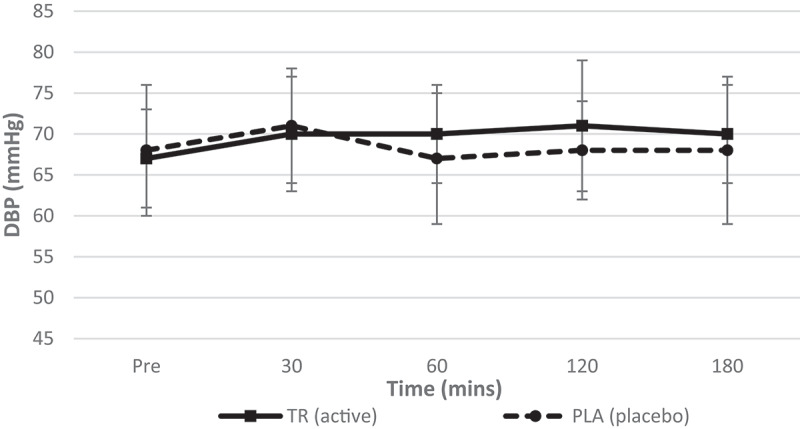
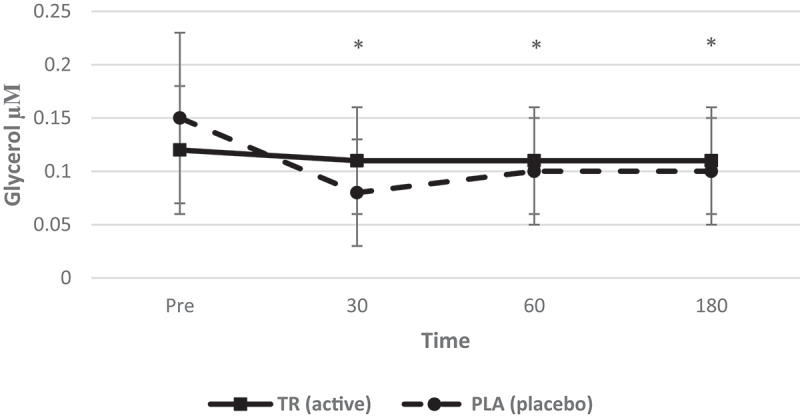
In the TR group, mean increases in REE of 121 to 166 kcal/d were observed at 30-, 60-, and 180 min post-ingestion ( < 0.01 for all). PL group mean decreases in REE of 72 to 91 kcal/day were observed at 60-, 120-, and 180 min ( < 0.05 for all). Respiratory quotient decreased at 120 and 180 min in both treatments. Slight increases in SBP of 3-4 mmHg were observed at 30, 120, and 180 min ( < 0.05 for all) post-ingestion of TR, while no effects were observed for DBP. Observed increases in SBP were within normal blood pressure ranges. TR decreased subjective fatigue with no other significant changes in mood states. Glycerol was maintained in TR, while there was a decrease at 30, 60, and 180 min ( < 0.05 for all) post-ingestion of PLA. Free fatty acids increased in TR at 60 and 180 min ( < 0.05) post-ingestion as well as a significant difference between treatments at 30 min post-ingestion indicating greater circulating free fatty acids levels in TR vs. PL ( < 0.01).
These findings indicate that ingestion of a specific thermogenic supplement formulation produces a sustained increase in metabolic rate and caloric expenditure and reduces fatigue over 3 h without producing adverse hemodynamic responses.
在普通人群中,热生成补充剂被广泛用于支持脂肪损失的尝试;然而,这些补充剂的功效和安全性受到质疑。
确定热生成补充剂是否会影响代谢率、血液动力学反应和情绪状态。
在一项随机、双盲交叉设计中,23 名女性(22.2±3.5 岁;164.8±6.4cm;73.5±6.9kg)在 12 小时禁食后报告实验室进行基线评估,通过间接热量法测量静息能量消耗(REE)、心率(HR)、血压(SBP 和 DBP)、血液变量以及饥饿感、饱腹感和情绪状态。此后,受试者摄入指定的治疗药物(含有咖啡因、微量营养素和植物化学物质的活性治疗[TR]或安慰剂[PL])。所有变量在摄入后 30、60、120 和 180 分钟再次评估。在另一天,受试者重复相同的方案,摄入相反的治疗药物。所有数据均使用 2×5 ANOVA 进行重复测量分析,预先设定显著性水平为 0.05。
在 TR 组中,在摄入后 30、60 和 180 分钟时,REE 平均增加 121 至 166 千卡/天(所有时间点均 <0.01)。PL 组在摄入后 60、120 和 180 分钟时 REE 平均减少 72 至 91 千卡/天(所有时间点均 <0.05)。呼吸商在两种治疗方法中均在 120 和 180 分钟时下降。在摄入 TR 后 30、120 和 180 分钟时,SBP 略有升高 3-4mmHg(所有时间点均 <0.05),而 DBP 无变化。观察到的 SBP 升高处于正常血压范围。TR 降低了主观疲劳感,而情绪状态没有其他显著变化。甘油三酯在 TR 中得到维持,而在 PLA 摄入后 30、60 和 180 分钟时(所有时间点均 <0.05)均有下降。游离脂肪酸在 TR 中在摄入后 60 和 180 分钟时增加(所有时间点均 <0.05),并且在摄入后 30 分钟时治疗之间存在显著差异,表明 TR 中的循环游离脂肪酸水平高于 PL(<0.01)。
这些发现表明,摄入特定的热生成补充剂配方可在 3 小时内持续增加代谢率和热量消耗,并减轻疲劳感,而不会产生不良的血液动力学反应。