Transplantation Center, the 3rd Xiangya Hospital, Central South University, 138 Tongzipo Rd, Changsha, 410013, Hunan, China.
Department of Nephropathy, the 3rd Xiangya Hospital, Central South University, Changsha, China.
Hereditas. 2023 Mar 4;160(1):9. doi: 10.1186/s41065-023-00270-3.
Systemic lupus erythematosus (SLE) is an autoimmune disorder which could lead to inflammation and fibrosis in various organs. Pulmonary fibrosis is a severe complication in patients with SLE. Nonetheless, SLE-derived pulmonary fibrosis has unknown pathogenesis. Of pulmonary fibrosis, Idiopathic pulmonary fibrosis (IPF) is a typicality and deadly form. Aiming to investigate the gene signatures and possible immune mechanisms in SLE-derived pulmonary fibrosis, we explored common characters between SLE and IPF from Gene Expression Omnibus (GEO) database.
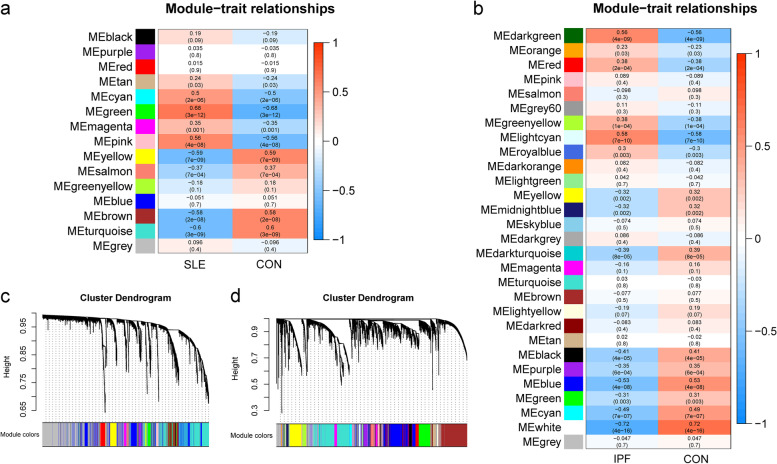
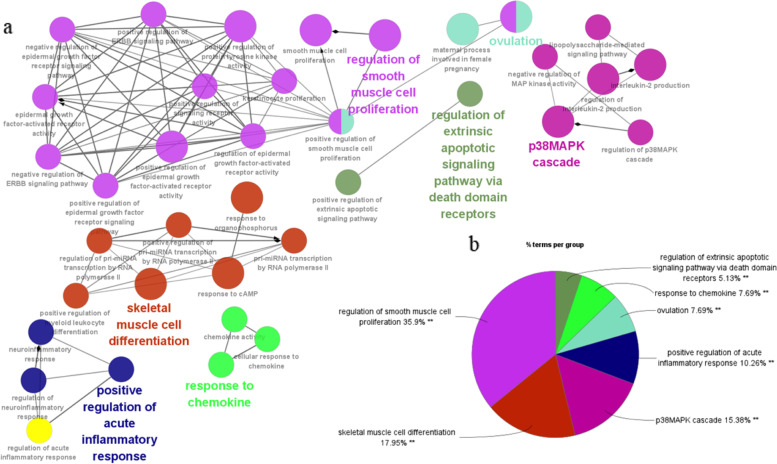
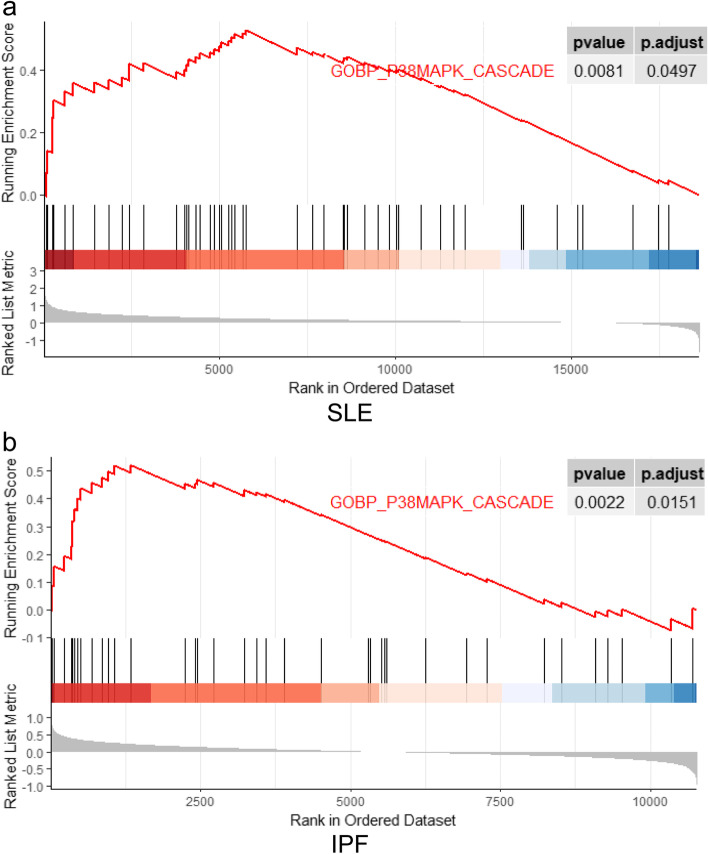
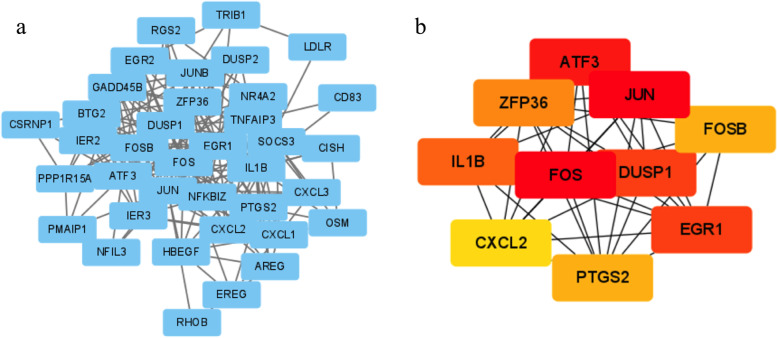
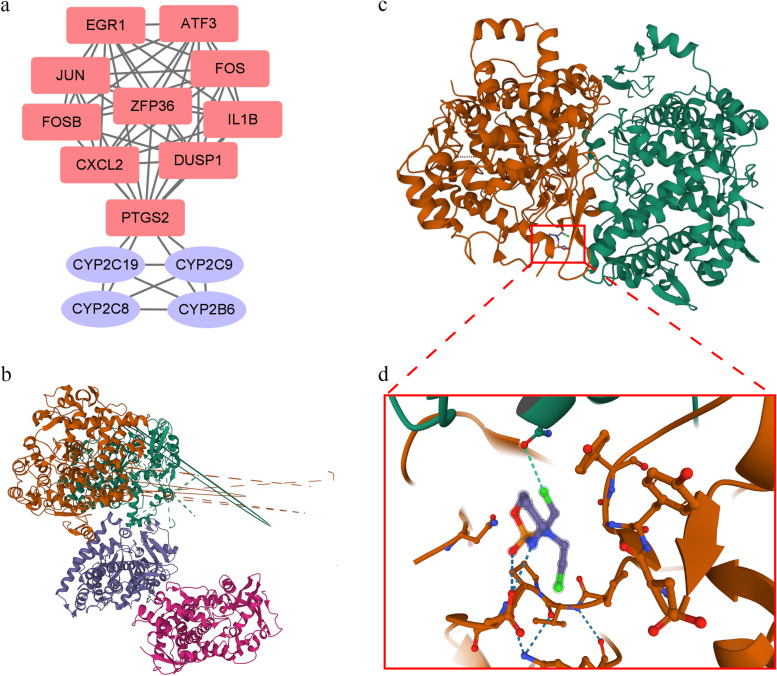
We employed the weighted gene co-expression network analysis (WGCNA) to identify the shared genes. Two modules were significantly identified in both SLE and IPF, respectively. The overlapped 40 genes were selected out for further analysis. The GO enrichment analysis of shared genes between SLE and IPF was performed with ClueGO and indicated that p38MAPK cascade, a key inflammation response pathway, may be a common feature in both SLE and IPF. The validation datasets also illustrated this point. The enrichment analysis of common miRNAs was obtained from the Human microRNA Disease Database (HMDD) and the enrichment analysis with the DIANA tools also indicated that MAPK pathways' role in the pathogenesis of SLE and IPF. The target genes of these common miRNAs were identified by the TargetScan7.2 and a common miRNAs-mRNAs network was constructed with the overlapped genes in target and shared genes to show the regulated target of SLE-derived pulmonary fibrosis. The result of CIBERSORT showed decreased regulatory T cells (Tregs), naïve CD4+ T cells and rest mast cells but increased activated NK cells and activated mast cells in both SLE and IPF. The target genes of cyclophosphamide were also obtained from the Drug Repurposing Hub and had an interaction with the common gene PTGS2 predicted with protein-protein interaction (PPI) and molecular docking, indicating its potential treatment effect.
This study originally uncovered the MAPK pathway, and the infiltration of some immune-cell subsets might be pivotal factors for pulmonary fibrosis complication in SLE, which could be used as potentially therapeutic targets. The cyclophosphamide may treat SLE-derived pulmonary fibrosis through interaction with PTGS2, which could be activated by p38MAPK.
系统性红斑狼疮(SLE)是一种自身免疫性疾病,可导致各种器官的炎症和纤维化。肺纤维化是 SLE 患者的严重并发症。然而,SLE 相关性肺纤维化的发病机制尚不清楚。在肺纤维化中,特发性肺纤维化(IPF)是一种典型且致命的形式。为了研究 SLE 相关性肺纤维化的基因特征和可能的免疫机制,我们从基因表达综合数据库(GEO)中探索了 SLE 和 IPF 的共同特征。
我们采用加权基因共表达网络分析(WGCNA)来识别共享基因。在 SLE 和 IPF 中分别鉴定出两个显著的模块。选择出 40 个重叠基因进行进一步分析。对 SLE 和 IPF 之间共享基因的 GO 富集分析采用 ClueGO 进行,并表明 p38MAPK 级联反应,一种关键的炎症反应途径,可能是 SLE 和 IPF 的共同特征。验证数据集也说明了这一点。从人类 microRNA 疾病数据库(HMDD)获得共同 miRNA 的富集分析,以及 DIANA 工具的富集分析也表明,MAPK 通路在 SLE 和 IPF 发病机制中的作用。通过 TargetScan7.2 确定这些共同 miRNA 的靶基因,并使用重叠基因和共享基因构建共同 miRNAs-mRNAs 网络,以显示 SLE 相关性肺纤维化的调节靶基因。CIBERSORT 的结果表明,SLE 和 IPF 中调节性 T 细胞(Tregs)、幼稚 CD4+T 细胞和静止肥大细胞减少,而激活 NK 细胞和激活肥大细胞增加。环磷酰胺的靶基因也从药物再利用中心获得,并与通过蛋白质-蛋白质相互作用(PPI)和分子对接预测的共同基因 PTGS2 相互作用,表明其潜在的治疗效果。
本研究最初揭示了 MAPK 途径,一些免疫细胞亚群的浸润可能是 SLE 肺纤维化并发症的关键因素,可作为潜在的治疗靶点。环磷酰胺可能通过与 PTGS2 相互作用来治疗 SLE 相关性肺纤维化,PTGS2 可被 p38MAPK 激活。