Enzan Nobuyuki, Matsushima Shouji, Kaku Hidetaka, Tohyama Takeshi, Nagata Takuya, Ide Tomomi, Tsutsui Hiroyuki
Department of Cardiovascular Medicine, Faculty of Medical Sciences, Kyushu University, Fukuoka, Japan.
Division of Cardiovascular Medicine, Research Institute of Angiocardiology, Faculty of Medical Sciences, Kyushu University, Fukuoka, Japan.
JACC Asia. 2023 Jan 3;3(1):93-104. doi: 10.1016/j.jacasi.2022.09.015. eCollection 2023 Feb.
Dipeptidyl peptidase-4 (DPP-4) inhibitors have been shown to exert pleiotropic effects on heart failure (HF) in animal experiments.
This study sought to investigate the impact of DPP-4 inhibitors on HF patients with diabetes mellitus (DM).
We analyzed hospitalized patients with HF and DM enrolled in the JROADHF (Japanese Registry Of Acute Decompensated Heart Failure) registry, a nationwide registry of acute decompensated HF. Primary exposure was the use of a DPP-4 inhibitor. The primary outcome was a composite of cardiovascular death or HF hospitalization during the median follow-up of 3.6 years according to left ventricular ejection fraction.
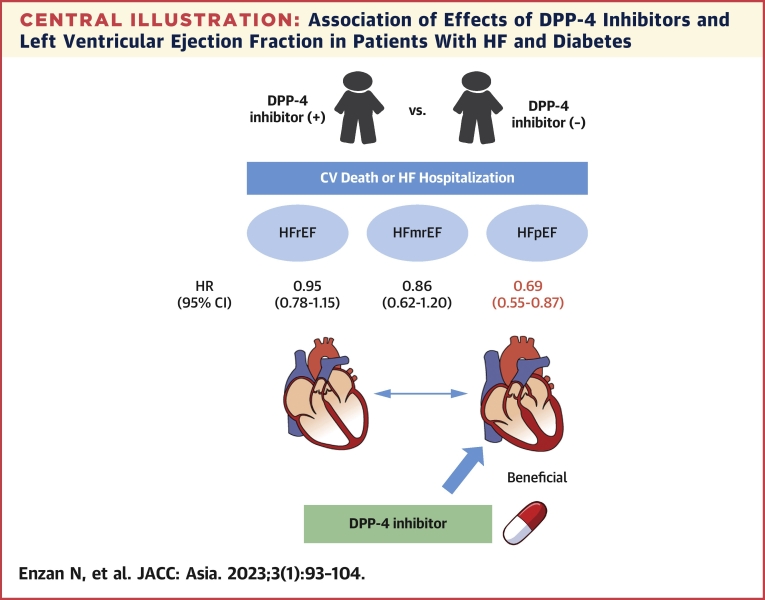
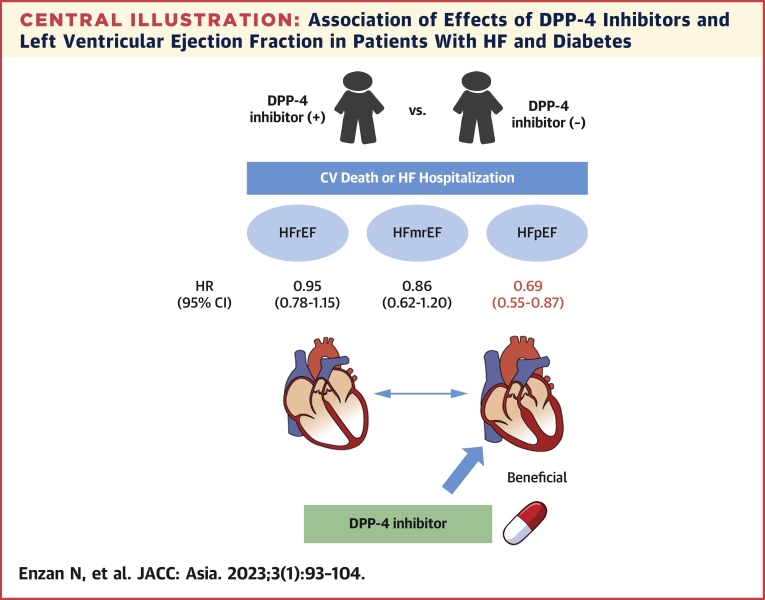
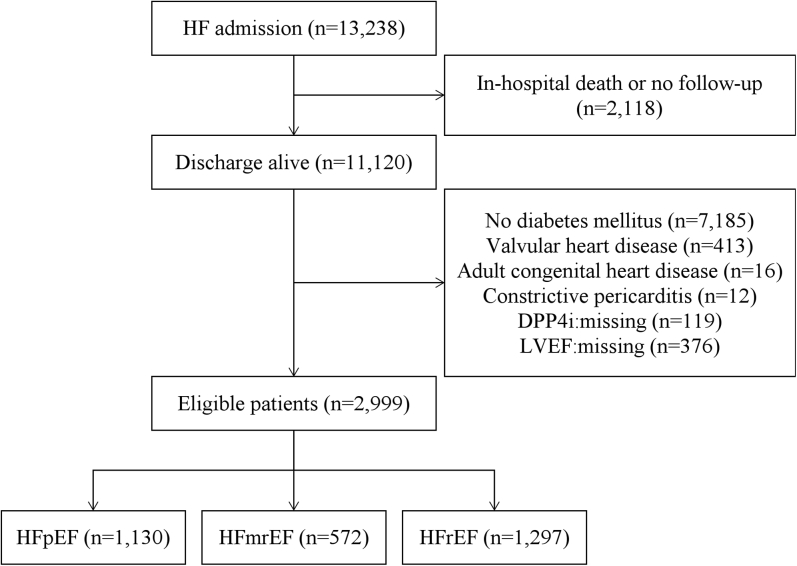
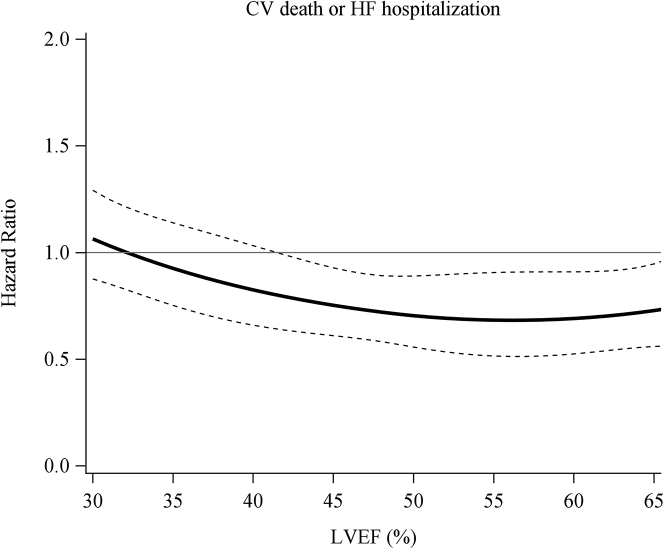
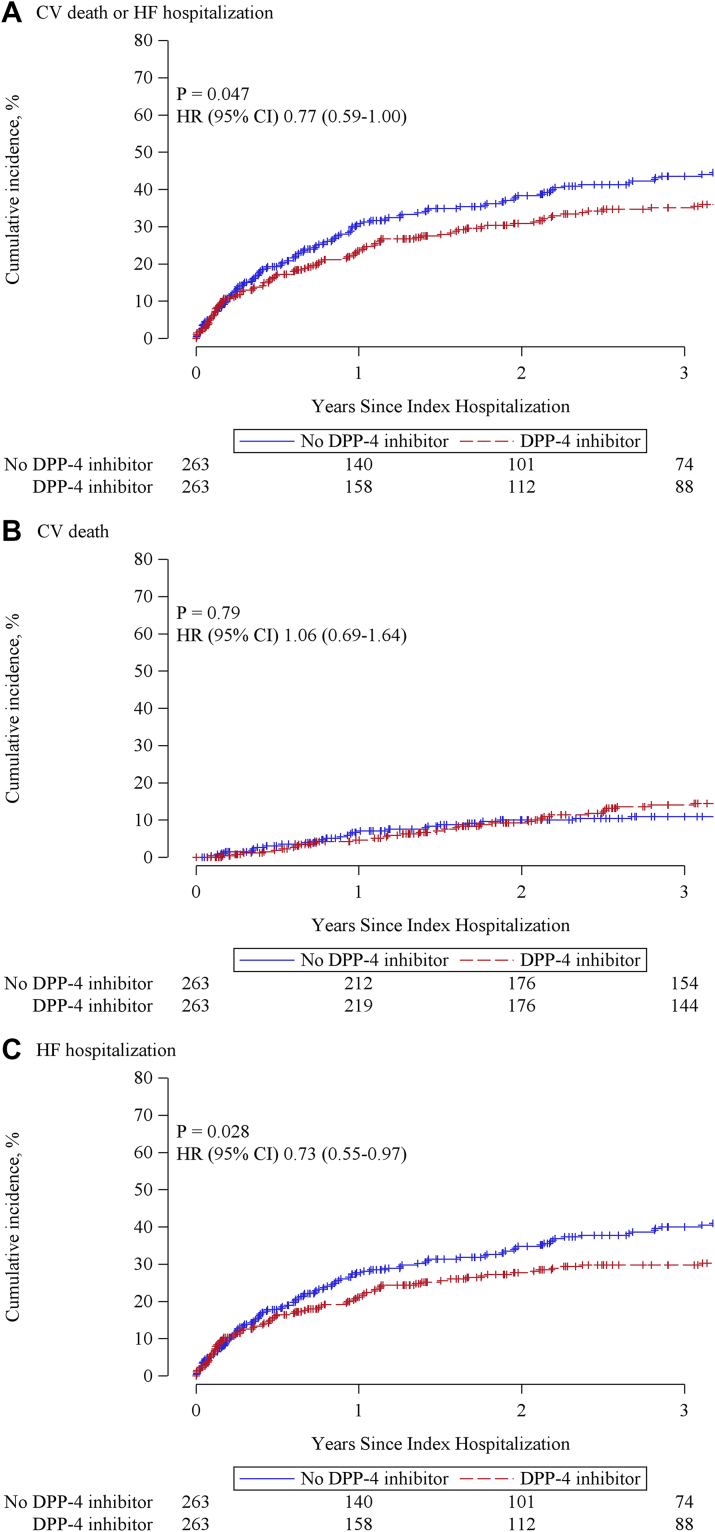
Out of 2,999 eligible patients, 1,130 had heart failure with preserved ejection fraction (HFpEF), 572 had heart failure with midrange ejection fraction (HFmrEF), and 1,297 had heart failure with reduced ejection fraction (HFrEF). In each cohort, 444, 232, and 574 patients received a DPP-4 inhibitor, respectively. A multivariable Cox regression model showed that DPP-4 inhibitor use was associated with a lower composite of cardiovascular death or HF hospitalization in HFpEF (HR: 0.69; 95% CI: 0.55-0.87; 0.002) but not in HFmrEF and HFrEF. Restricted cubic spline analysis demonstrated that DPP-4 inhibitors were beneficial in patients with higher left ventricular ejection fraction. In HFpEF cohort, propensity score matching yielded 263 pairs. DPP-4 inhibitor use was associated with a lower incidence rate of the composite of cardiovascular death or HF hospitalization (19.2 vs 25.9 events per 100 patient-years; rate ratio: 0.74; 95% CI: 0.57-0.97; 0.027) in matched patients.
DPP-4 inhibitor use was associated with better long-term outcomes in HFpEF patients with DM.
在动物实验中,二肽基肽酶-4(DPP-4)抑制剂已显示出对心力衰竭(HF)具有多效性作用。
本研究旨在探讨DPP-4抑制剂对糖尿病(DM)合并HF患者的影响。
我们分析了纳入JROADHF(日本急性失代偿性心力衰竭注册研究)的住院HF合并DM患者,这是一项全国性的急性失代偿性HF注册研究。主要暴露因素是使用DPP-4抑制剂。主要结局是根据左心室射血分数在3.6年的中位随访期内心血管死亡或HF住院的复合终点。
在2999例符合条件的患者中,1130例为射血分数保留的心力衰竭(HFpEF)患者,572例为射血分数中等范围的心力衰竭(HFmrEF)患者,1297例为射血分数降低的心力衰竭(HFrEF)患者。在每个队列中,分别有444例、232例和574例患者接受了DPP-4抑制剂治疗。多变量Cox回归模型显示,在HFpEF患者中,使用DPP-4抑制剂与较低的心血管死亡或HF住院复合终点相关(HR:0.69;95%CI:0.55-0.87;P=0.002),但在HFmrEF和HFrEF患者中并非如此。受限立方样条分析表明,DPP-4抑制剂对左心室射血分数较高的患者有益。在HFpEF队列中,倾向评分匹配产生了263对。在匹配患者中,使用DPP-4抑制剂与较低的心血管死亡或HF住院复合终点发生率相关(每100患者年19.2次事件与25.9次事件;率比:0.74;95%CI:0.57-0.97;P=0.027)。
在DM合并HFpEF患者中,使用DPP-4抑制剂与更好的长期结局相关。