Alkhatib Lean, Velez Diaz Lorena A, Varma Samyukta, Chowdhary Arsh, Bapat Prachi, Pan Hai, Kukreja Geetika, Palabindela Prasannalaxmi, Selvam Sri Abirami, Kalra Kartik
Internal Medicine, Royal Medical Services, Amman, JOR.
Medicine, Universidad de Guayaquil, Guayaquil, ECU.
Cureus. 2023 Feb 2;15(2):e34572. doi: 10.7759/cureus.34572. eCollection 2023 Feb.
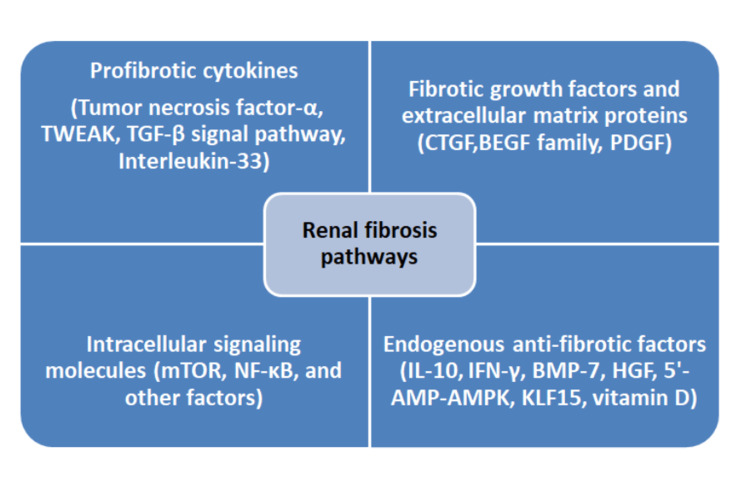
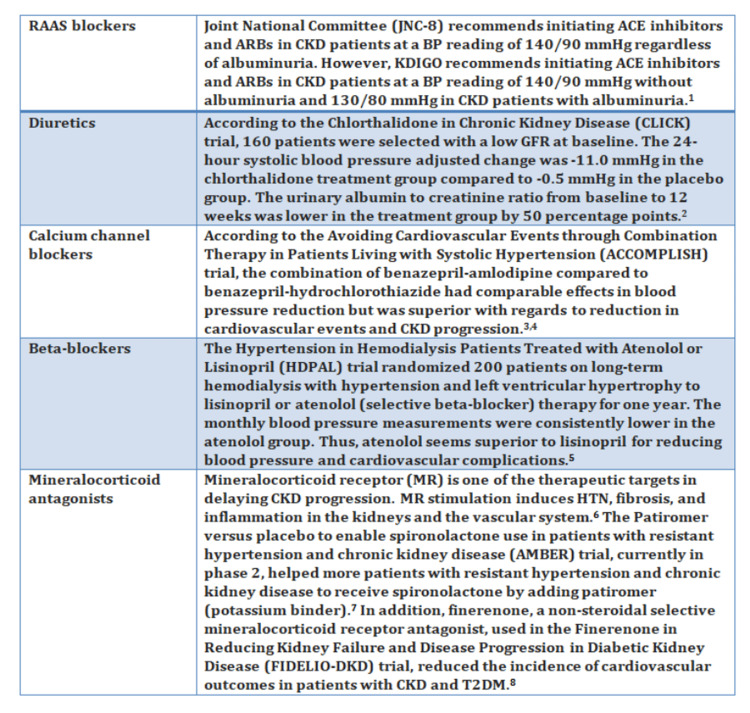
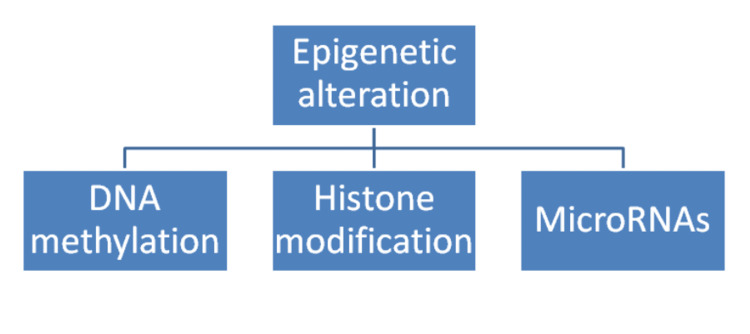
Chronic kidney disease (CKD) is a debilitating progressive illness that affects more than 10% of the world's population. In this literature review, we discussed the roles of nutritional interventions, lifestyle modifications, hypertension (HTN) and diabetes mellitus (DM) control, and medications in delaying the progression of CKD. Walking, weight loss, low-protein diet (LPD), adherence to the alternate Mediterranean (aMed) diet, and Alternative Healthy Eating Index (AHEI)-2010 slow the progression of CKD. However, smoking and binge alcohol drinking increase the risk of CKD progression. In addition, hyperglycemia, altered lipid metabolism, low-grade inflammation, over-activation of the renin-angiotensin-aldosterone system (RAAS), and overhydration (OH) increase diabetic CKD progression. The Kidney Disease: Improving Global Outcomes (KDIGO) guidelines recommend blood pressure (BP) control of <140/90 mmHg in patients without albuminuria and <130/80 mmHg in patients with albuminuria to prevent CKD progression. Medical therapies aim to target epigenetic alterations, fibrosis, and inflammation. Currently, RAAS blockade, sodium-glucose cotransporter-2 (SGLT2) inhibitors, pentoxifylline, and finerenone are approved for managing CKD. In addition, according to the completed Study of Diabetic Nephropathy with Atrasentan (SONAR), atrasentan, an endothelin receptor antagonist (ERA), decreased the risk of renal events in diabetic CKD patients. However, ongoing trials are studying the role of other agents in slowing the progression of CKD.
慢性肾脏病(CKD)是一种使人衰弱的进行性疾病,影响着全球超过10%的人口。在这篇文献综述中,我们讨论了营养干预、生活方式改变、高血压(HTN)和糖尿病(DM)控制以及药物在延缓CKD进展中的作用。步行、体重减轻、低蛋白饮食(LPD)、坚持改良地中海饮食(aMed)和2010年替代健康饮食指数(AHEI)可减缓CKD的进展。然而,吸烟和大量饮酒会增加CKD进展的风险。此外,高血糖、脂质代谢改变、低度炎症、肾素-血管紧张素-醛固酮系统(RAAS)过度激活和水钠潴留(OH)会加速糖尿病CKD的进展。改善全球肾脏病预后组织(KDIGO)指南建议,无蛋白尿患者的血压(BP)控制在<140/90 mmHg,有蛋白尿患者的血压控制在<130/80 mmHg,以预防CKD进展。药物治疗旨在针对表观遗传改变、纤维化和炎症。目前,RAAS阻断剂、钠-葡萄糖协同转运蛋白2(SGLT2)抑制剂、己酮可可碱和非奈利酮已被批准用于管理CKD。此外,根据已完成的阿曲生坦治疗糖尿病肾病研究(SONAR),内皮素受体拮抗剂(ERA)阿曲生坦可降低糖尿病CKD患者发生肾脏事件的风险。然而,正在进行的试验正在研究其他药物在减缓CKD进展中的作用。