Howard Hughes Medical Institute, Department of Cell Biology, Harvard Medical School, Boston, MA, USA.
Department of Biology, Massachusetts Institute of Technology, Cambridge, MA, USA.
Nature. 2023 Mar;615(7953):660-667. doi: 10.1038/s41586-023-05796-0. Epub 2023 Mar 8.
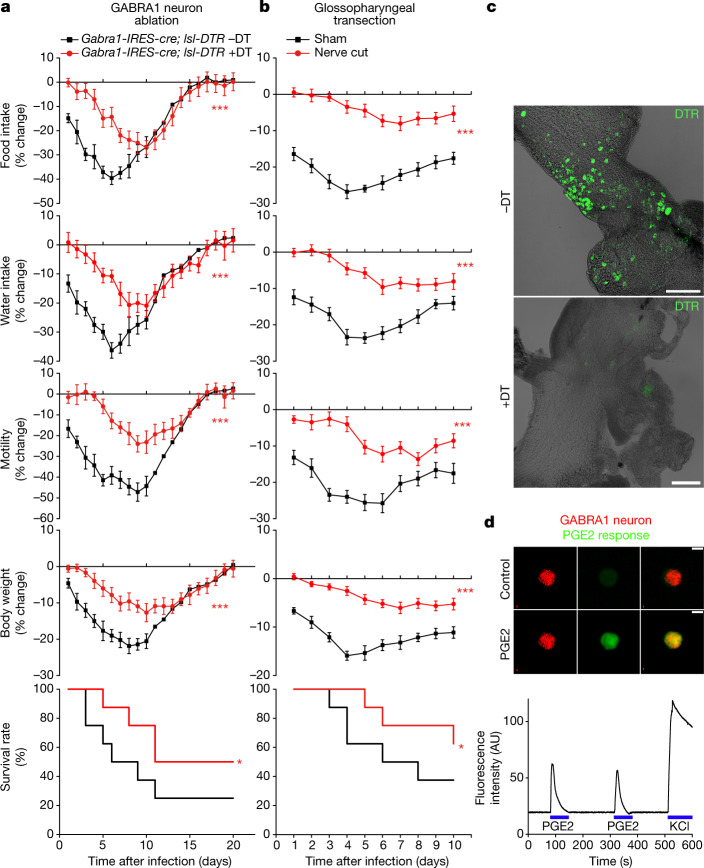
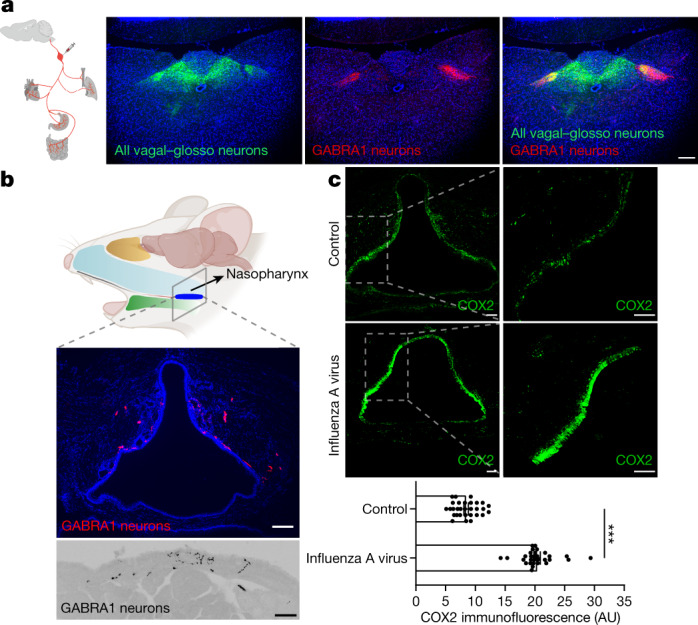
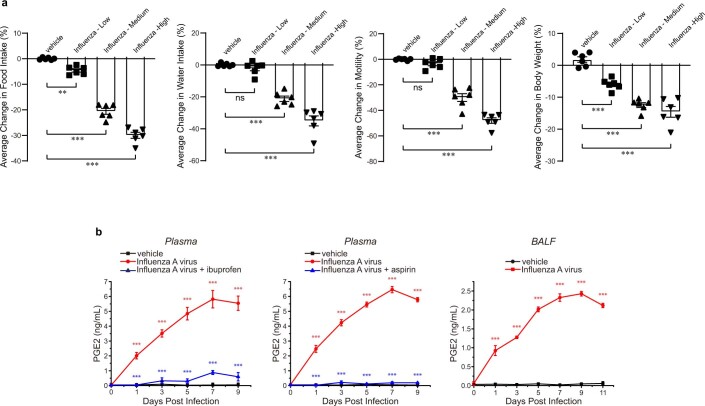
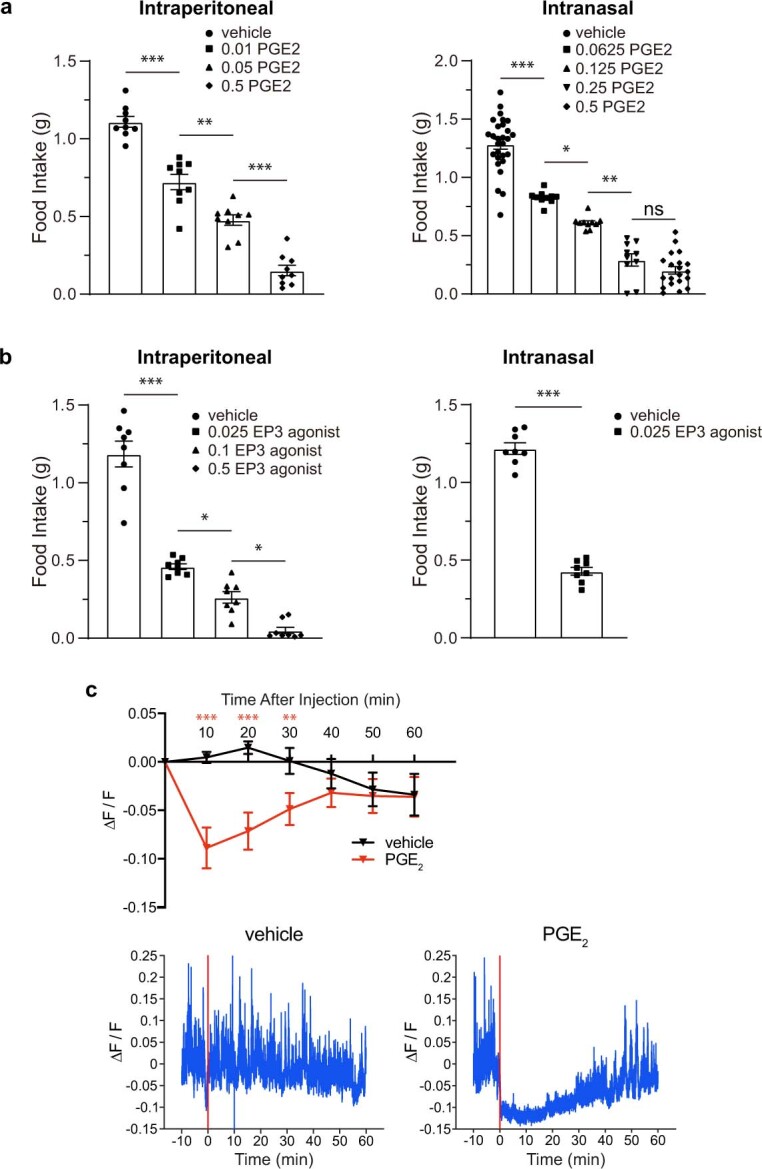
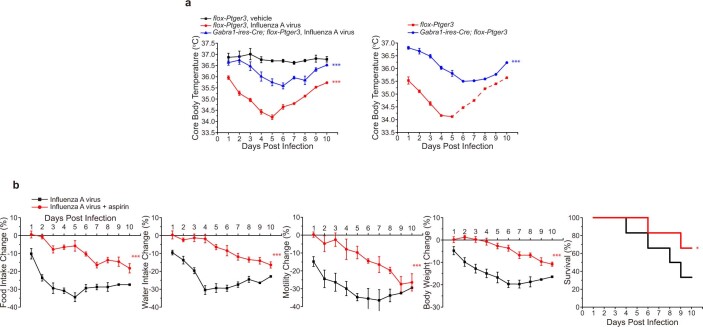
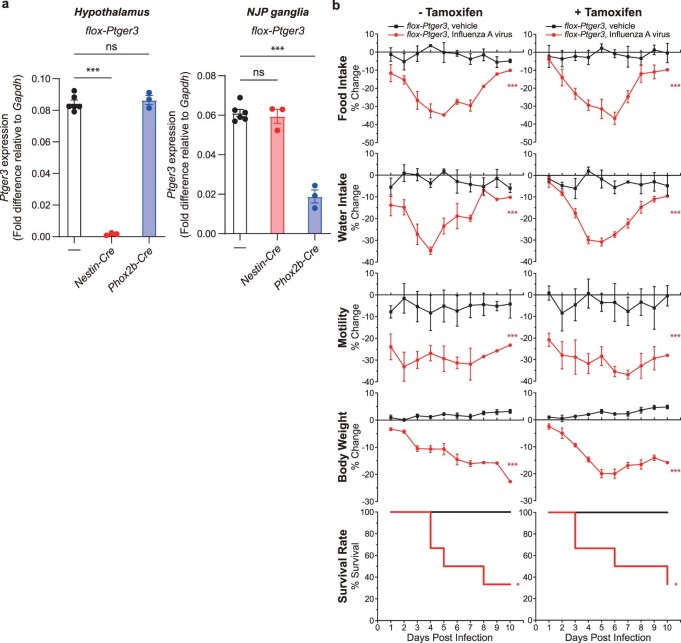
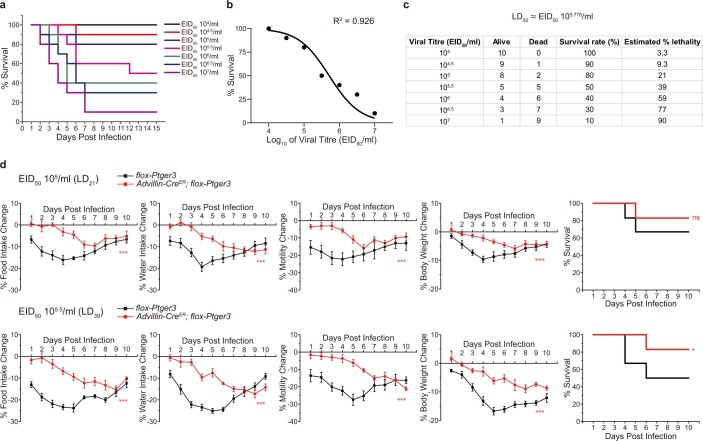
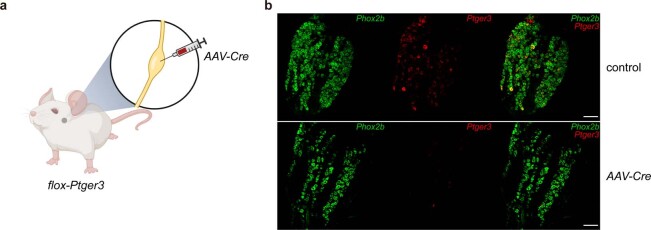
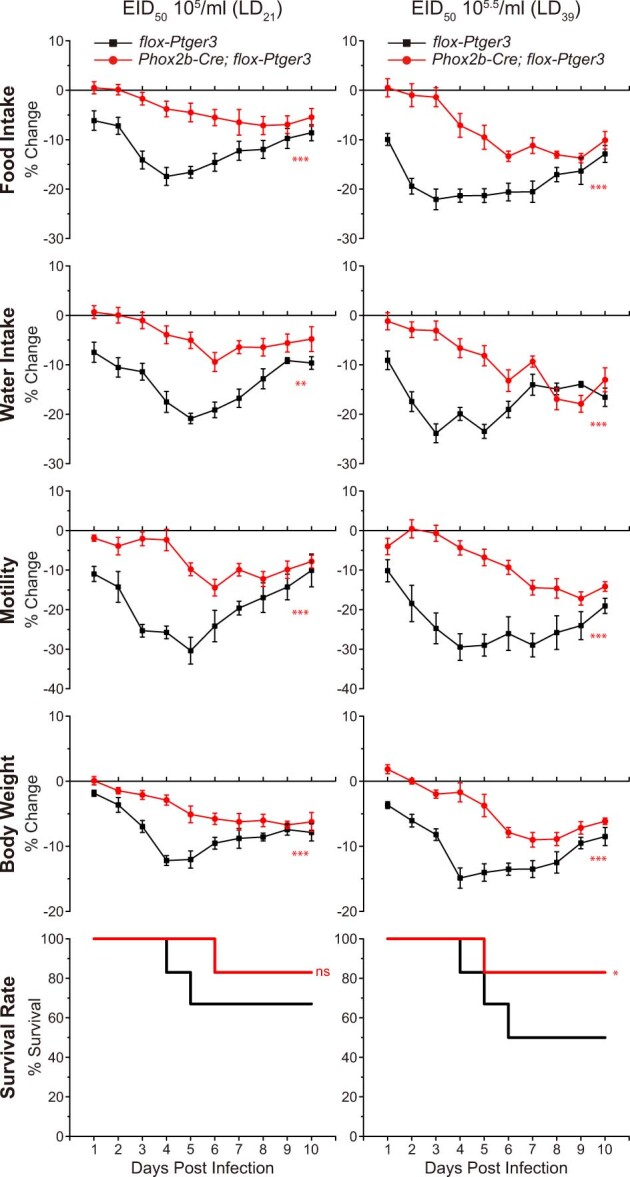
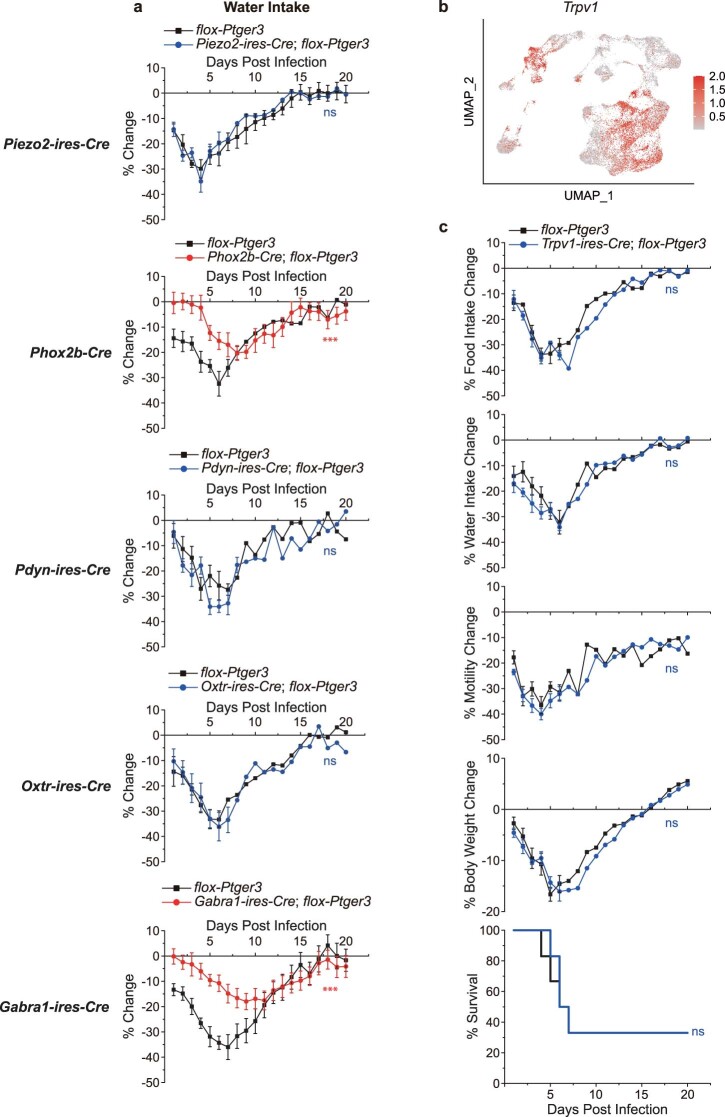
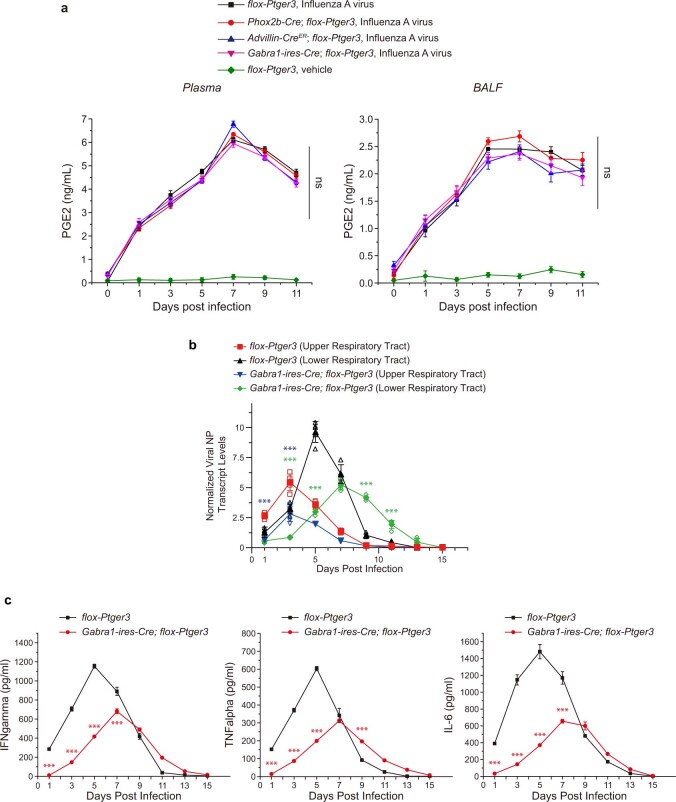
Pathogen infection causes a stereotyped state of sickness that involves neuronally orchestrated behavioural and physiological changes. On infection, immune cells release a 'storm' of cytokines and other mediators, many of which are detected by neurons; yet, the responding neural circuits and neuro-immune interaction mechanisms that evoke sickness behaviour during naturalistic infections remain unclear. Over-the-counter medications such as aspirin and ibuprofen are widely used to alleviate sickness and act by blocking prostaglandin E2 (PGE2) synthesis. A leading model is that PGE2 crosses the blood-brain barrier and directly engages hypothalamic neurons. Here, using genetic tools that broadly cover a peripheral sensory neuron atlas, we instead identified a small population of PGE2-detecting glossopharyngeal sensory neurons (petrosal GABRA1 neurons) that are essential for influenza-induced sickness behaviour in mice. Ablating petrosal GABRA1 neurons or targeted knockout of PGE2 receptor 3 (EP3) in these neurons eliminates influenza-induced decreases in food intake, water intake and mobility during early-stage infection and improves survival. Genetically guided anatomical mapping revealed that petrosal GABRA1 neurons project to mucosal regions of the nasopharynx with increased expression of cyclooxygenase-2 after infection, and also display a specific axonal targeting pattern in the brainstem. Together, these findings reveal a primary airway-to-brain sensory pathway that detects locally produced prostaglandins and mediates systemic sickness responses to respiratory virus infection.
病原体感染会导致一种刻板的疾病状态,涉及神经元协调的行为和生理变化。感染时,免疫细胞会释放出“炎症风暴”的细胞因子和其他介质,其中许多都被神经元检测到;然而,在自然感染过程中,引起疾病行为的反应性神经回路和神经免疫相互作用机制仍不清楚。阿司匹林和布洛芬等非处方药物被广泛用于缓解疾病,其作用机制是阻断前列腺素 E2(PGE2)的合成。一个主要的模型是,PGE2 穿过血脑屏障并直接与下丘脑神经元相互作用。在这里,我们使用广泛涵盖外周感觉神经元图谱的遗传工具,而是鉴定出一小群检测 PGE2 的舌咽感觉神经元(岩神经 GABRA1 神经元),它们对于流感诱导的小鼠疾病行为是必不可少的。消融岩神经 GABRA1 神经元或靶向敲除这些神经元中的 PGE2 受体 3(EP3)可消除流感感染早期时引起的食物摄入、水摄入和活动能力下降,并提高存活率。遗传指导的解剖学映射显示,岩神经 GABRA1 神经元投射到鼻咽部的粘膜区域,感染后环氧化酶-2 的表达增加,并且在脑干中也显示出特定的轴突靶向模式。总之,这些发现揭示了一种主要的气道到大脑感觉通路,它可以检测局部产生的前列腺素,并介导呼吸道病毒感染引起的全身疾病反应。