Department of Global Public Health, Karolinska Institutet, Stockholm, Sweden.
Nigeria Centre for Disease Control, Abuja, Nigeria.
BMC Public Health. 2023 Mar 8;23(1):455. doi: 10.1186/s12889-023-15326-2.
Cholera still affects millions of people worldwide, especially in lower- and middle-income countries (LMICs). The Global Task Force on Cholera Control (GTFCC) has identified surveillance and oral cholera vaccines as two critical interventions to actualise the global roadmap goals-reduction of cholera-related deaths by 90% and decreasing the number of cholera endemic countries by half by 2030. Therefore, this study aimed to identify facilitators and barriers to implementing these two cholera interventions in LMIC settings.
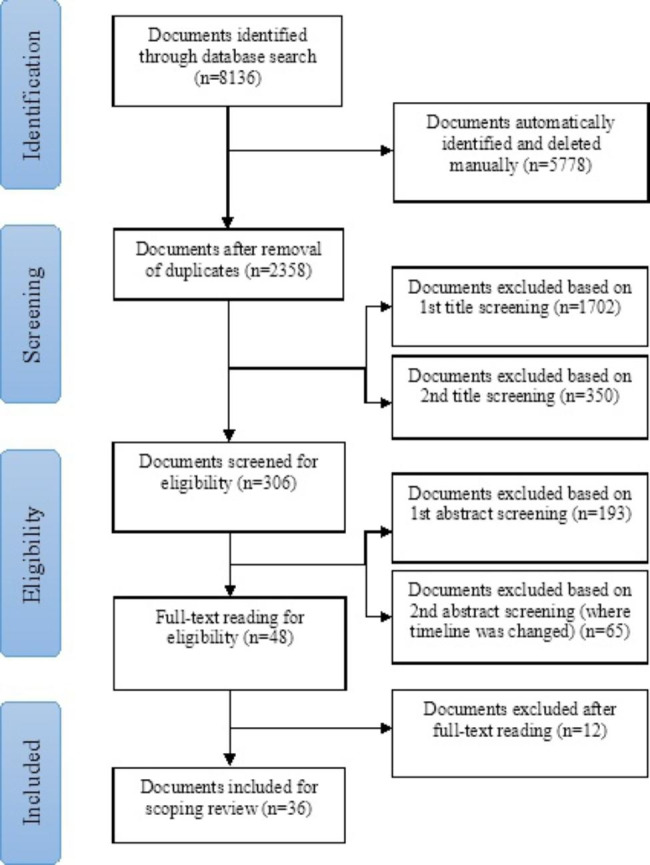
A scoping review using the methods presented by Arksey and O'Malley. The search strategy involved using key search terms (cholera, surveillance, epidemiology and vaccines) in three databases (PubMed, CINAHL and Web of Science) and reviewing the first ten pages of Google searches. The eligibility criteria of being conducted in LMICs, a timeline of 2011-2021 and documents only in English were applied. Thematic analysis was performed, and the findings were presented according to the Preferred Reporting Items for Systematic Reviews and Meta-Analyses Extension.
Thirty-six documents met the predefined inclusion criteria, covering 2011 to 2021. There were two themes identified regarding the implementation of surveillance: timeliness and reporting (1); and resources and laboratory capabilities (2). As for oral cholera vaccines, there were four themes identified: information and awareness (1); community acceptance and trusted community leaders (2); planning and coordination (3); and resources and logistics (4). Additionally, adequate resources, good planning and coordination were identified to be operating at the interface between surveillance and oral cholera vaccines.
Findings suggest that adequate and sustainable resources are crucial for timely and accurate cholera surveillance and that oral cholera vaccine implementation would benefit from increased community awareness and engagement of community leaders.
霍乱仍影响着全球数百万人,尤其是中低收入国家(LMICs)。全球霍乱控制工作队(GTFCC)已将监测和口服霍乱疫苗确定为实现全球路线图目标的两项关键干预措施——到 2030 年,将与霍乱相关的死亡人数减少 90%,将霍乱流行国家的数量减少一半。因此,本研究旨在确定在中低收入国家实施这两项霍乱干预措施的促进因素和障碍。
使用 Arksey 和 O'Malley 提出的方法进行范围综述。搜索策略涉及在三个数据库(PubMed、CINAHL 和 Web of Science)中使用关键搜索词(霍乱、监测、流行病学和疫苗),并查看 Google 搜索的前十页。应用了在中低收入国家进行、2011-2021 年时间线和仅英文文件的入选标准。进行了主题分析,并根据系统评价和荟萃分析扩展的首选报告项目呈现研究结果。
有 36 份文件符合预先确定的纳入标准,涵盖 2011 年至 2021 年。在监测实施方面确定了两个主题:及时性和报告(1);资源和实验室能力(2)。对于口服霍乱疫苗,确定了四个主题:信息和意识(1);社区接受和受信任的社区领袖(2);规划和协调(3);资源和后勤(4)。此外,发现充足的资源、良好的规划和协调在监测和口服霍乱疫苗之间发挥作用。
研究结果表明,充足和可持续的资源对于及时和准确的霍乱监测至关重要,而口服霍乱疫苗的实施将受益于提高社区意识和社区领袖的参与。