Department of Chemical Pathology, Li Ka Shing Institute of Health Sciences, The Chinese University of Hong Kong, Hong Kong, China.
Center for Neuromusculoskeletal Restorative Medicine (CNRM), CUHK InnoHK Centres, The Chinese University of Hong Kong, Hong Kong, China.
Elife. 2023 Mar 9;12:e82703. doi: 10.7554/eLife.82703.
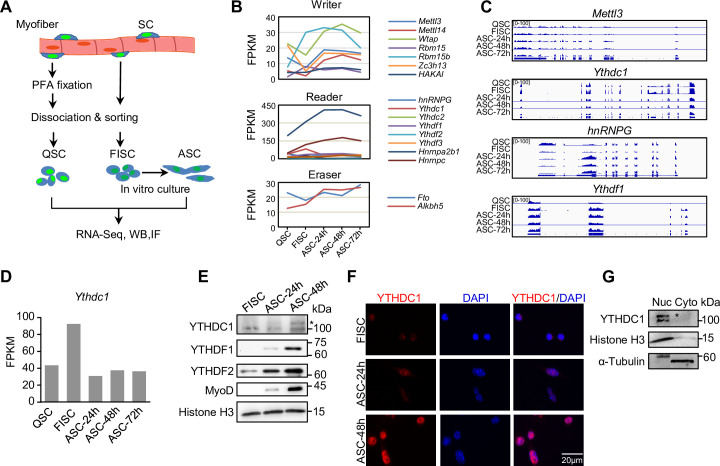
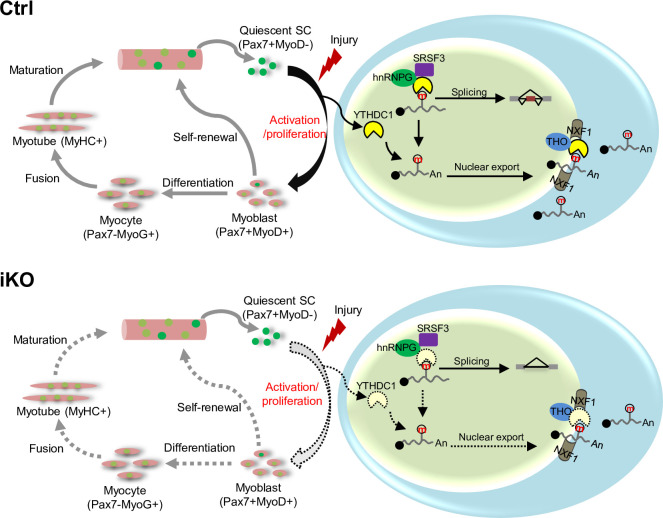
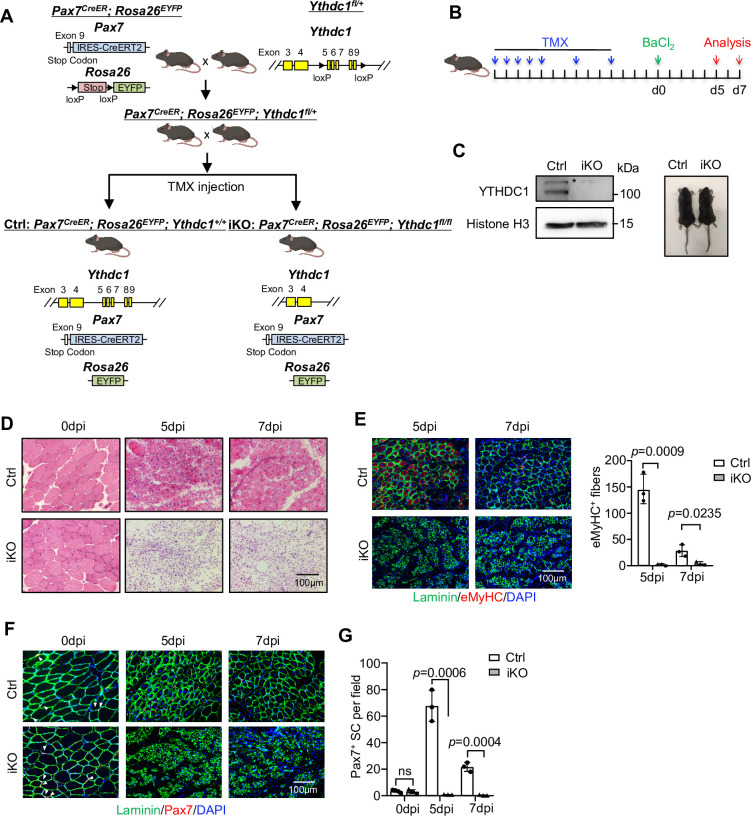
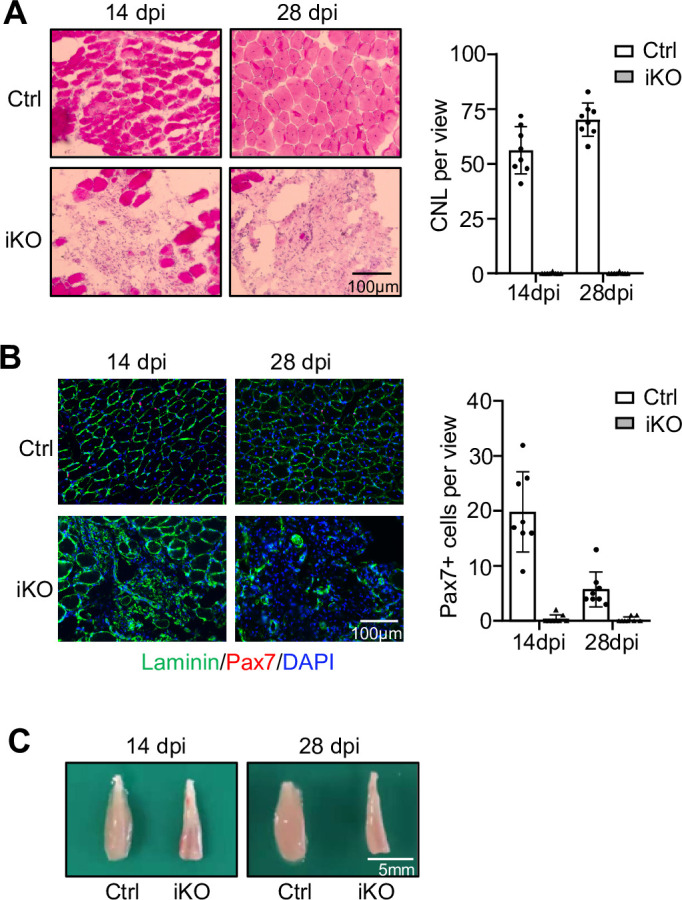
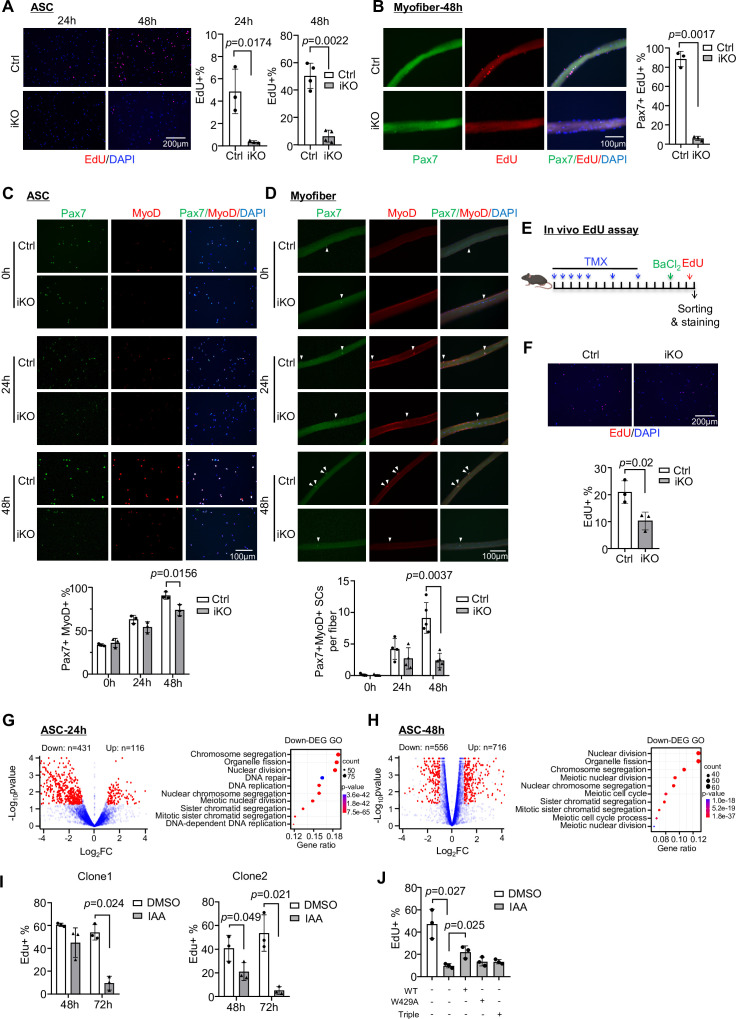
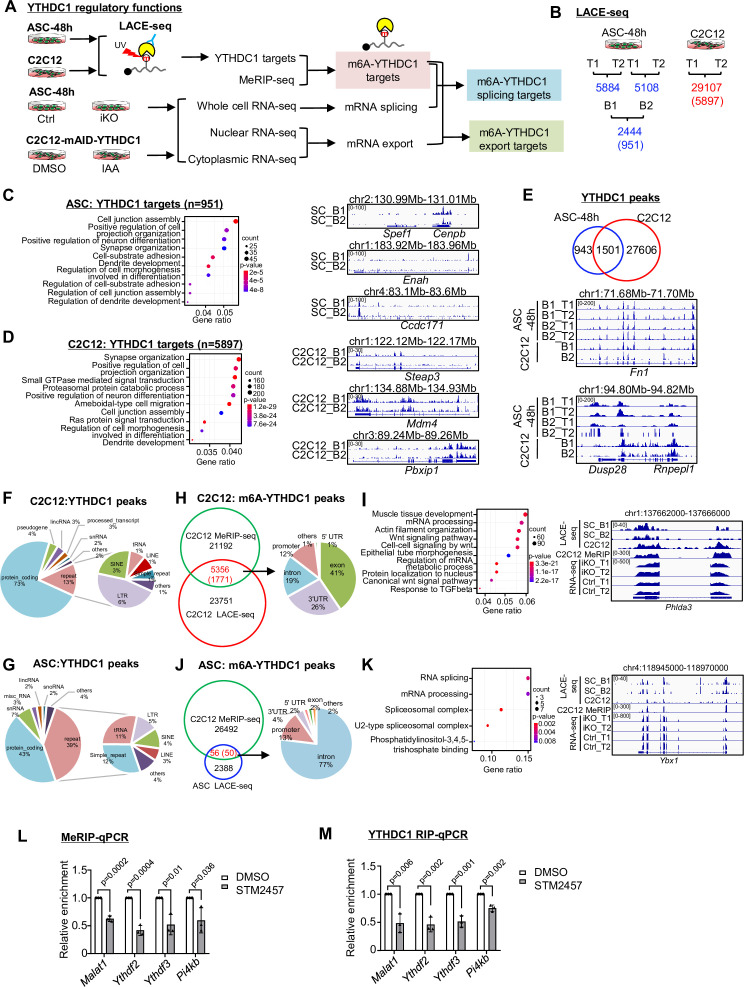
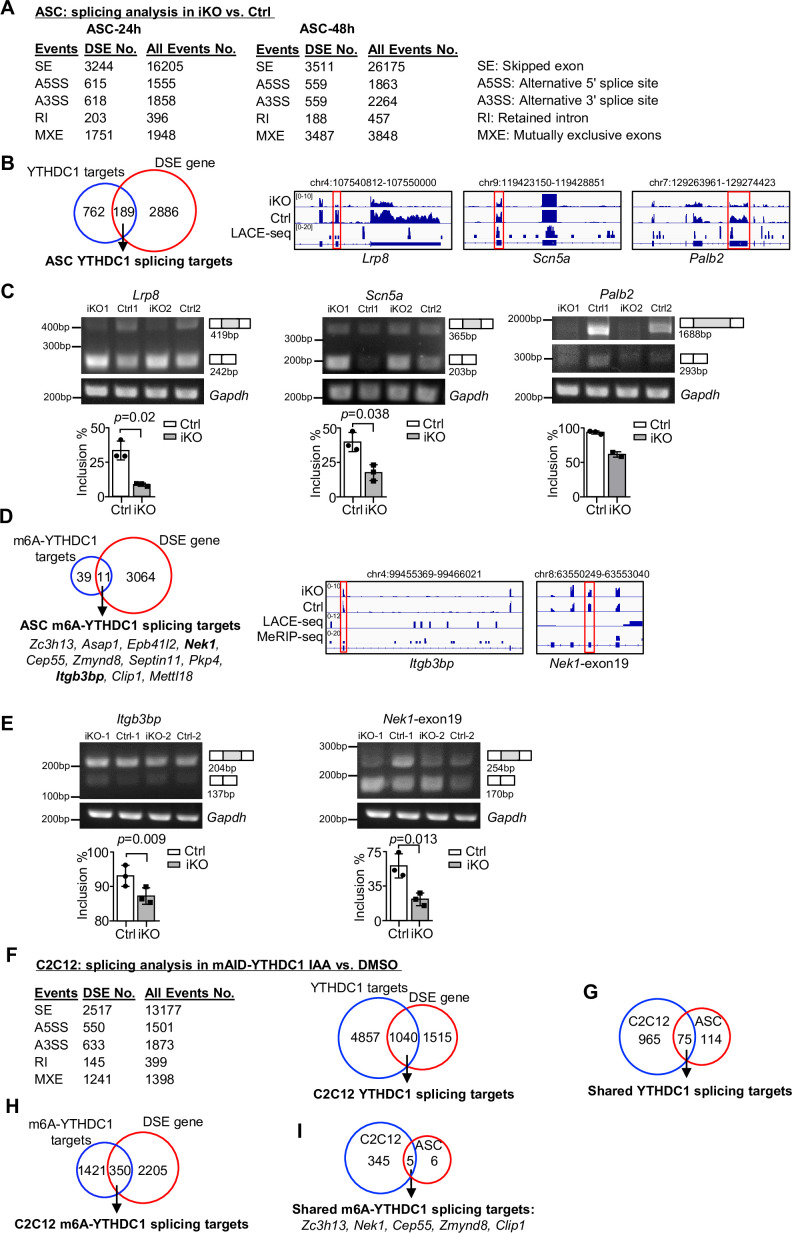
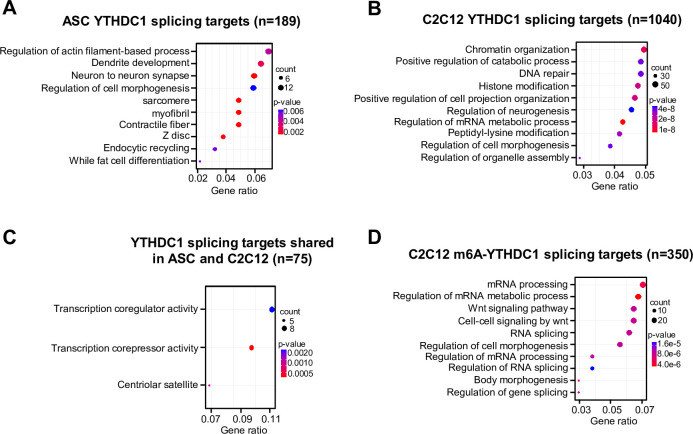
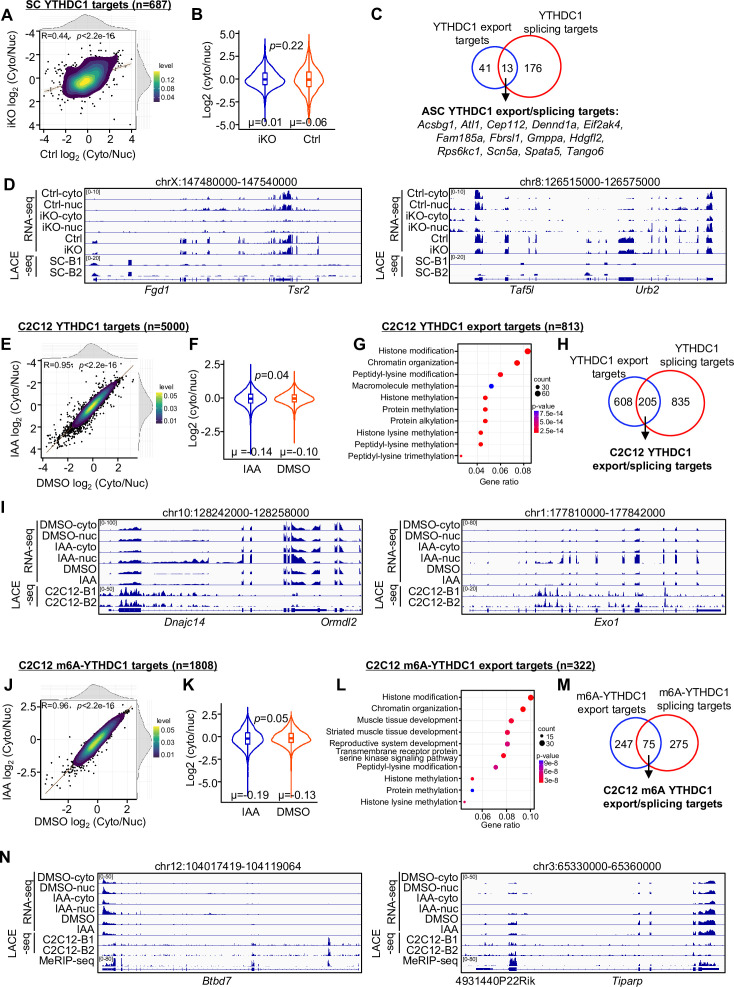
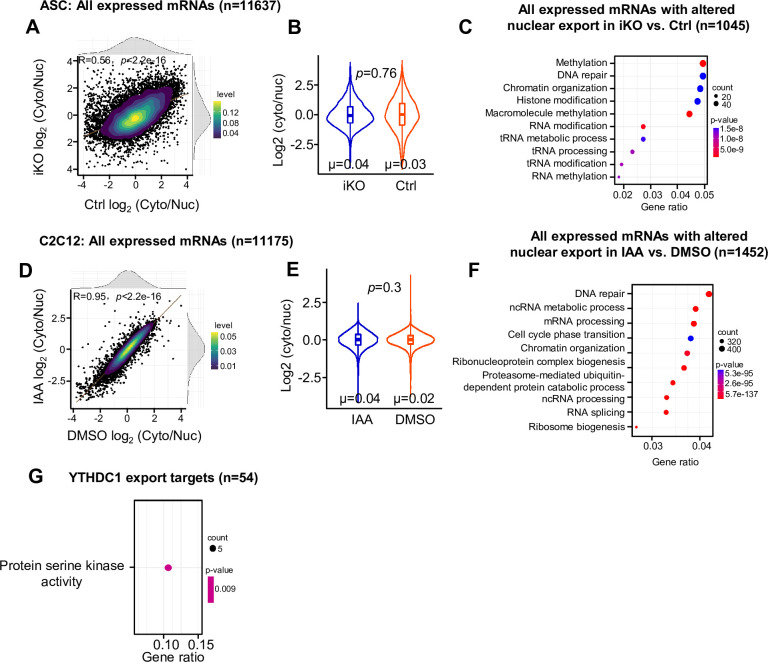
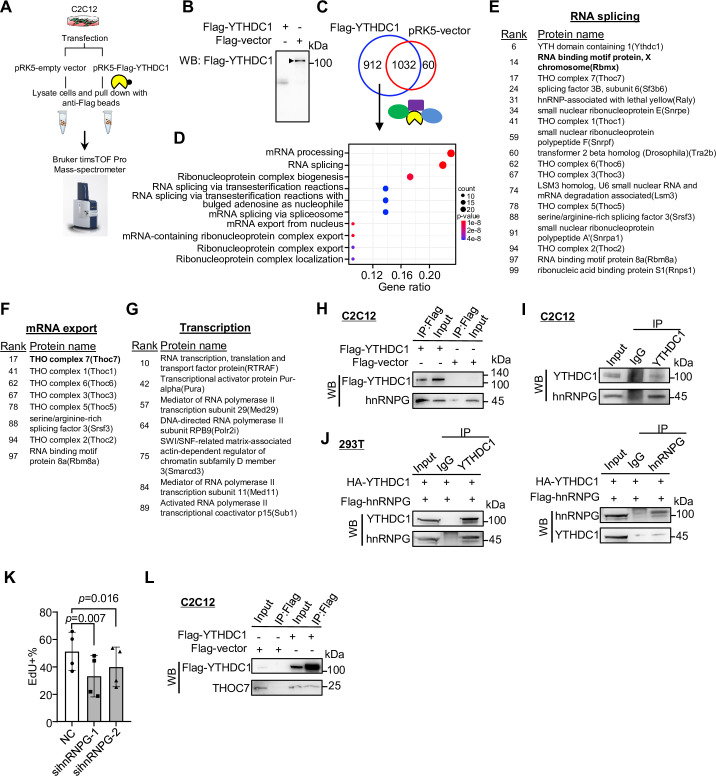
Skeletal muscle stem cells (also known as satellite cells [SCs]) are essential for muscle regeneration and the regenerative activities of SCs are intrinsically governed by gene regulatory mechanisms, but the post-transcriptional regulation in SCs remains largely unknown. N(6)-methyladenosine (m6A) modification of RNAs is the most pervasive and highly conserved RNA modification in eukaryotic cells; it exerts powerful impact on almost all aspects of mRNA processing that is mainly endowed by its binding with m6A reader proteins. In this study, we investigate the previously uncharacterized regulatory roles of YTHDC1, an m6A reader in mouse SCs. Our results demonstrate that YTHDC1 is an essential regulator of SC activation and proliferation upon acute injury-induced muscle regeneration. The induction of YTHDC1 is indispensable for SC activation and proliferation; thus, inducible YTHDC1 depletion almost abolishes SC regenerative capacity. Mechanistically, transcriptome-wide profiling using LACE-seq in both SCs and mouse C2C12 myoblasts identifies m6A-mediated binding targets of YTHDC1. Next, splicing analysis defines splicing mRNA targets of m6A-YTHDC1. Furthermore, nuclear export analysis also leads to the identification of potential mRNA export targets of m6A-YTHDC1 in SCs and C2C12 myoblasts;interestingly, some mRNAs can be regulated at both splicing and export levels. Lastly, we map YTHDC1 interacting protein partners in myoblasts and unveil a myriad of factors governing mRNA splicing, nuclear export, and transcription, among which hnRNPG appears to be a bona fide interacting partner of YTHDC1. Altogether, our findings uncover YTHDC1 as an essential factor controlling SC regenerative ability through multifaceted gene regulatory mechanisms in mouse myoblast cells.
骨骼肌干细胞(也称为卫星细胞[SCs])对于肌肉再生至关重要,SCs 的再生活动本质上受基因调控机制的控制,但SCs 的转录后调控在很大程度上仍然未知。RNA 的 N(6)-甲基腺苷(m6A)修饰是真核细胞中最普遍和高度保守的 RNA 修饰;它对 mRNA 处理的几乎所有方面都产生了强大的影响,主要归因于其与 m6A 阅读蛋白的结合。在这项研究中,我们研究了 YTHDC1 在小鼠 SCs 中的以前未被表征的调节作用,YTHDC1 是一种 m6A 阅读蛋白。我们的结果表明,YTHDC1 是急性损伤诱导的肌肉再生过程中 SC 激活和增殖的重要调节因子。YTHDC1 的诱导对于 SC 的激活和增殖是必不可少的;因此,诱导型 YTHDC1 耗竭几乎消除了 SC 的再生能力。从机制上讲,在 SCs 和小鼠 C2C12 成肌细胞中使用 LACE-seq 进行的全转录组谱分析确定了 YTHDC1 的 m6A 介导结合靶标。接下来,剪接分析定义了 m6A-YTHDC1 的剪接 mRNA 靶标。此外,核输出分析还导致鉴定了 SCs 和 C2C12 成肌细胞中 m6A-YTHDC1 的潜在 mRNA 输出靶标;有趣的是,一些 mRNA 可以在剪接和输出水平上受到调节。最后,我们在成肌细胞中绘制了 YTHDC1 相互作用蛋白伙伴,并揭示了许多调节 mRNA 剪接、核输出和转录的因素,其中 hnRNPG 似乎是 YTHDC1 的真正相互作用伙伴。总之,我们的研究结果揭示了 YTHDC1 通过多种基因调控机制在小鼠成肌细胞中作为控制 SC 再生能力的重要因素。