Institute of Biotechnology, Shiraz University, Shiraz, Iran.
PLoS One. 2023 Mar 9;18(3):e0277293. doi: 10.1371/journal.pone.0277293. eCollection 2023.
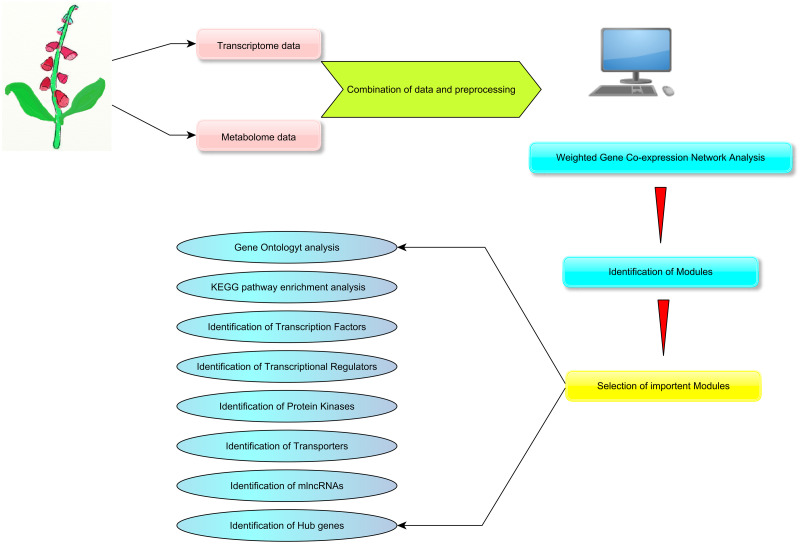
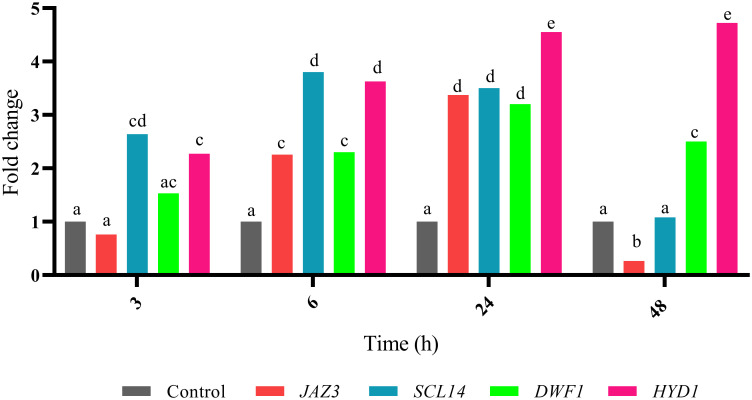
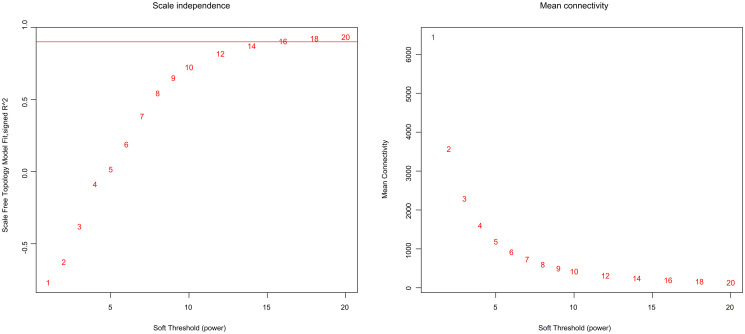
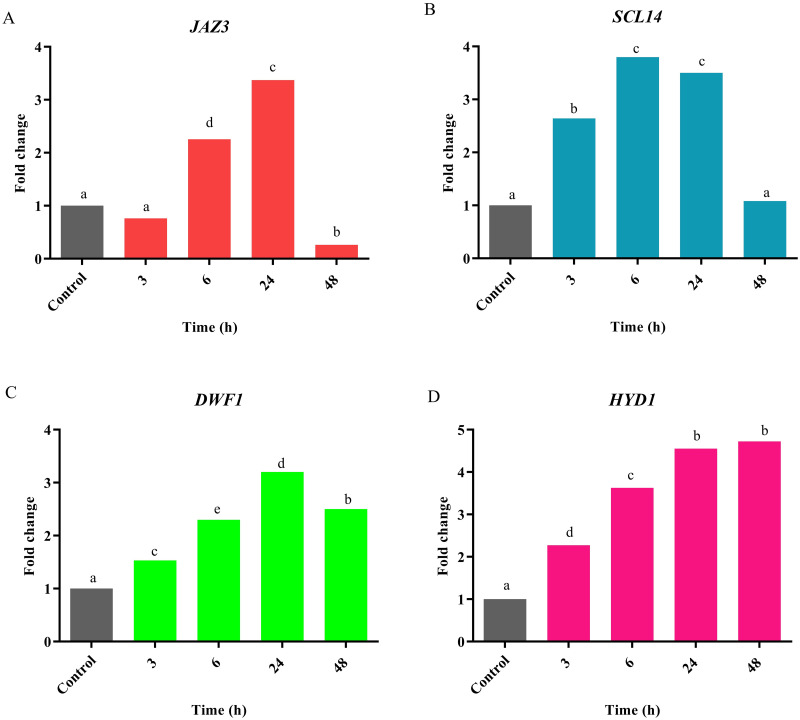
The medicinal plant Digitalis purpurea produces cardiac glycosides that are useful in the pharmaceutical industry. These bioactive compounds are in high demand due to ethnobotany's application to therapeutic procedures. Recent studies have investigated the role of integrative analysis of multi-omics data in understanding cellular metabolic status through systems metabolic engineering approach, as well as its application to genetically engineering metabolic pathways. In spite of numerous omics experiments, most molecular mechanisms involved in metabolic pathways biosynthesis in D. purpurea remain unclear. Using R Package Weighted Gene Co-expression Network Analysis, co-expression analysis was performed on the transcriptome and metabolome data. As a result of our study, we identified transcription factors, transcriptional regulators, protein kinases, transporters, non-coding RNAs, and hub genes that are involved in the production of secondary metabolites. Since jasmonates are involved in the biosynthesis of cardiac glycosides, the candidate genes for Scarecrow-Like Protein 14 (SCL14), Delta24-sterol reductase (DWF1), HYDRA1 (HYD1), and Jasmonate-ZIM domain3 (JAZ3) were validated under methyl jasmonate treatment (MeJA, 100 μM). Despite early induction of JAZ3, which affected downstream genes, it was dramatically suppressed after 48 hours. SCL14, which targets DWF1, and HYD1, which induces cholesterol and cardiac glycoside biosynthesis, were both promoted. The correlation between key genes and main metabolites and validation of expression patterns provide a unique insight into the biosynthesis mechanisms of cardiac glycosides in D. purpurea.
药用植物毛地黄产生的强心苷在制药行业很有用。由于民族植物学在治疗程序中的应用,这些生物活性化合物的需求很高。最近的研究调查了通过系统代谢工程方法整合分析多组学数据在理解细胞代谢状态中的作用,以及其在遗传工程代谢途径中的应用。尽管进行了许多组学实验,但毛地黄代谢物生物合成途径中涉及的大多数分子机制仍不清楚。使用 R 包加权基因共表达网络分析,对转录组和代谢组数据进行了共表达分析。作为我们研究的结果,我们确定了参与次生代谢产物生产的转录因子、转录调节剂、蛋白激酶、转运蛋白、非编码 RNA 和枢纽基因。由于茉莉酸参与了强心苷的生物合成,因此在茉莉酸甲酯(MeJA,100 μM)处理下验证了 Scarecrow-Like Protein 14(SCL14)、Delta24-甾醇还原酶(DWF1)、HYDRA1(HYD1)和茉莉酸-ZIM 结构域 3(JAZ3)的候选基因。尽管 JAZ3 早期诱导了下游基因,但在 48 小时后被显著抑制。靶向 DWF1 的 SCL14 和诱导胆固醇和强心苷生物合成的 HYD1 均被促进。关键基因与主要代谢物之间的相关性以及表达模式的验证为毛地黄强心苷生物合成的机制提供了独特的见解。