Department of Biological Sciences, Graduate School of Science, The University of Tokyo, Tokyo, Japan.
Department of Biological Sciences, Graduate School of Science, The University of Tokyo, Tokyo, Japan
Life Sci Alliance. 2023 Mar 9;6(5). doi: 10.26508/lsa.202201714. Print 2023 May.
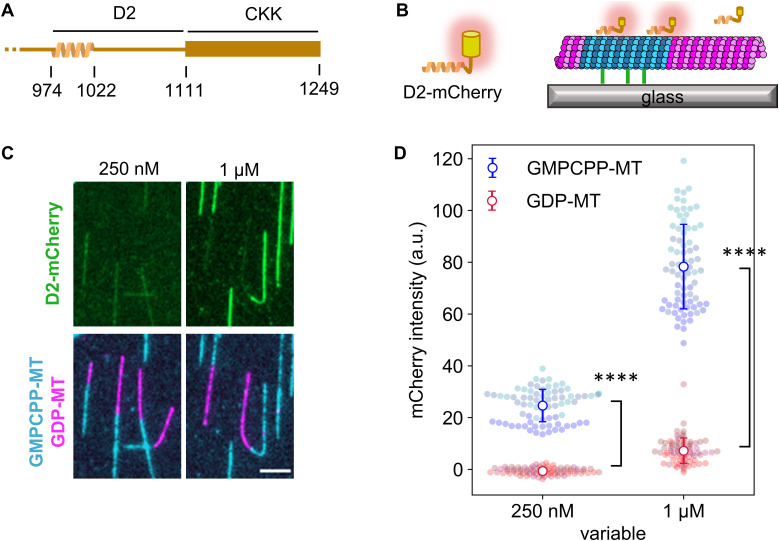
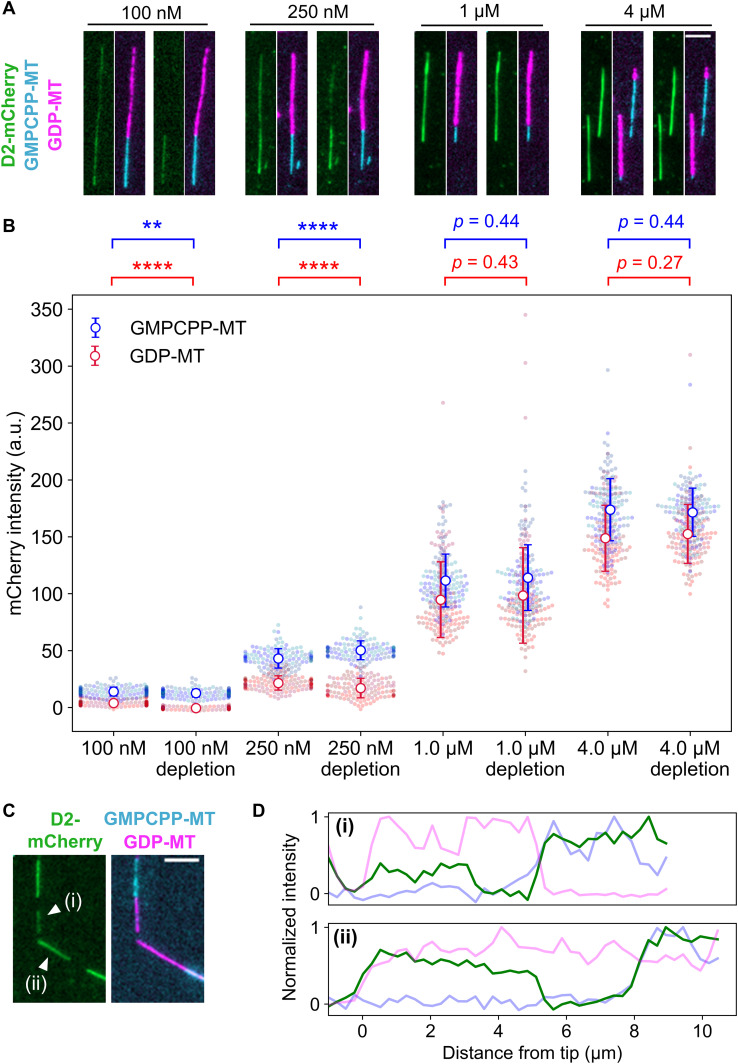
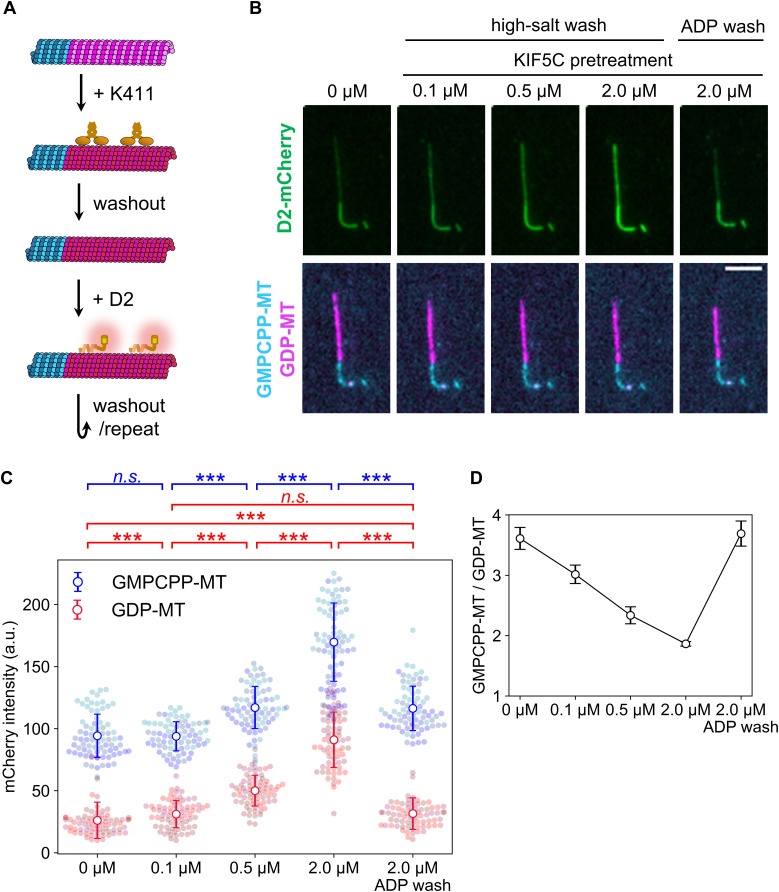
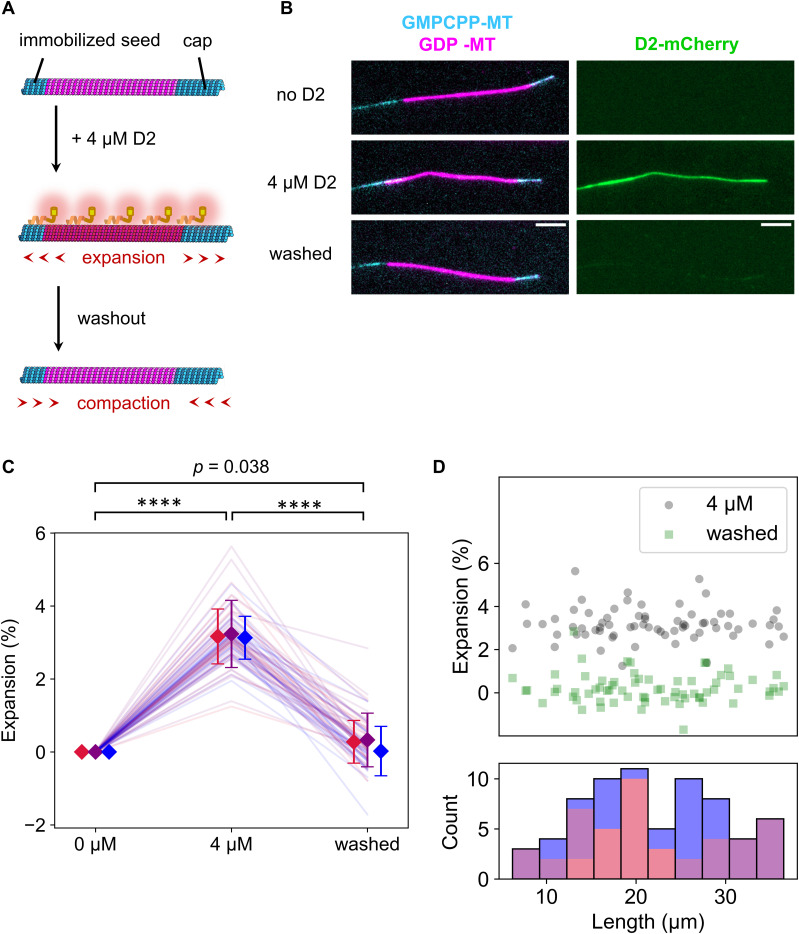
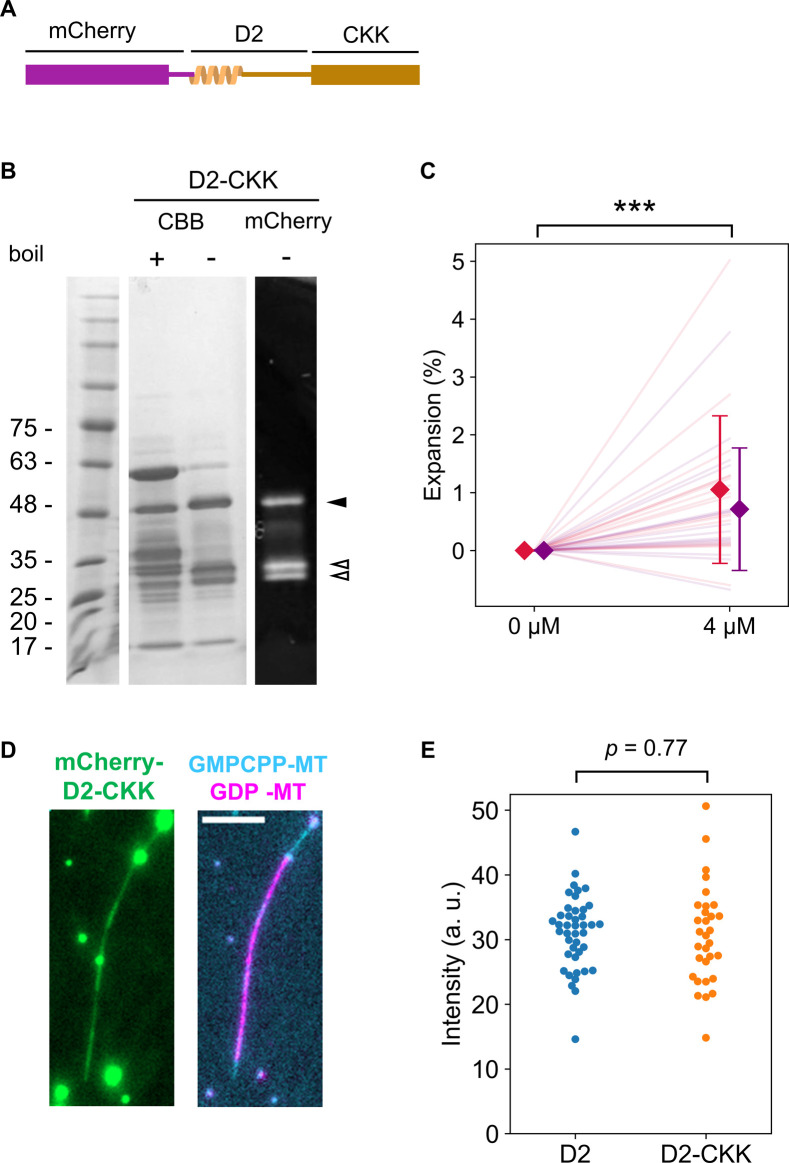
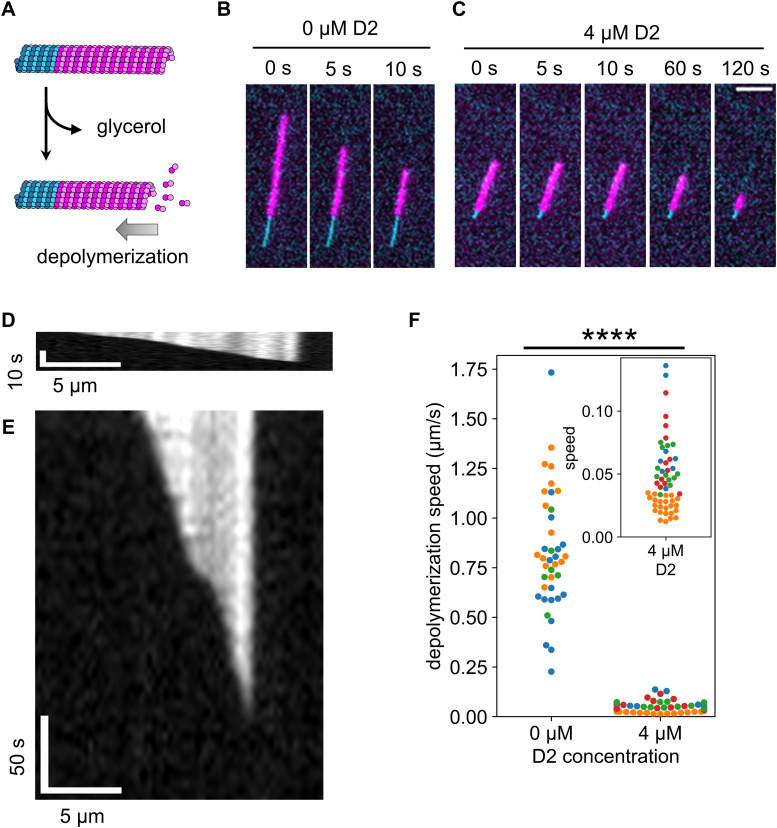
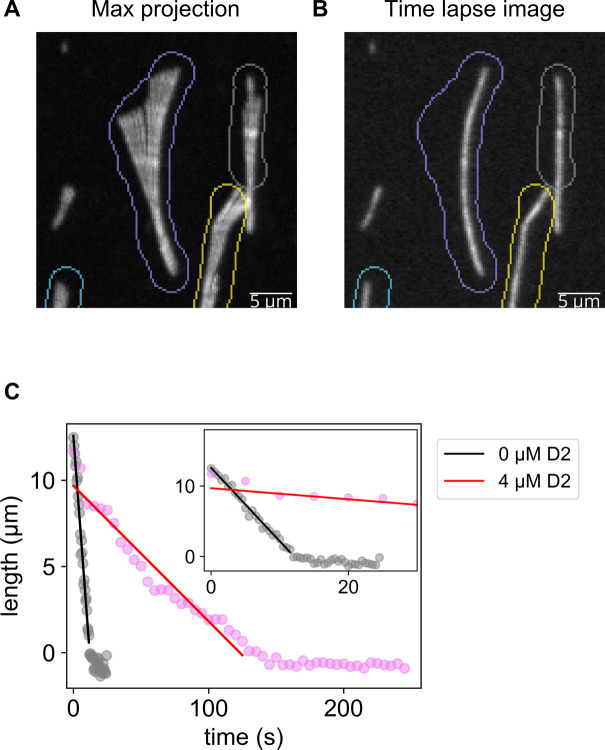
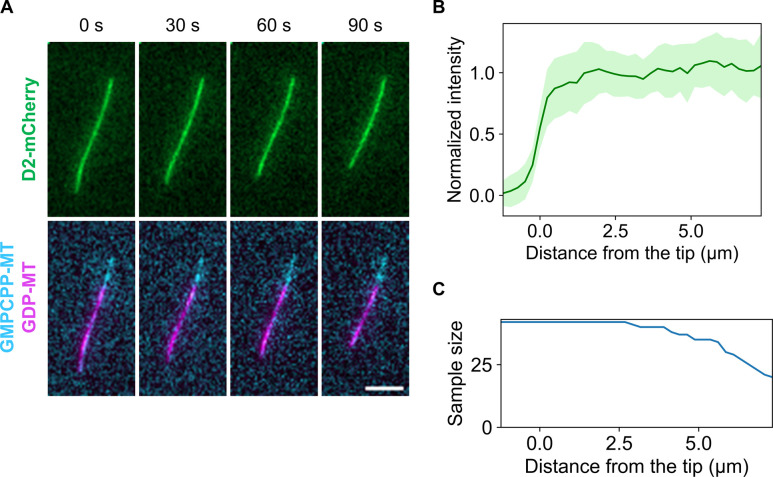
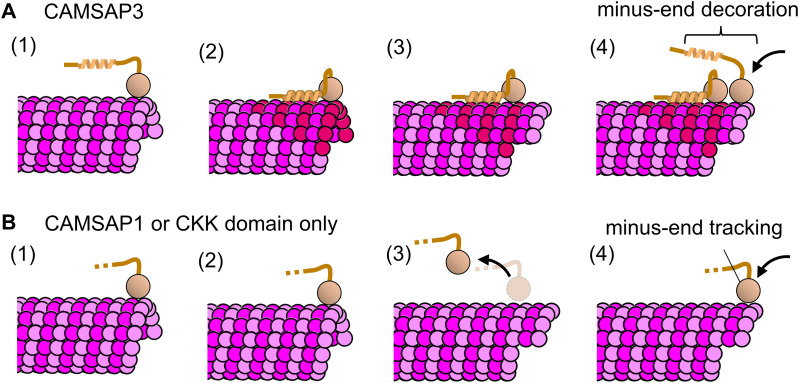
CAMSAPs are proteins that show microtubule minus-end-specific localization, decoration, and stabilization. Although the mechanism for minus-end recognition via their C-terminal CKK domain has been well described in recent studies, it is unclear how CAMSAPs stabilize microtubules. Our several binding assays revealed that the D2 region of CAMSAP3 specifically binds to microtubules with the expanded lattice. To investigate the relationship between this preference and the stabilization effect of CAMSAP3, we precisely measured individual microtubule lengths and found that D2 binding expanded the microtubule lattice by ∼3%. Consistent with the notion that the expanded lattice is a common feature of stable microtubules, the presence of D2 slowed the microtubule depolymerization rate to ∼1/20, suggesting that the D2-triggered lattice expansion stabilizes microtubules. Combining these results, we propose that CAMSAP3 stabilizes microtubules by lattice expansion upon D2 binding, which further accelerates the recruitment of other CAMSAP3 molecules. Because only CAMSAP3 has D2 and the highest microtubule-stabilizing effect among mammalian CAMSAPs, our model also explains the molecular basis for the functional diversity of CAMSAP family members.
CAMSAPs 是一类具有微管负端特异性定位、修饰和稳定作用的蛋白。虽然其 C 端 CKK 结构域通过负端识别的机制在最近的研究中已被很好地描述,但 CAMSAPs 如何稳定微管尚不清楚。我们的几项结合实验表明,CAMSAP3 的 D2 区特异性结合具有扩展晶格的微管。为了研究这种偏好与 CAMSAP3 稳定作用之间的关系,我们精确测量了单个微管的长度,发现 D2 结合将微管晶格扩展了约 3%。与扩展晶格是稳定微管的共同特征的观点一致,D2 的存在将微管解聚速率降低到约 1/20,表明 D2 触发的晶格扩展稳定了微管。综合这些结果,我们提出 CAMSAP3 通过 D2 结合引发晶格扩展来稳定微管,这进一步加速了其他 CAMSAP3 分子的募集。由于只有 CAMSAP3 具有 D2 结构域和在哺乳动物 CAMSAPs 中具有最高的微管稳定作用,我们的模型还解释了 CAMSAP 家族成员功能多样性的分子基础。