Stincardini Claudia, Pariano Marilena, D'Onofrio Fiorella, Renga Giorgia, Orecchini Elena, Orabona Ciriana, Nunzi Emilia, Gargaro Marco, Fallarino Francesca, Chun Sung Kook, Fortin Bridget M, Masri Selma, Brancorsini Stefano, Romani Luigina, Costantini Claudio, Bellet Marina Maria
Department of Medicine and Surgery, University of Perugia, P.le L. Severi 1, 06132 Perugia, Italy.
Department of Biological Chemistry, University of California, Irvine (UCI), Irvine, CA 92697, USA.
PNAS Nexus. 2023 Feb 3;2(3):pgad036. doi: 10.1093/pnasnexus/pgad036. eCollection 2023 Mar.
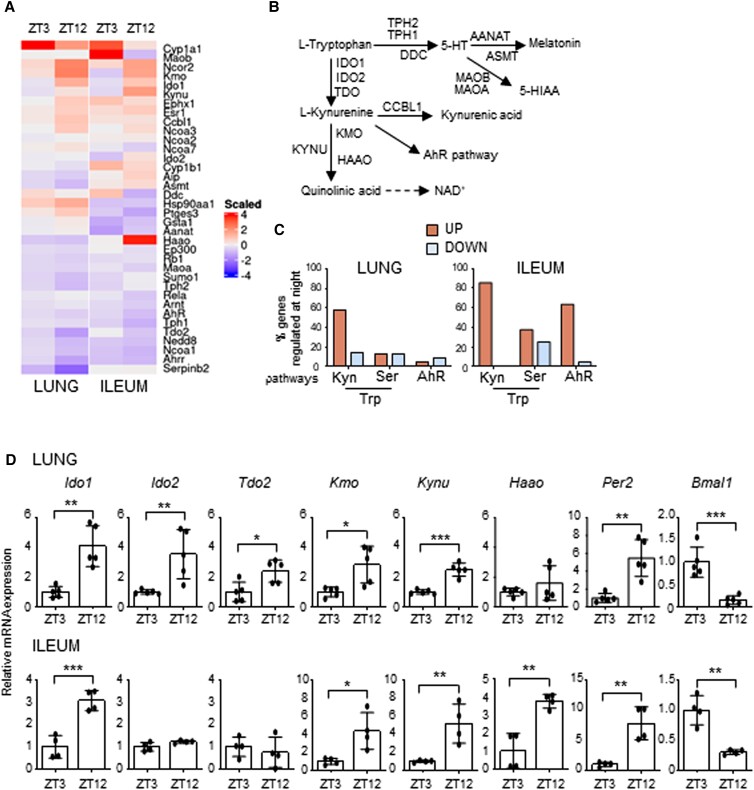
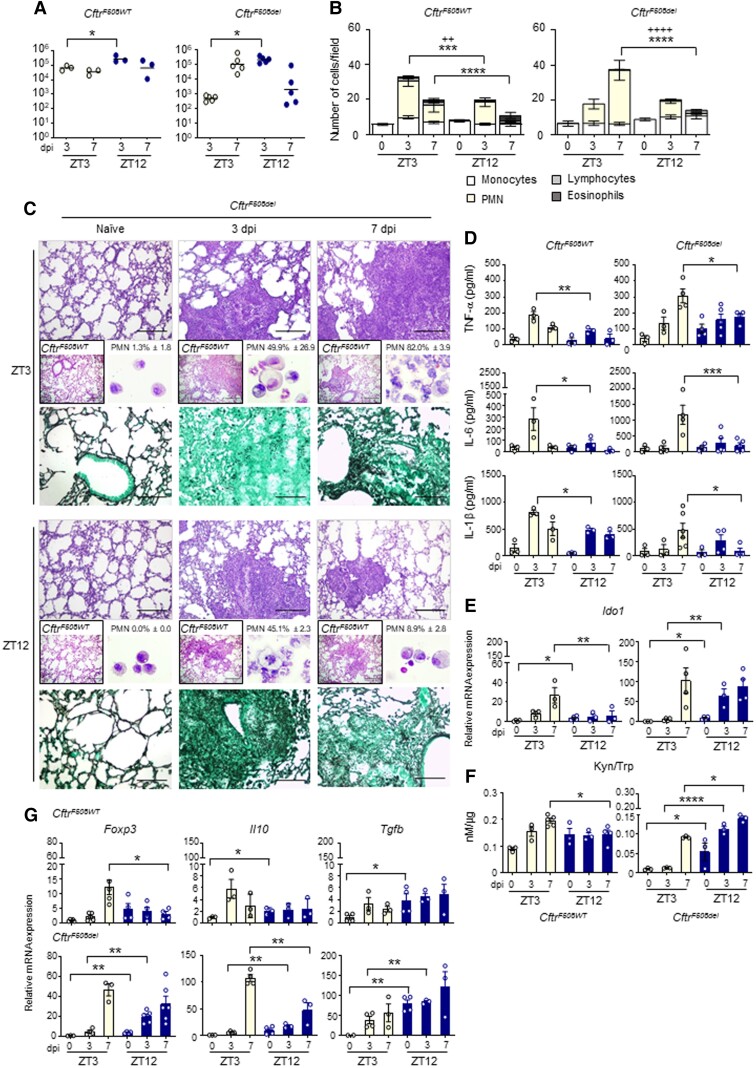
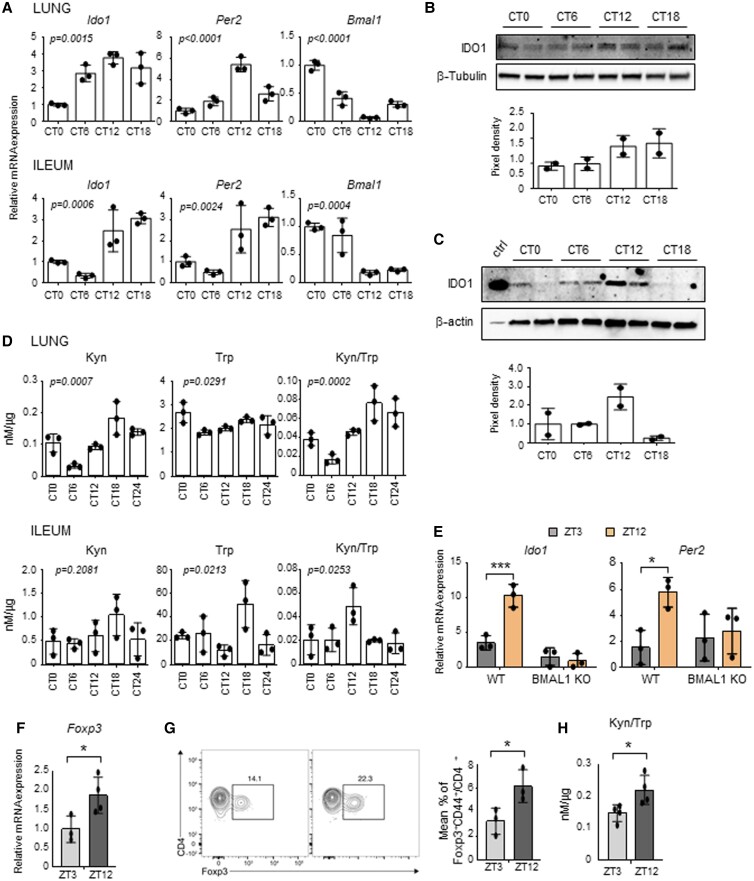
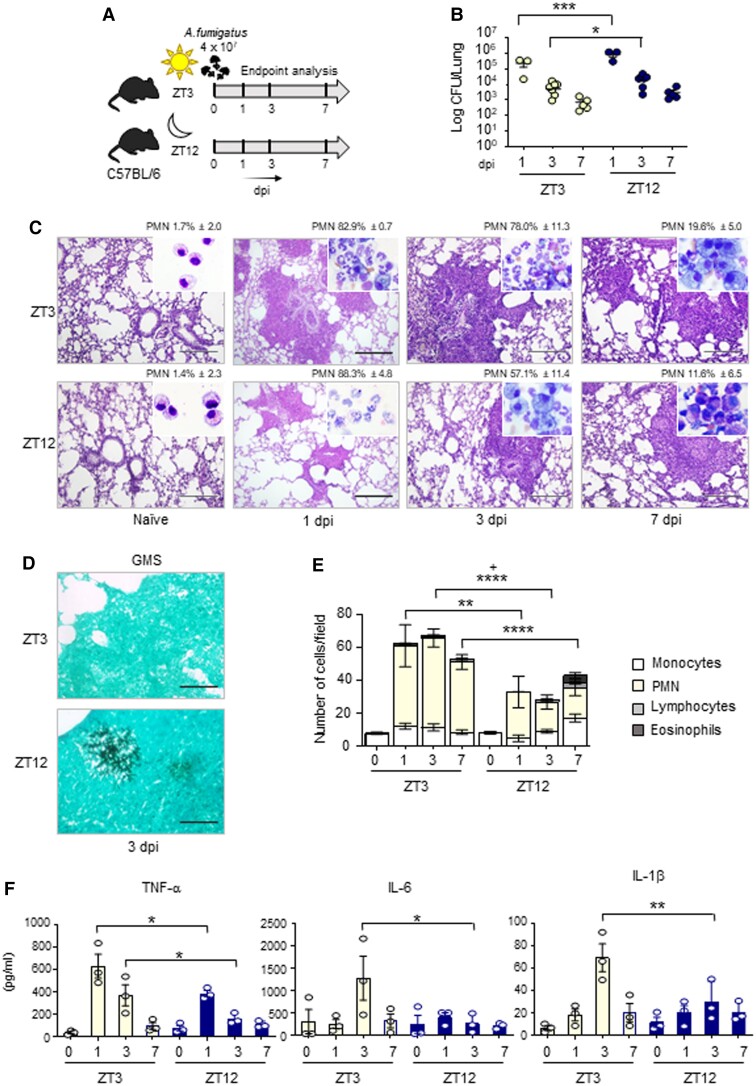
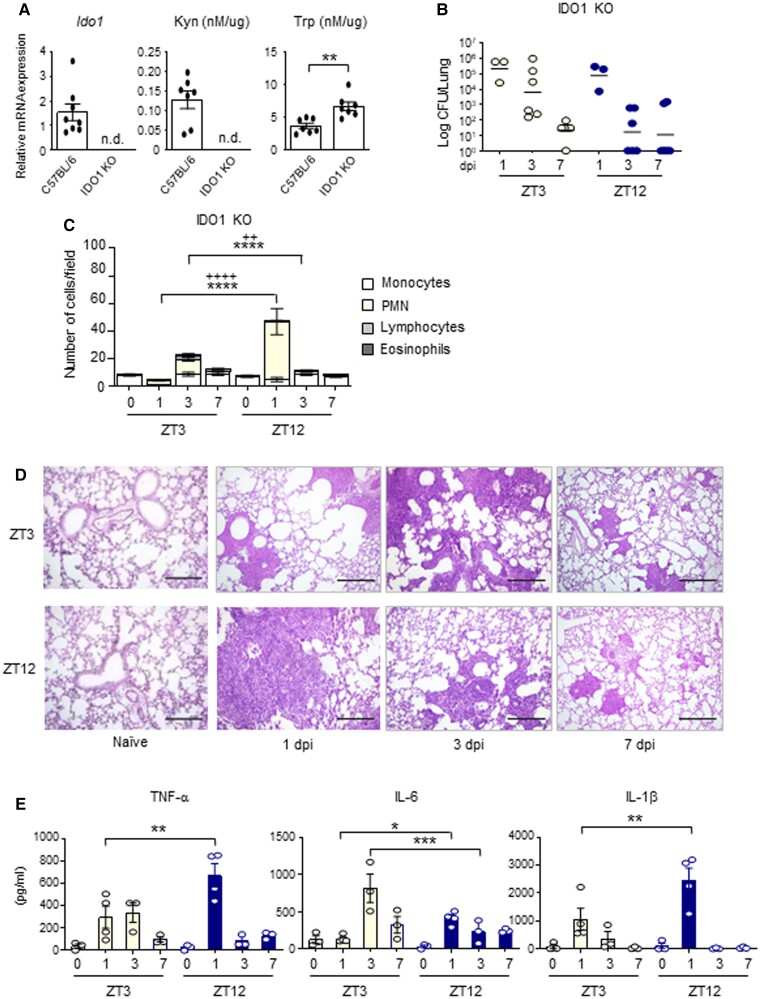
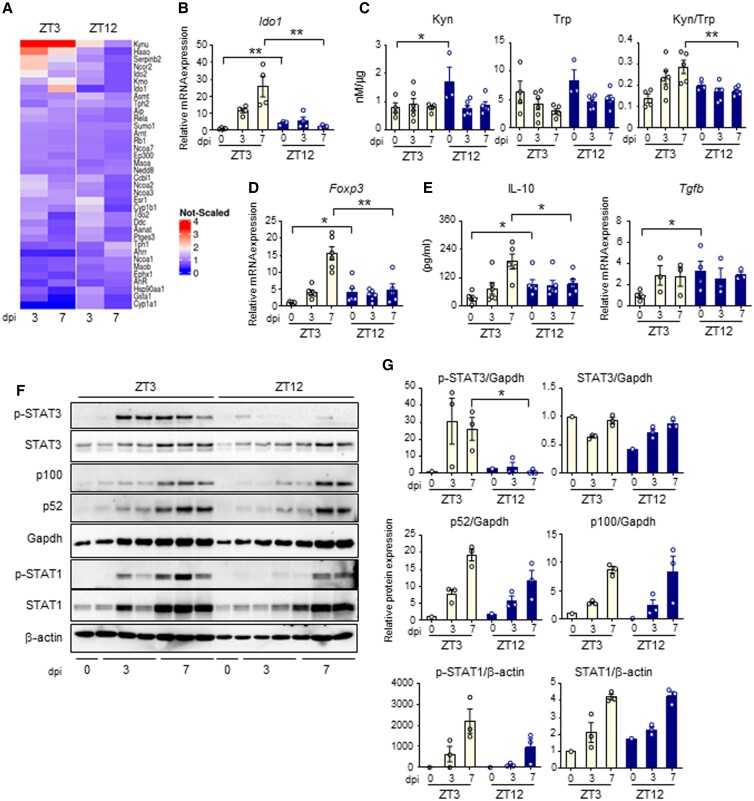
The environmental light/dark cycle has left its mark on the body's physiological functions to condition not only our inner biology, but also the interaction with external cues. In this scenario, the circadian regulation of the immune response has emerged as a critical factor in defining the host-pathogen interaction and the identification of the underlying circuitry represents a prerequisite for the development of circadian-based therapeutic strategies. The possibility to track down the circadian regulation of the immune response to a metabolic pathway would represent a unique opportunity in this direction. Herein, we show that the metabolism of the essential amino acid tryptophan, involved in the regulation of fundamental processes in mammals, is regulated in a circadian manner in both murine and human cells and in mouse tissues. By resorting to a murine model of pulmonary infection with the opportunistic fungus , we showed that the circadian oscillation in the lung of the tryptophan-degrading enzyme indoleamine 2,3-dioxygenase (IDO)1, generating the immunoregulatory kynurenine, resulted in diurnal changes in the immune response and the outcome of fungal infection. In addition, the circadian regulation of IDO1 drives such diurnal changes in a pre-clinical model of cystic fibrosis (CF), an autosomal recessive disease characterized by progressive lung function decline and recurrent infections, thus acquiring considerable clinical relevance. Our results demonstrate that the circadian rhythm at the intersection between metabolism and immune response underlies the diurnal changes in host-fungal interaction, thus paving the way for a circadian-based antimicrobial therapy.
环境光/暗周期在身体的生理功能上留下了印记,不仅调节我们的内在生物学,还影响与外部线索的相互作用。在这种情况下,免疫反应的昼夜节律调节已成为定义宿主-病原体相互作用的关键因素,而识别潜在的调控机制是基于昼夜节律的治疗策略发展的先决条件。追踪免疫反应的昼夜节律调节至代谢途径的可能性将是朝这个方向迈出的独特一步。在此,我们表明,参与哺乳动物基本过程调节的必需氨基酸色氨酸的代谢,在小鼠和人类细胞以及小鼠组织中均以昼夜节律的方式受到调节。通过采用机会性真菌肺部感染的小鼠模型,我们发现色氨酸降解酶吲哚胺2,3-双加氧酶(IDO)1在肺中的昼夜振荡产生免疫调节性犬尿氨酸,导致免疫反应和真菌感染结果的昼夜变化。此外,IDO1的昼夜节律调节在囊性纤维化(CF)的临床前模型中驱动了这种昼夜变化,CF是一种常染色体隐性疾病,其特征是进行性肺功能下降和反复感染,因此具有重要的临床意义。我们的结果表明,代谢与免疫反应交叉点的昼夜节律是宿主-真菌相互作用昼夜变化的基础,从而为基于昼夜节律的抗菌治疗铺平了道路。