School of Engineering, The University of Tokyo, 7-3-1, Hongo, Bunkyo-Ku, Tokyo, 113-8656, Japan.
Institute of Industrial Science, The University of Tokyo, 4-6-1 Komaba, Meguro-Ku, Tokyo, 153-8505, Japan.
Sci Rep. 2023 Mar 10;13(1):4033. doi: 10.1038/s41598-023-30690-0.
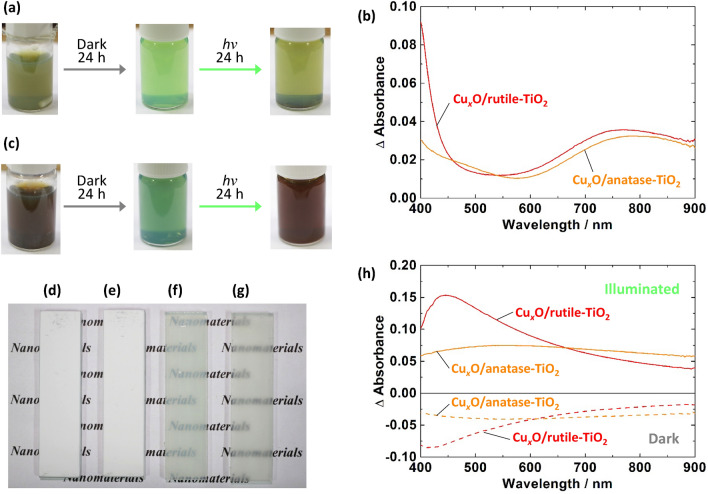
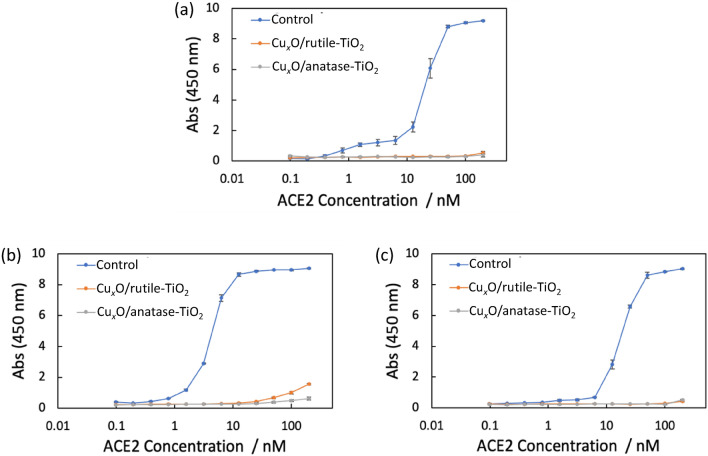
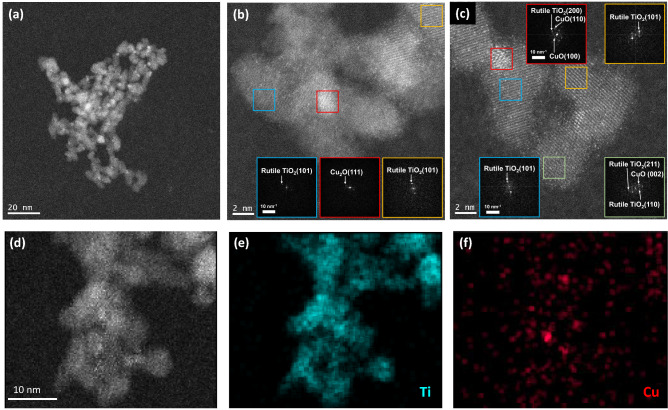
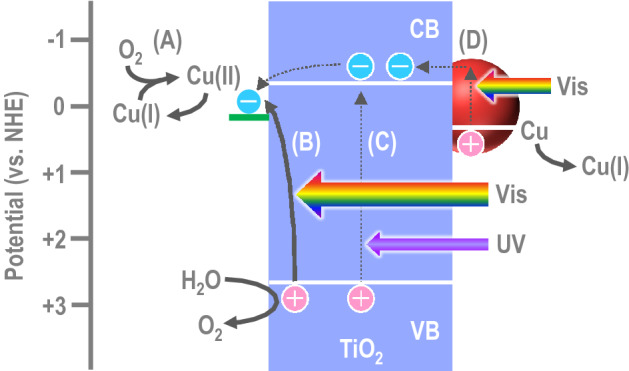
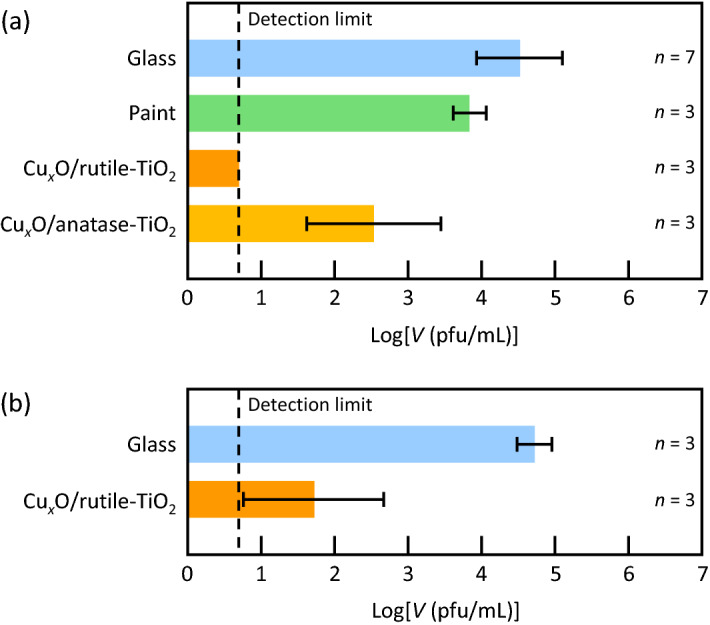
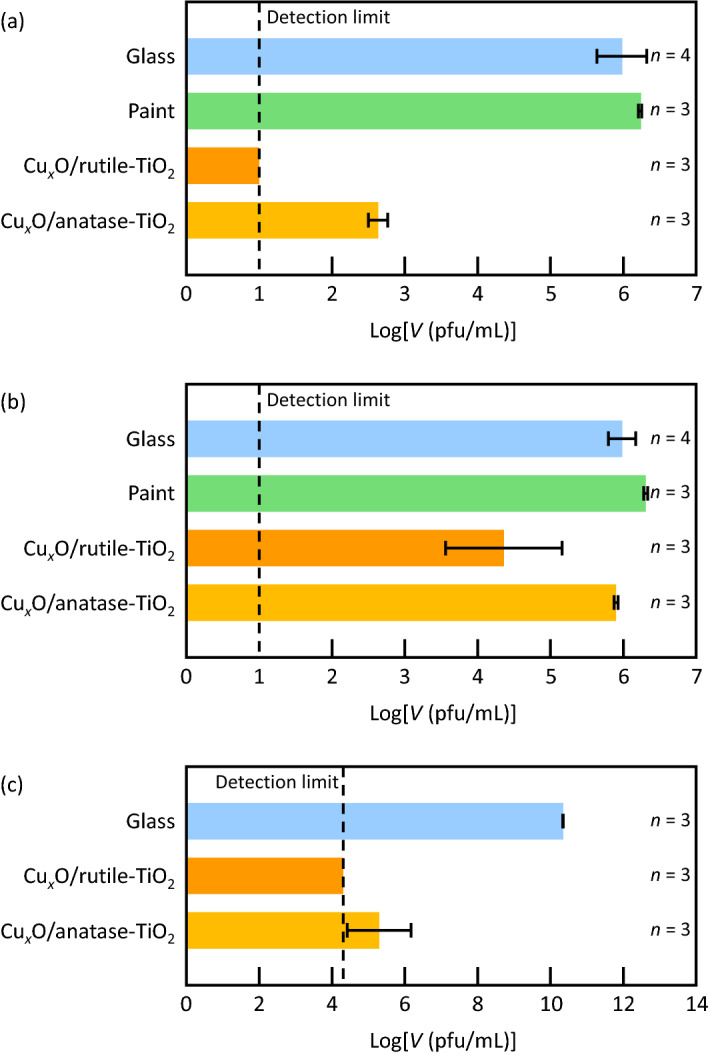
In order to reduce infection risk of novel coronavirus (SARS-CoV-2), we developed nano-photocatalysts with nanoscale rutile TiO (4-8 nm) and CuO (1-2 nm or less). Their extraordinarily small size leads to high dispersity and good optical transparency, besides large active surface area. Those photocatalysts can be applied to white and translucent latex paints. Although CuO clusters involved in the paint coating undergo gradual aerobic oxidation in the dark, the oxidized clusters are re-reduced under > 380 nm light. The paint coating inactivated the original and alpha variant of novel coronavirus under irradiation with fluorescent light for 3 h. The photocatalysts greatly suppressed binding ability of the receptor binding domain (RBD) of coronavirus (the original, alpha and delta variants) spike protein to the receptor of human cells. The coating also exhibited antivirus effects on influenza A virus, feline calicivirus, bacteriophage Qβ and bacteriophage M13. The photocatalysts would be applied to practical coatings and lower the risk of coronavirus infection via solid surfaces.
为了降低新型冠状病毒(SARS-CoV-2)的感染风险,我们开发了具有纳米锐钛矿 TiO(4-8nm)和 CuO(1-2nm 或更小)的纳米光催化剂。它们的超小尺寸导致高分散性和良好的光学透明度,以及大的活性表面积。这些光催化剂可应用于白色和半透明乳胶涂料。尽管参与涂料涂层的 CuO 簇在黑暗中逐渐经历有氧氧化,但在>380nm 光下,氧化簇被重新还原。在荧光灯下照射 3 小时,涂料涂层可使新型冠状病毒的原始株和阿尔法变异株失活。光催化剂极大地抑制了冠状病毒(原始株、阿尔法株和德尔塔株)刺突蛋白的受体结合域(RBD)与人类细胞受体的结合能力。该涂层对甲型流感病毒、猫杯状病毒、噬菌体 Qβ和噬菌体 M13 也具有抗病毒作用。光催化剂将应用于实际涂层,通过固体表面降低冠状病毒感染的风险。