Department of Psychiatry, MetroHealth Medical Center, 2500 MetroHealth Drive, Cleveland, OH 44109, USA.
School of Psychology, Georgia Institute of Technology, Atlanta, GA 30332, USA.
Int J Environ Res Public Health. 2023 Mar 5;20(5):4597. doi: 10.3390/ijerph20054597.
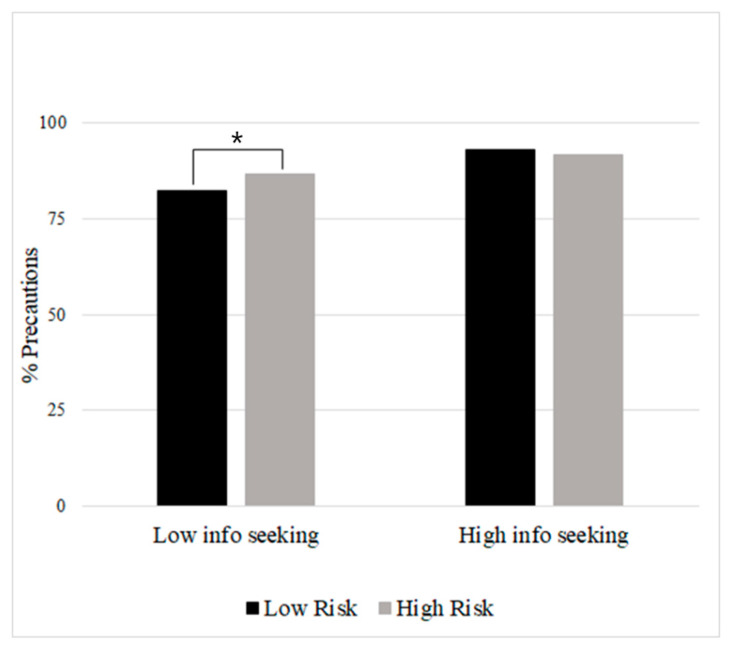
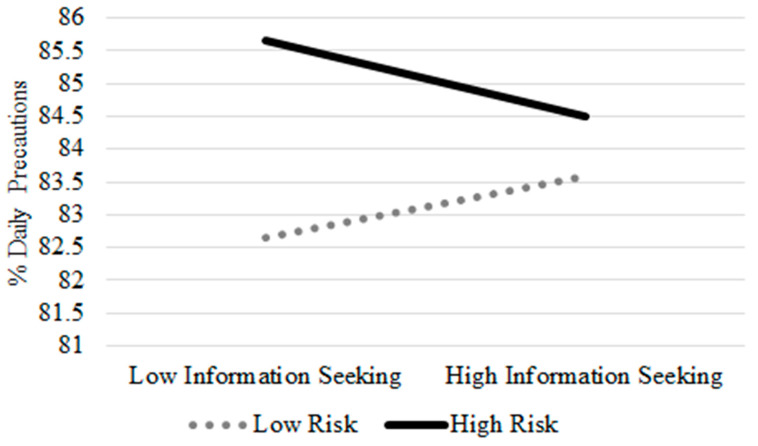
Precaution taking is an important part of managing COVID-19 and has been since the start of the pandemic. Guided by the Health Belief Model, two studies conducted during the beginning of the COVID-19 pandemic aimed to identify possible individual difference predictors of precautionary actions. Study 1 was an online, cross-sectional study using 763 adults aged 20-79 years old. Study 2, a 30-day daily diary study, examined daily precautions in 261 persons over the age of 55 years old. Study 1 and Study 2 indicated that COVID-19 knowledge predicted precautionary behaviors. Multilevel models from Study 2 indicated that daily increases in in-person interactions and leaving home were associated with decreases in precautions, but increases in disruption to routine were associated with increases in precautions. In both studies, including concurrent and lagged models in Study 2, significant interactions between information seeking and perceived risk suggested higher information seeking was related to higher precautions for those who consider themselves low risk. Findings highlight the burden of daily precautions and potentially modifiable factors of engagement in precautions.
预防措施是管理 COVID-19 的重要组成部分,从疫情开始就一直如此。受健康信念模型的指导,在 COVID-19 大流行初期进行的两项研究旨在确定预防措施的可能个体差异预测因素。研究 1 是一项在线的横断面研究,涉及 763 名 20-79 岁的成年人。研究 2 是一项为期 30 天的日常日记研究,调查了 261 名 55 岁以上人群的日常预防措施。研究 1 和研究 2 表明,COVID-19 知识预测了预防行为。研究 2 的多层次模型表明,面对面互动和离家外出的日常增加与预防措施的减少有关,但日常生活的中断增加与预防措施的增加有关。在这两项研究中,包括研究 2 中的同期和滞后模型,信息寻求和感知风险之间的显著交互表明,对于那些认为自己风险较低的人来说,较高的信息寻求与较高的预防措施有关。研究结果强调了日常预防措施的负担和预防措施参与的潜在可改变因素。